


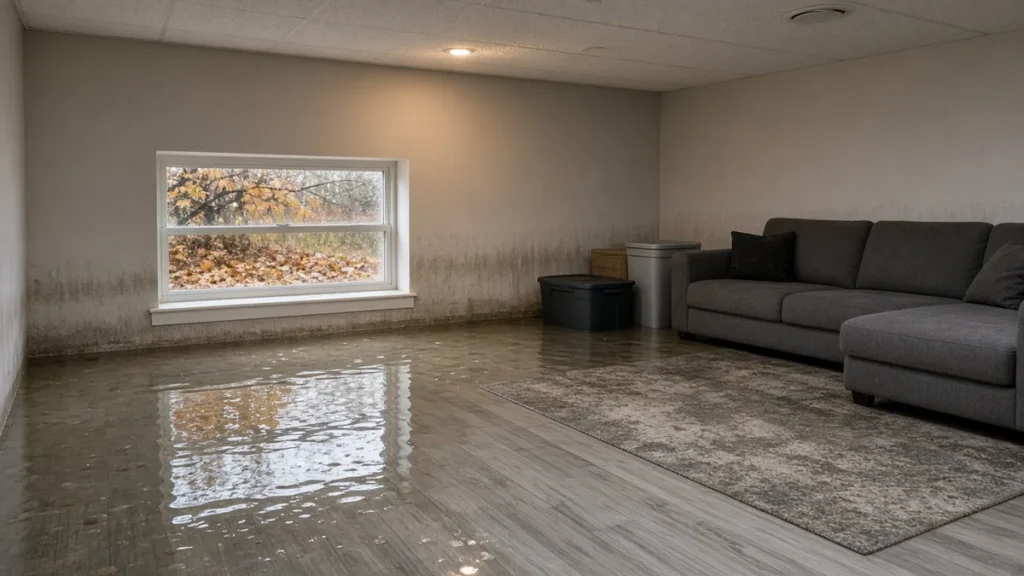
Most years, early November in Minnesota means bracing for the first snow. This year, it means rain, and a lot of it. In its October 30 forecast discussion, the National Weather Service Twin Cities office said a slow-moving storm is expected to bring a widespread soaking rain Monday and Tuesday, November 2 and 3, with a 70 to 90 percent chance of more than an inch across the region and some areas possibly getting over two inches. For context, the Twin Cities average about 1.61 inches of precipitation for the entire month of November.
There is no cold air behind this system, so it will fall as rain on ground that is already damp from fall weather. That is a recipe for a flooded basement, overworked sump pumps, and water seeping in through window wells and foundation cracks in Lakeville, Apple Valley, Burnsville, Rosemount, Farmington, and the rest of the south metro. Here is how to get ready, and what to do in the first hour if water gets in.
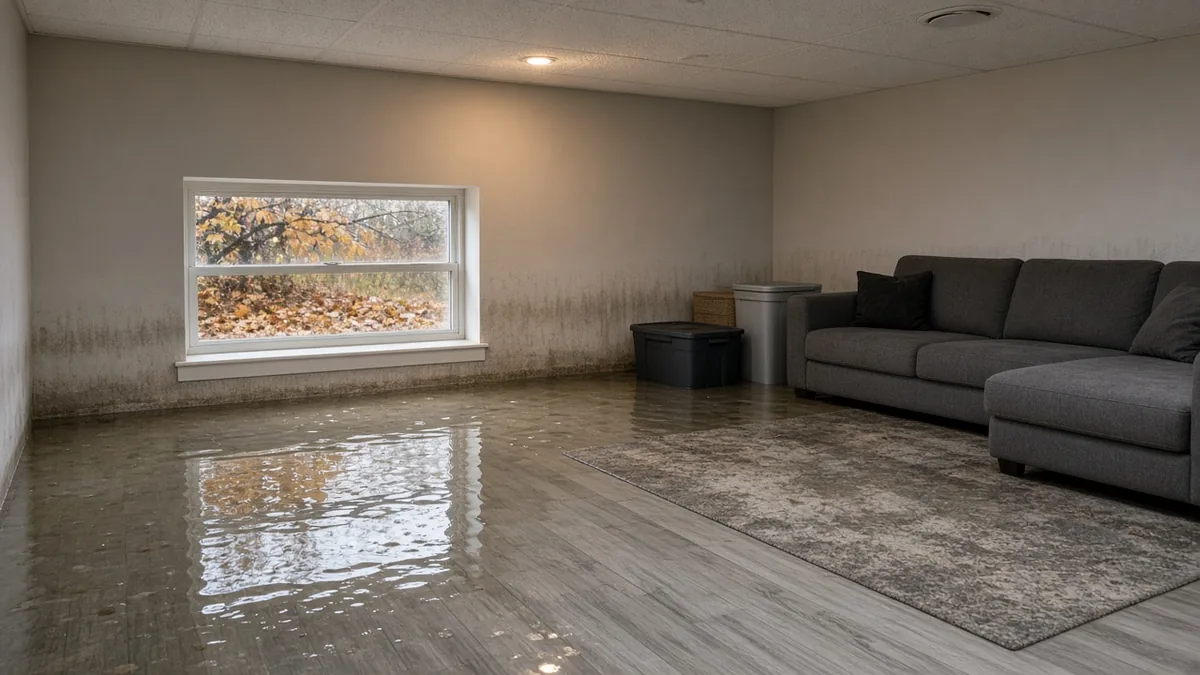
Before the Rain: A 30-Minute Basement Check
A short check now is the cheapest way to avoid a flooded basement later. None of these steps require special tools:
- Test your sump pump. Slowly pour a bucket of water into the pit. The pump should switch on, empty the pit, and shut off. If it hums but doesn’t pump, or doesn’t start at all, get it serviced now.
- Check the discharge line. Make sure the outside pipe isn’t clogged with leaves and empties several feet away from the foundation, not right next to it.
- Clear gutters and extend downspouts. After leaf drop, many gutters are packed. Downspouts should carry water well away from the house.
- Look at window wells. Scoop out leaves and debris so water can drain. A clear well cover helps keep rain out.
- Get valuables off the floor. Move photos, documents, electronics, and holiday decorations onto shelves or upstairs, where a flooded basement can’t reach them.
- Consider a backup. A battery backup sump pump or a water alarm can make a big difference if the power goes out during the storm.
If You Have a Flooded Basement: Your First-Hour Steps
What you do in the first hour of a flooded basement can limit how far the water spreads and how much has to be torn out later.
1. Make sure it’s safe to go downstairs
If water is near outlets, extension cords, a furnace, a water heater, or appliances, don’t walk into it. Water and electricity are a dangerous mix. If you can reach your electrical panel without stepping into water, shut off power to the basement. If you can’t, call your utility or an electrician.
2. Find the source
Is the water coming from a failed sump pump, a window well, a crack in the foundation wall, or a floor drain backing up? Clean rainwater seeping through a wall is very different from water coming up through a floor drain, which may be mixed with sewage. If the water smells bad or came from a drain, treat it as contaminated and keep kids and pets away.
3. Stop or slow the water if you safely can
Clear a clogged sump discharge, reset a tripped pump, or redirect a downspout. Don’t run washing machines or dishwashers if a floor drain is backing up.
4. Document everything
Before you move or throw anything out, take photos and video of the water, the walls, the flooring, and damaged belongings. This helps with any insurance claim later, because the adjuster will want to see the flooded basement as you found it.
5. Move what you can and start air moving
Lift furniture onto blocks or move it out of the water, pull up wet area rugs, and open interior doors. Only use fans or a wet/dry vacuum if the power and outlets are dry and safe.
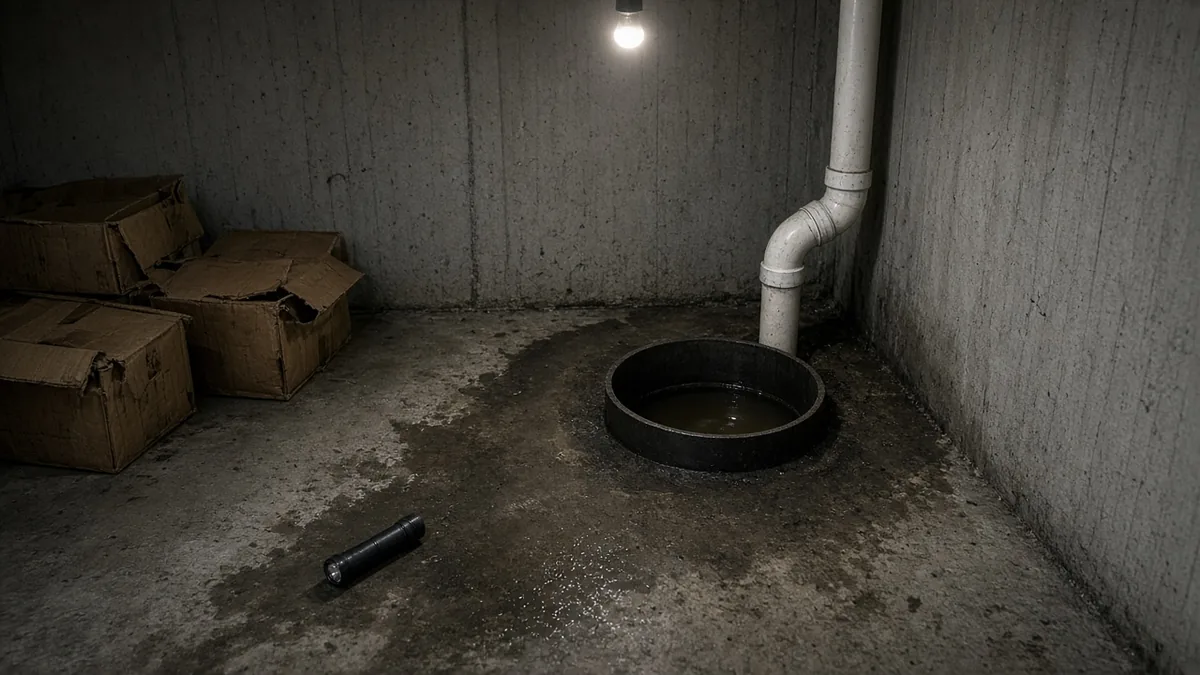
Safety Tips During and After the Storm
- Wear rubber boots and gloves when handling wet items in a flooded basement, especially if a drain backed up.
- Never run a generator or gas-powered pump indoors or in an attached garage because of carbon monoxide risk.
- Don’t drive through water covering roads. The American Red Cross flood safety guide has more tips for staying safe before, during, and after flooding.
- Throw out food, medicine, and cosmetics that touched contaminated water.
When to Call a Professional
A small puddle on bare concrete can often be handled with a wet vac and a fan. A flooded basement is a different job. It’s time to call a restoration company when:
- Water has soaked carpet, padding, drywall, or insulation in a finished basement
- The water came from a floor drain or sewer line
- There is more water than a wet vac can keep up with
- Walls or floors still feel damp a day or two later, or you notice a musty smell
Water hides behind baseboards and under flooring, and materials that stay wet can start growing mold within a few days. Professional water damage restoration uses moisture meters, commercial dehumidifiers, and air movers to find hidden moisture and dry the structure properly. If you already see or smell mold from an earlier leak, our mold removal team can assess it.
After a Flooded Basement: What the Next Few Days Look Like
Once the water is out, the real work is drying what you cannot see. Water wicks up drywall, soaks into the bottom plates of walls and hides under vinyl plank and carpet. The EPA advises drying wet materials within 24 to 48 hours to help prevent mold, so speed matters.
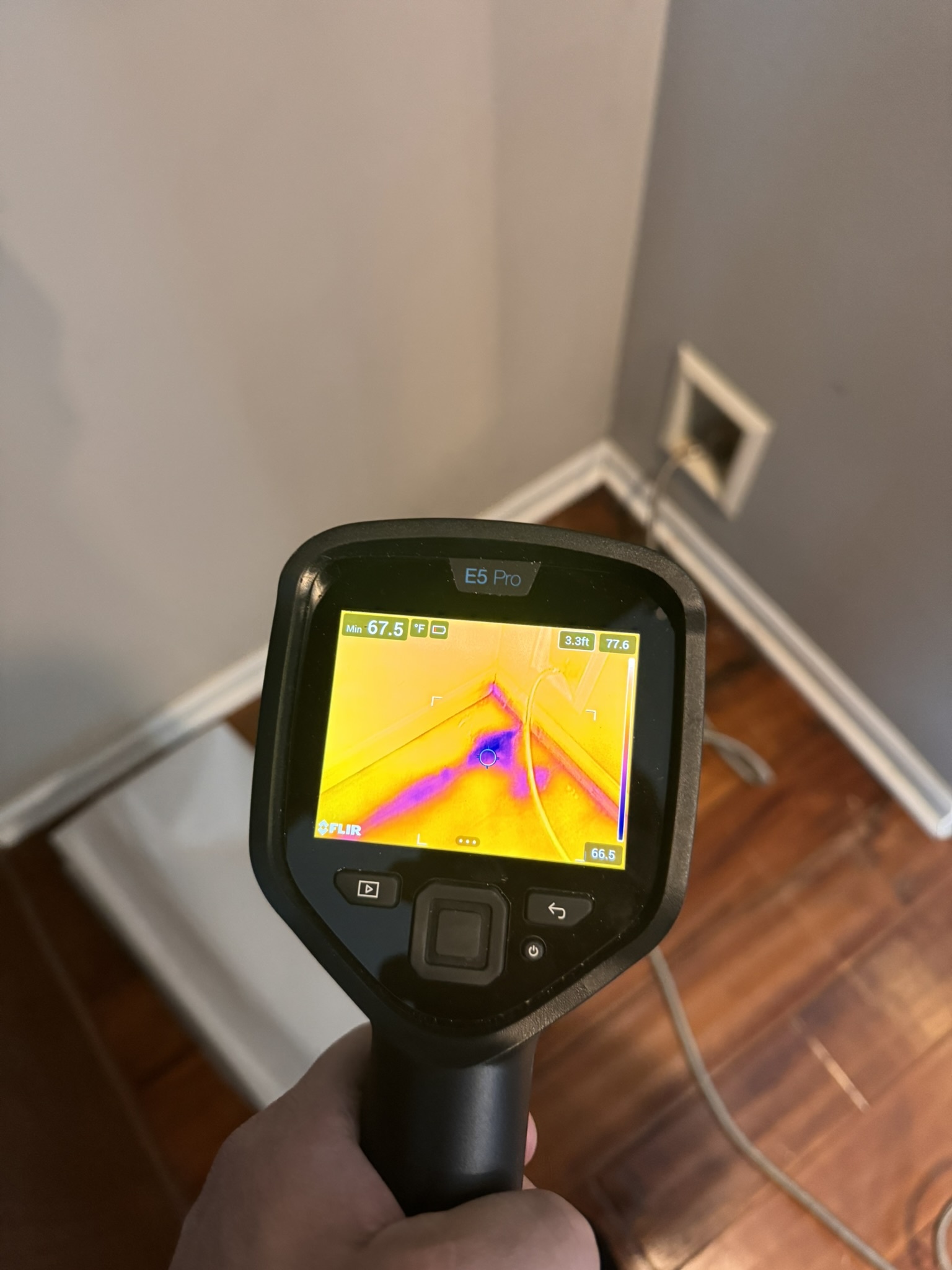
When our IICRC-certified team handles a flooded basement, here is what usually happens:
- Finding hidden moisture. Moisture meters and thermal imaging show where water traveled behind walls and under floors.
- Extraction and protecting your things. We pull out standing water, and our crews move furniture off wet floors so it does not wick up water or stain.
- Removing what cannot be saved. Soaked carpet pad, wet insulation or the bottom of drywall may need to come out. We explain why before anything is removed.
- Drying and follow-up visits. Air movers and dehumidifiers run until readings show the structure is dry. We make follow-up visits to check moisture levels and adjust equipment.
If the water came from a floor drain or sewer line, cleanup also includes removing contaminated materials and cleaning the area before drying. Our article on sewage backup causes explains why heavy rain can push water up through drains.
Why Fall Rain Hits Lakeville Basements Hard
Fall storms catch many south metro homeowners off guard. Gutters are full of leaves, so roof water spills right next to the foundation. Soil is often already damp from autumn rain. And sump pumps that sat idle through a dry summer may not have been tested in months.
Later in the season, a new problem shows up: discharge lines and downspout extensions can freeze or get buried in snow. When a thaw or rain follows, water has nowhere to go but back toward the house. If you had a flooded basement once, it is worth checking these spots every fall. Our guide to basement flooding in Minnesota covers more prevention steps.
Insurance Tips After Basement Water Damage
Every policy treats a flooded basement a little differently, so read yours or call your agent before you assume anything. Many homeowners policies treat water from a backed-up drain or a failed sump pump differently from surface water that seeps in from outside, and some coverage requires a separate endorsement. A few general tips:
- Report the damage to your insurance company promptly.
- Keep your photos, videos, and receipts for any emergency repairs or cleanup.
- Take reasonable steps to prevent further damage, which most policies expect.
- Don’t throw away damaged items until your adjuster says it’s okay, or at least until you have photographed them.
We work with insurance companies and can provide detailed documentation of the damage and the drying process to share with your insurer. Coverage decisions are always up to your insurance company. For more, see our article on restoration insurance claims.
Frequently Asked Questions
How fast should a wet basement be dried out?
As soon as possible. The longer drywall, carpet, and wood in a flooded basement stay wet, the more likely they are to need replacing and the higher the chance of mold. Drying usually takes several days with professional equipment.
Can I save wet carpet in my basement?
Sometimes, if the water was clean rainwater and it’s dried quickly. Carpet and pad soaked by sewage or drain backup generally should be removed.
My sump pump is running nonstop. Is that a problem?
During a heavy rain, it can be normal for the pump to run often. If it runs constantly and the water level in the pit keeps rising, the pump may be undersized or failing. Have a backup plan ready, because a pump that quits during heavy rain is a common cause of a flooded basement.
Do you serve my city?
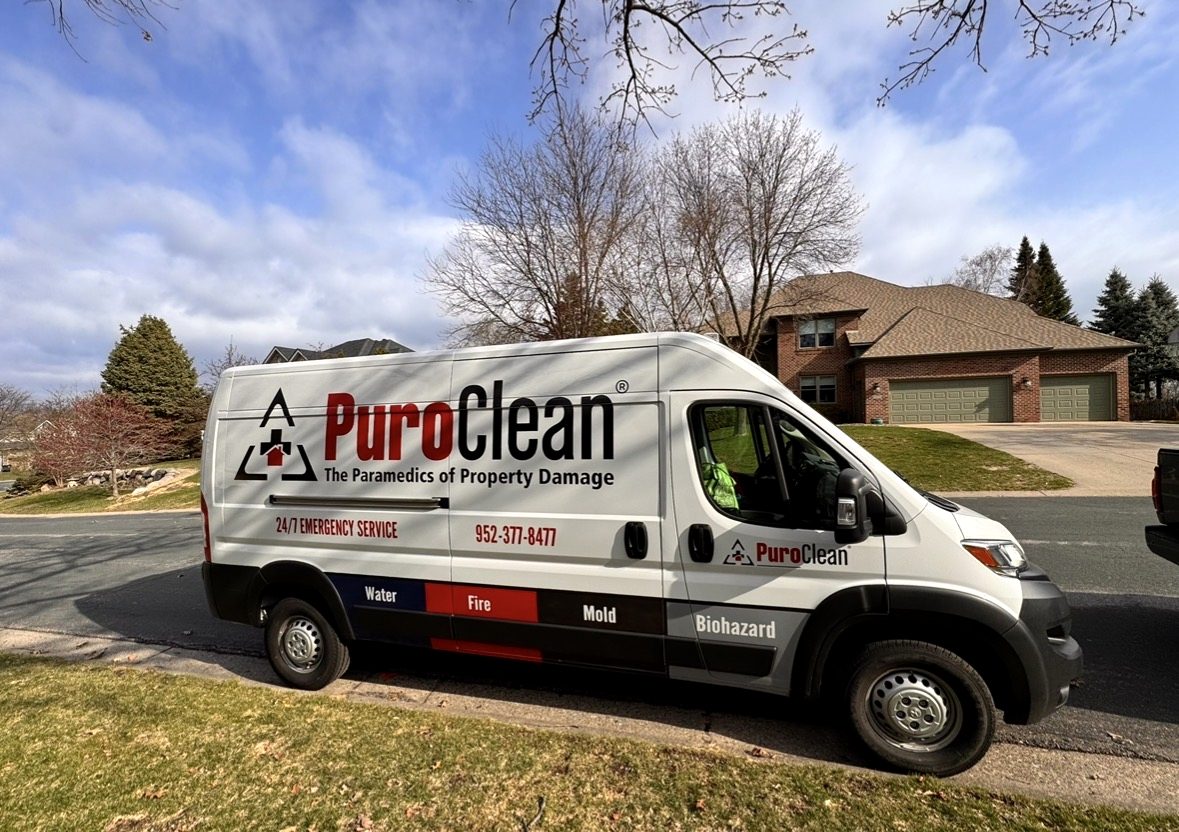
PuroClean of Lakeville helps with a flooded basement in Lakeville, Apple Valley, Burnsville, Rosemount, Farmington, Eagan, Prior Lake, Savage and nearby communities in the south metro.
Flooded Basement in Lakeville? Call PuroClean of Lakeville 24/7
If heavy rain leaves you with a flooded basement, don’t wait for it to dry on its own. PuroClean of Lakeville answers emergency calls 24 hours a day, 7 days a week. Call (952) 377-8477 or request an estimate online, and we’ll help you get your basement dry and your home back to normal.
PuroClean of Lakeville, 15195 Boulder Ct, Unit 50, Rosemount, MN 55068. Phone: (952) 377-8477.

