


When water, fire or mold damages your home, the company you call decides a lot: what gets saved, what gets torn out, and how the job feels for your family. PuroClean of Lakeville is a locally owned restoration company serving Lakeville, Apple Valley, Eagan, Prior Lake and the rest of the south metro. Our approach is simple: restore first, and replace only what cannot be saved.

Restoring What Matters Most
Some restoration jobs start with a dumpster and a pry bar. Ours start with a moisture meter. Tearing out drywall, flooring and cabinets is sometimes necessary, but it should not be the first answer. When materials can be dried, cleaned and kept in place, you save time, mess and the things that make your house feel like home.
Restoration-first is not about cutting corners. Wet or contaminated materials that cannot be made safe still come out. It is about making that decision with measurements and care instead of habit.
That is what we mean by restoring what matters most. A family photo album, a hardwood floor your parents put in, a basement you finished yourself. We look at each item and each surface and ask whether it can be saved before we recommend removing it. When your customers are also your neighbors, that care is simply how a locally owned restoration company stays in business.
What a Locally Owned Restoration Company Does Differently
PuroClean of Lakeville is owned and operated by Miguel Rocha, with our office at 15195 Boulder Ct, Unit 50, in Rosemount. Being a locally owned restoration company means a few practical things for you:
- You talk to people who live here. We know south metro homes, from split-levels in Apple Valley to newer builds in Lakeville and lake homes near Prior Lake.
- The owner is reachable. Questions about your job do not disappear into a call center.
- We care about our reputation in town. Our neighbors are our customers, and word gets around.
- We have national backing. As part of the PuroClean network, we have access to training, equipment and processes used across the country.
Restore vs. Replace: How We Decide
Every decision on a job comes back to one question: can this be restored safely? Here is how we work through it, and why a locally owned restoration company has every reason to get it right:
- Measure first. Moisture meters and thermal imaging show what is actually wet, so we do not remove dry material by guesswork.
- Dry in place when possible. Air movers and dehumidifiers can often dry walls, subfloors and cabinets without removing them, when drying starts early.
- Clean what can be cleaned. Many belongings and surfaces can be cleaned and deodorized after smoke or water damage.
- Remove only what is unsafe or ruined. Materials soaked by sewage, heavily damaged by fire, or growing mold usually need to go, and we explain why before we remove them.
- Repair and rebuild. Once the structure is dry and clean, damaged areas are repaired.
Timing matters. The U.S. EPA advises drying water-damaged areas within 24 to 48 hours to help prevent mold growth, which is one reason we answer calls 24/7.
Water, Fire, Mold and Biohazard Services
These are the four types of damage south metro homeowners most often call a locally owned restoration company about:
- Water damage restoration for burst pipes, sump pump failures, appliance leaks and flooded basements.
- Fire and smoke damage restoration, including soot and odor cleanup.
- Mold removal and remediation with containment to limit spread.
- Biohazard cleanup handled with care and discretion.
We also help businesses through our commercial restoration services.
Trained, Certified and Careful
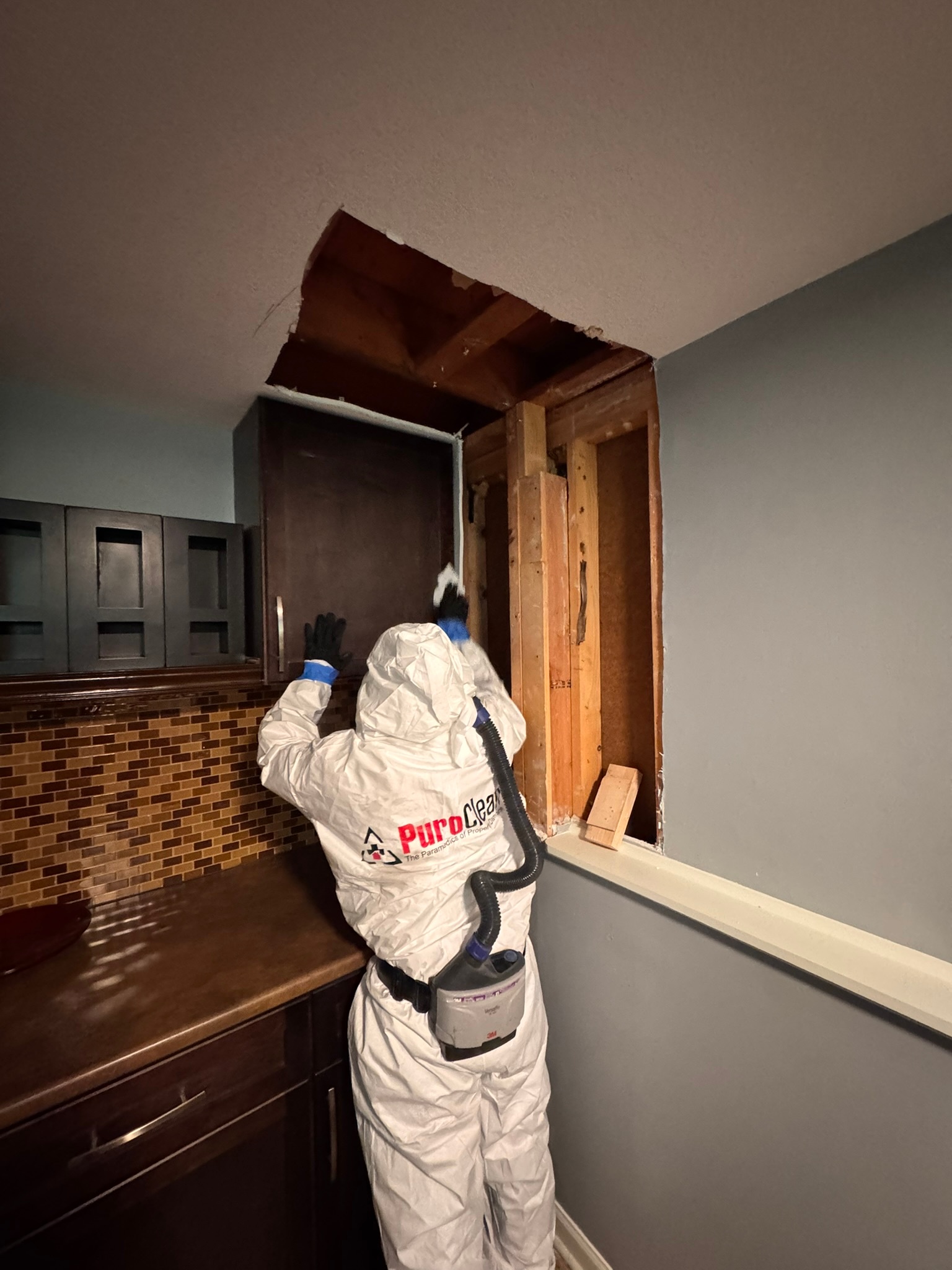
Our technicians are IICRC-certified. The IICRC (Institute of Inspection, Cleaning and Restoration Certification) sets industry standards for water damage, mold remediation and fire and smoke restoration. Certification means our team is trained on those standards, from how to measure moisture to how to set up containment.
Certification matters to us because a locally owned restoration company is only as good as the people it sends into your home. Training keeps everyone on the same page, from the technician running the extractor to the person explaining the plan at your kitchen table.
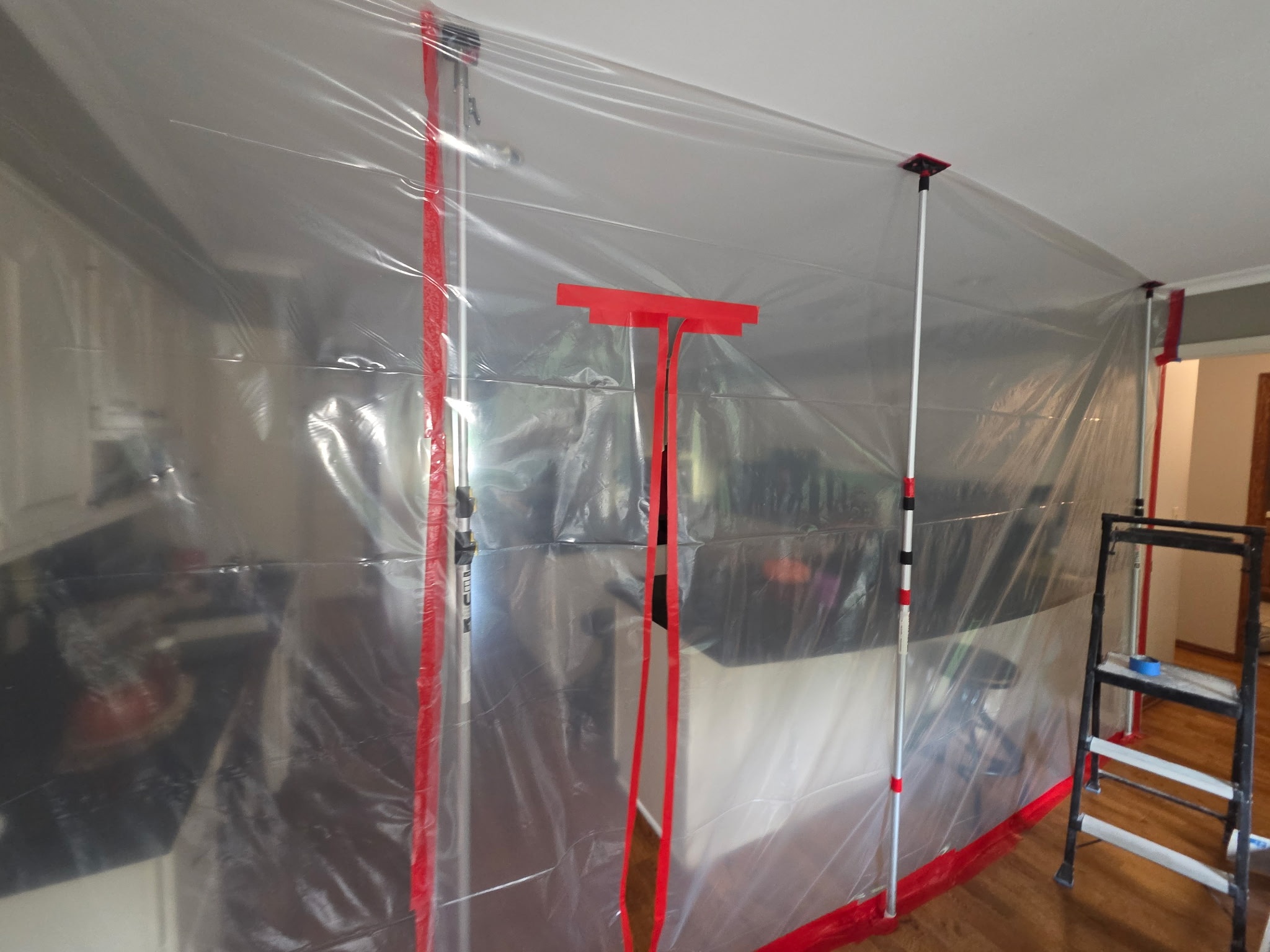
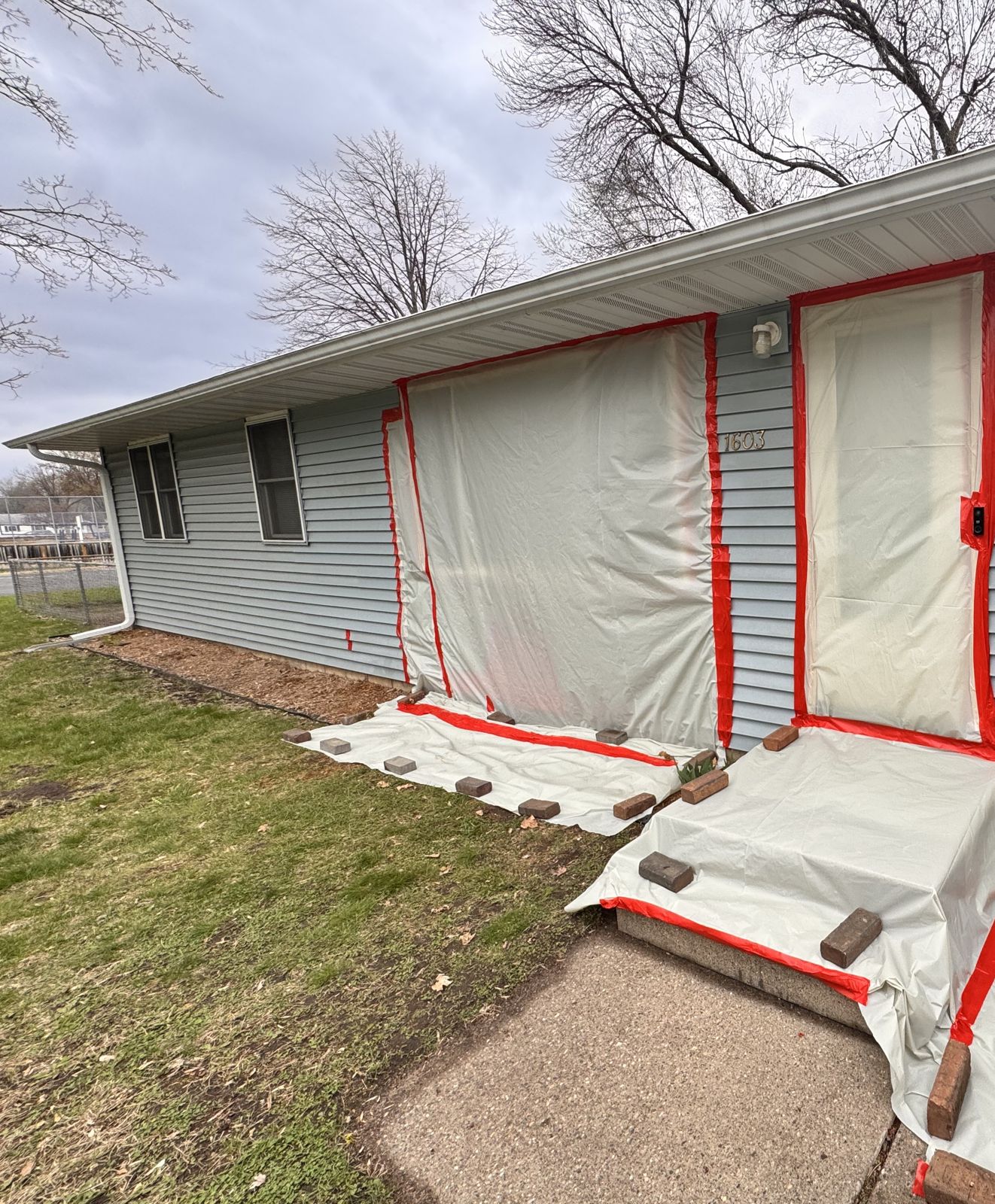
Careful also means protecting the parts of your home that were not damaged. We lay floor protection, set up containment when needed and keep you updated on what we find each day.
What to Expect When You Call
A damaged home is stressful, so we try to make the first steps clear. When you call, we ask what happened, where the damage is and whether anyone is at risk. Then we schedule a visit.
- Walkthrough and inspection. We look at the damage with you, measure moisture or smoke residue and find the source.
- A plan in plain language. We explain what can be restored, what may need to be removed and why.
- Protecting the rest of the house. Floor protection and containment keep dust and moisture from spreading.
- Daily updates. During drying and cleanup, we check progress and tell you what changed.
- Wrap-up. When materials are dry and clean, we remove equipment and talk through repairs.
Working with a locally owned restoration company also means you see familiar faces from start to finish, and you always know who to call with a question.
How to Choose a Locally Owned Restoration Company: 8 Questions to Ask
Most people pick a restoration company in the middle of a bad day. These eight questions take a few minutes on the phone, and any locally owned restoration company worth hiring should be glad to answer them.
- Where are you based? Ask for a real street address, not just a phone number. A company with an office nearby can get equipment to you and come back for checks without a long drive.
- Are your technicians IICRC-certified? Certification shows the crew has been trained on industry standards for water, mold and fire work. It is fair to ask which ones your crew holds.
- Do you answer calls 24/7? Water damage does not wait for business hours. Whether you call a national chain or a smaller locally owned restoration company, ask whether a person answers at night and on weekends.
- How do you decide what to remove? Listen for answers about moisture readings and drying, not just demolition. A good answer explains how they measure first.
- Will you document the damage? Photos, moisture readings and drying logs help you and your adjuster understand what happened and what was done.
- Do you work with insurance companies? Ask how they share documentation with your adjuster. No restoration company can promise coverage. Your policy and your insurer decide that.
- Who will be in my home? Ask who your main contact will be from start to finish.
- Will I get the plan in writing? A written scope of work shows what is planned before work begins.
PuroClean of Lakeville is happy to answer every one of these. If a company dodges them, that tells you something too.
Red Flags After a Storm: How to Spot Storm Chasers
After hail, high winds or a tornado, out-of-town crews often show up in south metro neighborhoods, knocking on doors and offering quick repairs. Some are legitimate. Others take a deposit and vanish. The Minnesota Attorney General’s Office warns homeowners about these home repair scams after disasters and lists the warning signs:
- Strangers at the door offering a cheap deal with “leftover materials.”
- No written estimate, contract or references.
- High-pressure tactics that push you to sign right away.
- A request for a large payment up front.
The Attorney General also suggests checking that a contractor is licensed with the Minnesota Department of Labor and Industry and getting every promise in writing. A locally owned restoration company has a reason to do things the right way: it will still be here next season, and its customers are its neighbors. When you hire one, you can drive past its office, look up its reviews on Google and ask friends in Lakeville or Apple Valley who they have used.
Minnesota Seasons and South Metro Homes
Minnesota weather is hard on houses, and the damage follows the seasons. Working in Lakeville, Apple Valley, Eagan, Burnsville, Prior Lake, Savage, Rosemount and Farmington every year, we see the same problems come back:
- Winter: frozen and burst pipes, especially in exterior walls, garages and crawl spaces during long stretches below zero. Ice dams that push meltwater under shingles and into ceilings.
- Spring thaw: snowmelt on frozen ground that has nowhere to go but toward the foundation. Window wells fill up and basements take on water.
- Late spring and summer: heavy thunderstorms that overwhelm sump pumps, power outages that stop them, and hail that damages roofs and lets water in.
- Humid summer weeks: damp basements and closed-up rooms where mold can start if moisture is not controlled.
- Fall: clogged gutters, disconnected downspouts and furnaces started for the first time in months.
A locally owned restoration company sees these patterns season after season. That helps us ask the right questions on the first call. Did the sump pump lose power? Is the leak on an outside wall? Has this happened before? Our guide to basement flooding in Minnesota covers many of these causes in more detail, and our Twin Cities severe weather prep guide walks through each season.
Before We Arrive: Safe First Steps
When you call, we will talk you through what to do while you wait. These general safety steps apply to most water, fire and mold situations, whichever locally owned restoration company you end up hiring:
- Put safety first. If water is near outlets, appliances or the electrical panel, stay out of it. Turn off power only if you can reach the panel from a dry spot. If you are unsure, leave it to an electrician or the utility.
- Stop the water if you can. Know where your main water shutoff is. For a burst pipe, shutting off the main is usually the fastest way to limit damage.
- Stay out of sewage. Water from a sewer backup can carry bacteria. Keep kids and pets away, and do not try to clean it up with household tools.
- Take photos and video of the damage before anything is moved or thrown away.
- Move what you can safely carry, like documents, electronics and photos, to a dry room.
- Do not run the furnace or AC fan if you suspect mold or sewage. The EPA advises against running an HVAC system that may be contaminated with mold, because it can spread spores through the house (see the EPA’s mold cleanup guidance).
After a fire, wait until the fire department says it is safe to go back inside. Ready.gov has more guidance on what to do after a home fire.
Working With Your Insurance Company
Many of our jobs involve an insurance claim, and we work with insurance companies regularly. Here is how a claim usually fits together when you hire a locally owned restoration company:
- You report the claim. Call your agent or insurer as soon as you can. They will open a claim and may assign an adjuster.
- We document as we work. Our crew takes photos, records moisture readings and keeps drying logs from the first visit. You can share all of it with your adjuster.
- Your insurer decides coverage. What is covered depends on your policy. Flood and sewer backup coverage, for example, is often separate from a standard homeowners policy. Your agent is the best person to explain your coverage.
- Keep records. Save receipts for anything you buy or spend because of the damage, and keep a simple list of damaged items.
We do not make coverage promises, and you should be cautious of any company that does. What a locally owned restoration company can do is give you clear records and explain the work, so the conversation with your adjuster is easier. For more detail, read our article on restoration insurance claims.
What Happens After the Drying Is Done
The job is not finished when the fans are turned off. Our crews move furniture off wet floors at the start of the job, and they make follow-up visits to check moisture levels until the readings show materials are dry. Only then do we pull equipment and talk about repairs.
Before you put a room back together, it helps to:
- Ask to see the final moisture readings for floors, walls and subfloors.
- Watch the area for musty smells or new stains over the next few weeks, and call if anything changes.
- Fix the cause, whether that is a sump pump, a supply line or a gutter, so it does not happen again.
That follow-through is part of what it means to hire a locally owned restoration company. We are close by if you have a question later, and we want the job to hold up long after we leave.
Restoration Help for South Metro Businesses
A locally owned restoration company is not just for homes. Offices, rentals and multi-family buildings have water and fire problems too, often with tenants to think about. A few steps help before anything happens:
- Keep a list of shutoff locations for water, gas and power in each building.
- Decide who can approve emergency work after hours.
- Save our number, (952) 377-8477, with your other emergency contacts.
- Review Ready.gov’s business preparedness guidance for a simple emergency plan.
Learn more on our commercial restoration services page.
Cost, Large Losses and Insurance: Quick Answers
Does local ownership change the cost?
Not by itself. Hiring a locally owned restoration company does not set the price. The size of the damage, the materials involved and the drying time do. Ask for a written scope so you can see what is planned.
Can you handle large losses?
Yes. We are a locally owned restoration company and part of the PuroClean network, so we can draw on national training, systems and support for bigger jobs.
Should I call my insurer or a restoration company first?
Do both as soon as you can. If water is still spreading, stopping it and starting the drying comes first, so call us and then report the claim. Your insurer decides coverage, and our photos and readings help you document the loss.
Communities We Serve
As a locally owned restoration company based in Rosemount, we serve homes and businesses across the south metro, including:
Not sure whether your address is in our area? Call and ask. A locally owned restoration company should be able to tell you right away.
Frequently Asked Questions
Why choose a locally owned restoration company?
A locally owned restoration company lives in the same community as its customers. You get people who know local homes and weather, and an owner you can reach when you have a question.
Do you work with insurance?
Yes. We work with insurance companies, and many of our jobs involve a claim. Your policy and your insurance company decide coverage, but we take photos and moisture readings as we work, which you can share with your adjuster.
How is PuroClean of Lakeville connected to the national PuroClean brand?
PuroClean of Lakeville is an independently owned and operated franchise of PuroClean. That makes us a locally owned restoration company: decisions are made here, while the PuroClean network provides training, systems and support.
Are you available after hours?
Yes. We answer calls 24/7, including nights, weekends and holidays.
Talk to PuroClean of Lakeville
If your home or business has water, fire, mold or biohazard damage, call your locally owned restoration company at (952) 377-8477. You can also send us a message. We will walk through what happened and what restoring it will take.