


24/7 Call or Text 651-329-5436
Mold Remediation Farmington MN From Downtown to the Northern Neighborhoods
Mold remediation Farmington MN from PuroClean of Lakeville is built around a simple rule: fix the moisture, then remove the mold. Our IICRC-certified team inspects, contains the work area, removes growth and handles repairs in older homes near downtown and in the newer subdivisions to the north. We are based in the Lakeville area and serve the entire south metro, Farmington included.
Need help with mold in Farmington? Call (952) 377-8477. We answer 24/7, give free estimates and work with insurance companies.
A River Town Since Before Statehood
Farmington is one of Dakota County’s oldest communities. The city’s history page quotes an 1856 newspaper describing the town “situated on the Vermillion River,” and notes it was platted in 1864, with a business district and railroad depot built a year later. The Vermillion still runs through town, and the city’s 2040 plan calls it one of the few rivers in the metro that supports trout.
Comments from the DNR in the plan note that trout streams depend on a supply of clean groundwater. For homeowners, the practical issue is wet soil: in wet springs, saturated soil presses moisture against foundation walls and keeps sump pumps busy. Low areas near the river and its tributaries stay damp longer. For mold remediation Farmington MN, that means looking closely at basements, crawlspaces and anything stored against a foundation wall.
Two Kinds of Housing, Two Kinds of Mold Remediation Farmington MN
The city’s 2040 Comprehensive Plan explains that much of the housing near downtown was built before 1950, while much of the housing in the northern part of the city was built since the 1980s. In the mid-1990s Farmington grew by 300 to 350 new homes a year, mostly suburban subdivisions closer to Lakeville.
Older homes downtown may have stone or block foundations, limited insulation and plaster walls. Ice dams, attic frost and basement seepage are the usual issues. The 1990s subdivisions are now about 30 years old, with finished basements, original water heaters and aging supply lines. We tailor mold remediation Farmington MN to the house, whether that means careful work around plaster or replacing drywall behind a basement wet bar.
Wet Springs and Sump Pumps
Newer homes in Farmington’s northern neighborhoods typically have sump pumps, drain tile and finished lower levels. In a wet spring, those pumps can run for weeks. When one fails, wears out or loses power during a storm, water reaches carpet and drywall quickly, and a small spill that is not dried properly becomes mold within days.
Older homes near downtown often lack drain tile and rely on gravity and grading, so they see more slow seepage than sudden flooding. Either way, the moisture source decides the mold remediation Farmington MN plan. We look at the pit, the discharge line, the downspouts and the floor drain. Then we remove damaged materials, clean, dry and rebuild, so mold remediation Farmington MN solves the problem instead of covering it up.
Seasonal Checks for Farmington Homes
A few minutes each season goes a long way. In fall, clear gutters and look at downspout extensions. In winter, watch for frost on attic nails and ice building at the eaves. In spring, walk the basement after thaw and heavy rain, and pour water into the sump pit to confirm the pump starts. In summer, check a hygrometer in the lower level.
If any of these checks turn up a problem, call early. Small moisture issues are inexpensive to correct, and early mold remediation Farmington MN is far less disruptive than waiting until growth spreads behind finished walls. We offer free estimates, and mold remediation Farmington MN always includes a plan to keep the area dry.
Where Mold Hides in Farmington
Downtown basements
Older foundations often let some moisture through. Paint that flakes, white mineral deposits and a damp smell are signs, and wood shelving or stored boxes against the wall can grow mold.
Attics in older houses
Limited insulation and air leaks from below let warm air reach the roof deck. Frost and ice dams follow, and the meltwater soaks insulation and sheathing.
Finished basements from the 1990s
Drywall to the floor, carpet on the slab and a bathroom in the lower level create plenty of places for a small leak to stay hidden.
Behind kitchen and bathroom cabinets
Slow drips at supply lines and drains wet the cabinet floor and wall behind it. We find these with moisture meters before opening anything.
Ice Dams, Condensation and Muggy Summers in Farmington
Ask anyone who has lived through a Minnesota March: the snow does not leave quietly. Attic heat melts roof snow, it refreezes at the eaves and water finds its way under the shingles. The Minnesota Department of Health points to ice dams, leaking roofs and condensation on windows and exterior walls as common sources of indoor moisture and mold.
Humid summers add a second round. Warm air carries moisture into cool basements, where it collects on concrete, cold-water pipes and the backs of stored boxes. MDH suggests indoor relative humidity below 60 percent most of the year and 20 to 40 percent in winter. We use those targets when planning mold remediation Farmington MN drying and prevention.
Attic Mold and Ice Dams
Attic mold usually starts with warm, moist air leaking up from the house through light fixtures, bath fans or gaps around chimneys. In cold weather that moisture frosts on the roof deck, then melts. Ice dams add water from outside. MDH recommends insulating and sealing air leaks between the attic and the house. During mold remediation Farmington MN in an attic, we remove damaged insulation, clean the sheathing and point out the leak paths to fix.
Basement Moisture and Mold
Foundation walls can let moisture through, and summer air carries more of it in. Insulating cold-water pipes, running a dehumidifier and keeping ductwork sealed all help, as EPA suggests for reducing condensation. When we rebuild after mold remediation Farmington MN, we look for ways to make the space easier to keep dry without changing how you use it.
Wet Rooms and Mold Remediation Farmington MN
A little mildew on caulk is routine cleaning. Soft drywall around a tub, a stained ceiling below a shower or a musty sink cabinet points to a leak. EPA advises venting moisture-producing appliances like clothes dryers outdoors and keeping air conditioning drip pans clean. When we do mold remediation Farmington MN in a bathroom or laundry room, we find the leak and coordinate the plumbing fix before rebuilding.
Signs You May Need Mold Remediation Farmington MN
The Minnesota Department of Health says the most practical way to find a mold problem is to use your eyes and nose. Mold can look cottony, velvety, granular or leathery, and it can be white, gray, brown, black, green or other colors. A musty or earthy smell counts as evidence too. If you see or smell mold, MDH says to assume a problem exists. Also look for water stains, peeling paint, warped trim and condensation on windows or pipes.
Finding Hidden Mold in Farmington
Hidden growth shows up as a smell, a cool or damp spot, or a health complaint before it shows up as a stain. EPA lists likely hiding places: the back of drywall and paneling, the upper side of ceiling tiles, under carpet and pad, inside ductwork and around pipes in wall cavities. We trace moisture first and open walls only where the readings point, which keeps mold remediation Farmington MN as small and tidy as it can be.
Water Damage First, Mold Second
Most mold jobs begin as water jobs that dried too slowly. EPA advises drying water-damaged areas and items within 24 to 48 hours to prevent mold growth. Fans alone rarely reach water trapped inside walls and under flooring. If you have had a leak in the last few days, call us for drying now, and we will check for early growth so mold remediation Farmington MN stays small or is not needed at all.
How Mold Remediation Farmington MN Works, Step by Step
First visit: assessment
We walk the property with you, check moisture in walls, floors and ceilings and identify where water is coming from. You get a free estimate and a plain-language scope.
Containment and protection
Before anything is removed, we isolate the work zone with plastic barriers and cover the route in and out so the rest of the building stays clean.
Removal
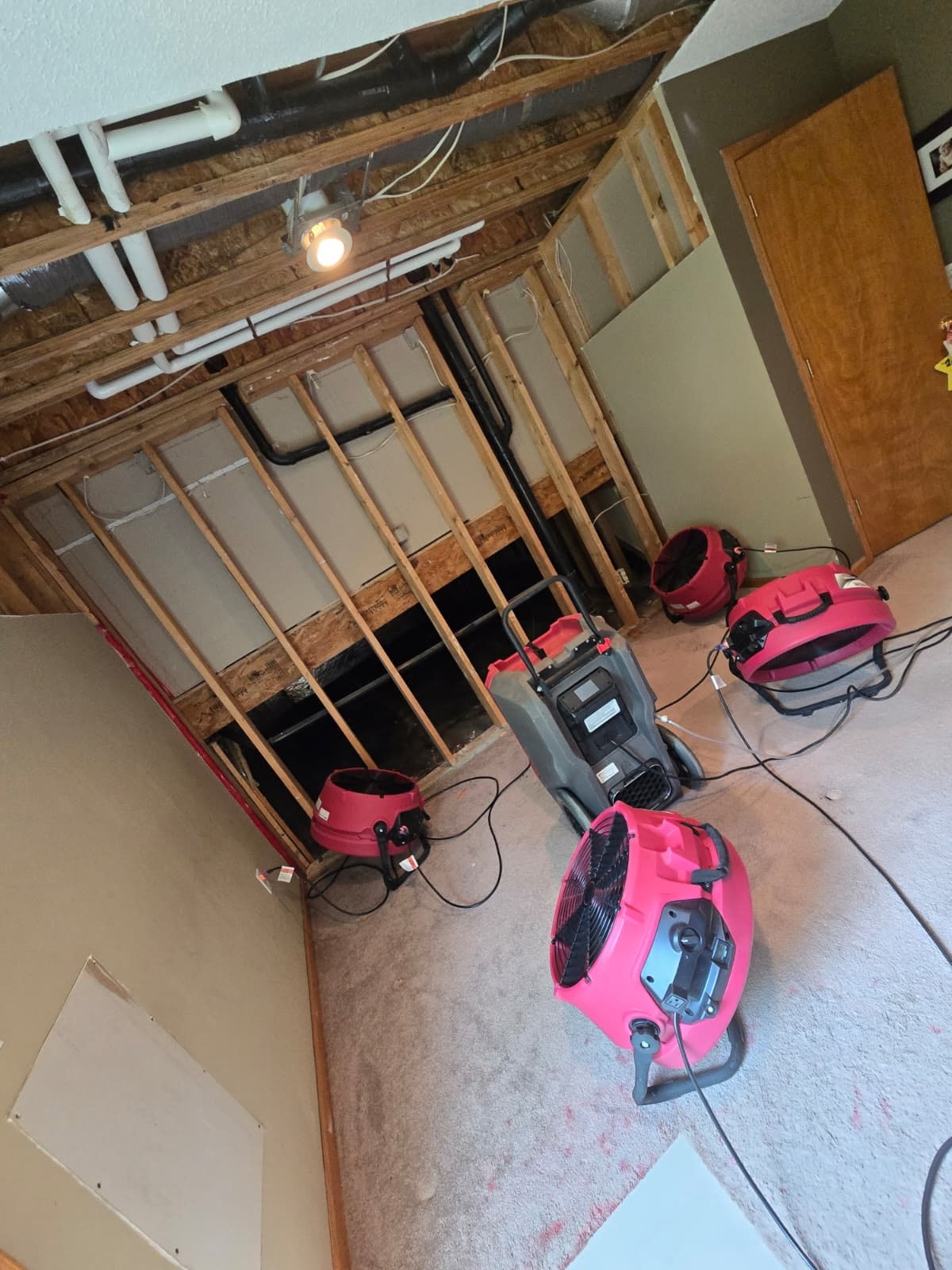
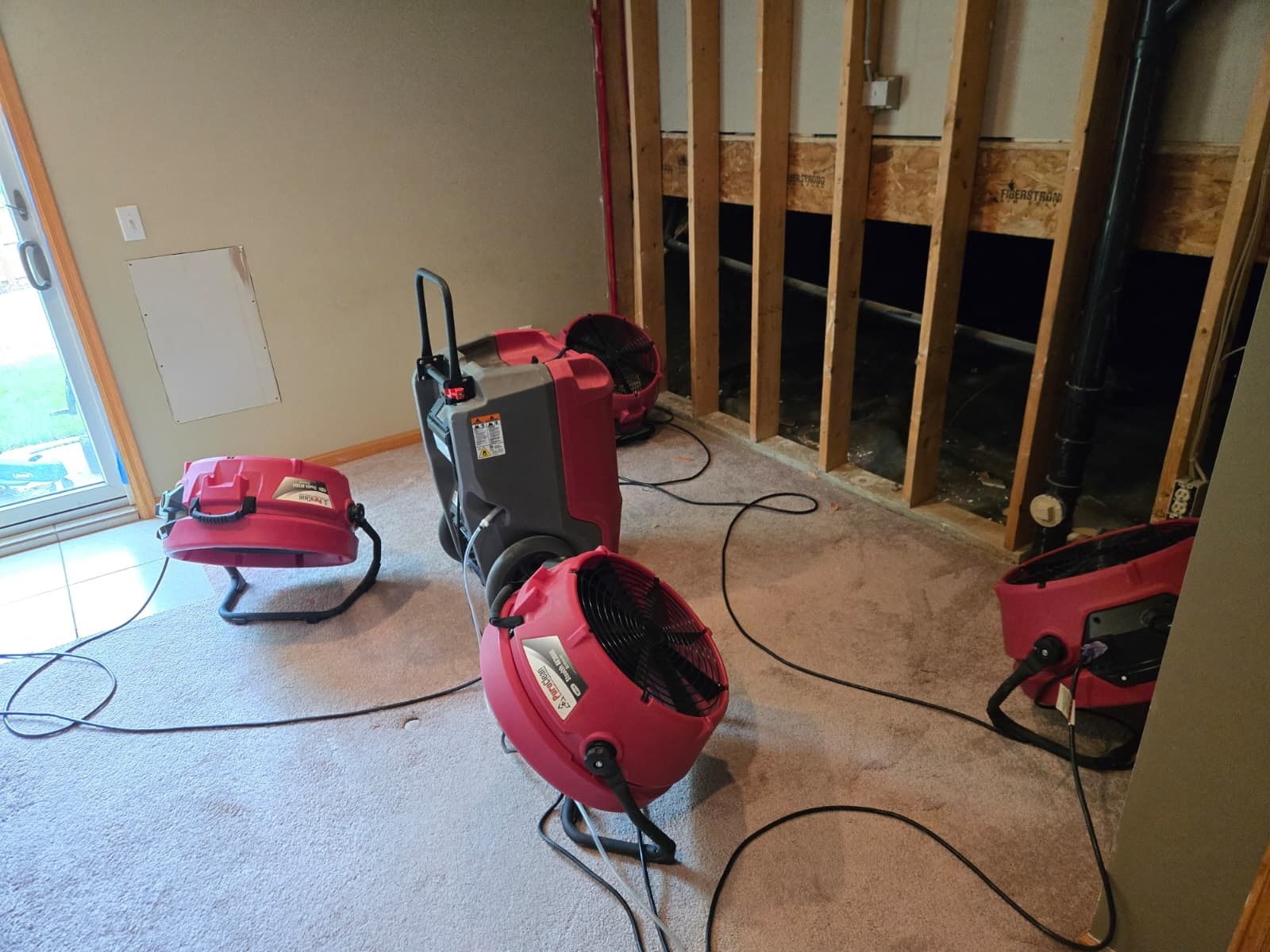
Materials that hold growth inside them, like wallboard, ceiling tile and carpet pad, come out. Solid wood framing, concrete and metal are usually cleaned in place.
Cleaning and drying
We clean remaining surfaces, collect dust and dry the structure using the latest technology, checking readings until materials reach a dry standard.
Rebuild
One team handles repairs and reconstruction, so the room is finished, not just stripped.
Removal Versus Cleaning
Not everything in a moldy room has to go. Hard, nonporous surfaces such as metal, glass, tile and sealed concrete clean up well. Solid wood framing can usually be cleaned if it is sound. Porous materials are different: EPA notes that ceiling tiles and carpet may need to be discarded, because mold grows into their crevices. We explain each recommendation before we remove anything during mold remediation Farmington MN.
How We Know the Job Is Done
MDH offers a practical test: an area should be relatively safe with regard to mold if all visible growth was removed, the surrounding areas were thoroughly cleaned and the space stays dry and free of mold odors. Before we close up walls after mold remediation Farmington MN, we confirm that materials are dry with meter readings, inspect for any remaining growth and make sure the moisture source was fixed. If you want independent verification, surface sampling by a qualified professional is one option EPA mentions.
Timeline and Living at Home
Timelines depend on how much material is affected and how wet the structure is. Removal and cleaning are often quick; drying and repairs take more time. During mold remediation Farmington MN we keep the work area sealed, so you can usually use the rest of the house, and we tell you in advance which days will be noisy.
Mold Testing: What MDH Recommends
MDH’s guidance on mold testing explains that any type of indoor mold growth should be removed, so knowing the species rarely changes the plan. Tests give a snapshot of one place at one time, and a negative result does not prove there is no problem. MDH notes that testing can be useful in specific cases, such as documenting that cleanup met expectations. For most homes, money is better spent finding and fixing the moisture.
Allergies, Asthma and Mold Remediation Farmington MN
EPA notes that people with asthma who are allergic to mold can have asthma attacks from exposure, and that mold can irritate the eyes, skin, nose, throat and lungs. If anyone in your home has health concerns, EPA suggests talking with a health professional before cleanup. During mold remediation Farmington MN, containment keeps the work area separate, and we can plan the schedule so sensitive family members are away from the noisiest, dustiest steps.
How Big Is Too Big for DIY?
Size matters. EPA’s mold and moisture guide says patches smaller than about 10 square feet can typically be handled as a do-it-yourself job, using protective gloves, eye protection and an N-95 respirator. Larger areas, extensive water damage and anything touched by sewage call for a professional who follows EPA’s remediation guidance. Whatever the size, EPA is clear that the water problem must be fixed or the mold will likely return.
First Steps When You Find Mold
Small steps help while you wait for us. Turn off the water to any leaking fixture. Leave visible growth alone rather than wiping or scrubbing it, because disturbing it puts spores in the air. Close the door to the room, set a fan to blow out an open window if the weather allows, and keep the HVAC system off if the growth is close to it. Photograph everything before it is moved. Then call (952) 377-8477 to set up mold remediation Farmington MN and a free estimate.
Business and Multi-Unit Mold Remediation in Farmington
Downtown Farmington’s older commercial buildings, plus offices, rentals and industrial sites, all benefit from early moisture checks.
Commercial properties often have more people, more equipment and less room for downtime. We work in offices, shops, rentals and multi-unit buildings and industrial and warehouse spaces, and we help restore operations quickly. Our work follows the approach in EPA’s guide for schools and commercial buildings: identify and fix the moisture, contain the area and remove what cannot be cleaned.
Paying for Mold Remediation Farmington MN
Estimates are free. If you plan to file a claim, we work with insurance companies every day, help document the claim with photos, readings and a scope of work, and can bill your insurer directly. We never promise coverage; that decision belongs to your insurer, and your agent can explain what your policy includes.
Farmington Prevention Tips
- Keep downspouts at least several feet from the foundation.
- Check the basement during spring thaw and after heavy rain.
- Use a dehumidifier in summer and empty or drain it regularly.
- Keep cardboard boxes off the basement floor.
- Insulate and seal the attic to reduce ice dams, as MDH recommends.
- Check under sinks for drips twice a year.
Related Services
Mold almost always follows water. If the source is a recent leak or flood, our water damage restoration team extracts water and dries the structure, and our Farmington water damage restoration page covers local water damage. We also offer fire and smoke damage restoration, including board-up and odor removal, and biohazard cleanup for sewage and trauma scenes. Read more about our main mold removal and remediation service, see all residential restoration services, or our commercial restoration services.
Our Commitment in Farmington
We bring the latest technology and a commitment to excellence to every job, large or small. Our IICRC-certified technicians are licensed and insured, we offer free estimates and we can bill insurance directly while helping document your claim. We are based in the Lakeville area and serve communities throughout the south metro, including Farmington.
Serving Farmington and Its Neighbors
We also serve Rosemount, Apple Valley (mold removal), Elko New Market and Hastings. See every city on our service areas page.
Mold Remediation Farmington MN FAQ
Is a damp basement normal in older Farmington homes?
Some moisture is common in older foundations, but a musty smell or visible growth is not something to live with. Controlling humidity and drainage often makes a big difference.
Can you work around plaster walls?
Yes. We open only what is needed, dry carefully and repair with materials that suit the house.
Do you offer free estimates?
Yes. Estimates are free, and we explain what we found before any work begins.
Can mold grow in winter?
Yes. MDH points to condensation on windows and exterior walls and to ice dams as common moisture sources, and both peak in cold weather. Keeping winter humidity between 20 and 40 percent, as MDH suggests, helps.
What humidity should I keep indoors?
EPA recommends keeping indoor relative humidity below 60 percent, ideally between 30 and 50 percent. MDH suggests 20 to 40 percent in winter. A simple hygrometer from a hardware store shows where you stand.
Do you work with insurance companies?
Yes. We work with insurance companies, help document claims and can bill your insurer directly. Your insurer decides coverage.
Call for Mold Remediation Farmington MN Today
Reach our team at (952) 377-8477, 24/7, or send us a message. Estimates are free.
More Restoration Services in Farmington
Mold usually starts with a water problem, and a fire can leave smoke, soot and water damage behind. Our team based in the Lakeville area also provides water damage restoration in Farmington and fire and smoke damage restoration in Farmington. Call (952) 377-8477 any time, 24/7, for a free estimate.

