


A late-fall storm blows through, and a day later you spot a tan ring on the bedroom ceiling. The roof leak may have been small, but the water didn’t stop at the shingles. It ran along the roof deck, soaked into the insulation and settled on top of the drywall. Attic insulation drying in Lanham and Bowie homes is often the part of a roof leak that people overlook. Wet insulation can hold water against the ceiling for days, long after the rain has stopped. This guide explains how to spot it, what can be saved and how drying works.
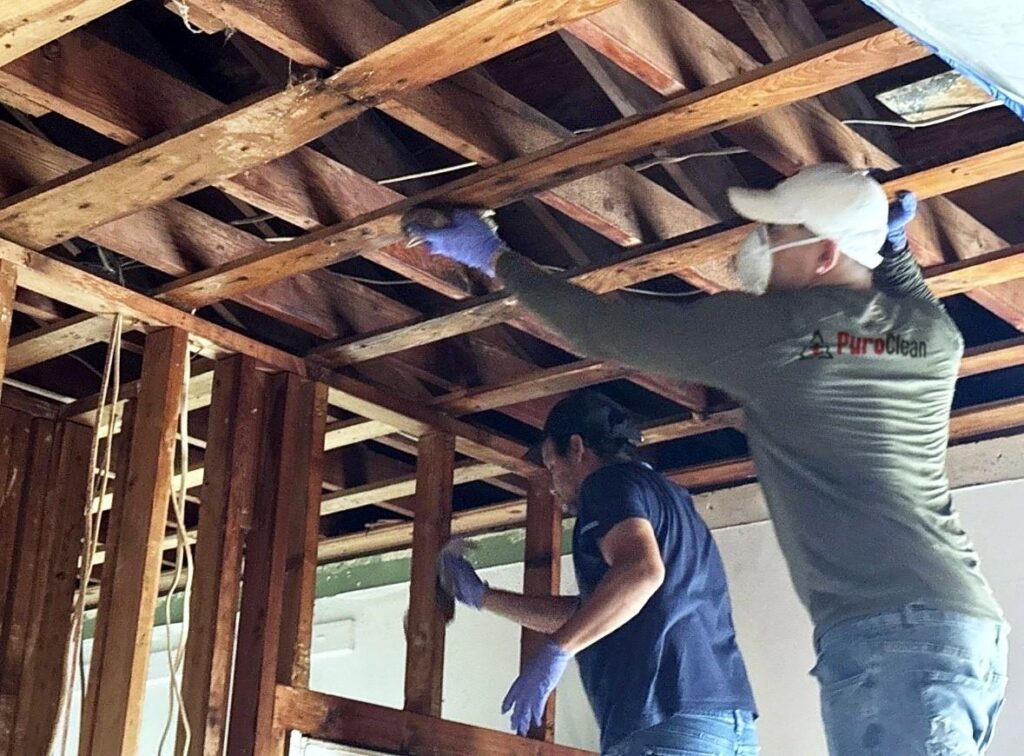
From PuroClean’s shared photo library: two workers checking ceiling joists after the drywall was taken down. This shows the kind of work involved; it was not taken at a Lanham or Bowie home.
Why Late Fall Brings Roof Leaks
Answer first: steady fall rain, wind and falling leaves all test a roof at once.
NOAA’s Upper Marlboro 3 NNW station, in Prince George’s County, has a long precipitation record. Its 1991–2020 climate normals average close to 11.9 inches of precipitation from September through November. That’s a lot of water on a roof in three months, and it often comes with wind.
Leaves add to the problem. Gutters fill up, valleys clog, and water backs up under the edge of the roof. A roof that was fine all summer can start to leak once those paths are blocked.
Where Roof Leaks Usually Start
Answer first: most leaks begin where the roof surface is interrupted.
- Flashing around chimneys, skylights and walls
- Plumbing vent boots, which can crack with age
- Valleys where two roof slopes meet
- Missing, lifted or cracked shingles after wind
- Gutters that overflow behind the fascia
- Attic vents or exhaust fan caps that weren’t sealed well
Water often travels along rafters or the roof deck before dripping. The stain on your ceiling may be several feet from where the water actually enters.
That’s why tracing a leak usually starts in the attic during or right after rain. Following the wet trail uphill along the deck often leads back to the opening. A moisture meter helps confirm what’s still wet once the surface looks dry.
Signs the Insulation Is Wet
Answer first: look for stains, smells and changes in how the insulation looks.
From inside the house:
- Brown or yellow rings on ceilings
- Bubbling or peeling paint near the ceiling line
- A sagging section of drywall
- A musty smell in upstairs rooms or closets
From the attic:
- Matted or compressed insulation that looks flattened
- Dark streaks on the roof deck or rafters
- Insulation that feels cold and damp to a gloved hand
- Water drops or rust on nails coming through the deck
If you go up, step only on joists or boards laid across them. Bring a bright light and wear a mask and gloves. Ceiling drywall won’t hold your weight.
What to Do Right Away
Answer first: protect the room below and keep the water from spreading.
1. Move furniture and electronics away from the wet ceiling.
2. Put a bucket or tarp under any drip.
3. If the ceiling is bulging with water, keep people out of the room. Don’t poke it unless you know what’s above.
4. Shut off power to any wet light fixture or ceiling fan at the breaker.
5. Photograph the ceiling, the attic and any damaged belongings.
6. Call a roofer to find and fix the leak, or to tarp the roof for now.
Fixing the roof comes first. Drying an attic while it’s still leaking won’t hold.
If a roofer can’t come right away, a temporary tarp can keep more rain out. Only a professional should go on the roof, especially when it’s wet or windy. Keep the receipt for any emergency tarping, since your insurer may ask for it.
Can Wet Insulation Be Saved?
Answer first: sometimes. It depends on the material, how soaked it got, and for how long.
Fiberglass batts that got lightly damp from a short leak can sometimes dry in place if air moves well around them. Loose-fill fiberglass or cellulose behaves differently. Cellulose soaks up water, packs down and can stay wet for a long time. Once it’s matted, it doesn’t insulate well even after it dries. Wet insulation is also heavy, and a large soaked patch can add real weight to the drywall below. That’s one reason attic insulation drying in Lanham homes often includes checking the ceiling from underneath.
As a rule of thumb, insulation that’s soaked, compressed, stained or smells musty is usually removed and replaced. Your restoration technician can take readings and help you decide.
How Attic Insulation Drying in Lanham Works
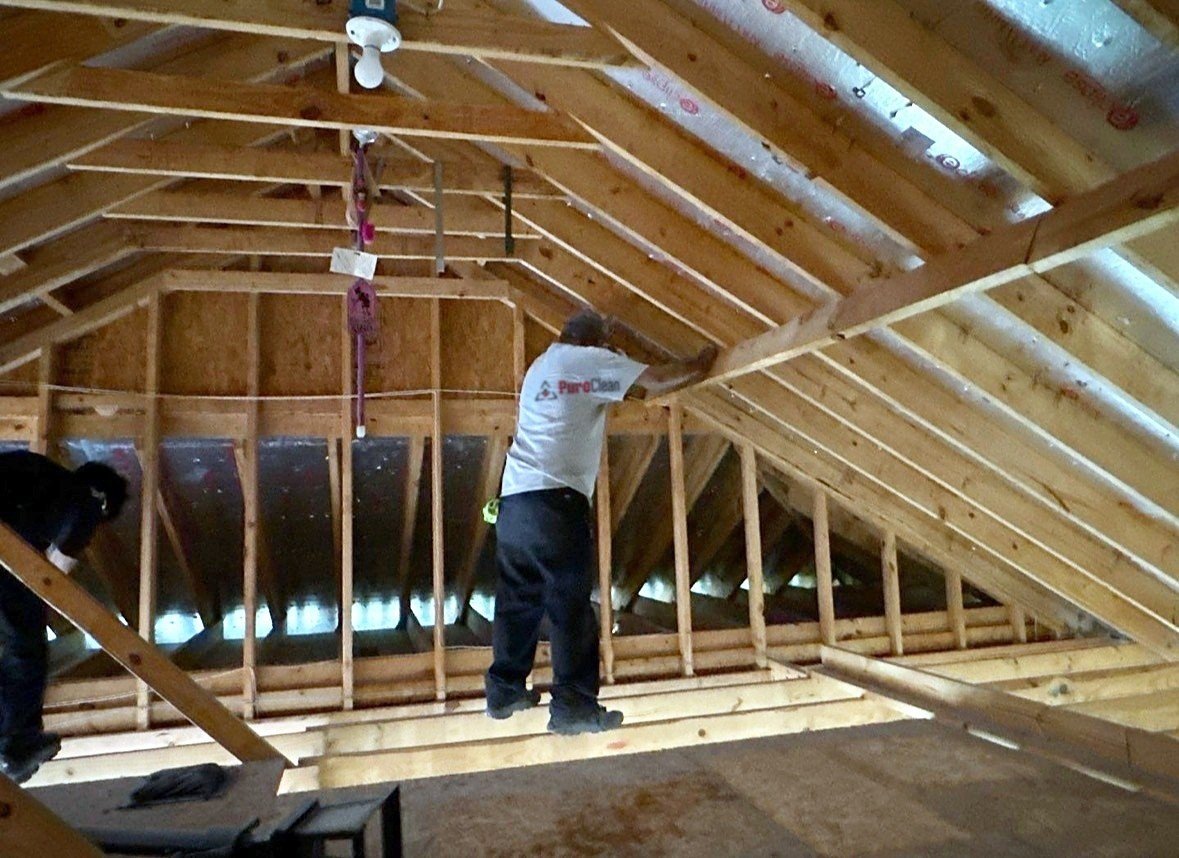
Answer first: find the wet area, remove what can’t be dried, then dry the structure and verify.
Our water damage restoration work for attics usually includes:
- Mapping moisture in the insulation, roof deck, rafters and ceiling drywall
- Removing soaked or matted insulation, often with a vacuum system for loose fill
- Setting up containment so insulation and debris don’t fall into living spaces
- Drying the roof deck, framing and ceiling with dehumidifiers and air movers
- Checking the drywall below and removing sections that are sagging or crumbling
- Rechecking moisture readings until the materials reach drying goals
Drying an attic often takes several days. Replacement insulation is installed once the roof is fixed and readings confirm the framing is dry.
In older homes, test for asbestos before removing insulation, since some older vermiculite and other materials can contain it. Lead paint is possible in houses painted before 1978, so have ceilings tested before sanding.
Watching for Mold
Answer first: the faster things dry, the lower the risk.
Wet insulation pressed against a roof deck or ceiling can stay damp long enough for mold to start. Dark spots on the sheathing, a musty smell or fuzzy growth on rafters are signs to take seriously. If growth turns up, our mold removal service follows the IICRC S520 standard for containment and cleanup.
Lanham and Bowie Homes
Answer first: both places have plenty of homes old enough for roofs to need attention.
Survey figures from the Census Bureau (ACS 2020–2024, five-year, table B25035) give the Lanham CDP a median year built of 1972 (±5). Bowie city’s median is 1982 (±2). Even in a newer house, a roof may be on its first or second replacement by now.
Older roofs may have several layers of flashing repairs, and older attics may have less insulation or mixed types. Newer homes can have complicated rooflines with valleys and dormers that collect water. Either way, attic insulation drying in Lanham and Bowie homes starts with knowing what’s up there.
Insurance and Roof Leaks
Answer first: coverage often depends on what caused the leak.
The Insurance Information Institute’s guide to which disasters homeowners insurance covers lists windstorm and hail among the perils on standard homeowners forms. The same guide says damage from a lack of maintenance isn’t covered. A roof damaged in a storm may be treated differently from a slow leak from worn flashing. Talk with your agent or adjuster before the roof or ceiling is repaired.
Preventing the Next Leak
Answer first: keep water moving off the roof and check the weak spots each fall.
- Clean gutters and downspouts after the leaves drop.
- Look at the roof from the ground with binoculars after big storms.
- Have flashing, vent boots and sealant checked by a roofer every few years.
- Trim branches that rub or drop debris on the roof.
- Peek into the attic after heavy rain, especially under valleys and chimneys.
- Make sure bath fans vent outdoors, not into the attic.
It also helps to know your roof’s age. Many homeowners keep the installer’s paperwork with the house records. If you don’t have it, a roofer can usually estimate the age from the shingles. They can also tell you roughly how much life is left.
Example: After a windy November storm, a Bowie homeowner finds a damp ring on the upstairs hallway ceiling. In the attic, the loose-fill insulation near the plumbing vent is packed down and wet. This scenario is invented to show the steps.
Frequently Asked Questions
How Long Does Attic Insulation Drying in Lanham Take?
Often several days once the roof is fixed. Soaked insulation is usually removed rather than dried.
Can I Just Let Wet Insulation Air Out?
A small, lightly damp patch of fiberglass may dry. Soaked or matted insulation usually needs to come out.
Will My Stained Ceiling Have to Come Down?
Maybe not. Drywall that’s stained but firm can often be dried and repainted. Sagging or crumbling sections are usually replaced.
Who Fixes the Roof, and Who Dries the Attic?
Usually two different trades. A roofer repairs the leak, and a restoration crew dries the attic and the rooms below.
Do You Serve Bowie as Well as Lanham?
Yes. We also serve Upper Marlboro, Washington, DC, and Prince George’s County.
Call About Attic Insulation Drying in Lanham
PuroClean Restoration Services in Lanham is owned by Ted Porter. Credentials on record: IICRC Certified, EPA Lead Safe Certified, and technician training in WRT, ASD and FRT. Phone lines stay open 24/7 at (301) 277-2755. Our base is 4720 Boston Way, Unit L, Lanham, MD 20706. We serve Lanham and Bowie, along with Upper Marlboro, Washington, DC, and Prince George’s County.