


Rowhouses pack a lot of plumbing into a narrow footprint. The water heater may sit in a tight closet under the stairs. Or it may be in a lower level that now serves as a den or rental unit. When the tank or a supply line lets go, the water has few places to spread except down and sideways. A DC rowhouse water heater leak can soak a finished lower level quickly. It can also wick into the party wall you share with next door. This guide covers how to stop the water, what to check, and how drying usually goes.
From PuroClean’s shared photo library: an air mover drying a floor in a house opened up for repairs, next to a stair railing. It’s a general example, not a Washington, DC job.
Why Rowhouses Need Extra Care
Answer first: narrow layouts, shared walls and older plumbing change how water moves.
Washington’s homes skew old. Census Bureau survey data (ACS 2020–2024, five-year, table B25035) put the District’s median year built at 1958 (±1). Table B25034 shows close to 70 percent of homes built before 1980, and about 31.5 percent built in 1939 or earlier. Table B25024 counts about 21.7 percent of housing units as single-unit attached homes, the category that includes rowhouses.
What that means for water damage:
- Water heaters and laundry often share a small lower-level space.
- Party walls are usually masonry, which can hold water and dry slowly.
- Plaster walls and old wood floors react differently than drywall and new subfloor.
- Lower levels may be finished, with carpet, built-ins and stored items close to the floor.
- Older galvanized or mixed plumbing may sit alongside newer lines.
Shut It Off Fast
Answer first: stop the water first, then cut power or gas to the heater.
1. Find the cold-water shutoff on the pipe going into the top of the water heater and turn it off.
2. If you can’t reach it, close the main water shutoff for the house.
3. For an electric heater, switch off its breaker at the panel, if you can reach it from a dry spot.
4. For a gas heater, turn the gas control to the off or pilot setting.
5. If you smell gas, leave the house and call the gas utility from outside.
6. Open a hot-water faucet upstairs to relieve pressure in the lines.
Don’t try to drain a tank that’s still hot. Let a plumber handle the heater itself. Your job is to stop the flow and protect what’s nearby.
Once the water is off, move rugs, boxes and electronics off the wet floor. Put foil or plastic under furniture legs so stains don’t transfer to the carpet. Then start soaking up what you can with towels, working from the edges in. With a DC rowhouse water heater leak, the narrow rooms mean even a modest spill can reach every wall in the space.
Water Heater or Supply Line?
Answer first: where the water is coming from tells you what failed.
Water pooling under the tank and spreading out evenly often means the tank itself is leaking. Water running down the side may come from the fittings on top or the relief valve line. A wet spot behind a toilet, sink or washer points to a supply line.
Supply lines fail in a few common ways:
- Braided lines can fray or burst, often at the crimped ends
- Older rubber washer hoses can crack with age
- Compression fittings can loosen over time
- Shutoff valves under sinks can seize or drip when finally turned
A supply-line leak can release a lot of water quickly because it’s under constant pressure. A tank leak may start slow and get worse. Some tanks fail at the bottom seam after years of sediment buildup. The drip can go unnoticed if the heater sits in a closet nobody opens. Checking the floor around it once a month takes a few seconds and can catch a slow leak early. A flashlight and a dry paper towel pressed to the floor are all you need.
What to Check Next
Answer first: look beyond the puddle, especially at walls, floors and the house next door.
- Baseboards and the lower part of walls for darkening or bubbling paint
- Wood floors for cupping, gaps or soft spots
- Carpet and pad, which can hold water far from where it started
- Built-in shelving and cabinets sitting on the floor
- Ceilings below, if the leak started on an upper floor
- The party wall, where you may see damp patches or efflorescence on brick
If you share a wall, let your neighbor know. Water can travel through masonry and show up on their side days later.
Take photos of every wet area before anything is moved, including close-ups of the failed part. Keep the old supply line or fitting if a plumber replaces it. It can help your adjuster understand what happened.
How Fast Drying Has to Happen
Answer first: the sooner materials are dry, the lower the chance of mold.
Speed matters here. The EPA’s brief guide to mold, moisture and your home advises drying wet areas and items within 24 to 48 hours. That helps keep mold from growing. Its humidity target for indoor air is under 60 percent.
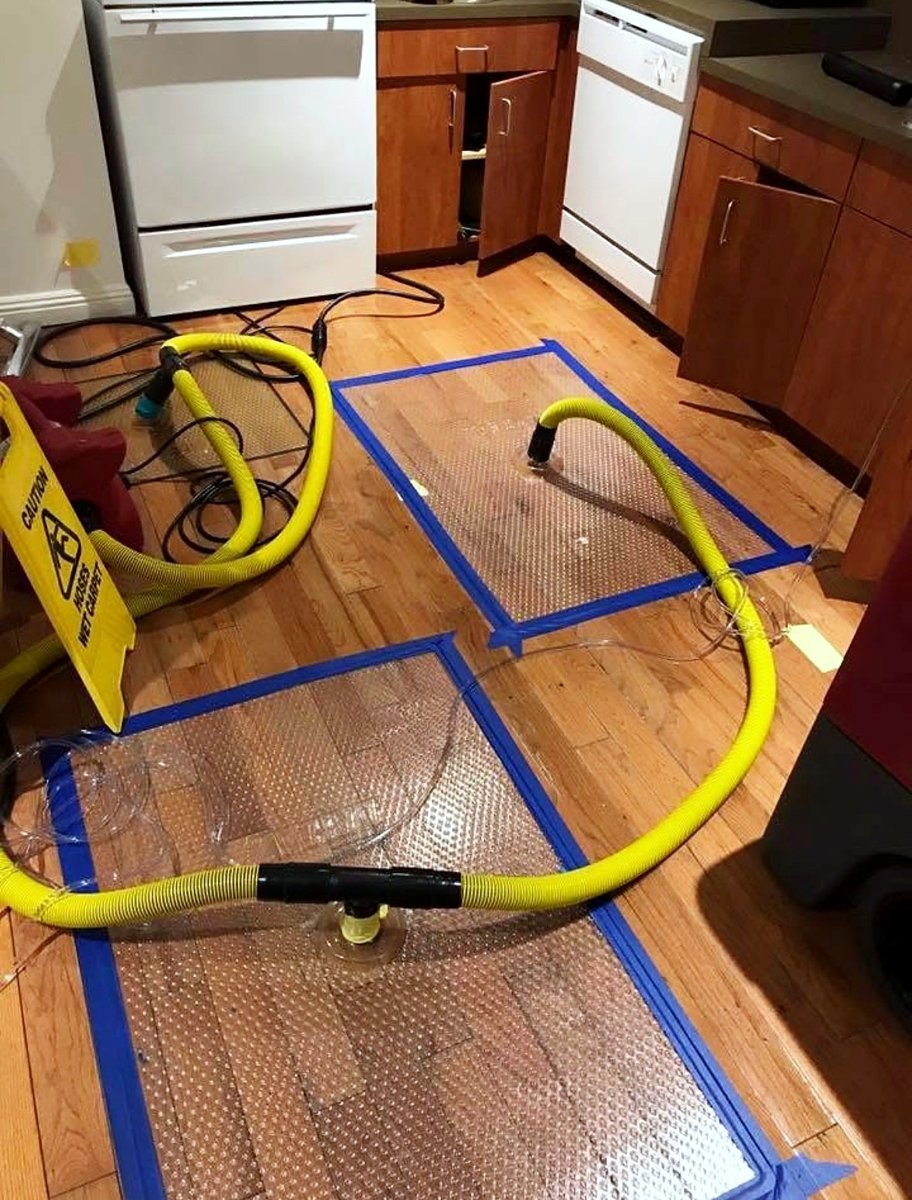
That timeline can be hard to meet in a rowhouse lower level. Masonry and plaster hold water longer than drywall, and small rooms limit airflow. That’s why professional drying uses dehumidifiers, air movers and regular moisture readings rather than fans alone.
How We Handle a DC Rowhouse Water Heater Leak
Answer first: extract, assess, dry, and verify before repairs start.
Our water damage restoration work usually follows these steps:
- Extracting standing water from floors and carpet
- Taking moisture readings in walls, floors and the party wall
- Removing wet carpet pad, baseboards or drywall where needed
- Setting up dehumidifiers and air movers sized to the space
- Protecting wood floors and plaster where they can be saved
- Checking readings daily until materials reach drying goals
- Documenting the work for your insurance claim
Drying often takes several days, and masonry can take longer. A leak from a new supply line is usually treated as clean water at first, following the IICRC S500 standard. Water that sits for a while or picks up dirt from the floor can change category.
Many rowhouses predate 1978, so lead paint testing comes before sanding or demolition. Some older plaster, floor tiles and pipe insulation can contain asbestos. Have suspect materials tested before they’re disturbed.
Insurance Basics
Answer first: sudden leaks are often covered, but the failed heater itself may not be.
Many homeowners policies treat a sudden water heater or supply-line failure differently from a slow leak that went unnoticed. The tank or hose itself is often not covered, while the water damage it caused may be. If you rent out a lower-level unit, your policy and your tenant’s renters policy may both come into play. Ask your agent or adjuster how your coverage applies before repairs begin.
Preventing the Next Leak
Answer first: a little maintenance and a few cheap parts go a long way.
- Check the water heater’s age. The label usually shows the manufacture date.
- Put the heater in a drain pan piped to a floor drain, if there’s room.
- Replace rubber washer hoses with braided ones.
- Swap out old supply lines under sinks and toilets.
- Exercise shutoff valves once or twice a year so they don’t seize.
- Consider a water leak sensor near the heater and washer.
- Make sure everyone in the house knows where the main shutoff is.
Example: A homeowner in a Washington rowhouse comes home to water across the lower-level den. The braided line to the washer has split near the fitting, and the carpet is soaked to the party wall. This scenario is invented to show the steps.
Frequently Asked Questions
How Do I Know if My Water Heater Is About to Fail?
Rust-colored water, rumbling sounds, moisture around the base and an older tank are all warning signs. A plumber can check it.
Can Plaster Walls Be Dried, or Do They Have to Come Out?
Plaster can often be dried in place. It depends on how long it was wet and whether it has started to crumble.
Who Is Responsible if the Water Reaches My Neighbor’s House?
That depends on the cause and the policies involved. Talk to your agent and let your neighbor know quickly.
How Long Will a DC Rowhouse Water Heater Leak Take to Dry?
Often several days. Masonry walls and thick plaster can take longer, and readings decide when it’s done.
Do You Serve Washington, DC?
Yes. We serve Washington, DC, along with Lanham, Bowie, Upper Marlboro and Prince George’s County. Our moisture mapping service can help find water hidden in walls and floors.
Call About a DC Rowhouse Water Heater Leak
PuroClean Restoration Services in Lanham is owned by Ted Porter. Our company credentials include IICRC Certified and EPA Lead Safe Certified, and the crew is certified in WRT, ASD and FRT. We answer 24/7 at (301) 277-2755. Visit or write to us at 4720 Boston Way, Unit L, Lanham, MD 20706. We work with homeowners in Washington, DC, Lanham, Bowie, Upper Marlboro and Prince George’s County.