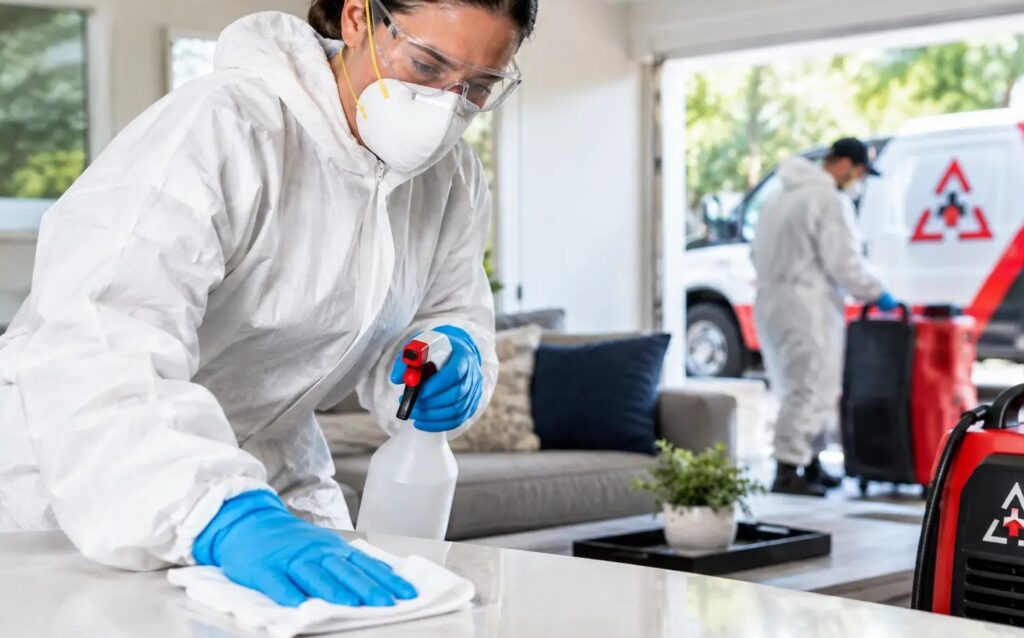
A bathroom, bedroom, vehicle, or workplace may look clean after the visible mess is gone. That does not mean it is safe to reenter. The difference between disinfection versus biohazard cleanup matters because one process reduces germs on a cleaned surface, while the other addresses hazardous material from the moment it is found through safe removal, treatment, and disposal.
For Las Vegas-area property owners, that distinction can prevent a difficult situation from becoming a health concern, a larger property loss, or a failed attempt at cleanup. The right response depends on what happened, which materials were affected, and whether contamination has traveled into porous surfaces, HVAC pathways, flooring layers, or concealed areas.
What Disinfection Is Designed to Do
Disinfection is the application of an appropriate disinfectant to a properly cleaned surface to kill or inactivate specified microorganisms. EPA-registered disinfectants are used according to their label directions, including the required contact time. If a product is wiped away too quickly or applied over dirt and organic residue, it may not perform as intended.
This service is often appropriate after a relatively contained contamination event, such as illness in a household, a water loss involving clean water, or a precautionary cleaning of frequently touched hard surfaces. Technicians first remove soil and residue, then apply the selected product to reachable, nonporous surfaces such as counters, tile, sealed fixtures, door handles, and equipment exteriors.
Disinfection does have limits. It does not remove blood, bodily fluids, drug residue, sewage solids, sharps, or other hazardous material. It also cannot reliably make a carpet pad, unsealed grout line, upholstered furniture, or absorbent drywall safe if contamination has soaked into it. Those materials may need specialized cleaning, removal, or replacement.
Disinfection Versus Biohazard Cleanup: The Core Difference
Biohazard cleanup is a controlled remediation process for conditions involving potentially infectious materials or hazardous biological contamination. It may be needed after an unattended death, trauma, crime scene, suicide, sewage backup, animal waste event, hoarding condition with biological contamination, or certain drug-related incidents.
The work begins with assessment and containment, not a spray bottle. Trained technicians identify affected areas, determine which materials can be cleaned and which must be removed, and establish procedures to prevent cross-contamination. They use appropriate personal protective equipment, controlled work practices, specialized tools, and regulated waste handling methods.
Disinfection is often one step within biohazard cleanup, but it is not the entire job. A complete response may include source removal, detailed cleaning, disinfection, deodorization, removal of unsalvageable porous materials, and documentation of the work performed. The objective is not to make the space look better. It is to return the affected area to a safe, sanitary condition while protecting occupants and anyone working in the property.
When Standard Disinfection May Be Enough
A professional disinfection service may be the practical choice when contamination is limited, visible material has already been safely addressed, and affected surfaces are nonporous and accessible. For example, a small illness-related incident on a tile floor or sealed countertop may require thorough cleaning followed by proper disinfection.
The situation changes when there is uncertainty about what is present or where it traveled. Fluids can migrate beneath flooring, seep into baseboards, enter subflooring, or wick into carpet backing and padding. In a dry climate like Southern Nevada, odors and staining can sometimes be less obvious after time has passed, but hidden contamination can remain inside materials.
If the incident involves a significant amount of blood or bodily fluid, sewage, unknown residue, needles or sharps, decomposition, or drug-related contamination, do not treat it as a routine disinfecting task. Keep people and pets away from the area and arrange for trained remediation.
Why Biohazard Events Require a More Controlled Process
The greatest risk in a biohazard event is often not the surface people can see. It is the material that has moved into cracks, porous contents, adjacent rooms, or building assemblies. Removing only the visible evidence can leave behind odor, bacteria, pathogens, or residue that continues to affect the property.
A professional biohazard team evaluates the scene methodically. That can include identifying affected materials, isolating the work area, removing contamination using established procedures, treating structural surfaces, and addressing odor at its source. Depending on the event, technicians may use specialized extraction equipment, HEPA filtration, ATP or other verification methods when appropriate, and odor-control technologies.
Waste handling is another major difference. Materials contaminated with blood, bodily fluids, or other potentially infectious substances cannot simply be placed in ordinary household trash. Proper containment, transport, and disposal practices help protect everyone who comes into contact with the material after it leaves the property.
Sewage, Trauma, and Fentanyl Are Not the Same Type of Loss
Biohazard cleanup is not one uniform service. Each event has different hazards and recovery requirements.
Sewage backups can introduce bacteria and viruses into flooring, cabinets, wall cavities, and belongings. Fast extraction and removal of affected porous materials may reduce the extent of damage, but all impacted areas still need careful cleaning and disinfection. Structural drying also matters. Even after sewage has been removed, trapped moisture can create conditions for mold growth.
Trauma and unattended death scenes require exceptional care for both the property and the people involved. Technicians work discreetly, protect privacy, and address affected materials without asking families or employees to take on an unsafe, emotionally overwhelming task.
Fentanyl-related recovery requires specialized assessment and protocols because ordinary cleaning products and household methods may not be sufficient. A professional team can determine the appropriate scope of work, manage affected materials, and guide the property owner through safe next steps.
What Property Owners Should Do First
After discovering a suspected biohazard, the safest immediate action is usually to limit access. Do not touch unknown substances, attempt to clean sharps, run fans through the area, or move contaminated contents through clean portions of the property. These actions can spread contamination and make restoration more complicated.
If there is an immediate threat to life or safety, contact emergency services first. Once the scene has been released and it is safe to begin remediation, document the affected area from a distance if needed for insurance purposes. Avoid close-up handling of contaminated materials.
For landlords, property managers, and business owners, quick action also helps protect operations and reduce secondary damage. A contained response can prevent employees, tenants, customers, or vendors from entering an unsafe space. It can also preserve more of the building when water, sewage, odor, or contamination is addressed before it spreads.
Choosing the Right Level of Help
The decision is not simply whether a room needs to be cleaned. Ask whether hazardous material is present, whether fluid or residue reached porous materials, whether there is a risk of exposure, and whether regulated waste or specialized disposal is involved. If the answer to any of those questions is yes, biohazard remediation is generally the safer path.
A qualified restoration provider should explain the scope in plain language. You should understand what will be cleaned, what may need to be removed, how the area will be contained, and what steps are being taken to protect the rest of the property. In insurance-related losses, clear documentation can also help support the claims process.
PuroClean of East Las Vegas provides 24/7 emergency response for biohazard, trauma, sewage, and specialized disinfection needs. Certified technicians can assess the conditions, use appropriate EPA-registered products and remediation procedures, and help guide property owners through a stressful recovery without adding uncertainty.
When a situation feels too serious for ordinary cleaning, trust that instinct. Securing the area and getting an informed professional assessment can protect the people who matter most while giving your property a clearer path back to normal.