 PuroClean of Lawrenceville
Many homeowners assume that once the fire is out, the damage stops. Unfortunately, that’s far from the truth. In most cases, smoke damage continues to deteriorate surfaces, corrode materials, and contaminate the air long after the fire is gone.
When a fire occurs in your Lawrenceville home, the immediate shock can be overwhelming. Flames might be extinguished in hours, but the aftermath can last for months — affecting your home, your health, and your peace of mind.
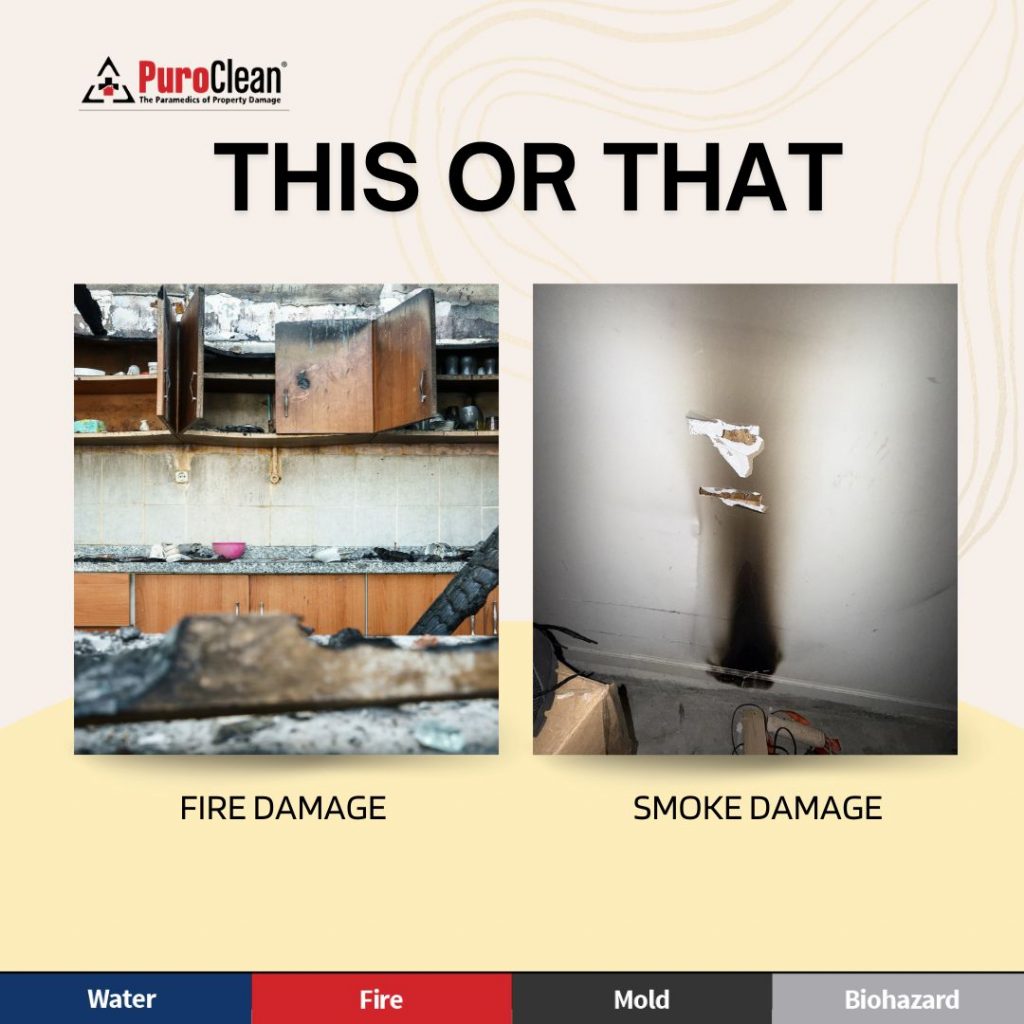
To recover your property fully, it’s crucial to understand the difference between fire damage and smoke damage, how they interact, and how professionals like PuroClean of Lawrenceville can restore your home quickly and safely.
Table of Contents
🔥 1. What Is Fire Damage?
Fire damage refers to the direct destruction caused by flames and intense heat. During a fire, materials undergo a rapid chemical change — typically combustion — which alters or completely destroys their structure.
The severity of fire damage depends on several factors:
- The temperature of the flames
- The duration of the fire
- The materials burned
- The method used to extinguish it
In a home fire, common materials such as wood, plastic, fabrics, and insulation ignite easily and burn at varying rates, releasing toxic gases and generating massive heat.
Types of Fire Damage
- Structural Damage – Beams, joists, and supports can weaken or collapse entirely under heat stress.
- Surface Damage – Charring, blistering, and bubbling occur on walls, ceilings, and floors.
- Electrical Damage – Melted wiring and damaged circuit panels pose ongoing fire risks.
- Secondary Water Damage – Water from firefighting efforts can flood interiors, leading to mold growth if not dried properly.
Common Signs of Fire Damage
- Blackened, charred walls or ceilings
- Cracked or warped flooring
- Melted plastic and burned insulation
- Persistent burnt odor
- Debris and soot accumulation
Even a small fire — like one confined to a kitchen — can leave serious structural and cosmetic issues behind.
💨 2. What Is Smoke Damage?
Unlike fire damage, smoke damage results from the byproducts of combustion rather than direct contact with flames. Smoke consists of fine particles (soot), vapors, and gases that travel far beyond the fire’s origin point.
These microscopic particles penetrate porous materials such as wood, drywall, fabric, and insulation, leaving behind discoloration, odors, and harmful residues.
Types of Smoke Damage
- Dry Smoke Residue – From fast, high-heat fires (paper or wood). It’s powdery and easy to clean but spreads widely.
- Wet Smoke Residue – From slow, smoldering fires (rubber or plastic). It’s sticky, greasy, and carries a pungent odor.
- Protein Residue – From kitchen fires. Invisible but leaves a strong, lingering odor and yellowish film.
- Fuel or Oil Soot – Less common in homes but can occur from furnace puff-backs, leaving dense, dark stains.
How Smoke Travels
Smoke moves through air currents, meaning it can infiltrate spaces the fire never touched. It’s common to find smoke residues in HVAC systems, behind walls, inside closets, or on upper floors.
Because of this, even areas that look “untouched” may need professional cleaning to ensure the home is safe and odor-free.
⚠️ 3. Why Smoke Damage Is Often More Widespread
In Lawrenceville, many homeowners are surprised to find that the smoke damage extends far beyond the burn site. That’s because smoke behaves differently than flames — it floats, seeps, and settles in hidden spaces.
The Science Behind Smoke Spread
- Temperature gradients push hot smoke upward into attics and vents.
- Air pressure differences draw smoke into wall cavities and insulation.
- Air conditioning and heating systems circulate soot particles throughout the home.
If left untreated, these residues continue to react with air moisture, forming corrosive acids that eat away at metals, finishes, and electronics.
Health Hazards of Smoke Damage
- Respiratory irritation from fine soot particles
- Headaches and nausea due to carbon monoxide and other chemicals
- Allergic reactions in sensitive individuals
- Long-term exposure risks such as aggravated asthma or chronic bronchitis
That’s why professional smoke remediation is critical — surface cleaning alone isn’t enough.
🧱 4. Comparing Fire Damage and Smoke Damage
Although both types of damage occur during a fire event, their effects — and required restoration methods — differ dramatically.
| Aspect | Fire Damage | Smoke Damage |
|---|---|---|
| Cause | Direct contact with flames and heat | Residue from combustion gases |
| Visible Damage | Charred, melted, or destroyed materials | Yellowing, discoloration, and soot film |
| Primary Concern | Structural safety | Air quality and contamination |
| Odor | Burnt material smell | Persistent, acrid smoke odor |
| Restoration Focus | Demolition, rebuilding, and drying | Cleaning, deodorization, and air filtration |
🧰 5. The PuroClean of Lawrenceville Restoration Process
When disaster strikes, PuroClean of Lawrenceville uses a comprehensive, science-based approach to restore your property. Our technicians are trained under IICRC (Institute of Inspection Cleaning and Restoration Certification) standards — ensuring your home is safe, clean, and structurally sound.
Step 1: Rapid Response and Assessment
We arrive on-site immediately to secure the property, evaluate structural safety, and assess both visible and hidden damage using moisture meters and thermal imaging cameras.
Step 2: Emergency Board-Up and Tarping
Openings, broken windows, and exposed roofing are sealed to prevent weather damage, theft, or animal intrusion.
Step 3: Debris and Fire Residue Removal
All unsalvageable materials — including drywall, flooring, and insulation — are removed to prepare for deep cleaning and reconstruction.
Step 4: Smoke and Soot Cleanup
Using HEPA vacuums, chemical sponges, and dry cleaning methods, our technicians remove soot particles from every surface — even from inside HVAC ducts and attics.
Step 5: Odor Elimination and Air Purification
We use advanced technology such as:
- Thermal fogging – recreates the fire’s conditions to neutralize odors at a molecular level.
- Ozone treatment – breaks down odor molecules in the air.
- Hydroxyl generators – safe, natural odor removal suitable for occupied spaces.
Step 6: Water and Moisture Mitigation
Water from firefighting efforts is extracted, and industrial dehumidifiers prevent mold growth.
Step 7: Deep Cleaning and Sanitization
Walls, floors, and surfaces are cleaned using EPA-approved solutions to remove contaminants and restore indoor air quality.
Step 8: Restoration and Reconstruction
Finally, our team rebuilds and repairs — from drywall and flooring replacement to repainting and final finishing touches.
Your home isn’t just repaired — it’s restored to pre-loss condition.
🧯 6. Insurance Coverage for Fire Damage and Smoke Damage
Most homeowners insurance policies in Lawrenceville and Gwinnett County cover both fire and smoke damage — but the claims process can be complex.
At PuroClean of Lawrenceville, we help you navigate every step:
- Documenting all damage with photos and itemized reports
- Working directly with your insurance adjuster
- Providing accurate repair estimates and progress updates
Our goal is to ensure you get full coverage and a seamless restoration experience.
🌤️ 7. Preventing Future Fire Damage and Smoke Damage
Prevention starts with awareness. Here are practical, locally relevant tips to protect your Lawrenceville home year-round:
Electrical Safety
- Replace worn cords and avoid overloading outlets.
- Have an electrician inspect older homes in downtown Lawrenceville or Grayson.
Kitchen Safety
- Never leave cooking unattended.
- Keep a fire extinguisher nearby and know how to use it.
Heating Safety
- Clean chimneys before winter.
- Keep space heaters at least three feet from flammable materials.
Outdoor and Seasonal Tips
- Store firewood and grills safely away from the home.
- Avoid burning debris during dry, windy conditions.
Install and Test Alarms
- Smoke detectors save lives — test them monthly.
- Replace batteries twice a year (a great habit during daylight savings changes).
💡 8. Common Myths About Fire and Smoke Damage
Myth 1: “If it doesn’t look burned, it’s fine.”
➡ False. Smoke and soot can penetrate deep into walls and insulation, causing hidden damage.
Myth 2: “Air fresheners will remove smoke odors.”
➡ False. Odor neutralization requires molecular-level treatment — not masking.
Myth 3: “Cleaning with soap and water is enough.”
➡ False. Many residues are acidic and can smear or stain surfaces permanently if not handled professionally.
Myth 4: “Only large fires cause smoke damage.”
➡ False. Even a small kitchen fire can spread soot and odors throughout your entire HVAC system.
❤️ 9. Why Homeowners Trust PuroClean of Lawrenceville
PuroClean isn’t just another restoration company — it’s a community-based partner you can rely on. Owners Jiselle and Will Severe lead the Lawrenceville team with a commitment to integrity, transparency, and compassion.
Why Choose Us
- 24/7 emergency response — we arrive when you need us most.
- Certified professionals trained in fire and smoke restoration.
- Advanced technology for deep cleaning and odor removal.
- Local expertise — we understand Lawrenceville’s climate, housing structures, and community needs.
When the smoke clears, we’re there to restore your property — and your peace of mind.
🚨 10. When to Call for Help
If your home has suffered any level of fire or smoke exposure, don’t wait.
Even minor damage can become a serious health hazard if left untreated.
Call PuroClean of Lawrenceville at (770) 810-5499 for expert fire and smoke damage restoration in:
Lawrenceville, Grayson, Snellville, Lilburn, Suwanee, and surrounding Gwinnett County communities.
We’re ready 24/7 to respond, restore, and rebuild — helping you move forward faster.

 PuroClean of Lawrenceville