 PuroClean of Layton
Attic mold in Layton rarely begins during winter and rarely begins with a roof leak or obvious water intrusion. Instead, it often develops silently as warm, moisture-laden indoor air rises into cold attic spaces and condenses on roof decking and framing. Because this process occurs out of sight, many homeowners are unaware of the problem until mold has already affected insulation, air quality, and structural materials.
Winter is the most active season for attic condensation in Layton homes because houses are sealed tightly for warmth, ventilation is reduced, and moisture from everyday activities accumulates indoors. Over time, that moisture migrates upward, condenses on cold attic surfaces, and creates ideal conditions for mold growth.
In this 2026 guide, PuroClean of Layton explains why attic condensation is one of the most common winter mold triggers, how it develops without leaks, and the five most dangerous ways it impacts Layton homes when left unaddressed.
Table of Contents
Attic Mold: Why Winter Condensation Is the Primary Trigger
Attic mold in Layton inspections performed during winter consistently trace growth back to condensation rather than active leaks. When warm indoor air reaches a poorly ventilated attic and contacts cold roof surfaces, condensation forms repeatedly, a mechanism widely documented by the U.S. Department of Energy as a leading cause of winter moisture problems in attics. Once moisture is present, mold can begin growing within 24 to 48 hours under the right conditions, as confirmed by the Environmental Protection Agency.
By January and February, this moisture cycle has often repeated for weeks, allowing mold colonies to establish themselves unnoticed.
1. Warm Indoor Air Continuously Feeds Attic Condensation
One of the primary reasons attic mold Layton happens is due to the problems homeowners encounter during winter is the steady rise of warm indoor air into attic spaces. Daily activities such as cooking, bathing, and heating generate moisture that naturally moves upward due to pressure differences inside the home.
This upward movement, commonly referred to as stack effect, allows moist air to escape through ceiling penetrations and attic access points, a process explained by the U.S. Department of Energy as a major contributor to attic moisture. When this air meets cold roof decking, condensation forms and repeats daily, even without visible leaks.
Over time, small amounts of condensation accumulate and support mold growth across large attic areas.
2. Inadequate Attic Ventilation Traps Moisture
Another significant contributor to attic mold Layton inspections reveal is poor attic ventilation. Without sufficient airflow, moist air becomes trapped and condensation lingers on cold surfaces.
Inadequate ventilation increases indoor humidity and promotes mold growth in enclosed spaces like attics, as noted by the Environmental Protection Agency. During winter, vents may also be partially blocked by snow or ice, further reducing airflow and worsening moisture retention.
When moisture cannot escape, mold growth accelerates quietly behind insulation and roof sheathing.
3. Condensation Saturates Insulation and Lowers Thermal Performance
As condensation continues, insulation becomes damp, which reduces its effectiveness and creates additional mold risk. Wet insulation holds moisture against wood framing and roof decking, prolonging damp conditions.
Moisture-laden insulation loses thermal performance and promotes microbial growth, a problem highlighted by the U.S. Department of Energy when insulation is exposed to persistent humidity. As insulation performance drops, attic temperatures remain colder, increasing condensation frequency and compounding the problem.
This hidden cycle allows attic mold to spread extensively before any interior warning signs appear.
4. Mold Spores Migrate Into Living Spaces
One of the most serious risks associated with attic mold Layton homeowners face is indoor air contamination. Mold spores do not remain confined to the attic; they migrate into living spaces through ductwork, ceiling gaps, and pressure differentials.
Mold spores can become airborne and trigger respiratory irritation, allergy-like symptoms, headaches, and asthma flare-ups, particularly when HVAC systems circulate air continuously, as explained by the Centers for Disease Control and Prevention. During winter, when heating systems run frequently, spores are redistributed throughout the home.
Homeowners often experience health symptoms long before realizing the attic is the source.
5. Structural Materials Weaken Before Mold Is Visible
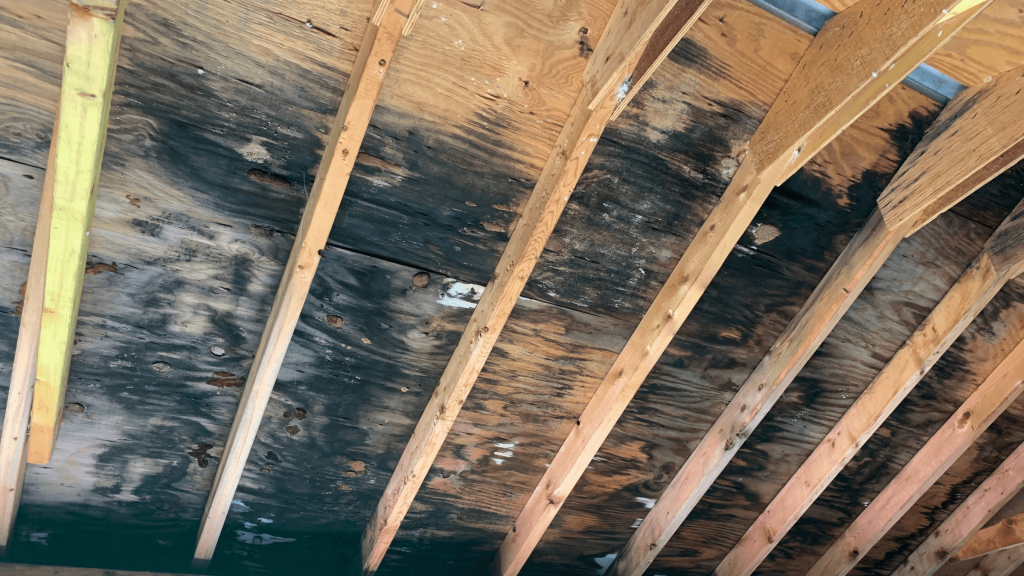
Over time, condensation and mold growth weaken roof decking, rafters, and attic framing. Wood exposed repeatedly to moisture becomes susceptible to decay and structural compromise.
Prolonged moisture exposure can deteriorate building materials even without flooding or leaks, as outlined by the Federal Emergency Management Agency. By the time visible staining or musty odors appear, damage to structural components may already be underway.
This delayed discovery is why attic mold remediation is often more extensive than homeowners expect.
Why Layton Homes Face Higher Winter Attic Mold Risk
Layton’s winter climate creates ideal conditions for attic condensation due to cold nights, frequent temperature swings, and sealed indoor environments. Homes with older insulation, limited air sealing, or obstructed vents are particularly vulnerable.
Regions that experience repeated freeze–thaw patterns see higher rates of condensation within building assemblies, especially attics, a trend documented by the National Weather Service. These climate factors make attic mold Layton homeowners encounter during winter far more common than in milder regions.
FAQ‘s
Attic mold in winter is most often caused by condensation forming when warm indoor air meets cold roof surfaces, a process described by the U.S. Department of Energy.
Attic mold can develop without a roof leak because condensation alone provides sufficient moisture for growth, according to the Environmental Protection Agency.
Mold can begin growing within 24 to 48 hours after moisture exposure under the right conditions.
Attic mold can affect indoor air quality and trigger respiratory symptoms, as explained by the Centers for Disease Control and Prevention.
How PuroClean of Layton Addresses Attic Mold
When attic mold Layton homeowners suspect becomes a concern, professional evaluation is essential. PuroClean of Layton performs winter-specific inspections that identify condensation sources, moisture patterns, and hidden mold growth using infrared moisture detection and attic assessments.
All remediation recommendations follow IICRC S520 Mold Remediation Standards established by the Institute of Inspection, Cleaning and Restoration Certification, ensuring safe, thorough, and defensible outcomes focused on both removal and prevention.
What Homeowners Should Do If Attic Mold Is Suspected
If attic mold is suspected, homeowners should avoid disturbing insulation, limit HVAC circulation until inspection, document odors or health symptoms, and contact PuroClean of Layton at (801) 513-2232 promptly. Early intervention significantly reduces remediation costs and protects indoor air quality.
Attic Condensation Is a Winter Mold Warning Sign
attic mold Layton homeowners encounter in winter is rarely sudden. It develops gradually as condensation cycles repeat and moisture remains trapped above living spaces.
Recognizing this hidden process allows homeowners to act before mold spreads into insulation, framing, and indoor air. PuroClean of Layton is the trusted local expert for attic mold inspections, remediation, and winter moisture control.
To schedule an attic mold inspection, call PuroClean of Layton at (801) 513-2232.


 PuroClean of Layton