


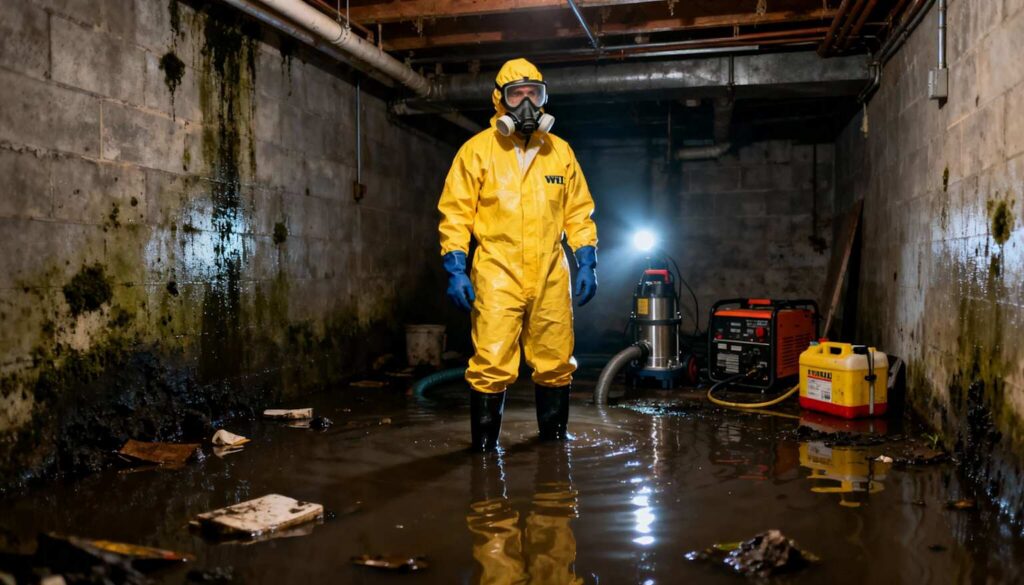
A sewage backup in a basement, bathroom, or laundry room is one of the most stressful situations a homeowner can face. It also carries serious health risks if it isn’t handled correctly.
1. Recognize the warning signs
Common signs of a sewage issue include:
- Strong, unpleasant odors coming from drains or the basement
- Toilets gurgling when other fixtures are used
- Multiple drains backing up at the same time
- Visible black or brown water coming up from floor drains
If you see or smell these signs, treat the area as contaminated.
2. Protect your family
Sewage water can contain bacteria, viruses, and other harmful contaminants. As soon as you realize you have a backup:
- Keep children and pets away from the affected area.
- Avoid contact with the water and do not track it through the house.
- Open windows if possible to improve airflow and reduce odors.
Do not try to “bleach it and move on.” Household cleaners are not enough for this type of contamination.
3. Call professionals immediately
A sewage backup is not the time for DIY. Call a restoration company experienced in sewage cleanup in the Syracuse/Liverpool area. They should:
- Use proper protective gear and containment
- Extract contaminated water with professional equipment
- Remove and dispose of affected materials safely
- Disinfect, clean, and dry the area thoroughly
If you suspect a problem with your main sewer line, you may also need a plumber to clear the blockage once the immediate contamination is under control.
4. Document and notify your insurance
Take photos and short video of the damage before cleanup goes too far. Contact your insurance company to report the loss and let them know you have a professional restoration company on the way. Many policies provide coverage for sudden sewage backups, especially when you act quickly.
Sewage backups are overwhelming, but you don’t have to handle them alone. PuroClean of Syracuse North responds quickly to safely clean, disinfect, and dry affected areas so you can get your home back.
3) Hidden Water Damage: 5 Signs You Might Have a Problem Behind the Walls
Not all water damage starts with a big, obvious flood. Slow leaks can hide behind walls, under floors, or in ceilings for weeks or months before you notice them—and by then, mold may already be growing.
Here are five warning signs Syracuse‑area homeowners should watch for.
1. Musty odors that don’t go away
A persistent musty smell in one part of your home, especially the basement, bathroom, or near a kitchen sink, often points to hidden moisture and possible mold growth. If you can’t see anything but the smell stays, it’s worth investigating.
2. Stains or discoloration on walls and ceilings
Brown, yellow, or dark spots—especially those that seem to grow over time—are classic signs of a slow leak. You might see them around ceiling fixtures, along baseboards, or where plumbing lines run.
3. Peeling paint, bubbling, or warped drywall
When drywall or paint has been wet repeatedly, it can bubble, crack, or separate from the surface. Warped baseboards, door frames that don’t close right, or soft drywall are all red flags for water inside the wall.
4. Floors that feel soft or uneven
Wood and laminate flooring can swell, buckle, or feel spongy if there’s moisture underneath. In basements, you might notice carpet that feels damp or gives off a musty smell even when the top feels dry.
5. Higher utility bills or running water sounds
An unexplained spike in your water bill or the sound of water running when no fixtures are on can indicate a hidden plumbing leak. The sooner it’s found, the less damage it can cause.
If you notice any of these signs in your Syracuse‑area home, it’s better to have a professional inspection than to wait for a major problem. PuroClean of Syracuse North can check moisture levels, help locate the source, and recommend the right plan so small leaks don’t turn into large, costly repairs.