 PuroClean of Huntington Park LA
Table of Contents
A Physician-Led, Forensic-Level Explanation for Los Angeles & Orange County Property Owners
By PuroClean of Pasadena — The Only Physician-Led Restoration Firm in the United States
Fentanyl contamination has become one of the most dangerous and poorly understood environmental hazards affecting residential properties across Pasadena, Los Angeles County, and Orange County. Because fentanyl is active at the microgram level and disperses easily through indoor environments, even minimal use inside a home, apartment, hotel room, or multi-unit building can create widespread contamination. Many families and property managers discover contamination only after experiencing unexplained health reactions, odor complaints, or failed environmental testing during turnover.
At PuroClean of Pasadena, our physician-led team brings clinical reasoning, contamination science, and trauma-scene expertise to the fentanyl decontamination landscape. We work closely with the world’s leading forensic restoration educators, including Jeff and Lori Jones of Microbial Warrior®, pioneers in scientific biohazard cleanup.
Learn more:
- Microbial Warrior® Training Programs
- Jeff Jones’ article “Illicit Drug Decontamination: The Scientific Truth” in Restoration & Remediation Magazine
- NIH Journal Study on Fentanyl Aerosolization
- CDC Illicit Drug Remediation Guidelines
What follows is a comprehensive, public-facing explanation intended to help residents, landlords, HOAs, real-estate professionals, and luxury property owners understand how fentanyl spreads—and what must be done to address it safely.
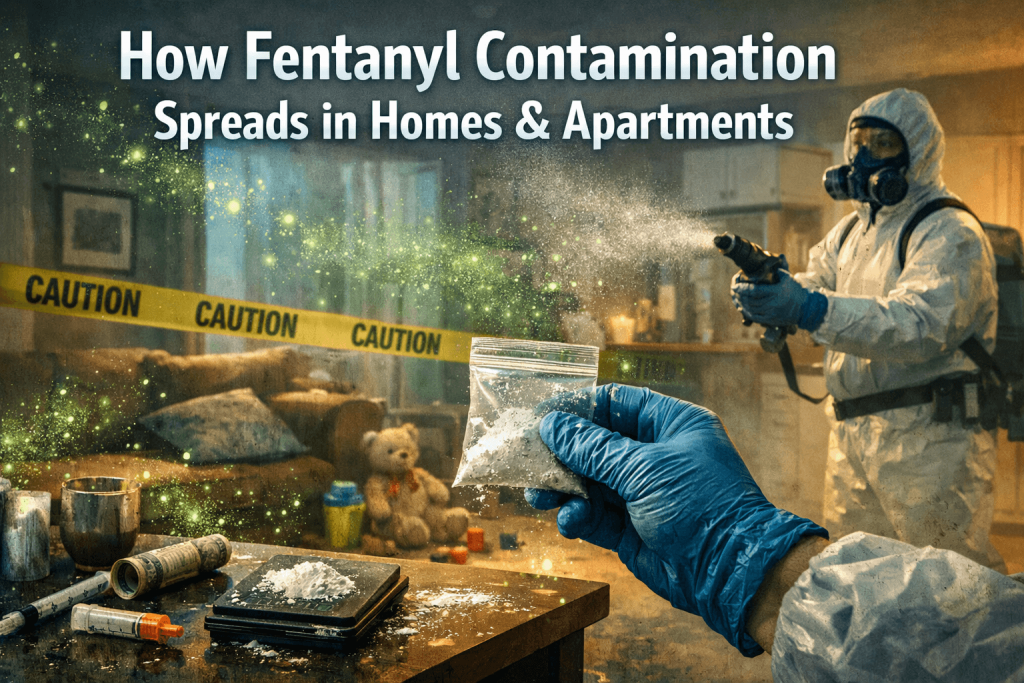
1. Why Fentanyl Moves So Easily Through Homes & Apartments
Fentanyl particles are extraordinarily small—far smaller than dust or pollen. When heated, smoked, crushed, or accidentally disturbed, fentanyl becomes aerosolized and can migrate throughout an entire property.
A. Aerosolization During Smoking, Heating, or Pill Manipulation
When fentanyl is smoked or heated, microscopic particles become airborne and may remain suspended for hours. These particles settle on:
- HVAC vents & filters
- Ceilings, light fixtures, crown molding
- Wall surfaces & artwork
- Upholstery, bedding, mattresses
- Toys, personal items, clothing
- Carpets, rugs, drapery
This mechanism commonly affects tightly packed neighborhoods like Koreatown, Mid-City, Downtown LA, Silver Lake, Echo Park, Hollywood, and North Hollywood, and multifamily buildings in Irvine, Anaheim, Costa Mesa, and Santa Ana.
A 2022 NIH-published study documented how drug aerosols travel far beyond the source room—highlighting the need for forensic-standard decontamination rather than superficial cleaning.
2. How Fentanyl Spreads Through HVAC Systems
Forced-air heating, cooling, and ventilation systems are one of the most significant drivers of building-wide fentanyl contamination.
Once particles enter return ducts, they migrate through:
✔ Supply vents
✔ Shared ductwork
✔ Interstitial wall spaces
✔ Furnace/air handlers & evaporator coils
✔ Bathroom and kitchen exhaust systems
Luxury homes and commercial buildings in Beverly Hills, Bel Air, Holmby Hills, Brentwood, Malibu, Pacific Palisades, Century City, Hancock Park, and West Hollywood often have complex multi-zone HVAC systems, making cross-contamination even more extensive.
In apartment complexes in Pasadena, Alhambra, Glendale, Burbank, Van Nuys, Sherman Oaks, Reseda, Encino, and Tarzana, shared ventilation increases the likelihood that residue travels between units—even if only one tenant used fentanyl.
Jeff Jones notes in his forensic restoration writings that airflow is the #1 underestimated route of illicit drug residue migration, which is why his Microbial Warrior® protocol emphasizes airflow control, pressure differentials, and particulate capture.
3. Cross-Unit Spread in Apartments & Multi-Family Housing
Fentanyl contamination in a single unit can quickly migrate vertically or horizontally through building structures, affecting neighboring apartments through:
A. Wall Cavities & Shared Building Materials
Electrical outlets, plumbing penetrations, gaps behind cabinets, and framing voids allow air movement between units.
B. Hallways & Common Spaces
Every time a door opens, a pressure change occurs that can push fentanyl-laden particulates into hallways, elevators, stairwells, and adjacent units.
C. Shared Laundries & Storage Rooms
Residual particles cling to clothing, bags, and fabric—spreading contamination unknowingly.
This pattern is increasingly documented in dense urban communities such as Westlake, MacArthur Park, Highland Park, Eagle Rock, East Hollywood, and Orange County areas like Garden Grove, Fullerton, Westminster, and Mission Viejo.
4. How Fentanyl Contaminates High-End & Luxury Real Estate
Luxury homes and estates across Beverly Hills, Trousdale Estates, The Flats, Beverly Park, Bel Air Crest, Malibu Colony, Newport Coast, Shady Canyon, Laguna Beach, and Dana Point face unique contamination risks because:
1. Short-term rental turnover is higher
Guest misuse can leave behind microscopic residue.
2. High-value furnishings absorb and retain contaminants
Fine textiles, silk drapery, down-filled upholstery, artisan rugs, and porous architectural materials require specialized protocols—not general cleaning.
3. Larger HVAC systems circulate contaminants further
Multi-zone systems can spread fentanyl to guest houses, theaters, gyms, wine rooms, and staff quarters.
4. Many luxury owners travel frequently
Contamination may go unnoticed for weeks or months, allowing particulates to settle deeply into the built environment.
In his R&R Magazine writings, Jeff Jones warns that high-end materials often require “surgical-grade restoration methods” due to their absorbency and replacement cost.
5. Secondary Transfer: The Hidden Spread No One Talks About
Even when fentanyl appears confined to a single room, secondary transfer can disperse contamination through:
- Clothing & shoes
- Purses, backpacks, luggage
- Bedding & linens
- HVAC filters
- Cleaning attempts that push residue deeper into surfaces
Parents in Pasadena, San Marino, La Cañada, Manhattan Beach, Hermosa Beach, Redondo Beach, and Orange County cities like Laguna Niguel, San Clemente, and Irvine often report concern when a child experiences symptoms from unknowingly touching contaminated objects.
This is one reason DIY cleanup is dangerous and often worsens contamination. Improper wiping or vacuuming spreads particulate fentanyl rather than removing it.
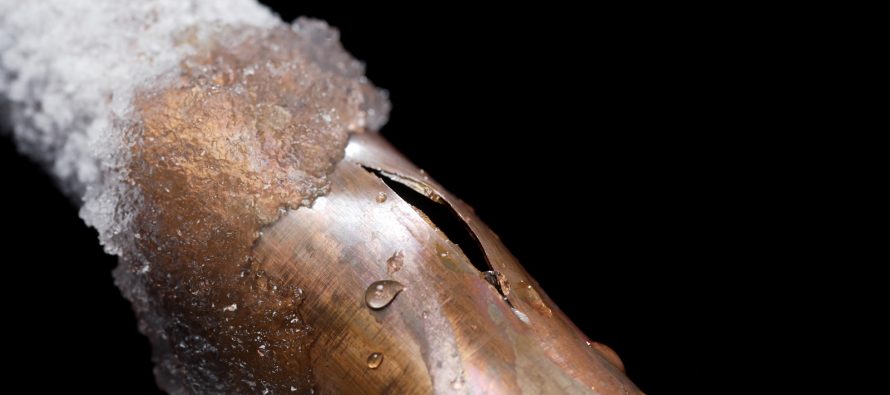
6. Water, Moisture & Fentanyl: A Dangerous Interaction
Few property owners realize that water damage—from a leak, broken pipe, or flood—can mobilize fentanyl residue hiding inside:
- Carpets & carpet pads
- Drywall & insulation
- HVAC ductwork
- Hardwood subflooring
- Cabinets & wall voids
Moisture activates capillary movement, pulling particulate residue deeper into building materials.
This is why fentanyl cleanup and water damage restoration intersect, especially in older neighborhoods like Altadena, Highland Park, South Pasadena, Glendale, and Long Beach, and coastal homes in Newport Beach, Huntington Beach, Dana Point, and San Clemente where humidity accelerates chemical migration.
Jeff Jones frequently teaches that the presence of water “changes the physics of contamination” and must be addressed with layered forensic methodology.
7. Where Fentanyl Hides: The Most Common Reservoirs in California Homes
Fentanyl residue has been scientifically shown to cling to nearly every household surface type. The most commonly contaminated materials include:
Highly Absorbent
- Mattresses
- Upholstered furniture
- Pillows, blankets, and stuffed toys
- Carpets & rugs
- Clothing, drapes, and linens
Semi-porous
- Wood furniture
- Cabinets
- Laminate flooring
- Acoustic wall panels
Hard Surfaces (Still Contaminated)
- Countertops
- Tile
- Appliances
- Plastic surfaces
- Glass & stainless steel
In Los Angeles luxury markets—Beverly Hills, West Hollywood, Malibu, Santa Monica, Pacific Palisades, Brentwood—these materials are often designer-grade and require forensic-level cleaning rather than removal.
8. The Clinical Symptoms of Exposure (Why Property Testing Matters)
(Informational, not medical advice)
Residents may experience symptoms such as:
- Headaches
- Nausea
- Dizziness
- Confusion
- Burning eyes
- Respiratory irritation
- Metallic taste
Children and pets are especially vulnerable because they contact surfaces and floor areas where particulates settle.
9. Proper Forensic Fentanyl Cleanup: What PuroClean of Pasadena Does Differently
Because we are physician-led, our fentanyl cleanup protocols are grounded in the same principles used in hospital hygiene and infectious disease control. Our team has trained extensively with Microbial Warrior®, the industry’s most advanced forensic restoration program.
Our approach includes:
A. Scientific Assessment & Testing
ATP testing, surface sampling, and forensic moisture mapping.
B. Engineering Controls
- Negative air pressure
- HEPA filtration
- Containment barriers
C. Removal of High-Risk Porous Items
To prevent re-contamination.
D. Forensic Cleaning Protocol
Using Microbial Warrior® methodology, including chemical inactivation and particulate elimination.
E. Post-Testing Documentation
A requirement for many property managers, HOAs, and insurance carriers.
Our geographic response area includes Pasadena, Altadena, San Marino, La Cañada, Glendale, Burbank, Hollywood, Beverly Hills, West Hollywood, Santa Monica, Pacific Palisades, Bel Air, Brentwood, Malibu, and all surrounding Los Angeles neighborhoods—as well as Irvine, Newport Beach, Costa Mesa, Huntington Beach, Anaheim, Mission Viejo, Laguna Beach, Tustin, Santa Ana, and the entire Orange County region.
10. Why Luxury Properties, HOAs, and Landlords Must Take This Seriously
Fentanyl contamination is not a cosmetic issue—it is a scientific and liability matter.
Failure to properly remediate may result in:
- Tenant lawsuits
- HOA litigation
- Loss of property value
- Failed inspections
- Insurance disputes
- Ongoing exposure risk for children & vulnerable individuals
In communities with high property valuations—Beverly Hills, Manhattan Beach, Malibu, Newport Coast, Irvine, Laguna Beach—the financial stakes are immense.
Final Word: Fentanyl Contamination Requires Science, Not Guesswork
As Jeff Jones, founder of Microbial Warrior®, writes:
“You cannot clean what you do not understand. Fentanyl requires science-based restoration, not janitorial work.”
PuroClean of Pasadena is proud to bring forensic-level methodology and physician-led oversight to fentanyl contamination cases across Los Angeles and Orange County.
Need Testing or Cleanup? Contact PuroClean of Pasadena 24/7
Your privacy is protected.
Unmarked vehicles available.
Rapid response throughout LA + OC.
Call Now: (626) 514-1400
Email: [email protected]

 PuroClean of Huntington Park LA