Table of Contents
Physician-Backed Remediation for Homes, Businesses & Vehicles — PuroClean of Huntington Park (Serving All of Los Angeles & Orange Counties, 24/7)
Illicitly manufactured fentanyl (IMF) and its analogs (including carfentanil) are extraordinarily potent. Public health and federal sources consistently note fentanyl is ~100× stronger than morphine, and carfentanil is up to 100× stronger than fentanyl. Even small amounts can be deadly, especially if they become airborne and inhaled, or if residue is transferred to the mouth, nose, or eyes. DEA+1
To illustrate the risk in simple terms: the amount of fentanyl that would fit on the tip of a pencil is enough to kill an adult, depending on purity, individual factors, and route of exposure. That variability is exactly why nobody should access a potentially contaminated area — especially a vehicle — until it’s properly assessed and cleared. PuroClean of Pasadena takes zero chances and proceeds with maximum caution on every suspected case.
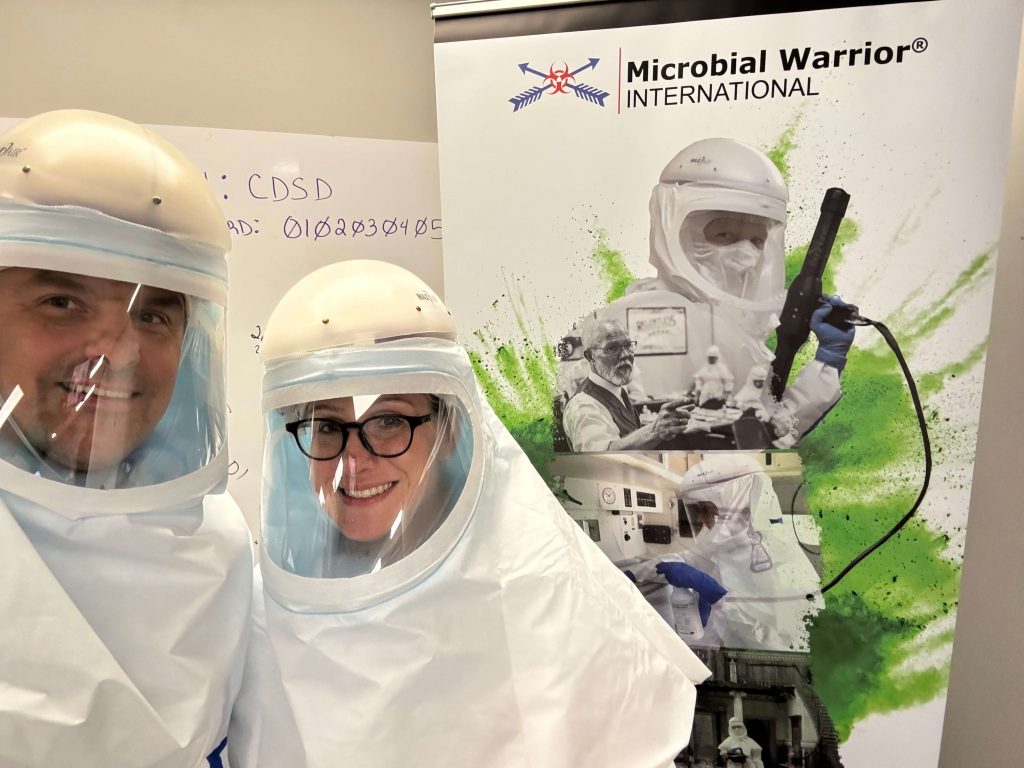
Physician-backed & expertly trained: We are the only physician-backed restoration and decontamination firm in the country and we hold ourselves to the highest standards. Our team was trained by Jeff and Lori Jones (Bio-Sheen / Microbial Warrior®) — internationally recognized leaders in high-risk decontamination and forensic restoration. Learn more about their programs at Microbial Warrior®and Bio-Sheen Services. Microbial Warrior® Academy+1
Fast Facts: Why suspected fentanyl scenes require professionals
- Potency: Fentanyl is ~100× morphine; carfentanil can be ~100× fentanyl. Tiny amounts can be catastrophic if inhaled or ingested. DEA+1
- Mixtures: “Street drugs” are often mixed. We regularly see combinations with xylazine (“tranq,” a veterinary sedative), cocaine, methamphetamine, and other opioids — contaminants that change risk and cleanup requirements. Xylazine is not an opioid; naloxone does not reverse xylazine, though it should still be given during suspected opioid poisoning. CDC+2DEA+2
- Primary danger: For responders and bystanders, the greatest risk comes from airborne powder (aerosolization) and hand-to-face transfer. Incidental dry skin contact alone is unlikely to cause overdose if promptly washed off with water, but we still treat every job as high-risk until proven safe. DEA+2CDC+2
What to Do — Step by Step — If You Suspect Fentanyl or Illicit Drug Contamination
Step 1 — Stop. Isolate. Control access.
- Do NOT enter, sit in, or drive a suspect vehicle. Do not open windows or vents if visible powder is present; you could aerosolize contamination.
- Keep people out. Restrict access to the room, unit, or vehicle. Post a simple “Do Not Enter — Hazard Assessment Pending” note.
- No DIY cleaning. Do not vacuum, sweep, shake out mats, or wipe surfaces — these actions can make things worse or expose you to deadly levels of aerosolized fentanyl powder.
(Why: Airborne powder is the most concerning pathway for harmful exposure in these settings.) DEA
Step 2 — If someone seems ill: call 911 and use naloxone
- Signs of opioid poisoning include slowed or stopped breathing, unresponsiveness, and pinpoint pupils.
- Administer naloxone (Narcan) immediately if available and repeat per instructions. Naloxone won’t reverse xylazine, but it can still save a life if opioids are involved. Provide rescue breathing as directed by emergency dispatch. DEA
Step 3 — Call PuroClean of Pasadena or Huntington Park(24/7)
We’ll conduct an intake to understand location, suspected substances, occupants, HVAC status, and whether first responders already cleared the scene. We dispatch trained technicians with the appropriate protective equipment and containment materials aligned to current best-practice guidance. CDC
Step 4 — Professional hazard assessment & testing
- Scene hazard survey: Visual indicators (powder, pills, paraphernalia), airflow pathways, porous vs. non-porous surfaces, high-touch zones, and contents inventory. We also provide a biohazard risk level to help detail the level of contamination.
- Sampling & testing: We facilitate formal third-party laboratory testing and may deploy on-site screening to guide the work plan depending on the situation at hand. Chain-of-custody documentation is maintained when required by employers, fleets, or insurers.
- Scope design: Based on findings, we specify engineering controls, containment, work zones, PPE, methods, and clearance criteria that meet or exceed current recommendations for responders around illicit opioids. CDC
Step 5 — Set containment & protect workers
- Establish control zones (operational/transition/clear), directional airflow when appropriate, and physical containment (e.g., 6-mil barriers with sealed portals).
- PPE typically includes double layers of nitrile gloves (changed appropriately), attidional layers of protective cover gloves, eye protection, and respiratory protection via PAPRs when powder is present or suspected; clothing protection is scaled to task risks, with extra precautions if operations could aerosolize residues (e.g., aggressive cleaning on porous substrates). We also provide neutralization and removal of contaminated porous material CDC+2PMC+2
Step 6 — Careful, methodical decontamination
- Specific proprietary gentle wet capture method protocol designed by Jeff and Lori Jones to mitigate risk of aerosolization
- Threat suppression: application of neutralization chemical in a proprietary pattern to ensure safety of decontamination team members.
- Chemistry: Use appropriate detergents/agents per substrate and protocol; avoid alcohol-based products on skin and many surfaces where they may increase absorption or volatility. Soapy water remain the standard for skin decon. NC DHHS
- Contents management: Bag/box/label, then neutralize, decontaminate, or dispose per testing results, material type (porous vs. non-porous), client/insurer requirements, and PuroClean of Pasadena’s highest standard of safety.
- Waste handling: Package and manifest contaminated disposables according to local/state requirements.
Step 7 — Post-decon verification & documentation
- Clearance testing (lab or validated screening per plan) against predefined criteria.
- Deliver before/after photo logs, sampling results, chain-of-custody forms, equipment logs, and work summaries suitable for employers, insurers, counsel, or regulators.
- Provide return-to-service guidance (HVAC filter change, housekeeping, occupant communication).
We align field procedures with respected guidance for responders and hazardous drug controls (e.g., NIOSH, DEA, state health departments), and we incorporate advanced high-risk remediation practices developed by Microbial Warrior® / Bio-Sheen training. CDC+2DEA+2
What about vehicles? (Police units, company fleets, rideshare, personal cars)
Short answer: Treat every suspect vehicle as high-risk until cleared by testing. Confined cabins, recirculating air, porous upholstery, and hidden recesses (vents, seams, spare-tire wells) can harbor residues. Stolen cars that have been recovered could have had illicit substance exposure and should be treated as such to mitigate risk of exposure after reclaiming the vehicle.
Until professionals arrive:
- Do not open, drive, sit in, vacuum, or air-blast the vehicle.
- Do not handle found pills/powders.
- Do not wipe interior surfaces.
- Keep it locked, tape a simple “Do not enter” sign, and wait for our team as well as law enforcement if visible contamination is present
Our vehicle protocol adds: strategic disassembly (as needed), controlled HEPA capture, damp-wipe decon, and targeted contents processing (child seats, textiles). Clearance sampling is performed before we return the keys.
“Is a tiny exposure really fatal?” — Understanding risk precisely (without panic)
- Yes, tiny amounts can be deadly under the wrong conditions — especially if the powder becomes airborne and is inhaled, or if contaminated hands contact eyes, nose, or mouth. That’s why access control and professional containment are non-negotiable. DEA
- Incidental dry skin contact alone is unlikely to cause acute toxicity if washed promptly with soap and water(avoid alcohol gels). But because scenes are unpredictable, we act as if any visible residue could be dangerousand manage it accordingly. NC DHHS
Other drugs we often find mixed with fentanyl
- Carfentanil: hyper-potent opioid; ~100× fentanyl. Even trace amounts are dangerous; overdose may require multiple naloxone doses and advanced care. DEA
- Xylazine (“tranq”): veterinary sedative often mixed with fentanyl; not reversed by naloxone (though naloxone should still be used because opioids are frequently present). Associated with severe wounds in people who inject. DEA
- Stimulants (e.g., cocaine, methamphetamine) and other adulterants: complicate symptoms and cleanup decisions; we scope testing to the scene.
Why PuroClean of Huntington Park?
Physician-backed oversight
Our medical leadership helps define risk-appropriate PPE, containment, sampling, and clearance criteria, and can coordinate with occupational health, legal teams, and insurers on sensitive cases.
Elite training & protocols
Our technicians train with Jeff & Lori Jones through Microbial Warrior® (Bio-Sheen) — recognized leaders in forensic restoration and high-risk decontamination. We integrate their best-practice frameworks into our day-to-day operations. Microbial Warrior® Academy+1
Compliance-ready documentation
From chain of custody to clearance testing, your file will withstand scrutiny from risk management, EHS, claims, or counsel.
Discretion & speed
We operate 24/7, arrive in unmarked options when requested, and restore operations quickly without compromising safety.
Service Area — We Cover All of Southern California (Same-Day Response)
Los Angeles County (selected communities & neighborhoods)
Pasadena, South Pasadena, Altadena, San Marino, Arcadia, Monrovia, Sierra Madre, Alhambra, San Gabriel, Rosemead, Temple City, El Monte, Monterey Park, East LA, Boyle Heights, Downtown LA, Echo Park, Silver Lake, Los Feliz, Hollywood, West Hollywood, Beverly Hills, Westwood, Brentwood, Bel Air, Santa Monica, Pacific Palisades, Venice, Mar Vista, Culver City, Inglewood, Hawthorne, Gardena, Manhattan Beach, Hermosa Beach, Redondo Beach, Torrance, Palos Verdes, Long Beach, Lakewood, Downey, Norwalk, Whittier, Pico Rivera, Commerce, Vernon, Huntington Park, South Gate, Lynwood, Compton, Carson, Wilmington, San Pedro, Glendale, Burbank, North Hollywood, Studio City, Sherman Oaks, Encino, Tarzana, Woodland Hills, Canoga Park, Chatsworth, Northridge, Granada Hills, Sylmar, Sun Valley, Panorama City, Pasadena Foothills, La Cañada Flintridge, La Crescenta-Montrose, Glendale foothills, Pomona, Claremont, La Verne, West Covina, Covina, Azusa, Glendora, Walnut, Diamond Bar, Baldwin Park, Duarte, Lancaster, Palmdale — and every surrounding community.
Orange County (selected cities & areas)
Anaheim, Anaheim Hills, Orange, Santa Ana, Tustin, Irvine, Newport Beach, Newport Coast, Costa Mesa, Huntington Beach, Fountain Valley, Seal Beach, Westminster, Garden Grove, Buena Park, Fullerton, Brea, Placentia, Yorba Linda, La Habra, Lake Forest, Mission Viejo, Laguna Hills, Laguna Niguel, Laguna Beach, Aliso Viejo, Dana Point, San Juan Capistrano, San Clemente, Rancho Santa Margarita, Ladera Ranch — and all adjacent neighborhoods.
If your city or neighborhood isn’t listed, we still cover you. Call us 24/7 for immediate assistance.
Frequently Asked Questions
Q: Can I just wipe down the car or room myself?
A: No. Household cleaning can aerosolize powder and spread contamination. Leave the area closed and call us. DEA
Q: What if a child or pet might have been in contact?
A: Seek medical advice immediately if you’re concerned. Keep them away from the area. Do not let anyone re-enter until testing and clearance are complete.
Q: Will insurance cover fentanyl decontamination?
A: Coverage varies by policy and loss type (property, auto, commercial). We provide documentation and test results to support claims.
Q: How do you know it’s safe afterward?
A: We define clearance criteria in advance, perform post-decon sampling, and provide a written release package (lab reports).
When to call 911 vs. when to call us
- Call 911 immediately if someone is unresponsive or having breathing problems — administer naloxone if available and follow dispatcher instructions. Call law enforcement if visible pills or powder are present DEA
- Call PuroClean of Huntington Park for assessment, testing, containment, and decontamination once the scene is safe.
Our Safety Pillars (What we will do on your loss)
- Assume danger until testing proves otherwise — eliminate guesswork.
- Control the space — restrict access, contain, and prevent aerosolization.
- Protect workers and occupants — right PPE, right methods, right sequence. CDC
- Use evidence-based methods — integrate NIOSH/DEA/state health guidance with advanced forensic-restoration practices. CDC+2DEA+2
- Verify and document — clearance testing and records that stand up to scrutiny.
Ready When You Are — 24/7

Whether it’s a fleet vehicle, a multifamily unit, a school nurse’s office, a hotel room, or a high-security facility, PuroClean of Pasadena brings physician-backed oversight, elite training, and measured, documentable processes to every fentanyl, carfentanil, xylazine, or mixed-substance scene.
Call now for immediate help: (323)364-8080
Training influences: Microbial Warrior® and Bio-Sheen Services. Microbial Warrior® Academy+1
Sources & Current Guidance
- DEA: Facts About Fentanyl; Carfentanil warning (potency, risk). DEA+1
- CDC/NIOSH & state health: Responder safety, xylazine advisory, exposure pathways and PPE. CDC+1
- ACMT/AACT position statements and public-health updates on dermal risk vs. aerosol, and safe responder practices. PMC+1
- NRT fentanyl quick reference (potency; PPE escalation when aerosolization is possible). nrt.org
Important note: Public guidance continues to evolve. While several authoritative sources emphasize that incidental dry skin contact is unlikely to cause overdose if promptly washed, PuroClean of Huntington Park always treats suspected scenes as high-risk until hazards are tested, controlled, and cleared. Your safety comes first, every time.