Table of Contents
When the Eaton Fire roared out of Eaton Canyon in January 2025, racing down toward Altadena and Pasadena under brutal Santa Ana winds, most of the headlines focused on flames, evacuations, and heartbreaking photos of destroyed neighborhoods. The fire ultimately burned more than 14,000 acres, killed 19 people, and damaged or destroyed over 9,000 structures, making it one of the most destructive fires in California history.
At the same time, the Palisades Fire in the Santa Monica Mountains and Pacific Palisades was chewing through chaparral and hillside neighborhoods near Topanga State Park, closing popular trails and forcing evacuations east of Topanga Canyon Boulevard and around Michael Lane.
Months later, something quieter but just as serious remains:
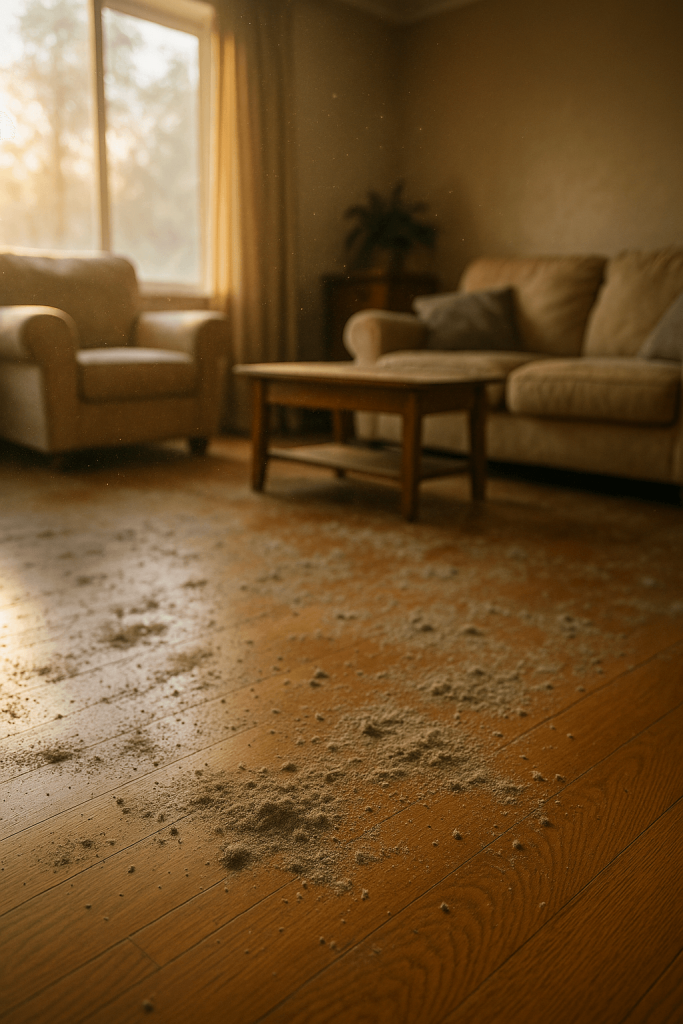
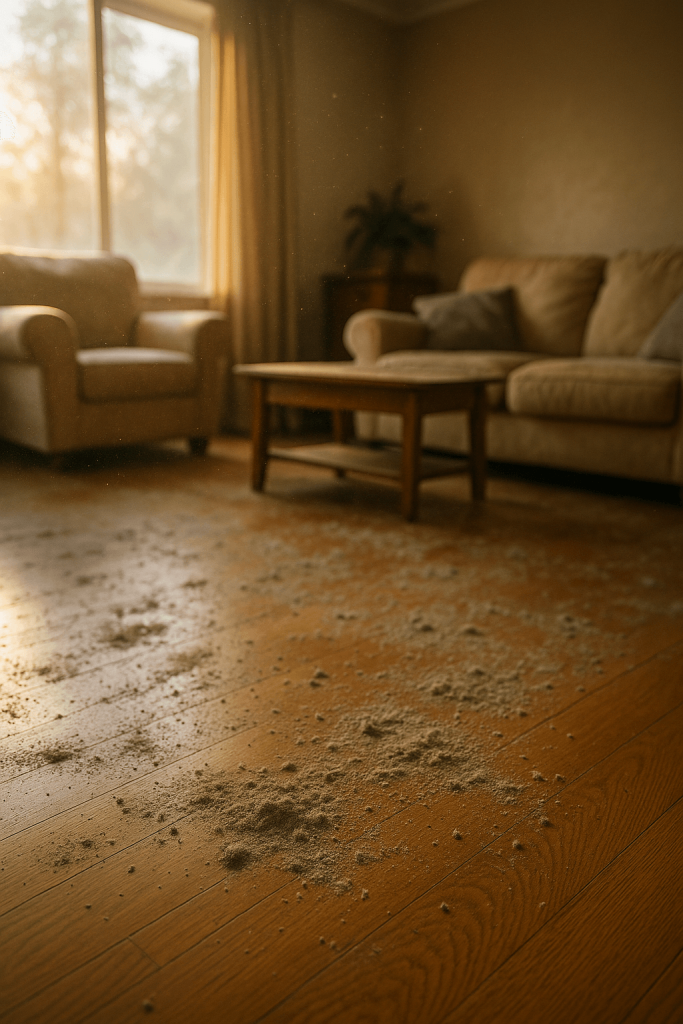
toxic lead dust and contaminated ash, even around homes that survived — and even around brand-new rebuilds.
This isn’t fear-mongering. It’s chemistry, history, and urban design colliding. And it’s exactly why Los Angeles homeowners need physician-guided environmental testing and cleanup after wildfire, not just a quick ash wash-down.
1. Eaton & Palisades: Not Just “Forest Fires,” but Urban Fires
When people hear “wildfire,” they picture forests or brush burning. But the Eaton and Palisades fires were wildland–urban interface fires: they burned houses, cars, garages, power infrastructure, fences, and consumer products alongside brush.
- During the Eaton Fire, flames raced down from Eaton Canyon toward Altadena Drive, Lake Avenue, and the historic Christmas Tree Lane corridor, destroying thousands of homes and businesses and heavily impacting a long-standing Black homeownership community in Altadena.
- In the Palisades Fire, firefighters battled steep terrain above Pacific Palisades, closing residential streets off Michael Lane and sections of Topanga State Park while residents near the coastline watched flames creep toward canyon-side homes.
When urban areas burn, the smoke and ash are chemically distinct from those of a remote forest fire. Research on wildfire ash shows that when buildings and vehicles burn, the resulting ash can contain elevated levels of heavy metals such as lead, copper, zinc, and other toxic elements — a mixture very different from “natural” forest ash.
That toxic ash and dust doesn’t stay politely outside. It moves into yards, playgrounds, HVAC systems, window tracks, carpets, and kids’ bedrooms.
2. Why Lead Is a Major Concern After LA Wildfires
Lead is baked into the urban environment
Los Angeles has more than a century of lead-based paint, leaded gasoline legacy dust, and industrial emissionslayered into neighborhoods from Highland Park to Pacific Palisades. When wildfires like Eaton or Palisades sweep through those areas, they re-mobilize lead that was previously “locked” in paint, soil, and structures.
Recent work on post-fire soils in Southern California has shown:
- On properties within burn areas, roughly one-third of homes had soil lead levels above California’s recommended screening level — even after initial debris removal protocols.
- Lead levels can vary significantly even within the same yard: one side of the property may look “safe” while another patch of bare soil is highly contaminated. Caltech Science Exchange
- Dust samples collected many months after fires in wildland–urban interface areas still show elevated toxic metals in indoor environments.
In other words: once lead becomes airborne as fine particles, it gets everywhere and it persists.
3. “But My Home Is New” — Why Newer or Rebuilt Homes Are Still at Risk
A big misconception we hear from families in Altadena, Pasadena, Pacific Palisades, and Topanga is:
“The fire destroyed the old house, and we rebuilt. Everything is new — so the lead is gone, right?”
Not necessarily.
Here’s why even a brand-new rebuild in the Eaton or Palisades burn zone can still sit in a lead-contaminated micro-environment:
- The soil didn’t start over.
FEMA/County debris removal typically scrapes a certain depth of soil and carted debris, but recent research suggests that these standard depths don’t always remove all lead-contaminated layers, especially in dense urban burns. - Wind blows ash and dust back in.
After the fire, wind can blow lead-bearing ash from burned neighbors, parks, and canyons back onto your property — especially in foothill locations near Eaton Canyon, Christmas Tree Lane, Topanga Canyon Boulevard, or the ridgelines above the Palisades. - Construction can disturb buried layers.
Grading, trenching, and foundation work for your rebuild can pull up deeper, previously buried contamination and bring it back to the surface. - Indoor environments can be re-contaminated.
If HVAC systems, ductwork, or attics weren’t cleaned with a heavy-metal-aware protocol, fine lead particles can linger and be circulated for years.
So even if your kitchen cabinets, drywall, and fixtures are “2025 new,” the environment around and under the home can still reflect 100+ years of Los Angeles lead history plus the acute contamination from Eaton or Palisades ash.
4. Local Landmarks, Local Loss — and Invisible Hazards
The Eaton Fire didn’t just burn “houses on a hillside.” It erased pieces of community identity:
- Beloved spots along Lake Avenue like Fox’s diner (69 years old), Side Pie, and Rancho Bar were heavily damaged or destroyed. Eater LA
- The fire ravaged areas around Christmas Tree Lane on Santa Rosa Avenue, one of LA’s most iconic holiday traditions and a designated historic landmark, while other stretches miraculously survived. SFGATE+1
- A significant portion of Black homeownership in Altadena was lost, raising deep concerns about displacement and generational wealth. The Guardian+1
In Pacific Palisades and Topanga:
- The Palisades fires triggered evacuations near Topanga Community House, View Ridge Road, and Entrada, with residents lining Sunset Boulevard and PCH watching smoke rise from the canyon.
- Popular hiking areas in Topanga State Park and coastal trails saw extended closures due to overlapping fire activity from Palisades, Malibu-area fires, and related events.
Those stories are visible and emotional.
What’s not visible are the microscopic particles those fires deposited on playgrounds, patios, dog-walking routes, gardens, and school yards — particles that may contain lead and other metals.
5. How Lead Dust Moves Through an LA Home After Wildfire
Even if firefighters saved your block during Eaton or Palisades, falling ash and smoke plumes may have seeded lead-contaminated dust on and inside your home.
Typical pathways:
- Roof & Gutters → Yard & Drains
Ash settles on roofs and in gutters along streets like Altadena Drive, Allen Avenue, Lake Avenue, Chautauqua Boulevard, Sunset Boulevard, and Temescal Canyon Road. First rains wash this material into yards, parkways, and storm drains. - Outdoor Surfaces → Shoes, Pets, Strollers
Kids’ toys, dog paws, and shoe soles track this dust inside. Porches and entryways become “staging areas” for fine contamination. - Open Windows & Leaky Seals → Living Spaces
During heavy smoke days, tiny particles enter through window frames, door gaps, bath fans, and older casement windows common in Altadena bungalows and Palisades canyon homes. - HVAC Systems → Whole-Home Distribution
If the AC was running during or shortly after the fire, the system can pull in outside particulates and distribute them throughout bedrooms, including nurseries and upstairs living spaces.
Multiple scientific teams studying post-fire homes in wildland–urban interfaces have confirmed that toxic metals, including lead, show up in indoor dust long after flames are out, especially in bedrooms where children spend most of their time.
6. Why Physician Ownership Changes How We Handle Post-Wildfire Lead
Most restoration companies are built by contractors. Ours is led by a physician and former Altadena resident
That matters.
A physician-owned restoration team in Los Angeles approaches post-wildfire lead very differently:
a) We start with health, not just “damage”Empty heading
We’re trained to think in terms of:
- Blood lead levels, not just “parts per million” in soil
- Vulnerable populations (pregnant people, infants, immunocompromised, kids with asthma)
- Exposure pathways (hand-to-mouth behavior in toddlers, classroom dust in kids returning to schools, etc.)
So when we evaluate a property in Altadena, Pasadena, Pacific Palisades, Topanga, Eagle Rock, or Highland Park, we’re asking:
Who lives here, and how might they realistically be exposed?
b) We insist on evidence, not guesswork
Instead of eyeballing ash and saying “this looks fine,” we:
- Recommend lab-based soil and dust testing in targeted locations: children’s play zones, entryways, bare soil patches, garden beds, garage floors, and bedroom dust. Caltech Science Exchange+1
- Interpret results with both environmental and medical context: a “borderline” soil result may be much more concerning for a toddler than for an adult who rarely gardens.
c) Our remediation plans are built like a clinical protocol
A typical physician-guided post-wildfire lead plan might include:
- Zoned risk mapping of your property (high, medium, low exposure areas).
- Targeted soil management: removal, capping with clean fill or mulch, and vegetation strategies.
- Deep HEPA cleaning of interior surfaces, including windowsills, baseboards, vents, and soft furnishings.
- HVAC assessment and filter upgrades, plus duct cleaning when indicated.
- Clear post-cleanup verification so you’re not left guessing.
d) We communicate in plain language
You shouldn’t need a PhD to understand your own test results. We walk you through:
- What the numbers mean
- Who is most at risk
- What steps reduce risk the fastest
- When to talk to your personal physician about blood lead testing
7. What LA Homeowners Should Do After Fires Like Eaton or Palisades
If you live anywhere near recent burn areas in Altadena, Pasadena, La Cañada Flintridge, San Marino, Highland Park, Eagle Rock, Pacific Palisades, Topanga, or Malibu-adjacent neighborhoods, here’s a practical roadmap:
Step 1: Assume there may be contamination
You don’t need to panic, but do assume some level of toxic ash and dust may be present on outdoor surfaces, especially if you saw visible ash on cars, patios, or roofs during the fire events.
Step 2: Get smart, not generic, cleaning
- Use HEPA vacuums, not regular shop-vacs that can blow fine particles back into the air.
- Wet-wipe hard surfaces rather than dry dusting.
- Avoid power-washing ash into the street or neighbors’ yards.
Step 3: Consider targeted soil & dust testing
Especially if:
- You have young children or are planning a pregnancy
- You garden or grow food
- Your property is within or near mapped burn perimeters for Eaton or Palisades
A physician-led restoration team can help design a sampling plan that focuses on the highest-value locations, rather than wasting money on random spots.
Step 4: Protect kids’ play areas first
- Cover bare soil in play zones with clean mulch, sod, or groundcover.
- Create a “shoes off” policy indoors.
- Vacuum frequently with HEPA filtration.
- Wipe window sills and floor edges regularly — these are dust hotspots.
Step 5: Bring in a physician-owned restoration partner
This is where we come in.
Our physician-owned team serves greater Los Angeles, with a focus on post-wildfire and post-smoke environments in communities affected by the Eaton Fire and the Palisades fires. We combine:
- Medical insight
- Environmental science
- Construction and restoration expertise
…to help you answer the questions that really matter:
- Is my home safe for my kids to crawl on this floor?
- Can I plant vegetables in this soil?
- What should I do before we rebuild / move back / sell this house?
8. The Bottom Line: Fire Season Ends, Lead Season Doesn’t
The Eaton and Palisades fires will be remembered for dramatic evacuations, closed trails at Eaton Canyon and Topanga State Park, lost businesses along Lake Avenue and in Pacific Palisades, and the trauma of families spending their first Thanksgiving still displaced.
But long after the last news truck leaves, toxic lead dust and contaminated ash remain, silently shaping health outcomes — especially for children.
That’s why Los Angeles needs more than “disaster cleanup.”
It needs physician-guided environmental recovery.
If your home is in or near the Eaton or Palisades burn areas and you’re concerned about ash, dust, or lead, reach out. A physician-owned restoration team can help you turn a scary unknown into a clear, science-based plan to keep your family safe. Contact us here
Further reading on the Eaton & Palisades fires

Eaton Fire devastates LA’s 140-year-old Christmas Tree Lane

California fires destroyed or damaged nearly half of Black homes in Altadena

Eater LA
At Least 3 Altadena Restaurants, Including 69-Year-Old Fox’s, Reportedly Destroyed by the Eaton Fire
Jan 8, 2025