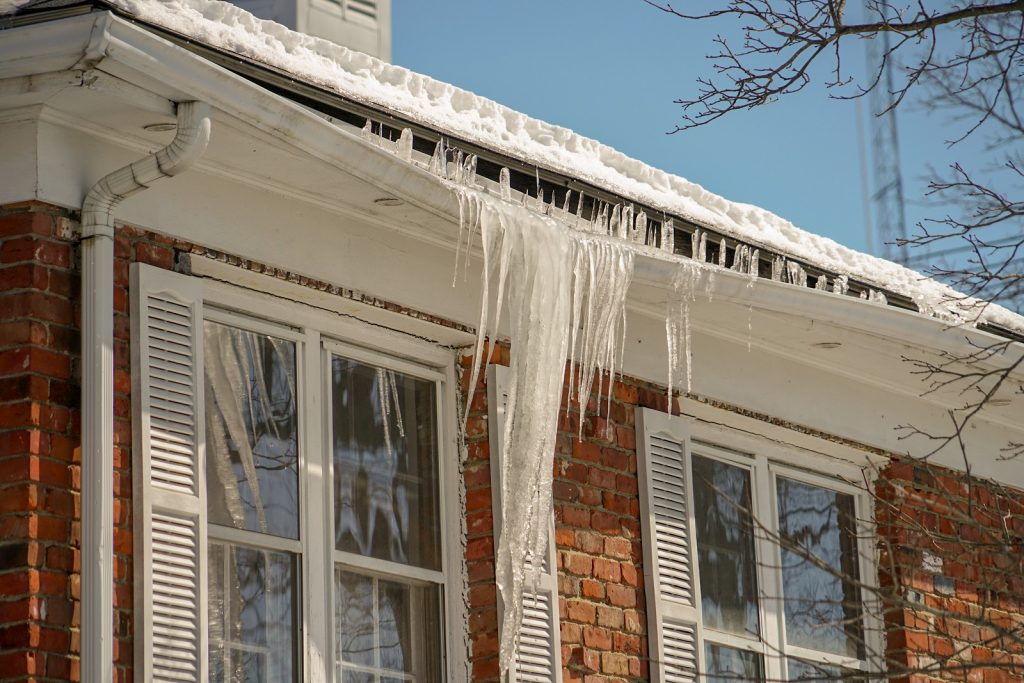
When the topic of winter weather home maintenance comes into focus, the emphasis is typically put on preventing frozen and broken water pipes, a common issue that homeowners experience in the cold months that can escalate into a full-blown water loss if not taken care of properly and promptly. But one other aspect of winter weather home maintenance that homeowners need to be aware of is ice dams.
Unlike a frozen pipe, which forms inside the home, ice dams form on the outside of the home – specifically on the edge of your roof before the gutter – following a snowfall. When heat from your home melts the snow that has accumulated on the roof, the snow runs off the roof toward the gutters to drain. However, ice dams form when this runoff of water hits the cold edge of the roofline, causing it to refreeze and block a drainage path. When a drainage path becomes blocked, the other melting water has the potential to seep in between the roof shingles – and thereby the home – leading to water damage and mold growth.
To make matters worse, ice dams are somewhat of a silent destroyer, as water enters the home gradually and typically damages the attic area first, which isn’t a place that homeowners usually frequent. By the time many even realize there’s a problem on their hands, it’s when the damage has spread from the attic and into other areas of the home.
Preventing Ice Dams
It’s common for homeowners to rev up their snowblowers and dig out their snow shovels after each winter snowfall to clear their driveways and sidewalks. But not to be ignored is the snow that has also fallen on the home. Hence, the best way to prevent an ice dam from forming is to incorporate roof maintenance into the post-snow shoveling routine.
Here are some tips:
- Attempt to remove the first 3 to 4 inches of snow from your roofline to prevent ice dams from forming. This is best done with a roof rake or a long-handled brush that can permit you to remove the snow without the use of a ladder.
- Make sure that downspouts are clear so that melted water has a chance to drain properly.
- If your area has received more than a foot of snow, it’s best to clear not just the first 3 to 4 inches along your roofline, but as much as possible. A foot or more of snow has the potential to cause your roof to cave in or collapse.
While incorporating roof maintenance into your snow removal routine is the best way to prevent ice dams immediately after a snowfall, there are other more long-term solutions that can be implemented. These include:
- Insulating the attic: A well-insulated attic helps prevent the melt/freeze conditions in which ice dams form.
- Water-repellant membranes: Installing a water membrane underneath the roof shingles can act as extra protection to prevent water from seeping into the building envelope.
Removing Ice Dams
While taking preventative measures are the best way to ensure that ice dams don’t form, it should be noted that just because an ice dam has formed doesn’t mean that water has entered the building envelope or that water damage and mold growth is imminent inside your home. But it’s always best to remove the ice dam as you notice it, well before it has a chance to cause damage to your property. Safely removing an ice dam can be done in a number of ways:
-
- Simply knocking an ice dam with a roof rake is often enough to dislodge it so that water can drain again.
-
- If the ice dam is too large, consider cutting a channel through it that will allow any standing water it’s blocking to drain properly.
-
- While you never want to use rock salt on your roof, you can use calcium chloride to melt the ice dam and allow water to once again flow freely.
-
- Finally, another option is to hire a snow removal contractor to resolve the problem.
Now is the time to make winter weather maintenance a priority. But even with all the proper measures in place, you still may be susceptible to a broken or frozen pipe or ice dam that could create a water loss.
And that’s where your local PuroClean office can help in restoring your water-damaged property to a pre-loss condition. For more information on PuroClean’s water damage restoration services, as well as disaster restoration, mold and bio-recovery services, contact your nearest location today.