



Mold is more than a cosmetic issue. It’s an environmental health hazard that thrives in moisture and poor ventilation. Many homeowners unknowingly live with mold in their walls, ceilings, or ventilation systems for months or even years before realizing the toll it’s taking on their bodies.
This blog explores the most common mold exposure symptoms and the long-term health effects of mold. If you or your family members are experiencing unexplained health issues at home, mold could be a hidden culprit, and early detection is key.
Key Symptoms of Mold Exposure
Mold exposure can affect multiple systems in the body. While some symptoms are immediate, others develop over time and can be mistaken for unrelated conditions. Being aware of these signs can help prevent serious health complications before they arise.
Below are the most important mold exposure symptoms every homeowner should understand and monitor closely.
Persistent Respiratory Symptoms
The lungs and airways are the most affected areas when mold is present in your home. Mold spores, when inhaled, can irritate and inflame your respiratory tract, especially over long periods of time.
- Persistent coughing or throat irritation: A dry, hacking cough that doesn’t go away and ongoing throat discomfort may signal your body’s reaction to airborne mold spores. Even without a cold or flu, you might find yourself clearing your throat constantly while indoors.
- Blocked nose or constant sneezing indoors: Nasal congestion that never fully clears and sneezing fits can result from mold spores irritating your sinus passages. These symptoms often improve when you leave the house but tend to return shortly after you come home.
- Difficulty breathing or chest tightness: You may feel pressure in your chest or experience shortness of breath when you spend time in certain rooms. These are often overlooked mold exposure symptoms, especially when no other allergies are present.
Skin and Eye Reactions You Might Overlook
Mold exposure doesn’t just affect your lungs, it can also show up on your skin and irritate your eyes, especially in enclosed areas with poor airflow.
- Rashes, dry patches, or inflamed skin: Itchy skin, red blotches, or eczema-like flare-ups can develop even if you haven’t directly touched mold. These symptoms can worsen in rooms like bathrooms or basements where mold often grows unseen.
- Irritated, watery, or burning eyes: Redness, tearing, and a burning sensation in the eyes may occur when mold spores are present in the air. This discomfort can become a daily issue and may be misdiagnosed as a seasonal allergy.
- Swelling around the eyes or eyelids: Your eyelids may feel puffy or sensitive, especially in the morning or after spending time in a mold-contaminated area. This kind of inflammation is one of the more visible yet misunderstood mold exposure symptoms.
Cognitive and Emotional Changes
In addition to physical symptoms, mold exposure can impact the brain and emotional well-being. Toxins from mold can affect neurological functions over time.
- Poor concentration and memory lapses: Struggling to focus, forgetting small tasks, or feeling mentally foggy could be signs of mold-related brain inflammation. These symptoms are often dismissed as stress but may improve when away from mold-affected environments.
- Mood swings, irritability, or anxiety: You might notice sudden mood changes or increased anxiety that seems unrelated to daily stressors or lifestyle. The health effects of mold on mental health are well-documented in long-term exposure cases.
- Ongoing fatigue, even after sleeping well: A persistent sense of tiredness, regardless of how much you rest, is common among people exposed to mold. This happens because your body is constantly fighting the toxins released by mold spores in your air.
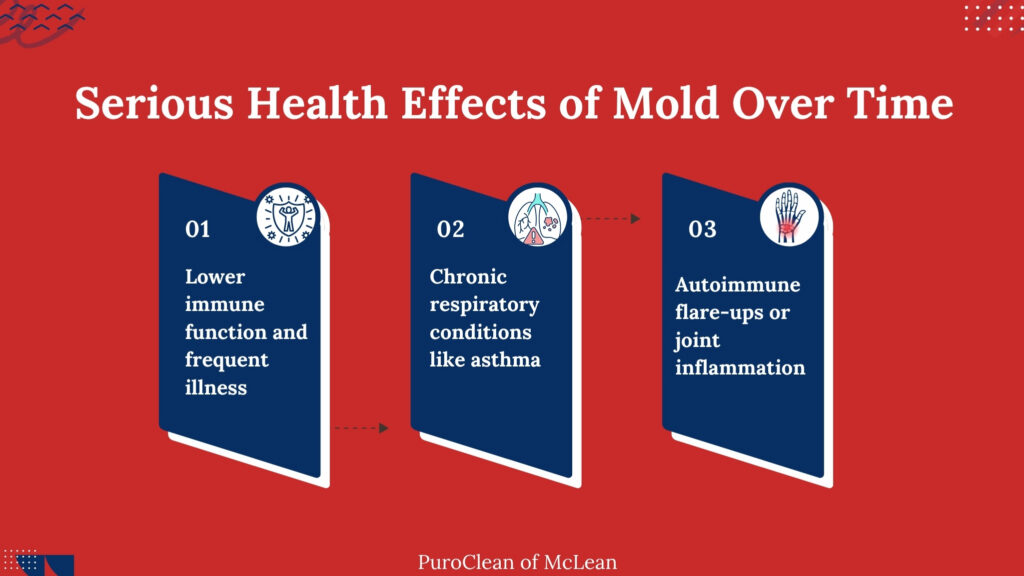
Serious Health Effects of Mold Over Time
If not addressed, mold exposure can lead to chronic and sometimes irreversible health conditions. These long-term issues highlight the need for quick action.
- Lower immune function and frequent illness: Being sick more often or taking longer to recover could indicate your immune system is weakened by mold. Over time, mold exposure can reduce your body’s ability to fight off infections and inflammation.
- Chronic respiratory conditions like asthma: Mold can cause asthma to develop or worsen, especially in children or people with pre-existing respiratory concerns. Symptoms like wheezing, chest pain, or tightness may grow more severe if exposure continues.
- Autoimmune flare-ups or joint inflammation: Some molds release toxins that can cause widespread inflammation, leading to joint pain or autoimmune symptoms. These are some of the most serious health effects of mold and may require long-term medical care.
Where Mold Hides Inside Your Home
One of the reasons mold-related symptoms are overlooked is that mold itself is often hidden. It thrives in dark, moist, and poorly ventilated areas.
- Behind drywall, under floors, or inside ceilings: Water leaks from plumbing or roofs can result in mold growing behind walls or under floorboards where you can’t see it. Even small leaks can fuel mold growth and create harmful conditions over time.
- In bathrooms, laundry areas, and kitchens: These spaces are naturally high in humidity and often poorly ventilated, making them ideal for mold to grow. Check grout lines, under sinks, and around windows for signs of dampness or odor.
- Within HVAC systems and air vents: If mold grows inside your heating or cooling system, spores can be spread throughout your entire home. Breathing in these spores daily increases your chances of developing mold exposure symptoms.
Steps to Reduce Mold Exposure in Your Home
Reducing moisture, improving airflow, and regular cleaning are all essential to prevent mold from affecting your health and home.
- Keep humidity levels below 50 percent: Use dehumidifiers in basements, bathrooms, and other damp areas to keep moisture under control. Maintaining dry air makes it much harder for mold to survive and spread in your living space.
- Fix leaks and water damage immediately: Address roof leaks, plumbing issues, and wet materials as soon as you spot them, even if they seem minor. Delaying repairs increases the chance of hidden mold growth and costly damage.
- Clean high-risk areas with mold-safe products: Regularly disinfect tiles, windows, and walls using cleaners designed to kill mold and prevent it from returning. Frequent cleaning can stop mold growth before it becomes a visible or dangerous problem.
- Schedule a professional inspection if symptoms persist: If your symptoms match those of mold exposure, but you cannot locate mold yourself, bring in a qualified expert. A certified inspector can test air samples and uncover mold hidden behind walls or inside systems.
Conclusion
Mold doesn’t need to be visible. It can quietly take a toll on your body over time, affecting your lungs, skin, brain, and immune system. Recognizing the signs early and acting is critical to protecting your health.
From lingering coughs to brain fog and skin irritation, mold exposure symptoms vary from person to person. But the consequences can grow serious if ignored. The health effects of mold are real, and they demand attention from homeowners who care about long-term wellness.
If you suspect mold in your home or have experienced any of the symptoms above, don’t wait. Investigate, clean, and when in doubt, bring in a professional to ensure your home stays safe.
FAQs
Q1. Can mold exposure lead to digestive issues?
A: Yes. Some people may experience nausea, bloating, or changes in appetite, as mold can disrupt the body’s natural balance and digestion.
Q2. Is it harmful to sleep in a moldy room?
A: Sleeping in a mold-affected space increases your exposure during vulnerable hours, which can worsen respiratory and neurological symptoms over time.
Q3. Can mold exposure affect children more than adults?
A: Children’s immune and respiratory systems are still developing, making them more sensitive to mold. Even short-term exposure can be harmful.
Q4. How soon do mold exposure symptoms improve after cleanup?
A: Most people begin feeling better within a few days to two weeks after mold is removed, and indoor air quality improves significantly.
Q5. Are air purifiers enough to stop mold problems?
A: Air purifiers with HEPA filters can reduce airborne spores, but won’t eliminate mold growing on surfaces. Cleaning and moisture control are essential.