 PuroClean of McLean and West Falls Church
Water damage might seem like something that happens only after catastrophic events, like hurricanes or major storms. But what if the real risk to your home is something more subtle, something as simple as your local climate? In McLean, Virginia, everyday weather patterns silently wear down homes, leading to hidden water damage that’s costly, frustrating, and surprisingly common.
This blog will explain exactly how local weather conditions impact water damage in McLean, provide clarity on insurance coverage, and equip you with a practical, season-by-season checklist to protect your home.
Is McLean’s Weather Secretly Causing Water Damage in Your Home?
The charming town in Northern Virginia has a humid subtropical climate, contributing to gradual water damage McLean homeowners often overlook.
Humidity may seem harmless, but over time, moisture accumulates and quietly attacks your home’s structure. High humidity levels, common from late spring to early fall, encourage mold growth, weaken foundations, and gradually compromise your home’s structural integrity.
McLean also experiences about 43 inches of rain per year. That’s higher than the U.S. average of around 38 inches. With approximately 129 rainy days annually, your home faces multiple opportunities each year for water intrusion, roof leaks, and basement flooding.
It’s not just about the quantity of rain, but how steadily it comes. Continuous rainfall saturates the soil, raising the water table and dramatically increasing basement leak risks.
Water Damage Calendar in McLean
Understanding the seasonal water damage causes that affect McLean homes can make all the difference in preventing costly repairs. Let’s break down how McLean’s unique weather patterns impact your risk for water damage throughout the year and what you should watch for each season.
Spring Floods in McLean
Among the most common seasonal water damage causes, spring rainfall is notorious for flooding basements and saturating foundations. Heavy showers rapidly saturate the ground, increasing the water table and turning yards into potential flood zones. These conditions are a leading cause of water damage McLean homes experience each spring:
- Damp floors or walls
- Water seepage through foundation cracks
- Persistent musty odors
Summer Flash Floods
Summer storms in McLean often seem brief, but they pack a powerful punch. Within minutes, flash flooding can overwhelm your gutters and drainage systems, sending torrents of water straight to your foundation. Typical summer flooding problems include:
- Sudden pooling around your foundation
- Overloaded drainage systems are causing basement leaks
- Damage to landscaping that worsens future flooding risks
Winter Freeze Water Pipes
Winter in McLean alternates between mild weather and extreme cold snaps, creating ideal conditions for burst pipes. Sudden temperature drops cause pipes to freeze, expand, and burst, leading to costly and messy plumbing disasters. Signs of trouble include:
- Reduced water pressure
- Strange noises from pipes
- Sudden water leaks or pooling indoors
By staying alert and proactively addressing these seasonal threats, you can keep your McLean home dry, safe, and worry-free all year round!
Insurance Facts for Flood Coverage Explained
When heavy rains hit McLean, homeowners often assume their standard insurance will automatically cover flooding damage. But here’s the surprising truth: most standard homeowner’s policies don’t cover floods caused by external factors. Understanding the difference can save you from unexpected financial stress.
Quick Insurance Facts:
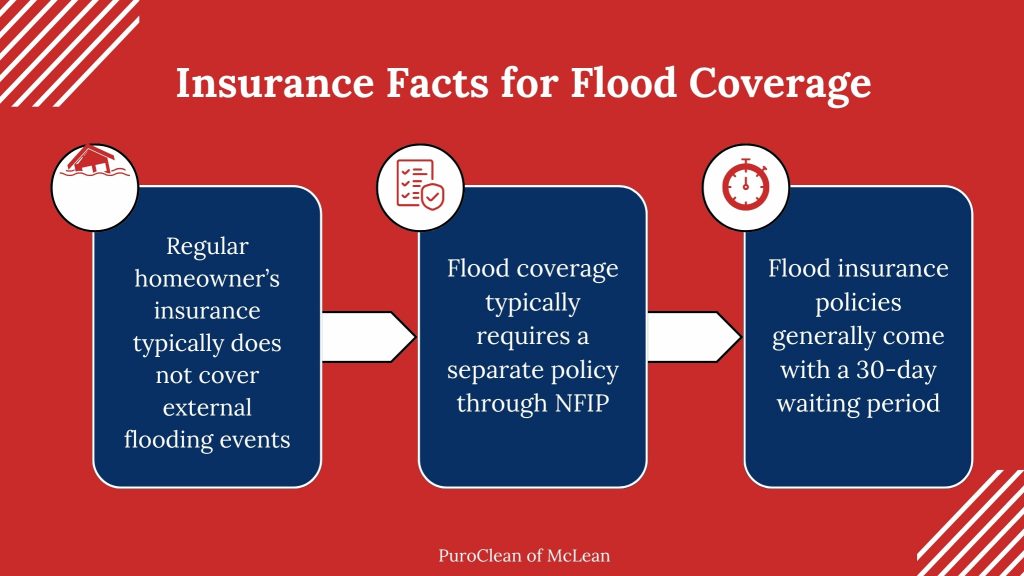
- Your regular homeowner’s insurance typically covers sudden and accidental water damage originating from inside your home, such as burst pipes or appliance malfunctions. However, it does not cover external flooding events like heavy rainstorms, flash floods, or overflowing creeks and rivers.
- Flood coverage typically requires a separate policy through the National Flood Insurance Program. The NFIP, backed by FEMA, offers specialized coverage. Purchasing flood insurance ensures you’re protected when heavy rain hits, safeguarding you against potentially massive repair costs.
- Flood insurance policies generally come with a 30-day waiting period. This means you can’t wait until the forecast predicts heavy storms or potential flooding before securing coverage. If you delay, you risk going through the next storm completely unprotected.
Many instances of water damage McLean residents encounter each year are not covered by standard policies, highlighting the importance of separate flood insurance.
McLean’s Seasonal Water Damage Checklist
Protecting your home year-round starts with understanding how each season in McLean brings its own water-related challenges. Use this seasonal checklist to stay ahead of the most common causes of water damage McLean and keep your property safe, dry, and well-maintained.
Spring Checklist (March–May):
- Inspect Gutters and Downspouts
- Clear debris and leaves to prevent clogs.
- Ensure water flows freely away from your foundation.
2. Test Your Sump Pump
- Verify that it activates correctly and pumps water efficiently.
- Consider a battery-powered backup to protect during outages.
3. Examine the Basement and Foundation
- Look for cracks, water stains, or dampness.
- Address issues promptly to prevent spring flooding.
4. Check Outdoor Drainage and Grading
- Ensure landscaping slopes away from your home to direct water flow away.
Summer Checklist (June–August):
- Monitor for Flash Flood Risks
- Regularly inspect storm drains and clear any blockages.
- Keep basement windows and entryways sealed and watertight.
2. Maintain Air Conditioning and Ventilation
- Reduce indoor humidity to prevent mold growth.
- Keep filters clean and ensure proper drainage from HVAC units.
3. Inspect Roof and Windows
- Check for leaks, cracks, and worn sealants around windows, doors, and roof shingles.
Fall Checklist (September–November):
- Clean Gutters Thoroughly
- Remove fallen leaves and debris to avoid winter ice dams.
- Double-check downspout extensions to ensure proper drainage.
2. Inspect Your Foundation Again
- Seal any cracks or openings before winter arrives.
3. Winterize Your Outdoor Faucets
- Shut off outdoor water valves and drain hoses to prevent freezing.
Winter Checklist (December–February):
- Insulate Exposed Pipes
- Wrap pipes in insulation sleeves to protect against freezing.
2. Maintain Consistent Indoor Temperature
- Keep your home heated consistently, even when away, to prevent pipe bursts.
3. Regularly Check for Signs of Moisture
- Monitor basement and attic areas for condensation, mold growth, or leaks.
4. Clear Snow from Roof and Gutters
- Prevent ice dams by safely clearing heavy snow buildup.
Conclusion
Water damage in McLean isn’t just a one-season event; it’s the result of ongoing seasonal water damage caused by its unique climate. But with a seasonal checklist in hand, a clear understanding of your insurance coverage, and timely home maintenance, you can stay ahead of costly surprises.
Now is the time to review your home’s defenses, speak with your insurer about flood cleanup & protection, and take preventive steps before the next storm hits. A little preparation today can save you thousands tomorrow and give you peace of mind.



 PuroClean of McLean and West Falls Church