


Introduction
A small roof leak rarely stays small for long. What starts as a drip during a storm can quietly turn into a hidden mold problem in your attic, spreading before you notice any visible damage inside your home. Many McLean homeowners don’t think to check their attic until there’s a clear issue, but by then, mold may already be established.
Understanding when attic mold crosses the line from minor concern to real problem can save you thousands in repairs and protect your indoor air quality. If you’re dealing with attic mold in McLean VA, knowing the warning signs, timelines, and risks tied to roof leaks is key to acting at the right moment.
How Roof Leaks Lead To Attic Mold Growth
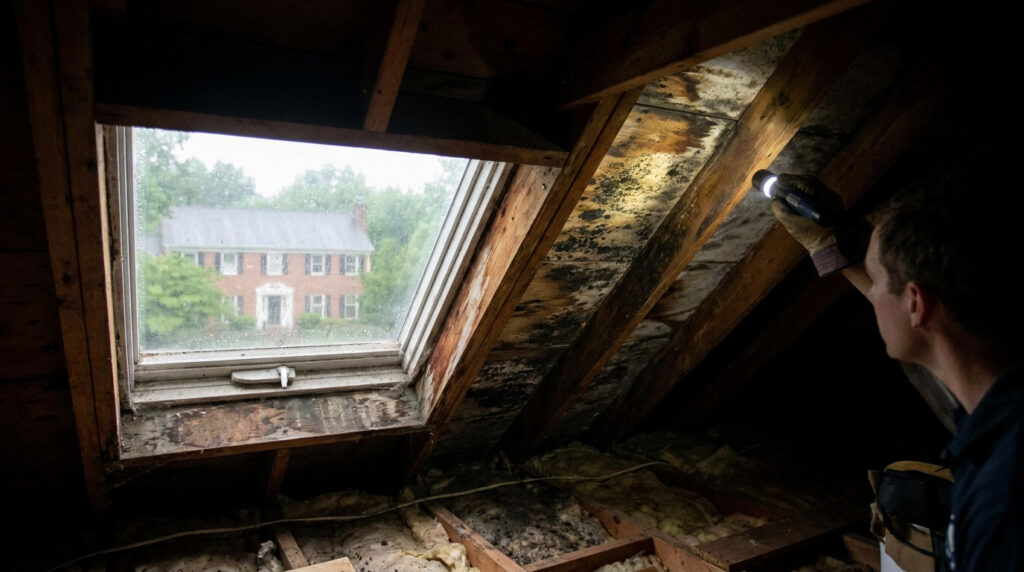
Roof leaks create the exact conditions mold needs: moisture, organic material, and limited airflow. Even a slow, intermittent leak can keep insulation and wood framing damp long enough for mold to develop.
In McLean, seasonal weather swings make the situation worse. Snow accumulation, ice dams, and heavy rainstorms can push water into vulnerable areas of your roof. Once moisture enters the attic, it often gets trapped, especially in homes with poor ventilation.
Mold doesn’t need standing water to grow. Damp wood sheathing, wet insulation, or even high humidity levels can trigger it. Within 24 to 48 hours of consistent moisture exposure, mold spores can begin colonizing surfaces.
That means a leak you noticed last week could already be contributing to a larger issue.
Early Warning Signs You Should Not Ignore
Catching attic mold early makes a significant difference in how complex and costly the solution will be. These signs often show up before visible mold spreads widely.
• Musty odors in upper floors or near attic access points
• Dark staining or discoloration on attic wood or insulation
• Damp or compressed insulation that feels heavier than normal
• Visible condensation on nails or roof decking
• Peeling paint or warped ceilings below the attic
If you notice even one of these signs, it’s time to investigate further before the problem escalates.
When Attic Mold Becomes A Serious Problem
Not all mold requires urgent intervention, but certain conditions signal a more advanced and risky situation. This is where hesitation can lead to structural damage or indoor air issues.
• Mold covering large sections of roof decking or rafters
• Persistent moisture even after a leak is repaired
• Mold spreading beyond the attic into walls or ceilings
• Strong odors throughout the home, not just near the attic
• Signs of wood deterioration or soft structural components
Once mold reaches this stage, simple cleaning is no longer enough. Professional remediation is usually required to fully address the issue.
Why McLean Homes Are Especially Vulnerable
Many homes in McLean feature complex rooflines, older construction, or attic spaces that weren’t designed with modern ventilation standards. These factors increase the likelihood of moisture buildup.
Tree coverage is another local factor. Heavy shade can keep roofs damp longer after rain, slowing evaporation and increasing the chance of leaks and mold growth.
Additionally, attic insulation in older homes may trap moisture instead of allowing airflow, creating pockets where mold can thrive undetected.
This combination makes proactive attic inspections more important for McLean homeowners than in areas with simpler roof designs or newer construction.
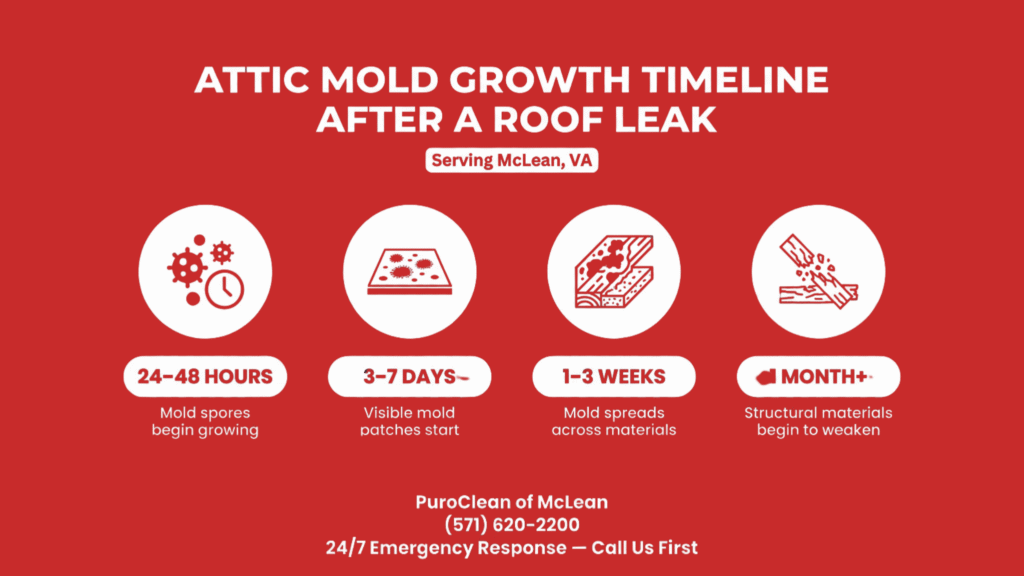
How Long Does It Take for Mold To Spread
Mold growth is faster than most homeowners expect. The timeline depends on moisture levels, temperature, and ventilation.
• 24 to 48 hours: Mold spores begin to grow on damp surfaces
• 3 to 7 days: Visible patches may start forming
• 1 to 3 weeks: Mold spreads across insulation and wood
• 1 month or more: Structural materials may begin to weaken
The longer moisture remains, the more aggressive the spread becomes. Acting quickly after a roof leak can significantly limit damage.
Steps To Take If You Suspect Attic Mold
If you think a roof leak has led to mold, your response should be deliberate and timely. Avoid guesswork and focus on stopping the source first.
• Identify and repair the roof leak as soon as possible
• Avoid disturbing visible mold to prevent spreading spores
• Document affected areas with photos for assessment
• Check insulation and ventilation conditions
• Schedule a professional inspection for an accurate evaluation
Taking these steps helps contain the issue while setting up an effective solution.
Common Mistakes Homeowners Make
Many homeowners unintentionally make attic mold problems worse by taking the wrong approach early on. Knowing what to avoid can save time and money.
• Painting over mold instead of removing it
• Ignoring small leaks that appear seasonal
• Using household cleaners that don’t kill mold at the root
• Failing to address attic ventilation issues
• Assuming the problem is resolved once the leak stops
Avoiding these mistakes keeps a manageable issue from turning into a major repair project.
Professional Inspection Vs DIY Assessment
It’s tempting to check your attic and make a judgment call, but mold is often more extensive than it appears. Surface staining may only represent a fraction of the problem.
Professionals use moisture meters, thermal imaging, and air sampling to detect hidden mold and identify ongoing moisture sources. They also understand how mold behaves in attic environments, especially in homes with layered insulation or complex roof structures.
A DIY inspection can help you spot obvious issues, but it won’t give you a complete picture. If you suspect attic mold in McLean VA, a professional assessment provides clarity and prevents underestimating the scope.
What A Proper Mold Remediation Includes
Effective mold remediation goes beyond cleaning visible areas. It addresses both the contamination and the conditions that allowed it to grow.
• Containment to prevent mold spores from spreading
• Removal of contaminated materials like insulation
• Cleaning and treatment of affected wood surfaces
• Moisture control through ventilation or repairs
• Post-remediation verification to confirm success
A thorough process ensures the mold does not return after cleanup.
Cost Factors And What Influences Them
The cost of addressing attic mold varies widely depending on how early the issue is caught and how far it has spread.
Small, localized mold problems may only require targeted cleaning and minor repairs. Larger infestations involving insulation removal, structural treatment, and ventilation upgrades can significantly increase costs.
Roof repair complexity also plays a role. A simple shingle fix is very different from addressing flashing issues or structural damage.
Timing is the biggest cost factor. Acting early almost always leads to a more manageable and less expensive solution.
How To Prevent Future Attic Mold Issues
Prevention is far more effective than remediation, especially in areas prone to roof leaks and humidity shifts. Consistent maintenance can dramatically reduce your risk.
• Schedule regular roof inspections, especially after storms
• Ensure attic ventilation is balanced and unobstructed
• Replace damaged or aging insulation
• Seal air leaks that allow warm air into the attic
• Monitor attic conditions during seasonal changes
These steps help keep moisture levels under control and reduce the likelihood of mold returning.
Conclusion
Attic mold rarely appears overnight without warning. It develops from conditions that are often visible if you know where to look and act early enough. A roof leak is one of the most common triggers, but the real problem begins when moisture lingers and goes unchecked.
If you notice signs tied to mold from roof leak situations, don’t wait for visible spread before taking action. A quick inspection, proper repairs, and a professional evaluation can prevent deeper structural issues and protect your home long-term.
FAQs
Q: How do I know if attic mold is dangerous or just cosmetic?
A: Cosmetic staining is usually limited and dry, while active mold spreads, has a musty odor, and is linked to moisture. If it’s growing or smells, it needs attention.
Q: Can attic mold go away once the leak is fixed?
A: No, fixing the leak stops moisture, but existing mold remains and can continue affecting air quality unless properly removed.
Q: Is attic mold covered by homeowners insurance?
A: Coverage depends on the cause. Sudden damage from a storm may be covered, but long-term leaks or neglect are often excluded.