


Introduction
A persistent earthy smell in your basement is rarely just a minor inconvenience. It often points to hidden moisture problems, and in many cases, active mold growth behind walls, under flooring, or within insulation. Homeowners in McLean, with its humid summers and older housing stock in some neighborhoods, are especially prone to these conditions.
A basement mold smell in McLean homes is more than an annoyance. It is usually a signal that something is actively growing, spreading, or decaying out of sight. Understanding what that smell means, where it comes from, and how to respond can prevent structural damage, air quality issues, and costly repairs later.
What Causes That Distinct Basement Mold Smell
That recognizable musty odor is not random. It comes from microbial volatile organic compounds released by mold colonies as they grow and break down organic materials like wood, drywall, and dust.
In McLean homes, several factors combine to create the perfect environment for this process. Basements tend to trap moisture due to limited airflow. Seasonal humidity increases condensation on cool surfaces. Small foundation cracks allow groundwater intrusion. Even well-finished basements can hide moisture behind walls where mold thrives unnoticed.
The smell itself is often the first clue. It usually appears before visible mold patches, which is why ignoring it can allow the problem to expand significantly before detection.
Why McLean Homes Are Particularly Vulnerable
Local climate and construction patterns play a big role in how mold develops in basements.
Environmental And Structural Factors That Increase Risk
These conditions make certain homes more prone to persistent basement odors and hidden mold growth.
– High summer humidity increases indoor moisture levels, especially in poorly ventilated basements
– Clay-heavy soil in parts of McLean retains water, increasing hydrostatic pressure against foundations
– Older homes may lack modern waterproofing or vapor barriers
– Finished basements can trap moisture behind drywall and insulation
– HVAC systems sometimes fail to properly dehumidify lower levels
Together, these factors create a setting where moisture lingers long enough for mold to establish and spread.
Hidden Infestation Or Surface Issue How To Tell The Difference
Not every musty smell indicates a severe hidden problem, but distinguishing between surface-level moisture and deeper infestation is critical.
A light odor that appears only during humid weather may be tied to temporary condensation. However, a persistent smell that remains even after cleaning or airing out the space usually points to something concealed.
The location of the odor matters too. If the smell is strongest near walls, baseboards, or built-in cabinetry, it often suggests mold growth behind those surfaces. If it is evenly distributed, the issue may involve HVAC circulation or widespread humidity imbalance.
Ignoring these distinctions can lead to ineffective fixes like surface cleaning while the underlying issue continues to grow.
Common Sources Of Musty Odor In Basement Spaces
Basement odors rarely come from a single source. They often develop from multiple moisture-related issues working together.
Frequent Problem Areas To Check First
These locations are known for harboring hidden moisture and mold growth.
– Behind finished walls where insulation traps moisture
– Under carpeting or padding installed directly on concrete
– Around sump pumps or floor drains with poor sealing
– Near foundation cracks or window wells that allow water intrusion
– Inside HVAC ducts or near air handlers in the basement
Identifying the source is the first step toward solving the problem effectively rather than masking the smell.
Health And Indoor Air Quality Implications
A musty basement does not stay isolated. Air from the basement often circulates through the entire home, especially in houses with forced-air systems.
Mold spores and microbial compounds can travel upward, affecting living spaces. This can lead to respiratory irritation, persistent allergies, and worsened symptoms for individuals with asthma. Even when health effects are mild, the air quality decline is noticeable.
The concern is less about visible mold and more about what you cannot see. Long-term exposure to contaminated air can quietly impact comfort and well-being throughout the home.
Signs That Your Basement Smell Signals A Bigger Problem
Some warning signs indicate that the issue goes beyond simple humidity and requires immediate attention.
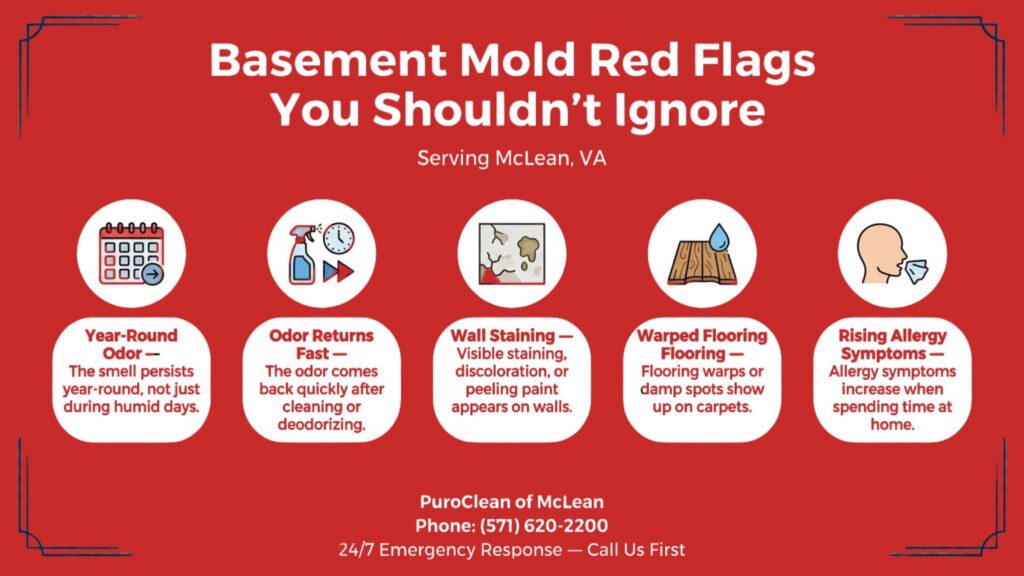
Red Flags You Should Not Ignore
These indicators suggest active mold growth or ongoing moisture intrusion.
– Smell persists year-round, not just during humid days
– Odor returns quickly after cleaning or deodorizing
– Visible staining, discoloration, or peeling paint on walls
– Warped flooring or damp spots on carpets
– Increased allergy symptoms when spending time at home
These signs point to conditions that will not resolve without targeted intervention.
Practical Steps To Diagnose The Source
Pinpointing the cause requires more than a quick inspection. A systematic approach helps narrow down where the problem originates.
How To Investigate A Basement Odor Effectively
Start with simple observations and work toward more detailed checks.
– Walk the basement and note where the smell is strongest
– Check humidity levels using a hygrometer; aim for below 60 percent
– Inspect walls and floors for dampness or discoloration
– Look behind furniture and stored items where airflow is limited
– Examine exterior drainage and grading around the foundation
These steps provide a clearer picture of whether the issue is surface-level or hidden deeper within the structure.
Why Quick Fixes Often Fail
Air fresheners, scented candles, and even some cleaning sprays only mask the odor temporarily. They do nothing to address the moisture source or the mold itself.
Even dehumidifiers, while helpful, are not a complete solution if water is actively entering the basement or trapped within materials. Without addressing the root cause, the smell will return.
Homeowners sometimes paint over affected areas or replace flooring without resolving the underlying moisture. This can trap mold further, making the problem harder to detect and more expensive to fix later.
Effective Solutions That Address The Root Cause
Solving a basement odor requires targeting both moisture and mold simultaneously.
Long Term Fixes That Actually Work
These solutions focus on eliminating conditions that allow mold to thrive.
– Install or upgrade a basement dehumidifier sized for the space
– Seal foundation cracks and improve exterior drainage
– Add vapor barriers to walls and floors where needed
– Replace water-damaged materials such as drywall or carpeting
– Ensure proper ventilation and airflow throughout the basement
Addressing both moisture entry and indoor humidity prevents the problem from returning.
When To Call A Professional
Some situations go beyond what a homeowner can reasonably handle.
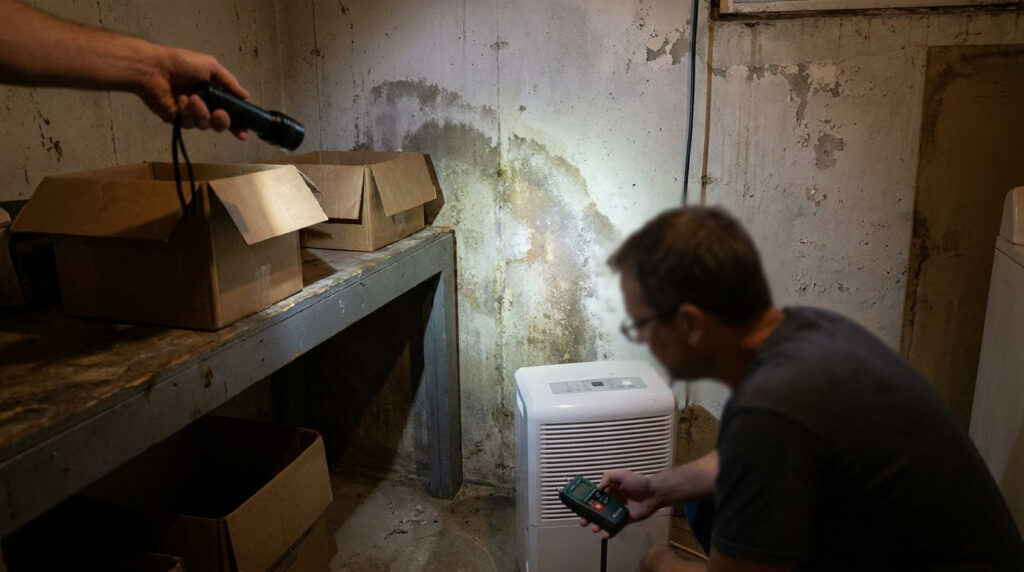
If the smell persists despite basic efforts, or if there are signs of hidden mold, professional inspection is the safest route. Specialists can use moisture meters, infrared imaging, and air testing to locate the source without unnecessary demolition.
In McLean, where property values are high, early professional intervention can protect both the structure and resale value of the home.
Preventing Future Basement Odors
Prevention is far more effective and less costly than remediation.
Simple Habits That Keep Basements Dry And Fresh
These practices reduce the likelihood of recurring moisture problems.
– Run a dehumidifier during humid months consistently
– Keep gutters clean and direct water away from the foundation
– Avoid storing items directly against basement walls
– Regularly inspect for leaks or condensation issues
– Maintain HVAC systems to ensure proper airflow
Consistent attention to these details keeps moisture levels in check and reduces the risk of mold growth.
Conclusion
A persistent odor in your basement is rarely harmless. In many cases, it points to hidden moisture problems and potential mold growth that can spread if ignored. Understanding the cause, identifying early warning signs, and taking targeted action can prevent larger structural and air quality issues.
If you notice a musty odor in basement spaces that does not go away, treat it as a signal rather than a nuisance. Investigate the source, address moisture at its origin, and bring in expert help if needed. Acting early protects both your home and the comfort of everyone living in it.
FAQs
Q: Does a musty basement smell always mean mold is present?
A: Not always, but it often does. The smell is typically caused by microbial compounds, which are commonly linked to mold or mildew growth in damp environments.
Q: Can I eliminate basement odor with a dehumidifier alone?
A: A dehumidifier helps control moisture, but it will not fix leaks, trapped moisture, or existing mold. It works best as part of a broader solution.
Q: How quickly should I act on a persistent basement smell?
A: Immediately. The longer the odor persists, the more likely the underlying issue is spreading, which increases repair complexity and cost.