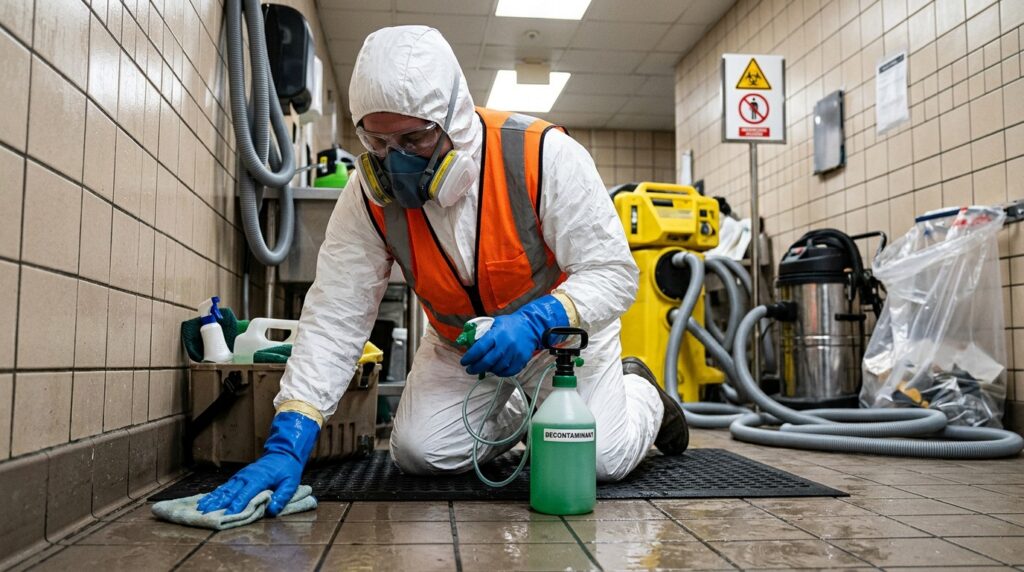
The words used after a contamination event can make a routine cleanup sound more complete than it is. Wiping a surface, reducing germs, applying a disinfectant, and removing contaminated materials are different jobs with different limits. The trouble starts when people treat them as interchangeable and return to a room before the underlying contamination has been addressed. This guide separates the terms, explains where each one stops, and helps you recognize when a situation calls for more than household cleaning.
TL;DR
– Cleaning removes visible soil, residue, and debris but may not address what remains on the surface.
– Sanitizing lowers the level of germs on a cleaned surface without solving every contamination concern.
– Disinfecting is a targeted surface treatment, not a substitute for removing contaminated porous materials.
– Biohazard decontamination addresses the contaminated area, affected contents, and materials that cannot be safely cleaned.
– Keep people and pets away from a suspected biohazard area until its condition has been assessed.
These Terms Describe Different Jobs, Not Different Names for the Same Work
Cleaning, sanitizing, disinfecting, and decontamination sit on a spectrum, but they do not simply mean “more cleaning.” Each term describes a different goal. A clean-looking room can still need further work, while a room with ordinary dust and dirt may need nothing beyond normal cleaning.
Cleaning is the physical removal of dirt, spills, residue, and loose material from a surface. It is usually the first task because grime can prevent a later product from reaching the surface beneath it. Cleaning can make a room look and smell better, but appearance alone does not determine whether contamination remains.
Sanitizing is a narrower term that applies when the aim is to reduce germs on a surface after it has been cleaned. It is often discussed in everyday settings such as kitchens, shared bathrooms, and food-preparation areas. Sanitizing does not describe the removal of bodily fluids, sewage, or contaminated building materials.
Disinfecting is a more specific surface-treatment step. It may be appropriate for hard, nonporous surfaces after the surface has been cleaned and the product is used as directed. It does not turn carpet, padding, drywall, insulation, or upholstered furniture into clean materials if contamination has traveled into them.
Biohazard decontamination starts with a different question: what has been affected, and can it be cleaned safely? That question may include the visible surface, nearby materials, hidden layers, and the route people could take through the area.
Decide Whether Ordinary Cleaning Is Enough
Ordinary cleaning is appropriate for visible soil on materials that can be cleaned without creating exposure concerns. A spilled drink on a counter or muddy footprints on tile are straightforward examples: the material is visible, the surface is accessible, and the building materials remain unaffected.
The decision changes when the material may be contaminated, its source is unclear, or it has reached absorbent materials. Wiping a surface may not remove contamination from seams, flooring, carpet backing, or affected contents.
Use the material itself to guide the first decision:
- Identify whether the affected surface is hard and nonporous or soft and absorbent.
- Look for spread beyond the original area, including tracking, splatter, or moisture migration.
- Keep people away if you cannot identify the material or its path through the room.
- Avoid moving affected contents through clean parts of the property.
In McLean homes and businesses, pay particular attention to bathrooms, hallways, basements, utility rooms, and shared entry points, where shoes, tools, or belongings can carry material into other areas.
Separate Sanitizing From Disinfecting Before Choosing a Product
Sanitizing and disinfecting serve different purposes. Sanitizing lowers the level of germs on a cleaned surface, while disinfecting targets specific microorganisms according to the product’s label claims.
Choose a product based on the surface, the type of treatment needed, and the directions on its label. Check that the product is approved for the intended use and compatible with the surface. Follow the required application method and contact time, the length of time the surface must remain visibly wet for the product to work as directed.
Applying more product or spraying an entire room does not improve the result. Never mix cleaning products, and follow label instructions for ventilation and protective equipment.
These treatments are appropriate for accessible surfaces when the materials are intact. They are not substitutes for biohazard decontamination when bodily fluids, sewage, animal waste, or other potentially hazardous materials have soaked into porous building components.
Recognize When Biohazard Decontamination Is Required
Biohazard decontamination is the appropriate frame when the concern is not just a dirty surface but contamination that may expose people or affect materials beyond what can be wiped.
This type of work begins by controlling access to the affected area. That keeps the material from being spread by foot traffic, pets, cleaning tools, or personal belongings. It also gives the person evaluating the area a clearer view of what was affected before items are moved.
Porous materials often create the hardest decisions. Carpet, carpet pad, fabric furniture, mattresses, paper goods, unfinished wood, insulation, and drywall can hold material below the visible surface. Trying to clean only the top layer can leave the source behind or spread it into adjacent areas.
The same problem can arise in places that seem easy to clean. A bathroom floor may have gaps around fixtures. A vehicle may have fabric seams and padding. A finished basement may have trim, flooring layers, and stored belongings that hide the full path of contamination.
PuroClean of McLean and West Falls Church serves properties in McLean, Falls Church, Arlington, and nearby communities where homes and workplaces often combine finished living areas with storage, utility, and shared-access spaces. The practical question is not whether the room looks presentable. It is whether the affected materials can be safely cleaned or need controlled removal.
Keep the Scene From Becoming a Larger Cleanup
The first priority is to limit contact and prevent potentially contaminated material from spreading to unaffected areas.
Avoid walking through the area, moving furniture, or handling affected belongings. These actions can transfer material to flooring, door handles, stair rails, vehicles, and personal items.
A safer approach is to close off the area if possible, keep children and pets away, and avoid disturbing affected items. If there is an immediate danger, injury, suspected crime, fire, or unsafe structure, contact emergency services before arranging cleanup.
Do not use a household vacuum on unknown contamination or sweep dried material into the air. Avoid placing potentially affected items in regular trash until you know what they are and how they should be handled.
If the source is known and limited to an intact, hard surface, ordinary cleaning and appropriate surface treatment may be sufficient. However, when the source is uncertain, contamination has spread, or porous materials and contents are affected, a professional assessment may be necessary. Some materials cannot be safely cleaned and may require controlled removal and proper disposal rather than surface treatment alone.
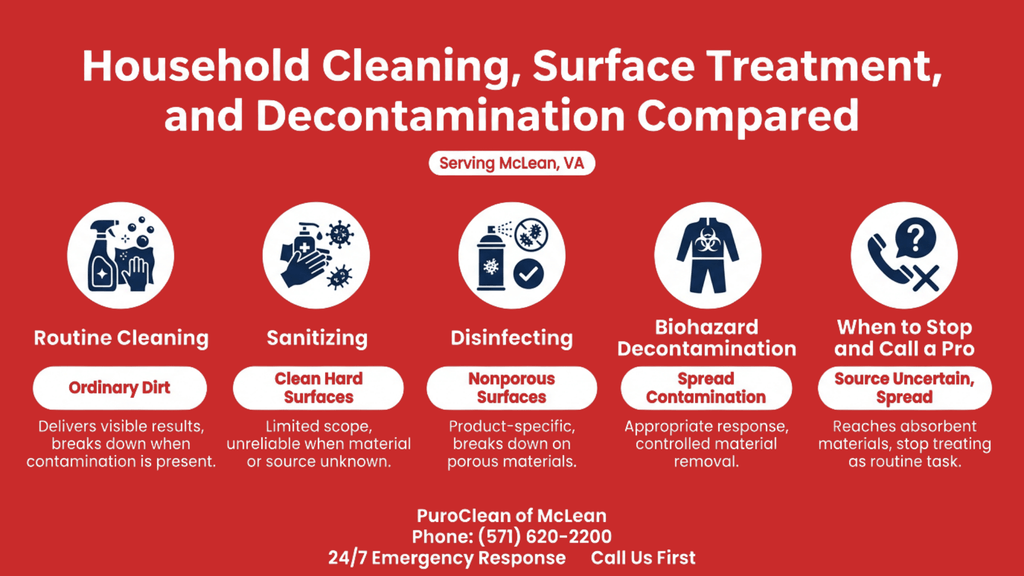
Household Cleaning, Surface Treatment, and Decontamination Compared
| Option | Works When | Breaks When | Trade-Off |
| Routine cleaning | Ordinary dirt | Contamination is present | Visible results only |
| Sanitizing | Clean hard surfaces | Material is unknown | Limited surface scope |
| Disinfecting | Intact nonporous surfaces | Porous materials affected | Product-specific process |
| Biohazard decontamination | Contamination has spread | Emergency response comes first | Materials may require removal |
Final Verdict
If the issue is ordinary dirt on an intact surface, clean it thoroughly and let the surface dry. If the surface is clean but needs a targeted treatment, the sanitizing vs disinfecting decision depends on the surface and the purpose of the treatment. If bodily fluids, sewage, animal waste, or an unknown substance has reached porous materials, biohazard decontamination is the more accurate concern because wiping the visible area may not resolve what lies underneath.
If you are unsure where the material traveled, keep the area closed off rather than testing it with more household products. PuroClean of McLean and West Falls Church can help you assess whether the situation calls for routine cleaning, controlled cleanup, or removal of affected materials.
FAQs
Q: Is cleaning the same as disinfecting?
A: No. Cleaning removes dirt, residue, and loose material from a surface. Disinfecting is a separate surface-treatment step that may be used after cleaning. The distinction matters because applying a disinfectant over grime does not remove the grime, and cleaning alone may not meet the goal of treating an intact hard surface.
Q: What makes something a biohazard cleanup issue?
A: It becomes a biohazard cleanup issue when the material may create an exposure concern, has spread beyond one accessible surface, or has entered materials that cannot be fully cleaned by wiping. The source, the affected materials, and the route through the property matter more than whether the room looks clean afterward.
Q: Should I throw away everything near a contaminated area?
A: Not necessarily. Some intact, nonporous items may be cleaned depending on the material and the nature of the contamination. Absorbent items are harder to assess because material can move below the surface. Keep items in place when possible until you understand what was affected and whether cleaning is appropriate.
Q: Can I use bleach for every cleanup?
A: No. A product that works on one hard surface may not be suitable for every material or every type of event. Mixing products can create hazards, and strong odors do not prove that a space has been properly cleaned. Read product directions and avoid using household chemicals as a substitute for assessing contamination.