


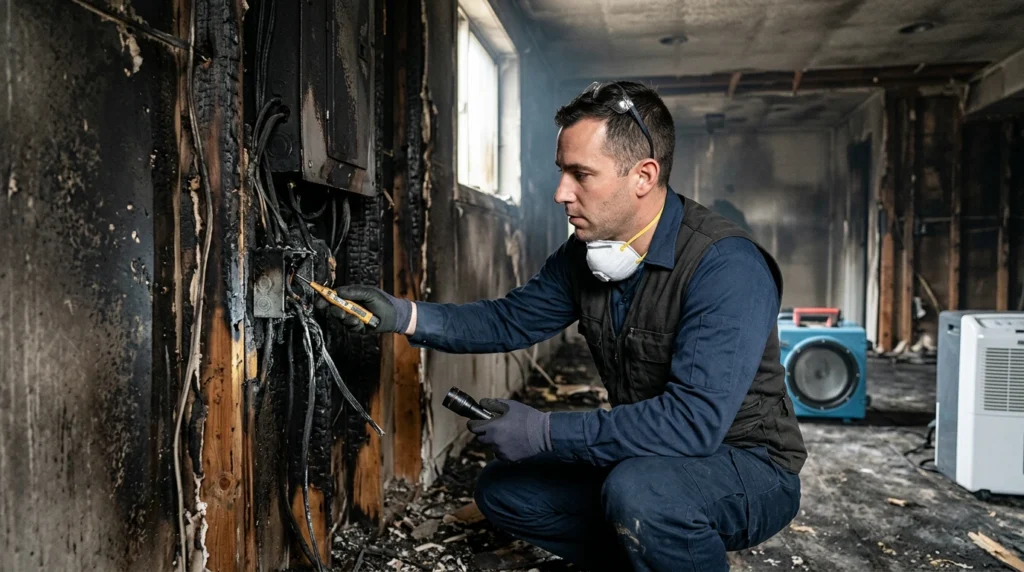
An electrical fire has been extinguished in your McLean home, and you may be standing outside wondering what happens next. Do not reenter until fire officials permit access, and follow any restrictions they give you.
Electrical fire restoration generally involves assessing damage, controlling hazards, protecting exposed areas, addressing firefighting water, cleaning affected materials, and checking the results before rebuilding. Some activities overlap, depending on conditions. Understanding the process helps you ask useful questions and avoid repairs that conceal unresolved damage.
Follow the restoration sequence before any rebuilding begins
The amount of cleaning and rebuilding depends on the fire’s extent, smoke spread, water damage, and affected materials. For electrical fire damage in McLean, VA, an assessment helps establish the scope before replacement finishes cover damaged areas.
PuroClean of McLean and West Falls Church provides fire and smoke damage restoration for homes and businesses in McLean, Falls Church, Arlington, and nearby communities. The work begins with a careful look at the fire area, adjoining rooms, contents, ceilings, walls, and air paths rather than treating the burned room as the whole loss.
The ANSI/IICRC S700 Standard for Professional Fire and Smoke Damage Restoration, published in 2025, covers contractor qualifications, assessment, mitigation, odor management, contents restoration, and post-restoration evaluation. That order matters because each phase gives the next one a clearer starting point.
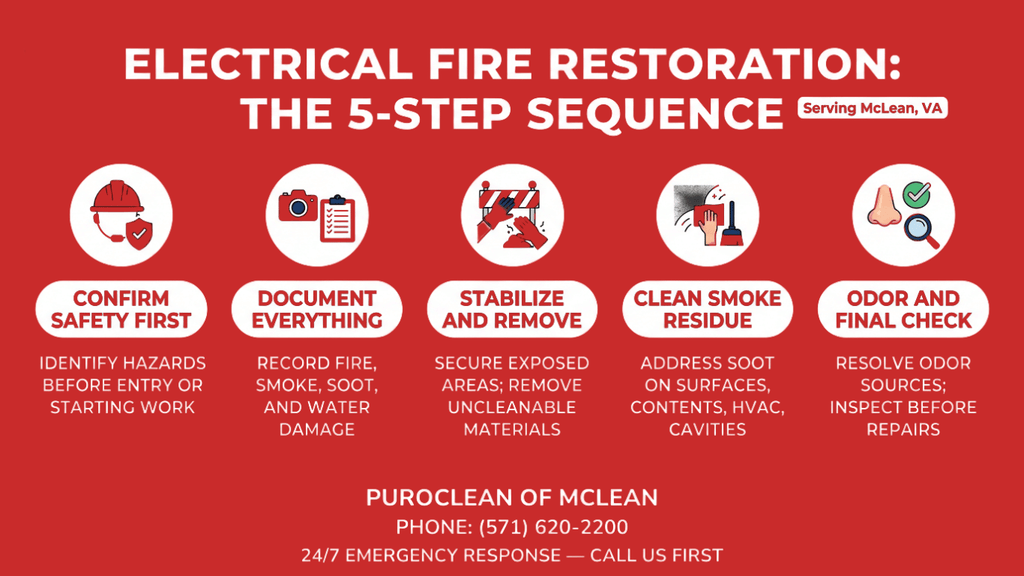
A typical work sequence includes:
- Obtain appropriate access clearance and identify immediate hazards.
- Document affected areas and protect the property from further damage.
- Assess firefighting water and arrange extraction and drying where needed.
- Determine which materials and contents can be cleaned or require removal.
- Clean residues, address odor sources, and evaluate results before replacement finishes are installed.
Some tasks can proceed together in safely separated areas. Others depend on electrical evaluation, structural assessment, or decisions about affected materials. Ask the team which activities can begin and what must happen before rebuilding.
Inspect smoke paths beyond the burned room
Smoke and soot can travel beyond the room where flames were contained. A closed door may reduce damage, but it does not establish that the space is unaffected.
Assessment may include doorways, ventilation openings, gaps around service penetrations, adjoining rooms, and concealed spaces where inspection is warranted. A room without burn marks may still have residue on ceilings, furnishings, blinds, or ventilation components.
The HVAC system may also need inspection. Residue in affected components can contribute to particles or odors reaching other rooms when the system operates.
Do not restart disconnected utilities yourself. USFA advises homeowners against restoring utilities on their own after a fire. Ask the relevant professionals whether the HVAC system can operate during assessment and cleanup.
Smoke can contain fine particles that affect respiratory and cardiovascular health. EPA explains that particle exposure can affect the lungs and heart. The absence of visible soot does not establish that a room is suitable for normal use. People with health concerns should ask their clinician about exposure and follow the relevant authorities’ guidance on returning.
Odor that returns often points to a missed source
A smoke smell that returns after airing out usually means residue remains in a material, cavity, or air path. Odor control works after the source is found and cleaned, not as a substitute for cleaning it.
Porous materials can hold smoke particles deep below the visible surface. Drywall, insulation, carpet padding, unfinished wood, fabrics, and contents may need different decisions based on the type and extent of residue. The goal is to remove or clean what is affected before repairs seal it in.
Clear electrical hazards before restoration work moves forward
A qualified electrician should assess affected electrical components regardless of the system’s age. They should identify what must remain disconnected and what electrical repairs are needed.
Restoration professionals assess and clean fire damage. An electrician evaluates wiring, outlets, panels, and connected equipment within their scope. Structural concerns may require a separate qualified specialist.
If the cause remains under investigation, coordinate access and any removal of electrical components with the fire investigator, insurer, and electrician. Avoid discarding potentially relevant items before the responsible parties have provided instructions.
Restoration may proceed in areas that have been cleared and safely separated from outstanding hazards. Replacement finishes should wait until the relevant inspections, repairs, and restoration checks allow that work to proceed.
Document the loss before cleaning changes the evidence
Insurance documentation should begin early because cleaning and removal can change what the insurer needs to see. Photos, item lists, moisture findings, affected-room notes, and records of emergency actions give the claim a clearer record.
Virginia Code § 38.2-2101 requires homeowners fire insurance policies issued in Virginia to meet the standard provisions in § 38.2-2105. Fire is a basic cause of loss under the state’s dwelling-property insurance rules, but the amount paid and the work approved still depend on the specific policy, the cause of loss, limits, deductibles, exclusions, and the insurer’s review.
Virginia Administrative Code 14VAC5-342 requires homeowners insurers to cover reasonable repairs that protect covered property from further damage when those repairs result directly from a covered loss. That can matter after a fire when an opening, damaged window, or exposed area needs temporary protection while the claim is being evaluated.
Keep your own record as well. Photograph rooms before moving items if it is safe to do so. Save receipts for emergency expenses, keep claim correspondence in one place, and make a written list of damaged contents while details are still fresh.
A restoration assessment can organize the damage by room and material, which helps distinguish fire damage from smoke damage and water used to put out the fire. It can also show why cleanup may involve areas where flames never reached.
Do not assume a claim will cover every item or every decision. Ask the insurer what documentation it needs, what emergency work it authorizes, and how it wants estimates or invoices submitted. Clear records make it easier to discuss the scope of electrical fire restoration without relying on memory after a stressful event.
Choose the level of help that matches the damage
The services required depend on the damage found during assessment. The visible burn area alone cannot establish whether smoke, moisture, or electrical damage extends elsewhere.
| Type of help | Main responsibility | Important boundary |
| Licensed electrician | Assess affected electrical components and perform necessary electrical repairs | Does not replace smoke, soot, or water-damage assessment |
| Fire and smoke restoration team | Assess residues, contents, moisture, cleaning needs, and odor sources | Must coordinate with electrical, structural, and other specialists where needed |
| Repair or reconstruction contractor | Repair or replace damaged building components | Replacement finishes should follow the relevant inspections and restoration checks |
One company may provide several services, but confirm who is responsible for each part. Ask about relevant training, credentials, insurance, and the proposed assessment and restoration plan.
Conclusion
The visible burn area does not establish the full restoration scope. Electrical inspection, smoke and soot assessment, and checks for firefighting water help determine what can remain, what needs cleaning, and what requires replacement.
If you cannot tell how far smoke, soot, or water traveled, arrange an assessment before making repair decisions. PuroClean of McLean and West Falls Church can explain the electrical fire restoration process and help document the affected areas for your insurer.
FAQs
Q: Is it safe to stay in my house after an electrical fire?
A: It depends on what the fire department, electrician, and restoration assessment find. Do not return until fire officials say the structure is safe to enter. Even after visible flames are out, smoke residue, damaged wiring, water, and structural damage may affect whether particular rooms can be used. Ask an electrician about electrical safety and your insurer about temporary living expense coverage under your policy.
Q: What certifications should a fire restoration contractor have?
A: Ask about training and certification related to fire and smoke damage restoration, as well as the company’s process for documenting damage and evaluating odor sources. The IICRC publishes the S700 standard for professional fire and smoke damage restoration. A restoration contractor’s qualifications do not replace the need for a licensed electrician to inspect and repair electrical components.
Q: How long does fire restoration take after an electrical fire?
A: There is no standard timeline because the scope depends on the fire source, smoke spread, water damage, materials affected, electrical clearance, and insurer review. A contained fire may require limited work, while smoke in several rooms or HVAC pathways can add assessment and cleaning tasks. Ask for the work sequence and the decisions that must be made before repairs can begin.
Q: Will my homeowners insurance cover electrical fire damage restoration?
A: Fire is a basic covered cause of loss under Virginia dwelling-property insurance rules, but coverage for your specific claim depends on your policy, deductible, exclusions, limits, cause of loss, and insurer review. Keep photos, receipts, and damage records. Ask the insurer which emergency actions it approves and what documents it needs before cleanup or repair work begins.