 PuroClean of McLean and West Falls Church
The fire may be out, but your home isn’t safe yet. What many McLean homeowners don’t realize is that the real danger begins after the last flame is extinguished. Beneath the visible soot and smoke lies a mix of invisible toxins, moisture, and chemical residue quietly affecting the air you breathe. Every hour that cleanup is delayed allows these contaminants to spread deeper into walls, carpets, and even your lungs.
It’s easy to underestimate what’s left behind. The air may seem clear, but microscopic soot particles can linger for weeks, while water used to fight the fire fuels mold growth within days. These aren’t just structural problems; they’re serious health concerns that can cause long-term respiratory issues, skin irritation, and fatigue.
Delaying fire damage cleanup doesn’t just risk your property; it risks your well-being. Let’s uncover what really happens when restoration waits too long, and why quick action is the first step toward a truly safe recovery.
Understanding Fire Damage Cleanup
Fire damage cleanup is more than sweeping away ashes or repainting walls. It’s a detailed process that removes smoke residue, soot, and water left from firefighting efforts. Professional restoration teams use specialized equipment to sanitize, dehumidify, and filter contaminated air to restore a safe indoor environment.
When this process is delayed, chemical residues and moisture continue to interact, releasing harmful toxins and fostering bacterial growth. These contaminants can linger for weeks, causing hidden health risks that fire damage McLean residents may not immediately notice. Quick intervention helps limit exposure, prevent mold, and preserve both the property and the well-being of those who live there.
Health Risks of Delaying Fire Damage Cleanup
The longer soot and smoke remain in your home, the more dangerous they become. Fire residues are acidic, meaning they slowly corrode surfaces, damage air quality, and weaken materials over time. But more concerning are the delayed fire restoration effects that impact your body, from breathing problems to long-term health complications.
Prolonged exposure to these residues can trigger reactions that mimic chronic illness symptoms, even in healthy individuals. Children, older adults, and people with respiratory conditions are especially vulnerable. Below are some of the most significant risks of waiting too long to start cleanup.
Respiratory Problems
Smoke particles contain microscopic carbon and metal compounds that linger in the air long after the fire. Inhaling these particles can irritate your lungs and lead to coughing, wheezing, or shortness of breath. Extended exposure can worsen asthma or cause bronchitis; two of the most common health risks fire damage McLean homeowners face when cleanup is postponed.
Skin and Eye Irritation
Soot isn’t just airborne; it settles on furniture, fabrics, and walls. When it comes into contact with your skin, it can cause rashes, redness, or burning sensations. Similarly, smoke residue in the air may lead to dry, itchy eyes or discomfort. These problems can persist for weeks if cleaning is incomplete or poorly managed.
Toxic Chemical Exposure
Fires involving plastics, synthetic fabrics, or paints release toxic chemicals like formaldehyde and benzene. These compounds continue to off-gas into your living space after the fire is extinguished. Continuous low-level exposure can lead to headaches, nausea, fatigue, or dizziness, subtle signs that often go unnoticed until they become chronic health risks fire damage McLean homeowners must address.
Mold and Bacterial Growth
Water used during firefighting seeps deep into floors and walls, creating damp spaces ideal for mold growth. Within 48 hours, spores can begin spreading, triggering allergic reactions or sinus infections. Over time, these delayed fire restoration effects compromise both the structure of your home and the safety of the air you breathe.
Compromised Indoor Air Quality
Even after visible debris is removed, smoke odor lingers in carpets, drapes, and HVAC systems. These materials trap microscopic contaminants that continue circulating through your home. According to the U.S. Environmental Protection Agency, fine smoke particles can easily enter homes and remain suspended in the air, worsening indoor air quality long after the fire.
Poor air quality can lead to chronic fatigue, headaches, and respiratory distress: hidden health risks fire damage McLean families often overlook until symptoms appear.
Emotional and Mental Health Strain
Living in a space that still smells of smoke or shows signs of damage can cause ongoing stress. The environment itself becomes a reminder of the event, making recovery harder. Constant exposure to poor air and unpleasant odors adds to emotional fatigue: one of the delayed fire restoration effects that affects mental well-being as much as physical health.
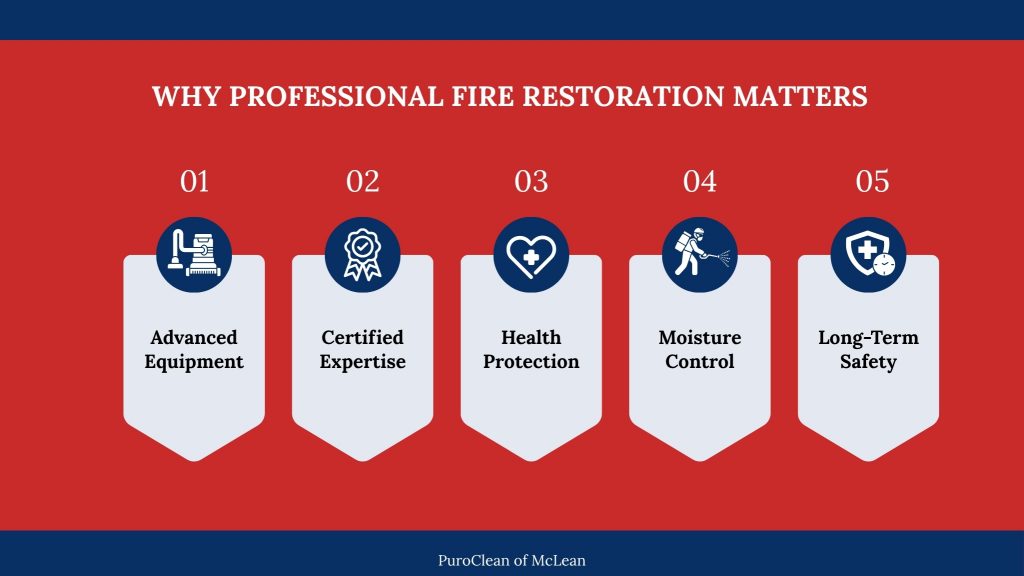
Why Professional Fire Restoration Matters
Professional fire restoration doesn’t just clean your home: it restores safety. Experts are trained to detect hidden damage, remove harmful residues, and neutralize odors that household cleaners can’t touch. Their goal is to make your home livable again, both structurally and environmentally.
Here’s why hiring professionals makes a difference:
- Advanced Equipment: HEPA vacuums, ozone machines, and air scrubbers remove microscopic contaminants.
- Certified Expertise: Technicians identify and treat areas prone to corrosion, mold, or off-gassing.
- Health Protection: Specialized cleaning methods prevent further exposure to toxins and allergens.
- Moisture Control: Industrial dryers eliminate dampness, preventing mold and bacterial spread.
- Long-Term Safety: Ensures your home meets health and safety standards before you return.
Prompt professional help minimizes health risks fire damage McLean homeowners face and shortens recovery time, preventing the situation from escalating further. To learn more about how restoration specialists protect your home’s structure in McLean, explore our related blog here.
Conclusion
Fire damage cleanup isn’t just about restoring what’s visible: it’s about protecting your health and home from unseen harm. Every day spent delaying cleanup increases exposure to toxins, mold, and poor air quality. By acting quickly and working with trained experts, you prevent delayed fire restoration effects that could have lasting consequences.
Fast action means cleaner air, safer surroundings, and peace of mind knowing your McLean home is truly restored, not just repaired. If your home has recently experienced fire damage, don’t wait. Contact a certified restoration team in McLean today to assess the situation and begin safe, thorough cleanup before hidden risks take hold.
FAQs
Q1. What health issues can appear after a fire if cleanup is delayed?
A: Common problems include breathing difficulties, headaches, skin irritation, and fatigue. These signs often point to ongoing health risks fire damage McLean residents should not ignore.
Q2. Is it safe to clean fire residue myself?
A: DIY cleaning may remove visible soot, but toxic particles can remain. Professionals use equipment designed to fully eliminate delayed fire restoration effects that household tools can’t handle.
Q3. How soon should cleanup start after a fire?
A: Ideally, within 24–48 hours, though it can vary based on the fire’s severity. Quick cleanup helps prevent mold growth and limits exposure to harmful residues, reducing the health risks fire damage McLean families face.


 PuroClean of McLean and West Falls Church