


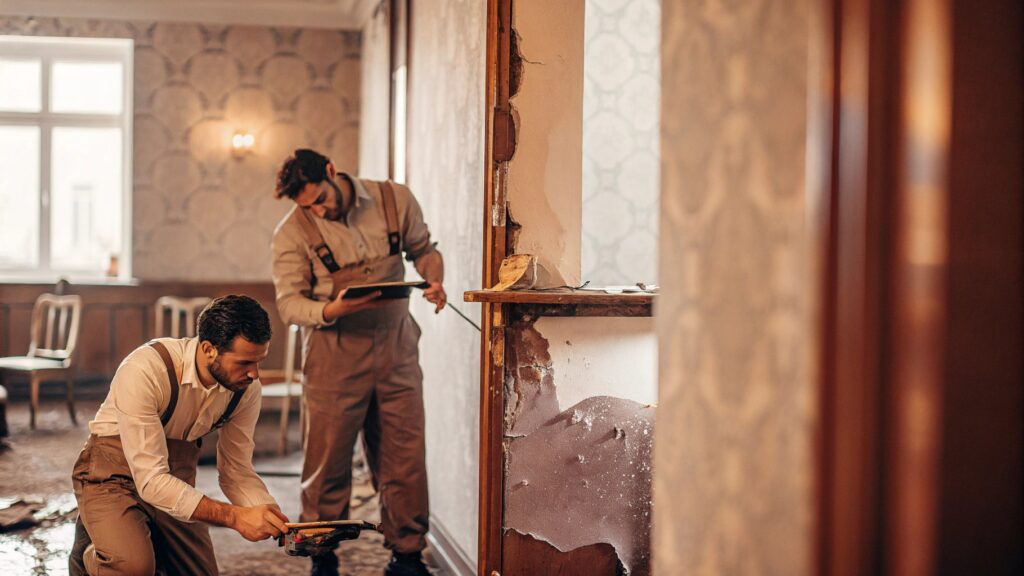
Hidden moisture rarely announces itself early, and that’s what makes it risky. Homeowners often notice problems only after stains, warping, or musty smells appear, long after the issue has already spread. Even small leaks can turn into costly repairs if they go unnoticed, especially when early clues related to hidden water damage detection are missed.
Data from the Insurance Information Institute shows that water damage and freezing accounted for 22.6% of all homeowners’ insurance losses in 2023, underscoring how quickly minor moisture issues can escalate when early signs are missed. The goal is to understand how subtle clues form and how a simple routine check can help prevent those hidden problems from developing into widespread damage.
How Early Detection Prevents Bigger Problems
Slow moisture movement can weaken materials, discolor surfaces, and create ideal conditions for mold. The earlier you identify changes, the easier it is to stop the issue from spreading to areas you can’t see. Small leaks grow quickly inside walls and flooring, moving along structural pathways and becoming more challenging to contain over time.
Using consistent checks supports effective hidden water damage detection, helping homeowners intervene before repairs become costly. Regular awareness also ensures that early signs are not overlooked during seasonal changes or after heavy rainfall. Over time, this habit makes hidden water damage detection a natural part of home upkeep.
How Hidden Water Damage Develops Inside Your Home
Moisture often travels through building materials quietly. It follows gravity, heat differences, and absorption patterns, gradually settling into cavities and layered structures.
Because this movement happens out of view, it becomes important to understand how subtle changes on the surface connect to larger issues beneath, especially when relying on hidden water damage detection to catch problems early. The Environmental Protection Agency (EPA) notes that moisture often settles behind drywall, wallpaper, ceiling tiles, and carpets long before signs appear on the surface, making early awareness essential.
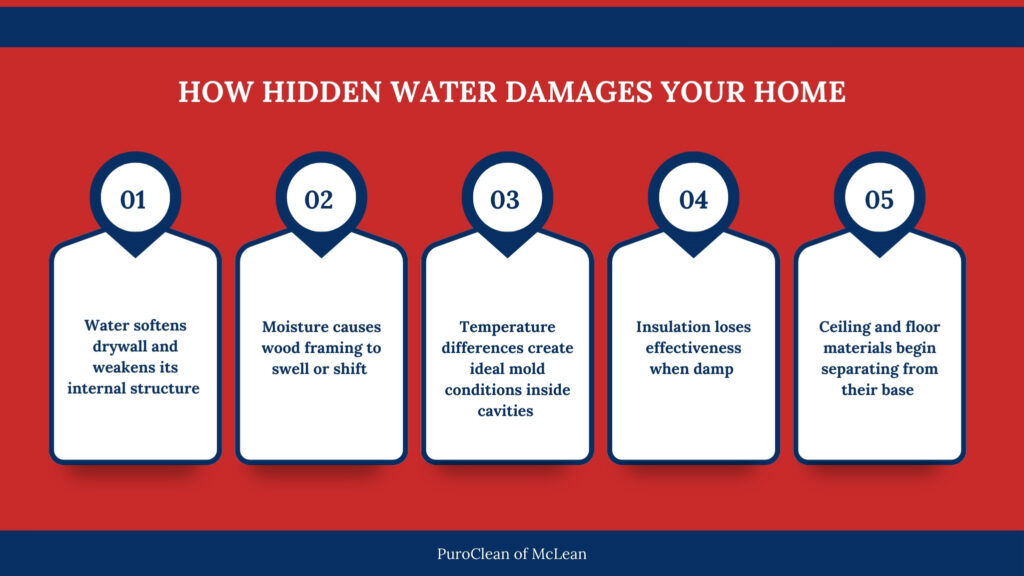
How it damages your home:
- Water softens drywall and weakens its internal structure
- Moisture causes wood framing to swell or shift
- Temperature differences create ideal mold conditions inside cavities
- Insulation loses effectiveness when damp
- Ceiling and floor materials begin separating from their base
Understanding these pathways helps strengthen moisture inspection McLean, giving homeowners a clearer sense of potential risk zones. With this knowledge, it becomes easier to link surface cues to what may be developing deeper inside your home.
How to Check for Subtle Wall Changes
Walls hold early clues long before stains appear. Many changes begin as extremely faint shifts in texture, temperature, or overall feel. The more familiar you are with how your walls normally look, the easier it becomes to recognize variations during your routine walkthroughs.
How to check:
- Run your hand gently across the wall to feel for cool spots
- Notice areas where paint seems slightly raised or uneven
- Tap lightly to identify hollow-sounding sections
- Watch for tiny bubbles or faint ripples when light hits the surface
- Smell for mild mustiness near electrical outlets or baseboards
These checks make hidden water damage detection more reliable because the wall can reveal hints before deterioration becomes visible. When small surface changes accumulate, it’s usually a signal to inspect the surrounding areas more carefully.
How to Spot Early Ceiling Warning Signs
Ceilings often show the earliest effects of moisture because water tends to travel downward from roofs, bathrooms, or upper-floor plumbing. While stains usually appear late, early clues show up in temperature differences, texture shifts, or minor warping in overhead surfaces.
How to check:
- Observe ceiling texture under different lighting angles
- Look for faint shadows or slightly darker patches
- Press gently in suspicious areas to check for softness
- Listen for a dull sound when tapping specific spots
- Inspect areas around lighting fixtures where moisture often gathers
Spotting these changes early helps enhance moisture inspection McLean, especially in rooms where airflow is limited. Subtle variations above eye level are often some of the earliest clues during hidden water damage detection. Small variations often indicate that moisture may be settling above the ceiling and requires closer attention.
How to Examine Flooring Without Visible Damage
Flooring materials absorb moisture differently. Hardwood may rise, laminates can bubble, and tiles may loosen. But before any visible reaction occurs, the floor often gives subtle, early signals. This makes it important to walk through your home intentionally during your routine checks.
How to check:
- Pay attention to slight unevenness when you walk
- Listen for new creaking that wasn’t there before
- Look for dull patches where the flooring loses its natural sheen
- Press gently on corners or edges for softness or movement
- Check baseboards nearby for swelling or separation
These steps strengthen hidden water damage detection, especially in areas near kitchens, bathrooms, and entryways. Early floor changes are usually a clue that moisture may be present below the surface and spreading laterally.
How Professionals Confirm What Homeowners Can’t See
When early clues appear, trained specialists use advanced tools to trace moisture patterns within hidden spaces. These tools measure temperature shifts, locate saturation points, and map moisture trails through walls, ceilings, and subfloors. This level of detail allows experts to identify the exact source and depth of the issue.
Professionals often rely on infrared scanning, pin and painless meters, and structural probes to complete a thorough assessment. Infrared imaging, for example, identifies cooler zones where moisture is likely present, even when surfaces still look normal. This process helps refine moisture inspection McLean by ensuring no area is overlooked during evaluation.
By combining visual cues with precise measurement, experts can outline a clear plan for drying and repair before extensive damage occurs.
Conclusion
Keeping track of small changes in your home is one of the simplest ways to prevent moisture from spreading into hidden areas. Early awareness allows you to act before small issues grow, reducing repair time and protecting your home’s structure. As you build a habit of routine checks, a consistent moisture inspection McLean approach can make it easier to notice subtle shifts that matter.
It also helps to understand how quick response plays a role in limiting long-term damage. Our blog on how fast water extraction protects McLean homes from expensive damage offers helpful context if you want to learn more about the impact of early intervention. With consistent observation and timely assessments, you can stay ahead of problems that often remain unnoticed until they become costly.
FAQs
Q1. How does hidden water damage go unnoticed for long periods?
A: It stays concealed because moisture spreads inside walls, ceilings, and floors before surface changes appear. The materials absorb water slowly, so early clues tend to be subtle rather than obvious. This makes routine checks important for spotting small shifts before they worsen.
Q2. How should I respond if early signs begin to show?
A: Start by checking the nearby areas, then schedule a professional evaluation to prevent further spread. Acting early helps limit how far the moisture travels and reduces the chances of deeper structural issues. Even minor changes are worth addressing quickly.
Q3. How do I know which areas of my home need regular checks?
A: Focus on bathrooms, kitchens, attics, basements, and spaces near plumbing lines or exterior walls. These areas experience frequent moisture shifts, making them more susceptible to hidden issues. A quick monthly walkthrough can help you stay ahead of developing problems.