 PuroClean of McLean and West Falls Church
Living among piles of items, unable to let go of possessions, often feels like being trapped in a maze with no clear path out. For many, this isn’t about mess or laziness; it’s about deep emotional struggles that shape how they live. Experts have found a growing connection between hoarding cleanup and mental health, showing how restoring a living space can also help restore emotional balance.
When clutter turns into chaos, it silently affects how a person feels, thinks, and functions. Understanding how cleanup can play a vital role in mental well-being is the first step toward change that lasts.
Understanding the Link Between Hoarding and Mental Health
Hoarding is more than an untidy home; it’s a behavioral health issue tied to strong emotional attachments and the fear of loss. People who struggle with hoarding often experience anxiety, depression, or trauma that makes letting go of objects feel impossible. The clutter isn’t random; it becomes a reflection of their emotions, memories, and sense of safety.
As the clutter grows, so does the emotional distress. The environment becomes a constant reminder of overwhelm, shame, and helplessness. Addressing these layers requires more than just cleaning; it requires compassion, structure, and understanding. This is where hoarding cleanup mental health approaches make a difference, focusing on healing both the home and the mind.
What Hoarding Really Means
Hoarding isn’t simply about collecting or being messy. It’s a mental health condition that develops over time, often linked to life changes, trauma, or deep-seated fears. The individual often believes that every item serves a purpose or represents a piece of their identity.
As noted by Harvard Health Publishing, hoarding disorder involves persistent difficulty discarding items due to emotional attachment or perceived need, which can severely affect daily functioning and well-being.
Experts highlight that hoarding creates a physical manifestation of emotional distress. Rooms once filled with laughter become storage spaces for pain and avoidance. Recognizing this emotional weight is essential before any cleanup begins. It’s not about forcing a change; it’s about creating a safe space where recovery feels possible. This perspective is at the core of hoarding cleanup mental health programs designed by professionals who understand both the emotional and practical sides of recovery.
How Hoarding Affects Emotional Well-Being
Living in a cluttered environment can quickly lead to isolation and anxiety. The constant sight of disorder can heighten stress levels and make everyday tasks feel impossible. Over time, people may stop inviting others over, avoid social situations, and withdraw emotionally.
The cycle becomes self-perpetuating; clutter fuels anxiety, and anxiety fuels more clutter. Sleep, concentration, and even physical health start to decline. Studies show that an organized and safe space can reduce cortisol levels and improve emotional regulation, which explains why the benefits of hoarding cleanup extend beyond the visible transformation of the home. Restoring order offers relief, clarity, and renewed energy for life’s daily challenges.
The Role of Professional Cleanup in Restoring Balance
Professional hoarding cleanup isn’t about judgment; it’s about rebuilding safety and stability. These teams are trained to understand the emotional sensitivity involved while ensuring that the process remains structured and respectful. Every item is handled with care, allowing the individual to make decisions at their own pace.
A professional approach combines psychological insight with physical cleanup, ensuring that progress doesn’t trigger panic or guilt. The goal isn’t perfection; it’s peace. Through this collaborative effort, both the environment and the emotional state begin to shift. For those considering whether expert help is the right choice, our blog on Why Hire Experts for Hoarder Cleanup, offers deeper insight into how trained professionals make the process safer, smoother, and more supportive.
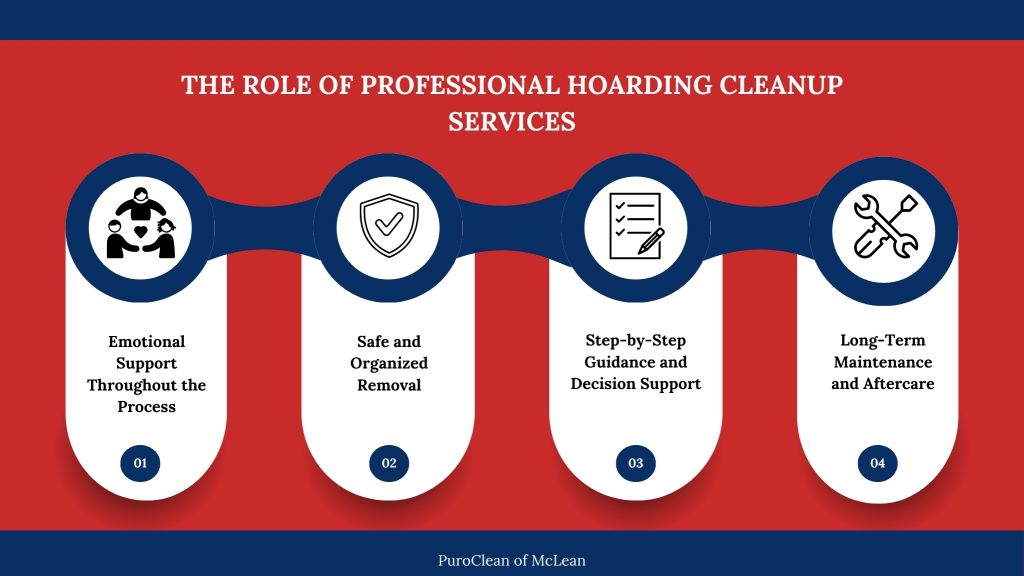
Here’s how professionals contribute to the hoarding cleanup mental health process:
1. Emotional Support Throughout the Process
Cleanup specialists often work closely with therapists or counselors. They recognize that the cleanup isn’t just about removing items; it’s about addressing fear and loss. Having empathetic professionals by one’s side helps reduce resistance and builds trust, allowing change to feel empowering rather than overwhelming.
2. Safe and Organized Removal
Hoarding environments can pose risks like mold, pests, or structural issues. Professionals are equipped to handle these safely, preventing further physical or mental strain. A cleaner, safer home directly supports emotional recovery, highlighting the benefits of hoarding cleanup for overall health and stability.
3. Step-by-Step Guidance and Decision Support
Each step is carefully planned, ensuring the person feels in control. Professionals guide clients through sorting, donating, and discarding without pressure. This structured approach helps replace fear with confidence, a core part of improving hoarding cleanup mental health outcomes.
4. Long-Term Maintenance and Aftercare
After the cleanup, maintaining progress is vital. Many services offer aftercare plans or connect clients with local support groups and therapists. This continuity helps prevent relapse and reinforces the lasting benefits of hoarding cleanup, ensuring that recovery continues long after the cleaning ends.
How to Get the Right Professional Cleanup
Finding the right team makes a huge difference. A compassionate, experienced crew understands that every situation is unique, and every decision carries emotional weight.
Here are a few tips to choose wisely:
- Check experience: Choose teams that specialize in hoarding cleanup and understand mental health challenges.
- Ask about training: Certified professionals in trauma-informed care or safety protocols provide better emotional support.
- Look for flexibility: The right team will adapt to your pace, not rush the process.
- Request a plan: A detailed cleanup and aftercare plan ensures clarity and comfort throughout the journey.
- Read testimonials: Past experiences from other families can help you assess the team’s empathy and professionalism.
Choosing the right professionals ensures that the cleanup becomes a turning point, not just for the home, but for emotional healing too. With the right support, recovery feels possible and sustainable.
Conclusion
Hoarding cleanup is not just about cleaning; it’s about reclaiming peace, safety, and control. When guided by professionals who understand the emotional complexities involved, the process can lead to profound improvements in mental well-being. The benefits of hoarding cleanup reach far beyond what’s visible; they restore balance, confidence, and hope.
If you or someone you care about is struggling, take that first step toward help. Seek compassionate professionals who specialize in hoarding cleanup and mental health, because every clean space begins with the courage to start healing.
FAQs
Q1. Can hoarding cleanup really reduce anxiety or depression?
A: Yes, many people experience noticeable emotional relief after a cleanup. A clearer, safer environment can ease anxiety and improve focus, contributing to better overall hoarding cleanup mental health outcomes.
Q2. How can families support someone going through a hoarding cleanup?
A: Offer empathy and patience. Avoid judgment or pressure and let professionals lead the process. Emotional support and understanding amplify the benefits of hoarding cleanup for your loved one’s recovery.
Q3. Is it okay to do a hoarding cleanup without professional help?
A: It’s possible but not recommended. Hoarding situations often involve safety risks and deep emotional triggers. Professionals trained in hoarding cleanup mental health ensure the process is both safe and supportive, making long-term recovery more achievable.


 PuroClean of McLean and West Falls Church