


In McLean’s competitive housing market, homes are often judged quickly and compared closely. Buyers walk in expecting strong maintenance, long-term stability, and minimal risk. When mold enters the conversation, it quietly changes how a home is evaluated, sometimes before price negotiations even begin.
What many homeowners don’t realize is that the impact of mold extends beyond visible damage and into perception, documentation, and trust, factors that directly influence mold and property value from the earliest stages of a sale. A national survey of 2,000 adults found that many homeowners underestimate how common mold actually is. While respondents believed roughly 37 percent of homes contained mold, researchers indicate the real number is closer to 47 percent across U.S. housing.
This gap between perception and reality explains why mold often catches sellers off guard when it surfaces during a transaction. Understanding the process behind how mold influences property value helps homeowners respond more strategically rather than reactively.
Why Mold Changes the Way Homes Are Valued
Property value reflects not just condition, but confidence. Mold disrupts that confidence because it suggests unresolved moisture, ventilation issues, or prior water intrusion. Even when damage appears limited, the concern is rarely treated as cosmetic.
Buyers, inspectors, and lenders often view mold as an indicator rather than an isolated problem. This is why mold and property value are connected through risk perception as much as physical repair cost. Once uncertainty is introduced, value adjustments tend to follow.
Buyer Reactions During Showings and Walkthroughs
Buyers begin assessing a home the moment they step inside. When mold is visible or mentioned, attention shifts away from finishes and toward potential problems. Common buyer responses include:
- Spending more time inspecting bathrooms, basements, and ceilings
- Asking pointed questions about leaks or past water issues
- Comparing the home less favorably against similar listings
Buyers often focus on spaces where moisture tends to linger, especially areas that are easy to overlook during everyday living. Many of these concerns align with lesser-noticed parts of the home where mold is more likely to develop, a topic we explore further in our blog on what are the most overlooked areas in McLean homes where mold can thrive.
Even when buyers understand that mold can be addressed, concern often outweighs optimism. In many cases, this hesitation becomes reflected in lower offers, reinforcing the link between mold and property value early in the sales process.
Inspection Reports and Negotiation Pressure
Home inspections formalize buyer concerns. Once mold or mold-supporting conditions are noted, the tone of negotiations often changes. Inspection reports may highlight:
- Visible growth or staining
- Elevated indoor moisture readings
- Conditions that encourage recurrence
Buyers frequently use these findings to request credits, repairs, or price reductions. This is one of the most direct ways mold and property value translate into financial outcomes rather than hypothetical concerns.
Appraisals and Financing Considerations
Appraisers assess both condition and risk. Mold, particularly when unresolved, can influence comparable selections or trigger valuation adjustments. Lenders rely on these assessments when approving financing. In some transactions:
- Appraisals may come in below the agreed price
- Lenders may require remediation before closing
- Buyers may need to renegotiate or walk away
These hurdles place sellers at a disadvantage and often lead to concessions, reinforcing the relationship between mold and property value and lending confidence.
Disclosure Requirements and Trust
Virginia requires sellers to disclose known material issues, including mold. While transparency supports fair transactions, it also formalizes the issue in writing.
A survey found that although many homeowners believe they can identify mold visually, only about one in four could accurately recognize common mold types. This uncertainty affects buyers as well. When disclosures lack detail or documentation, confidence drops, and negotiations become more cautious, another factor shaping mold and property value.
Marketability and Time on Market
Homes associated with mold often experience reduced buyer demand. This doesn’t always mean no offers, but it does mean fewer options. Market effects commonly include:
- Longer listing periods
- More conditional offers
- Increased likelihood of price adjustments
For homeowners focused on selling home with mold, a longer time on the market can indirectly reduce the final sale price, even if remediation is completed later in the process.
Challenges During the Sales Process
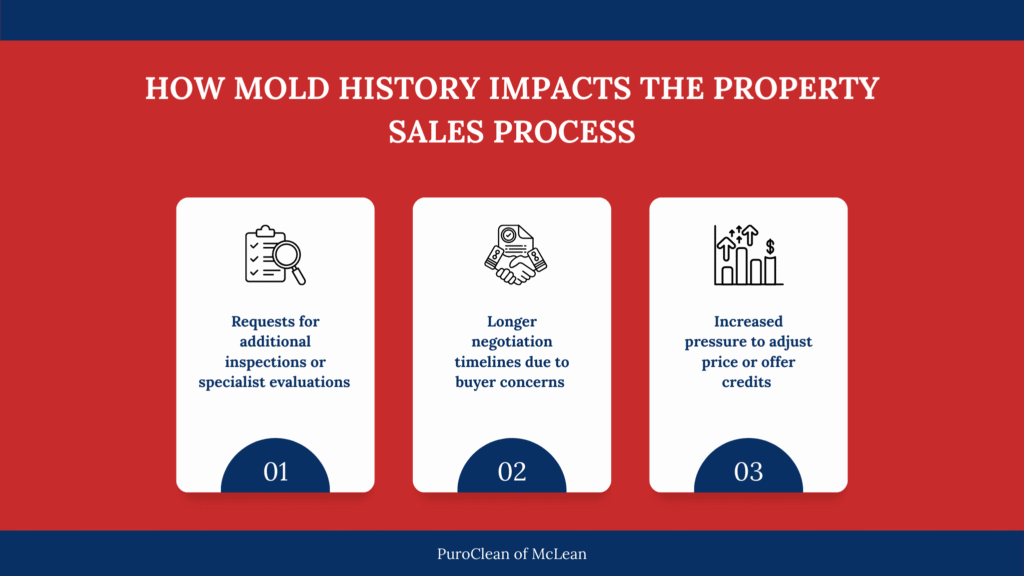
When mold becomes part of a property’s history, the sales process often slows down. What might have been a straightforward transaction can involve more reviews, questions, and cautious decision-making from buyers.
Common challenges include:
- Requests for additional inspections or specialist evaluations
- Longer negotiation timelines due to buyer concerns
- Increased pressure to adjust price or offer credits
For sellers navigating selling home with mold, these hurdles can shift control toward the buyer. Clear communication and documentation help reduce uncertainty, even when caution remains.
Long-Term Effects on Resale History
A prior mold issue can follow a property beyond one transaction. Inspection reports, disclosures, and appraisal notes often resurface during future sales. This can result in:
- Repeat inspections focused on moisture
- Buyers referencing past documentation
- Renewed negotiations around risk
For homeowners considering selling home with mold again in the future, proper documentation becomes critical to maintaining buyer confidence.
Steps That Can Help Limit Value Impact
Although mold can influence sales outcomes, addressing it early and thoroughly often reduces long-term consequences. The goal is not just removal, but restoring buyer confidence through clear action.
Helpful steps include:
- Identifying and fixing moisture sources early, such as leaks, poor ventilation, or drainage issues, to prevent recurrence rather than repeated cleanup.
- Using professional remediation services to ensure the issue is handled according to industry standards and verified through proper assessment.
- Keeping clear, organized records of inspections, remediation work, and follow-up checks to support transparency during negotiations.
These steps don’t remove scrutiny entirely, but they help position selling home with mold as a resolved and documented situation rather than an ongoing concern.
Conclusion
Mold affects more than surfaces; it shapes buyer perception, professional evaluations, and negotiation dynamics. From showings and inspections to disclosures and financing, mold and property value are connected through a chain of practical decisions and responses.
For McLean homeowners, understanding this process allows for better planning and fewer surprises. Early assessment, proper documentation, and informed timing can help reduce unnecessary value loss. If you’re preparing for a sale or responding to inspection findings, a professional evaluation can provide clarity and support informed next steps.
FAQs
Q1. Does mold always reduce home value?
A: Not always. The impact depends on severity, documentation, and whether underlying moisture issues were addressed properly.
Q2. Is selling a home with mold still possible?
A: Yes. Many transactions move forward when disclosures are clear and professional remediation has been completed, though pricing may adjust.
Q3. Do past mold issues affect future buyers?
A: They can. Prior records often lead to closer inspection, but thorough documentation helps reduce concern.