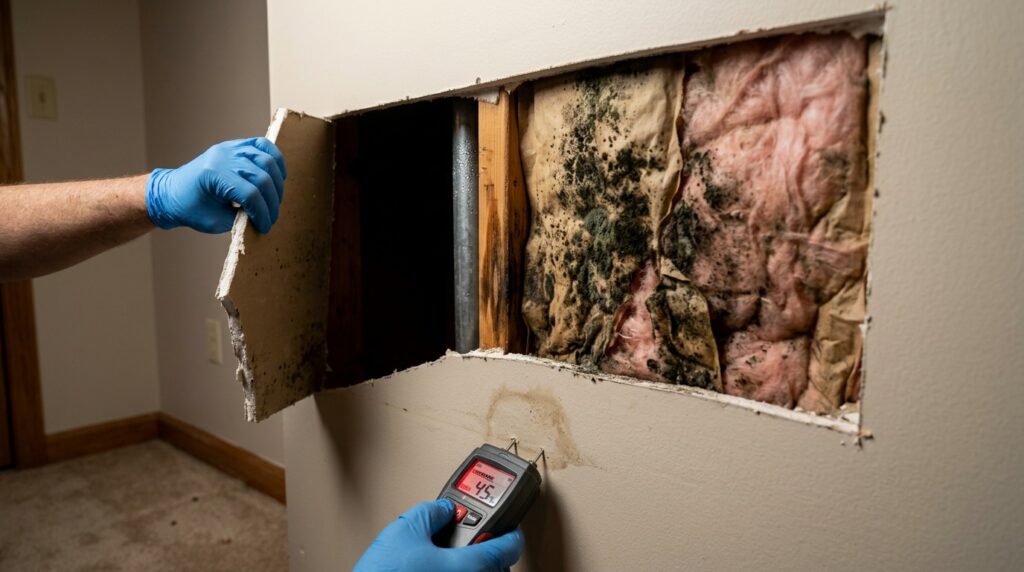
A clean-looking wall can still leave a homeowner with an unanswered question: what is happening on the other side? The difficult part is that a stain, odor, or soft area may be a small visible clue rather than the full problem. Waiting for a wall to look obviously damaged can make it harder to decide what needs inspection. This article explains the clues worth documenting, the areas to check first, and when an unopened wall needs professional attention.
TL;DR
– Treat a new musty odor or changing wall surface as a reason to inspect the area more closely.
– Photograph stains, bubbling paint, and warped trim before cleaning or covering them.
– Check rooms beside bathrooms, kitchens, laundry areas, and exterior walls after any water event.
– Do not paint over a suspicious area before you understand whether moisture is still present.
– If you cannot identify the source, arrange an inspection before opening or rebuilding the wall.
Why a clean wall can still hide a moisture problem
A wall can look normal from the room while its hidden cavity still needs attention. Drywall is only the finished surface; plumbing, insulation, framing, wiring, and gaps around pipes or fixtures may sit behind it. A problem inside that space may not show itself in one obvious way.
That is why mold behind drywall in McLean homes is often less about spotting mold itself and more about noticing a change in the room. You may see paint that no longer lies flat, trim that separates from the wall, or a mark that returns after it has been wiped. None of those signs identifies the cause by itself, but each is worth recording.
The goal is not to diagnose the wall by sight. The goal is to avoid making the surface look better before the underlying question has been answered. Cleaning, repainting, or placing furniture in front of the area can remove useful clues and delay a closer inspection.
In McLean homes, pay close attention to spaces where finished rooms meet plumbing walls, lower-level exterior walls, and rooms below bathrooms. The location of a symptom can help narrow the next question: Is this connected to a fixture, a drain, an appliance, a roof or window area, or a past water event that was never fully checked?
Document the clues before you cover them
The first step is to document what changed and where it appeared. Take photos before cleaning, painting, or removing materials, so you have a clear record of the condition.
Photograph the room as a whole, then take closer images of the affected wall, nearby trim, flooring, ceiling, and any fixture or plumbing on the other side.
1. Photograph the area in good lighting.
2. Note when you first noticed the change and whether it has spread.
3. Check the opposite side of the wall for nearby plumbing or related damage.
4. Save records of prior leak repairs, cleanup, or insurance communication.
5. Avoid sanding, scraping, or painting until the moisture question is resolved.
A stain may be old, active, or unrelated to the current concern. Good documentation gives a restoration professional, plumber, or insurer a clearer starting point if further evaluation is needed.
Odor is a clue, not a conclusion
A musty smell can be frustrating because it may come and go with closed windows, humidity, or room use. Do not assume that an odor alone tells you exactly what is behind the wall. Instead, notice whether it is strongest near one wall, cabinet, closet, bathroom, or lower-level room.
A lingering odor that returns after cleaning may indicate an underlying issue that isn’t immediately visible. Moving stored items, opening a closet, or running a bathroom fan may change what you notice. Write down those details rather than relying on a general impression that the room “smells off.”
Trace the water path instead of chasing the stain
The key question is where the water may have entered or traveled, not how severe the stain looks. Moisture can move along framing, pipe openings, flooring edges, or other hidden paths before becoming visible.
Check what is above, below, beside, or behind the affected area. A bathroom wall may share plumbing with another room, while a kitchen wall may sit near a refrigerator line, dishwasher, or sink connection. Lower-level walls may be affected by windows, exterior drainage, or water from rooms above.
A repaired leak also does not confirm that nearby materials were fully dried. If the source is unclear or the wall has changed again, the area may need further evaluation.
Do not open the wall just to investigate. Hidden cavities can contain wiring, plumbing, insulation, or contaminated materials that require careful handling.
Separate an active problem from an old repair
A repaired leak and a dry wall are not automatically the same thing. Ask what was repaired, what materials were affected, and whether they have checked the cavity on the wall before repairs were completed. Those questions are more useful than asking whether someone “fixed the leak.”
An old water mark may stay visible long after the original event. A new change in paint, texture, odor, or trim deserves separate attention, especially if it appears near the same location. Keep the old repair paperwork with your new notes so that the full history is available.
Decide when a wall needs professional inspection
Arrange professional inspection when the source is unclear, the condition is changing, or the affected area is connected to a larger water concern. You do not need to wait until a wall has a large visible patch to ask for help.
PuroClean of McLean and West Falls Church serves property owners who need help assessing water and mold-related damage in McLean and nearby service areas. A professional inspection should focus on the likely moisture source, the materials that may be affected, and whether the visible damage matches the full extent of the problem.
The inspection conversation should also distinguish between stopping the source of the water, removing damaged material when needed, and rebuilding the affected structure after the space is cleared for restoration. Those are separate decisions. A homeowner should understand which decision is being made before work begins.
If the concern involves a rental property, shared wall, condominium unit, or commercial space, notify the person responsible for the building as early as possible. Documenting the condition before repairs can help all parties discuss the same area and sequence of events.
Drying it yourself, a general contractor, and a restoration company compared
| Option | Works when | Breaks when | What it costs you |
| Surface cleaning and monitoring | A small visible issue has a known, resolved cause | The source or wall condition remains unclear | Time spent watching for changes |
| A general contractor | The wall is ready for repair or rebuilding | Moisture questions have not been resolved | Rework if repairs cover an unresolved issue |
| A restoration company | Water or mold concerns may extend beyond the surface | The issue is only cosmetic and fully understood | Inspection and mitigation expense |
| A plumber | A plumbing source needs repair | Wall materials also need assessment | Repairing the source without addressing affected materials |
The comparison is not about choosing one trade over another in every situation. A plumbing repair may be necessary first, while a restoration inspection may address what happened around the pipe. A contractor may be the right person later, once the wall is ready to be put back together.
The mistake is treating those roles as interchangeable. The person who repairs the source is not always the person who evaluates the materials around it, and the person who rebuilds the wall is not always the person who determines whether it is ready to close.
What goes wrong most often
The most common mistake is making the wall look finished before anyone has answered why it changed. Fresh paint can hide a stain, but it does not resolve an unanswered moisture question. New baseboards can also cover the edge of a wall where earlier clues were visible.
Another mistake is focusing only on the room where the symptom appears. The useful evidence may be in the bathroom behind the wall, the room above it, the adjacent closet, or the exterior side of the house. A quick check of those areas can make an inspection more focused.
Homeowners also lose useful information by throwing away damaged materials or cleaning everything before taking photos. If the condition may involve a claim, a landlord, a condominium association, or a later repair decision, clear documentation helps establish what was present before the area changed.
Where this does not apply
A small, clean spill that stayed on a hard surface and was removed immediately may not call for a wall inspection. A stain that has been professionally evaluated and confirmed as unrelated to current moisture may need only cosmetic repair.
The advice also changes if you notice a damaged electrical outlet, a strong gas smell, sewage, a ceiling that appears unstable, or another immediate hazard. Do not investigate those conditions by opening walls or moving damaged materials yourself. Keep clear of the area and contact the appropriate emergency or qualified service provider.

Final Verdict
A single mark with a known, resolved cause may only need monitoring. But if the odor returns, the wall surface changes, or the source is still unclear, the area should be evaluated before it is painted over or rebuilt.
Walls near plumbing, exterior openings, or previous water damage deserve closer attention because visible signs may not show the full extent of the problem.
If you are unsure what is happening behind the wall, contact PuroClean of McLean and West Falls Church to discuss an inspection and the appropriate next step.
FAQs
Q: Can mold grow behind drywall without showing on the wall?
A: A wall can raise concerns before there is an obvious visible patch on the room side. Look for changes in odor, paint texture, trim, flooring edges, or nearby surfaces. Those clues do not identify the cause on their own, but they can justify documenting the area and asking for an inspection rather than covering the wall.
Q: Should I cut into drywall if I smell something musty?
A: Do not cut into a wall simply to investigate an odor. The wall may contain wiring, plumbing, insulation, or materials that require careful handling. First document where the odor seems strongest, note any visible changes, and consider whether a bathroom, appliance, window, or prior water event is nearby. Then arrange appropriate professional guidance.
Q: Does a repaired plumbing leak mean the wall is dry?
A: Repairing a plumbing source answers one part of the problem: where the water came from. It does not automatically answer what happened to nearby drywall, insulation, flooring, or framing. Ask what materials were affected, whether the area was evaluated before the wall was closed, and whether any current change is new or connected to the earlier event.
Q: Can a contractor repair drywall before the moisture source is identified?
A: A contractor may be the right person for rebuilding once the wall is ready for repair. Before that work begins, it helps to know whether the source of the water has been addressed and whether affected materials need further evaluation. Rebuilding before those questions are answered can make later access more difficult and create avoidable rework.