


Introduction
Water damage doesn’t arrive politely. It floods basements, soaks drywall, and seeps into flooring before you fully realize what’s happening. When it does, you’ll often hear two terms: water mitigation and water damage restoration. They sound similar, but they serve very different purposes, and understanding the difference can save you time, money, and long-term damage.
In McLean, where homes range from older constructions to high-end modern builds, responding correctly to water damage matters even more. Choosing the wrong service at the wrong time can worsen structural issues or lead to mold growth. This is where knowing how water damage restoration McLean VA differs from mitigation becomes essential.
What Water Mitigation Actually Means
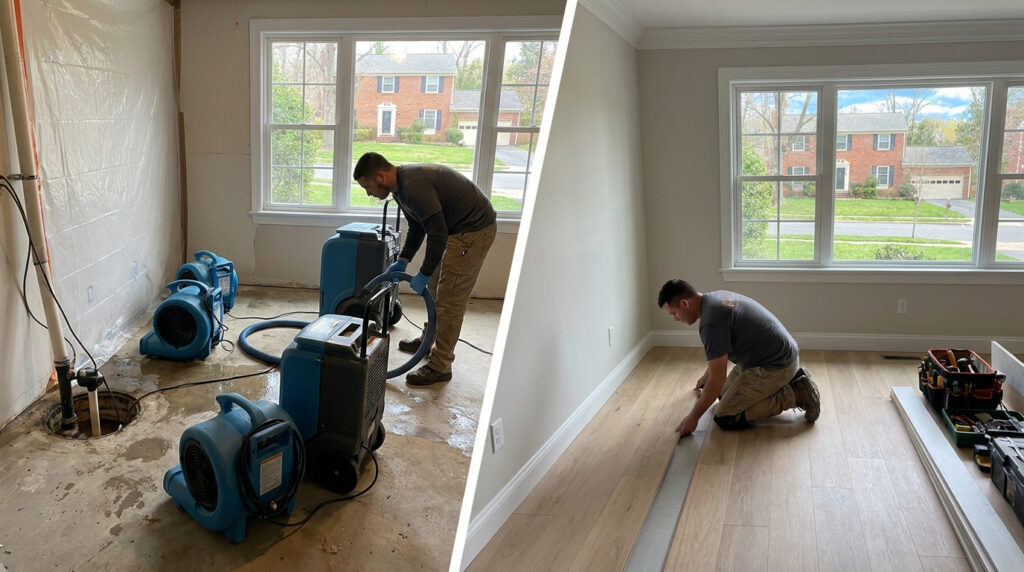
Water mitigation is the immediate response to water intrusion. Its goal is simple: stop the damage from getting worse.
Think of mitigation as damage control. When a pipe bursts or a storm floods your home, mitigation teams step in quickly to remove water, dry affected areas, and stabilize the environment.
This phase does not focus on repairing or rebuilding. Instead, it focuses on preventing further destruction.
Key Tasks Included in Water Mitigation
Water mitigation involves a series of urgent, practical actions designed to limit damage.
– Emergency water extraction using industrial pumps and vacuums
– Moisture detection using specialized meters and thermal imaging
– Drying with air movers and dehumidifiers
– Removing unsalvageable materials like soaked drywall or insulation
– Preventing mold growth with antimicrobial treatments
These steps aim to stabilize the property so deeper restoration work can happen safely.
What Water Damage Restoration Involves
Once the immediate threat is under control, restoration begins. This is where your home starts returning to its original condition.
Water damage restoration focuses on repair, rebuilding, and full recovery. It goes beyond drying and cleanup to address the structural and aesthetic impact of water damage.
In water damage restoration McLean VA services, this phase often includes working with insurance companies and ensuring the home meets local building standards.
Key Tasks Included in Restoration
Restoration is more comprehensive and often takes longer than mitigation.
– Replacing drywall, flooring, and damaged structural elements
– Repairing ceilings, walls, and insulation
– Painting and refinishing surfaces
– Reinstalling cabinetry or fixtures
– Conducting final inspections to ensure safety and completeness
This phase restores both functionality and appearance, making the home livable again.
The Core Difference Between Mitigation and Restoration
The distinction is not complicated, but it is critical.
Mitigation stops the damage. Restoration fixes the damage.
Mitigation is immediate and preventative. Restoration is corrective and reconstructive.
Many homeowners confuse the two because they often happen back-to-back, sometimes handled by the same company. But skipping mitigation or delaying it can make restoration significantly more expensive and complex.
Why Timing Matters More Than You Think
Water damage is highly time-sensitive. The longer water sits, the worse the damage becomes.
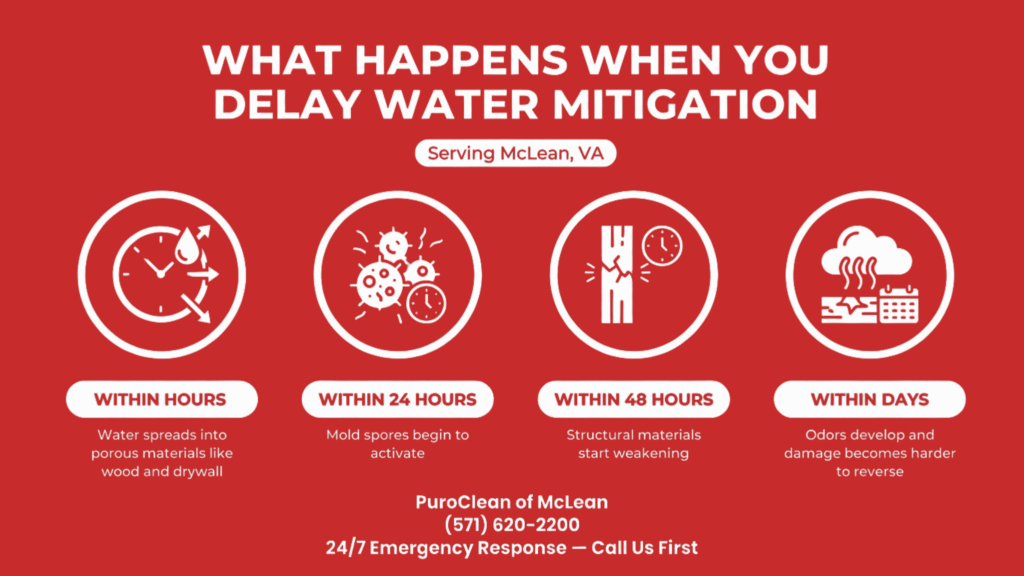
What Happens When You Delay Mitigation
Even a short delay can escalate the situation quickly.
– Within hours: Water spreads into porous materials like wood and drywall
– Within 24 hours: Mold spores begin to activate
– Within 48 hours: Structural materials start weakening
– Within days: Odors develop and damage becomes harder to reverse
Quick mitigation limits how much restoration will be needed later.
Common Scenarios Where Both Services Are Needed
Most real-world situations require both mitigation and restoration, not one or the other.
A flooded basement, for example, needs immediate water removal and drying. Once that’s done, damaged flooring, drywall, and insulation must be replaced.
Typical Situations That Require Both Phases
These are some of the most common cases in McLean homes.
– Burst pipes during winter freezing
– Roof leaks after heavy storms
– Appliance failures like washing machines or dishwashers
– Sewer backups causing contaminated water intrusion
– Basement flooding due to poor drainage
Each situation starts with mitigation and transitions into restoration.
How Professionals Approach Water Damage in McLean VA
Local conditions influence how water damage is handled. McLean homes often feature finished basements, hardwood flooring, and custom interiors all of which require careful handling.
Professionals in water damage restoration McLean VA follow a structured approach that combines urgency with precision. They assess the extent of damage, categorize water contamination levels, and implement tailored drying and repair strategies.
They also consider factors like humidity levels, building materials, and potential hidden moisture pockets, which are common in larger homes.
What Sets Professional Services Apart
Not all cleanup efforts are equal. Professional services bring expertise and equipment that DIY approaches cannot match.
– Industrial-grade drying equipment that removes moisture faster
– Advanced detection tools to find hidden water damage
– Knowledge of building materials and how they respond to water
– Proper handling of contaminated water to avoid health risks
– Documentation for insurance claims
This level of detail ensures the job is done thoroughly, not just visibly.
Mistakes Homeowners Often Make
Water damage situations are stressful, and it’s easy to make decisions that seem logical but lead to bigger problems.
Common Mistakes To Avoid
These are some of the most frequent errors homeowners make.
– Waiting too long before calling professionals
– Assuming drying visible areas is enough
– Skipping mitigation and jumping straight to repairs
– Using household fans instead of professional drying equipment
– Ignoring minor water damage that later becomes mold
Avoiding these mistakes can significantly reduce long-term repair costs.
Cost Differences Between Mitigation and Restoration
Mitigation is generally less expensive because it focuses on stopping damage early. Restoration costs vary widely depending on how much damage occurred before mitigation.
If mitigation is done quickly, restoration may be minimal. If delayed, restoration can involve major reconstruction.
Insurance often covers both phases, but coverage depends on the cause of the damage and how quickly action was taken.
When To Call For Help
Knowing when to act can make all the difference.
Signs You Need Immediate Mitigation
These indicators mean you should act right away.
– Standing water in any part of the home
– Damp or sagging ceilings and walls
– Musty odors indicating hidden moisture
– Warped flooring or bubbling paint
– Visible mold growth
Acting immediately reduces damage and speeds up recovery.
Choosing The Right Service Provider In McLean
Not every company handles both mitigation and restoration effectively. Choosing the right team ensures a smoother process from start to finish.
Look for providers who offer end-to-end services, have local experience, and understand McLean’s building styles and regulations.
Ask about response time, equipment used, and whether they assist with insurance documentation.
Working with one team for both phases reduces miscommunication and speeds up the overall process.
Conclusion
Understanding the difference between mitigation and restoration helps you respond faster and more effectively when water damage occurs. One controls the immediate threat, while the other rebuilds what was lost.
If you’re dealing with water issues, acting quickly is the most important step. Whether it’s a small leak or major flooding, starting with water mitigation McLean services ensures the situation doesn’t spiral into something much worse. From there, a proper restoration process can bring your home back to normal safely and efficiently.
If you suspect water damage in your home, don’t wait to reach out to a local professional who can assess the situation and guide you through both phases.
FAQs
Q: Can I skip mitigation and go straight to restoration?
A: No, mitigation is essential to stop ongoing damage. Skipping it can make restoration more expensive and less effective.
Q: How long does water damage restoration take?
A: It depends on the severity of the damage. Minor cases may take a few days, while major restoration can take several weeks.
Q: Does insurance cover both mitigation and restoration?
A: In many cases yes, but coverage depends on the cause of the damage and how quickly the issue was addressed.