


Introduction
A biohazard scene can be alarming, confusing, and unsafe before you even know the full extent of the problem. Blood, bodily fluids, sharp objects, unknown substances, animal waste, medical waste, or chemical residues can expose nearby people to pathogens, toxins, or physical hazards. The first hour matters because well-meant actions, such as wiping a surface or moving an item, can spread contamination and make professional remediation harder. Your job is not to investigate, clean, or identify every risk. Your job is to prevent additional exposure and get the right help involved.
A calm emergency biohazard response begins with controlling access, assessing immediate danger from a safe distance, and contacting the appropriate authorities or cleanup provider. The correct response will vary depending on whether the scene involves an active medical emergency, a possible crime, a workplace incident, or contamination in a home.
Move People Away From The Area
Your first priority is preventing anyone from entering the affected space. Keep children, pets, visitors, employees, and residents out until the scene has been assessed.
– Ask everyone nearby to leave the immediate area without touching surfaces or objects.
– Close the door if possible, but do not lock yourself into an enclosed contaminated space.
– Keep pets away, as they can track material through the property.
– Avoid walking through visible fluids, debris, broken glass, or unknown residue.
– Do not allow anyone to collect belongings from the area until it is cleared.
Creating distance limits the chance of contamination spreading to other rooms, vehicles, shoes, hands, and clothing.
Call Emergency Services If There Is An Immediate Threat
Some scenes require police, fire, paramedics, or hazardous materials teams before a cleanup company can enter. Call emergency services if a person may need help, the threat is ongoing, or the substance is unknown and dangerous.
– Call 911 if someone is injured, unconscious, unresponsive, or in medical distress.
– Contact police if there is a suspected crime, forced entry, violence, or an unexplained death.
– Call the fire department for smoke, fumes, fire damage, gas odors, or chemical vapors.
– Report an unknown powder, leaking container, or hazardous chemical exposure to emergency responders.
– Stay at a safe distance and follow instructions from dispatch personnel.
Emergency personnel determine whether the area is safe and whether evidence, medical care, or hazard control must happen before cleanup.
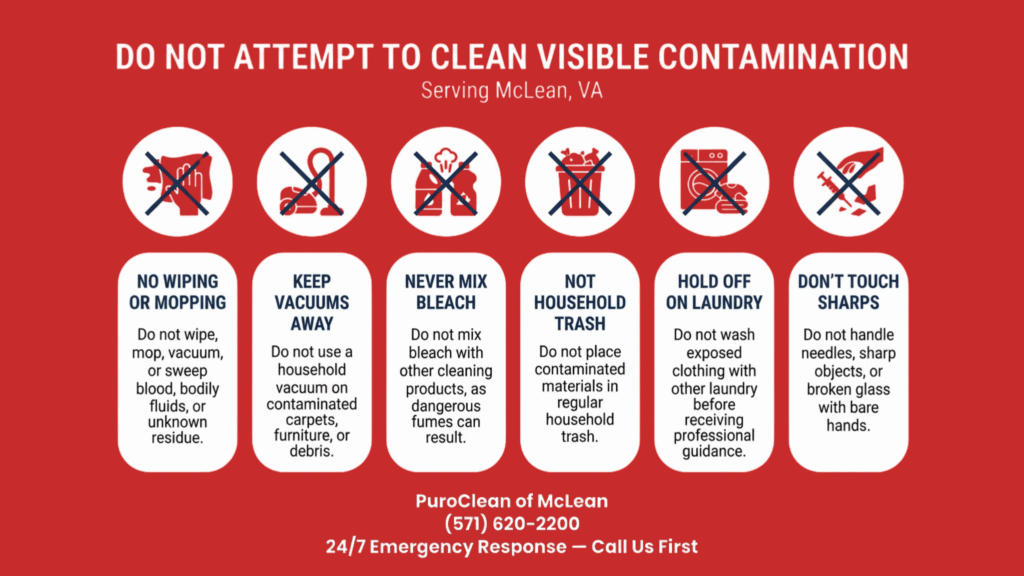
Do Not Attempt To Clean Visible Contamination
Household cleaning products are not a safe solution for many biohazard scenes. Bleach, disinfectant wipes, paper towels, and mops may remove what you can see while leaving contamination in cracks, porous materials, flooring seams, and personal items.
– Do not wipe, mop, vacuum, or sweep blood, bodily fluids, or unknown residue.
– Do not use a household vacuum on contaminated carpets, furniture, or debris.
– Do not mix bleach with other cleaning products, as dangerous fumes can result.
– Do not place contaminated materials in regular household trash.
– Do not wash exposed clothing with other laundry before receiving professional guidance.
– Do not handle needles, sharp objects, or broken glass with bare hands.
Professional cleaners use containment, approved disinfectants, protective equipment, and regulated disposal methods to address contamination safely.
Avoid Touching Items That May Be Evidence
A scene involving injury, violence, death, or suspicious circumstances may be part of an active investigation. Moving even ordinary items can interfere with evidence collection and create unnecessary legal complications.
– Leave phones, papers, clothing, containers, and personal items where they are.
– Do not photograph the scene unless law enforcement specifically asks you to document something.
– Avoid opening drawers, cabinets, bags, or containers near the affected area.
– Do not dispose of bedding, towels, tools, or materials that may be connected to the event.
– Write down basic observations from a safe location instead of entering repeatedly.
Wait for law enforcement to release the property before arranging cleanup or removing affected belongings.
Limit Cross-Contamination Outside The Scene
Contamination often spreads through contact rather than through the original incident itself. Shoes, hands, bags, pets, and equipment can transfer material to clean spaces within minutes.
– If you entered the area, avoid touching your face, phone, vehicle, or other people.
– Remove yourself from common areas until you can wash exposed skin thoroughly with soap and water.
– Leave contaminated footwear at the edge of the affected zone if doing so does not require re-entry.
– Keep doors to unaffected rooms closed where practical.
– Tell anyone who may have entered the area so they can avoid spreading contaminants.
– Do not transport affected items in a personal vehicle.
Containing movement now reduces the amount of property that may need later remediation.
Document Only What You Can See Safely
Basic documentation can help with insurance claims, landlord communication, workplace reporting, and professional cleanup estimates. It should never require you to enter the scene, touch materials, or disturb potential evidence.
– Record the date, time, location, and how the scene was discovered.
– Take wide photographs from a safe distance only if police have not restricted the area.
– Note visible damage to flooring, walls, furniture, or building materials.
– Keep receipts for emergency services, temporary lodging, replacement items, and cleanup work.
– Notify the property owner, manager, or employer if the incident occurred outside your home.
– Ask your insurer whether the policy includes biohazard remediation coverage.
Clear records help the responsible parties make decisions without requiring repeated access to the contaminated space.
Choose A Qualified Biohazard Cleanup Provider
After emergency services release the area, contact a company that specializes in biohazard remediation rather than a standard janitorial service. The work may require regulated waste handling, detailed disinfection, odor treatment, and removal of porous materials.
– Ask whether the company handles bloodborne pathogen cleanup and regulated medical waste.
– Confirm that technicians use appropriate personal protective equipment and containment methods.
– Request an explanation of how they assess hidden contamination beneath flooring or furniture.
– Ask how contaminated materials will be packaged, transported, and disposed of.
– Verify that the company is insured and can provide written documentation of completed work.
– Request a clear estimate that separates assessment, remediation, disposal, and reconstruction work.
A qualified provider should explain the scope plainly and give you a practical plan for re-entering the space safely.
Know What Not To Do While Waiting For Help
Waiting can feel difficult, especially if the scene is in your home or workplace. The safest choice is usually to protect the perimeter, remain available for responders, and avoid creating new problems.
– Do not invite friends, coworkers, or neighbors inside to help assess the scene.
– Do not use air fresheners, candles, fans, or open flames near unknown substances.
– Do not eat, drink, smoke, or apply cosmetics after possible exposure.
– Do not post scene images or details on social media.
– Do not pressure yourself to make major property decisions before the area is assessed.
– Do not return to the scene alone if you feel overwhelmed or unsafe.
Keeping the situation contained gives emergency personnel and cleanup specialists the best conditions to work effectively.
Prepare For The Cleanup Conversation
Once the site is released, the cleanup provider will need practical details to determine the right response. You do not need to identify the material yourself, but accurate observations help them plan equipment, staffing, and disposal.
– Share the location of the affected room, vehicle, or outdoor area.
– Explain whether contamination reached carpets, upholstery, mattresses, subflooring, or ventilation areas.
– Mention how long the scene may have been present, if known.
– Tell the provider whether police, paramedics, or fire personnel have already attended.
– Ask whether you should leave the property during remediation.
– Confirm whether personal belongings can be evaluated for restoration or must be discarded.
A complete initial conversation helps the cleanup team arrive prepared and reduces delays after they
reach the property.
Conclusion
The safest immediate response is simple: keep people out, call emergency services where needed, avoid touching or cleaning anything, and contain the area until trained professionals can assess it. Fast action does not mean rushing into the room; it means making careful decisions that prevent further exposure.
If you are unsure what to do after a biohazard scene, treat the area as potentially hazardous and arrange qualified remediation after authorities release the property. A professional cleanup team can remove contaminated materials, disinfect affected surfaces, and help restore the space for safe use.
FAQs
Q: Can I clean a small amount of blood myself?
A: A minor incident may appear manageable, but blood can enter grout, fabric, carpet backing, wood seams, and damaged surfaces. If the source is unknown, the amount is significant, or porous materials are affected, professional cleanup is the safer option.
Q: Should I open windows after discovering a biohazard scene?
A: Open windows only if you can do so without entering the affected area and there are no chemical fumes, fire risks, or police restrictions. For unknown substances or strong odors, wait for emergency responders or cleanup professionals to advise you.
Q: Will homeowners insurance pay for biohazard cleanup?
A: Coverage depends on the cause of the incident and the terms of the policy. Contact your insurer promptly, document the damage from a safe distance, and ask whether emergency remediation, temporary lodging, and damaged contents are covered.