 PuroClean of McLean and West Falls Church
When belongings start taking up more space than intended, daily comfort gradually declines without anyone realizing it. What once felt like a harmless clutter slowly becomes a barrier to moving around freely, hosting guests, or maintaining a sense of order. Many individuals and families overlook these early shifts because they happen quietly over time, but these small changes often reveal much bigger challenges beneath the surface.
In this blog, we’ll break down the signs that show when cleanup becomes necessary, explain what each signal truly means, and help you understand how recognizing them early can make the entire process safer, more manageable, and far less stressful for everyone involved.
Understanding When Cleanup Becomes Necessary
Many people assume cleanup is only needed when a home reaches extreme conditions, but the right time often arrives much earlier. What may look like a hygiene concern to others is often far more complex for the individual living in the space.
Hoarding isn’t just about keeping items; it’s closely tied to emotional attachment, fear of letting go, and the worry that something important might be lost. Because of this, it can be incredibly hard for someone to admit that the situation has become difficult to manage.
When belongings start piling up in a way that disrupts daily living, or when safety risks begin to appear, reaching out to a hoarding cleanup service becomes more than just a practical step; it becomes an essential one for restoring stability. The earlier the support begins, the less overwhelming the process feels for the individual.
Early Signs That Indicate It’s Time to Get Support
Recognizing the moment when things shift from “messy” to unmanageable is often the hardest part. Small warning signs can reveal when outside support is needed long before the situation becomes dangerous.
Many families first notice that routines feel harder, rooms feel less accessible, or belongings begin to take priority over comfort. Public health resources, including the NHS, note that these early shifts often appear much sooner than most people realize. When these changes appear, considering professional cleanup for hoarding becomes an important next step.
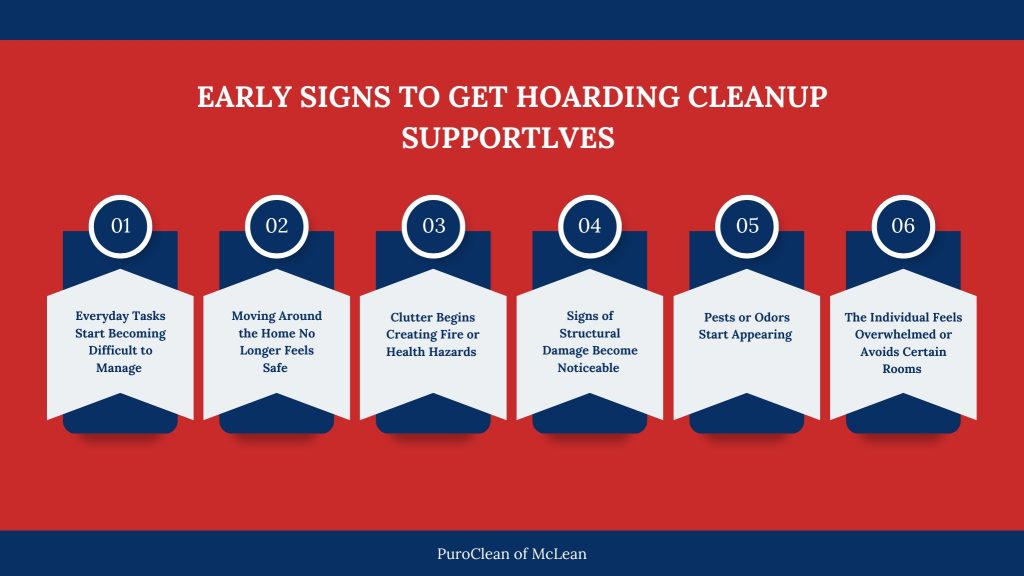
Everyday Tasks Start Becoming Difficult to Manage
When simple routines like cooking, cleaning, or moving items become difficult, it often signals that clutter is taking up too much space. If someone is unable to use key areas of the home without significant effort, this is a clear indication that a hoarding cleanup service may be needed to restore functionality.
Moving Around the Home No Longer Feels Safe
Blocked walkways, stacked items, or unstable piles can create real risks. Trips, falls, and difficulty navigating the home are common early signs that conditions are becoming unsafe. At this point, reaching out for cleanup hoarding help becomes an important step in preventing accidents and protecting the individual’s well-being.
Clutter Begins Creating Fire or Health Hazards
When items block exits, surround heating sources, or pile near appliances, the danger increases significantly. Fire risks are one of the most overlooked signals that a hoarding cleanup service should be considered sooner rather than later.
Signs of Structural Damage Become Noticeable
Clutter can hide moisture issues, leaks, or damaged flooring. When doors stop closing, shelves bow under pressure, or floors feel uneven, these are not just household problems; they indicate that the home needs structured support. At this stage, professional assistance, such as cleanup for hoarding help, can prevent further damage.
Pests or Odors Start Appearing
Unintentional food waste, paper piles, and long-unmoved items can attract pests or cause unpleasant smells. When these appear, it often means the home has reached a point where a hoarding cleanup service can intervene to restore sanitation and prevent worsening conditions.
The Individual Feels Overwhelmed or Avoids Certain Rooms
When someone starts avoiding parts of their home or feeling distressed by the idea of organizing, it’s a strong emotional signal. These feelings often arise long before the situation becomes severe, and acknowledging them early makes cleanup for hoarding help much easier and gentler. For a deeper look at how cleanup can support emotional well-being during this process, you can explore our blog on how hoarding cleanup can improve mental health.
What a Professional Cleanup Team Actually Does
A skilled team approaches the home with sensitivity, safety planning, and a clear structure. Their work goes far beyond clearing items; they create a manageable pace, ensure hygiene standards, and organize the process so the individual never feels alone. A hoarding cleanup service provides guidance that makes the entire experience more secure and supportive.
- They walk through the home, identify safety risks, and build a step-by-step plan.
- They remove clutter carefully while ensuring the individual has control over decisions.
- They clean, sanitize, and organize spaces to restore safe daily living.
- They help prevent future buildup by offering practical tools and structured layouts.
With a methodical process, a hoarding cleanup service makes the transition smoother and reduces stress for everyone involved.
Conclusion
The right moment to reach out often arrives long before the situation becomes severe. When everyday life feels disrupted or safety concerns start emerging, it’s a sign that support can make a real difference. Calling a hoarding cleanup service early helps bring safety, clarity, and comfort back into the home.
If you’re noticing these signs in your own space or in someone you care about, consider taking the first step today by connecting with a professional team that can guide the process with care and structure.
FAQs
Q1. How do I know if professionals are needed?
A: If clutter affects daily life, movement, or safety, reaching out for hoarding cleanup help is a good first step. Noticing these early signs makes the process easier and prevents the situation from becoming more overwhelming later.
Q2. Is cleanup usually done in one day?
A: It depends on the size of the home and the amount of organizing required. A hoarding cleanup service creates a plan that matches the pace needed. Teams adjust the schedule based on comfort level, ensuring the process never feels rushed.
Q3. Will the individual be involved in decisions during cleanup?
A: Yes. Teams work respectfully and ensure the person has control throughout the hoarding cleanup service process. Their preferences are included at every stage so the environment feels safe and supported.



 PuroClean of McLean and West Falls Church