


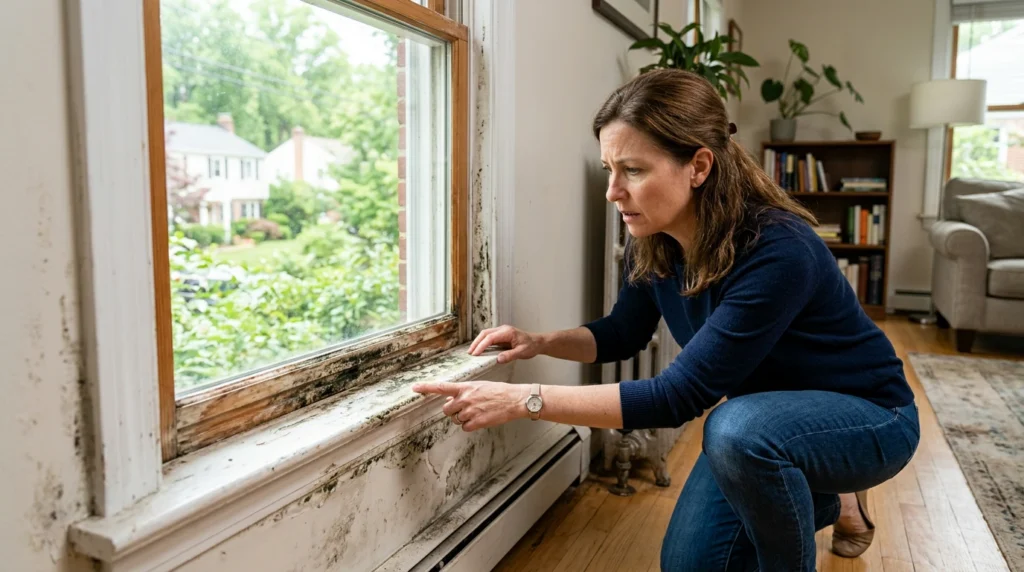
You clean the dark spots from the window frame, but they show up again near the same corner a few weeks later. The surface mold is usually the visible part of a moisture pattern: warm indoor air meets a cold window surface, water collects, and the area stays damp long enough for growth to return. The answer is not just stronger cleaner or a new coat of paint; it is finding whether the moisture starts with indoor humidity, air leaks, window condition, or water getting into the wall. This article explains how those causes differ and what to check before deciding on cleanup, repair, or professional remediation.
Find the moisture pattern before cleaning the window
The recurring mold matters because it shows where moisture is collecting, not because the glass itself is necessarily the problem. Window mold in McLean homes often appears at the lower sash, along a frame edge, behind blinds, or where trim meets drywall. Those locations can point to different causes, so cleaning before you look closely may remove the clue you need.
Start by noticing when the spots return. Mold that appears after cold mornings may follow moisture forming on the interior glass and frame. Growth that stays in one corner even during mild weather may suggest an air leak, a failed seal, damaged caulk, or water entering from outside. A stain that spreads beyond the frame deserves a closer look at the surrounding trim and wall.
Use this short check to organize what you see:
1. Look for droplets, fogging, or dampness on the interior glass.
2. Compare the affected window with nearby windows in the same room.
3. Check whether curtains, blinds, or furniture block air around the window.
4. Look for peeling paint, soft trim, or staining beyond the frame.
5. Note whether the issue follows rain, cold weather, or daily household activity.
PuroClean of McLean and West Falls Church provides mold removal and remediation when the issue is more than a small, contained surface area or when moisture may have moved into nearby materials. The important decision is whether the problem is limited to a damp window surface or has become a moisture issue inside the window opening.
Separate room humidity from a failing window
Condensation on windows can be normal in a humid room during cold weather, but repeated moisture in one location usually means that room conditions and the window are working against each other. Indoor air carries moisture from ordinary activities such as cooking, showering, drying clothes, and living in the home. When that air reaches a colder surface, it can leave water behind.
A whole-home pattern often looks different from a single-window problem. If several windows collect moisture at the same time, the room may be holding more moisture than the windows can handle. If one window stays wet while nearby windows do not, focus on that opening first. A draft around the sash or frame can cool one section more than the rest of the room.
Closed coverings can trap damp air
Blinds and heavy curtains can hold humid air against cold glass and make a window corner stay wet longer. This does not mean coverings caused the mold by themselves. It means the window may not have enough airflow to dry after moisture forms.
Try changing one condition at a time. Open the covering during the day, move furniture away from the window, and watch whether the same area still becomes damp. That observation is more useful than cleaning the spot repeatedly without knowing why it returned.
Check the frame and wall for signs that moisture is traveling
Mold around a window becomes a different problem when moisture is getting past the visible surface. A frame can look mostly dry while dampness sits behind trim, at the sill, or in the drywall next to the opening. The goal is not to pull materials apart without a reason. It is to identify signs that the issue reaches beyond ordinary condensation on the glass.
Look at the shape of the staining. A narrow line of spotting on the interior frame may fit a condensation pattern. Discoloration that continues down the wall, paint that bubbles, or trim that changes shape can point to moisture affecting other materials. A musty smell near one window can also be a reason to investigate the area rather than treating it as a cosmetic problem.
Water behavior outside the home matters too. If the issue appears after rain or wind-driven weather, the source may be outside the window rather than inside the room. A window contractor can assess window condition and exterior sealing. If an active leak is present, a licensed contractor who handles the relevant repair should address that source before restoration work begins.
For window mold in McLean homes, the sequence matters: stop the moisture source, determine what stayed wet, then clean or remove affected material based on the condition of the area. Repainting damp trim may hide a stain for a while, but it does not settle why the material became damp.
Decide whether the problem is surface cleanup or remediation
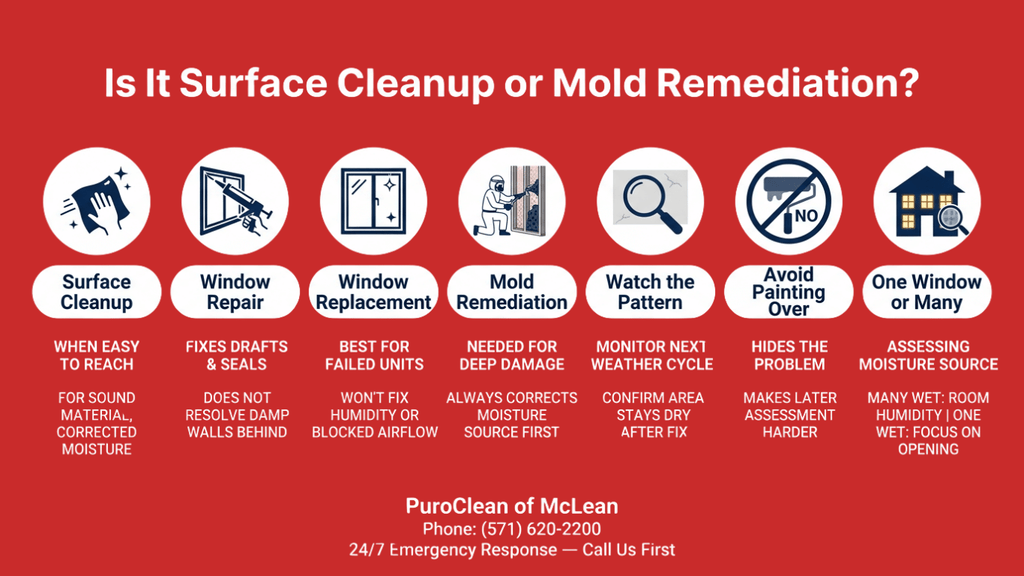
A small amount of visible growth on a hard, nonporous surface may be a cleaning issue, while recurring growth around soft, stained, or damaged materials may need a broader assessment. The distinction is not the color of the spot. It is whether moisture has stayed limited to an accessible surface.
Surface cleanup makes sense when the area is easy to reach, the material is sound, and the moisture cause has been corrected. In that situation, the follow-up is simple: watch the area through the next period of cold or wet weather and see whether it stays dry.
Remediation becomes more reasonable when mold keeps returning after the visible area has been cleaned, when trim or drywall shows damage, or when the source is unclear. A restoration assessment can help separate what needs attention from what can remain in place. It also prevents a common cycle in which a homeowner replaces a window covering, repaints the trim, and later finds the same moisture path still active.
Do not assume window replacement is automatically the answer. A new window may help if the existing unit or installation is the source, but replacement will not fix room humidity, blocked airflow, or a leak elsewhere in the wall. The useful question is not which repair sounds largest. It is which condition is keeping that specific area wet.
Surface cleanup, window repair, and remediation compared
| Option | Works when | Breaks when | Trade-off |
| Surface cleaning | Small visible area | Moisture remains active | Return of growth |
| Window repair | Drafts or failed seals | Wall materials stay damp | Repair scope varies |
| Window replacement | Unit has failed | Room humidity persists | Higher upfront cost |
| Mold remediation | Damage extends beyond surface | Moisture source remains | Requires source correction |
What goes wrong most often
The most common mistake is treating every dark mark as the same kind of problem. A homeowner may clean the lower frame, close the blinds again, and assume the work is done because the window looks better that day. If dampness returns each morning, the condition that fed the growth has not changed.
Another mistake is jumping directly to replacement. Windows can fail, but a new unit does not change how moisture moves through a room. Before committing to a major repair, compare the affected window with nearby ones and look for the timing of the moisture. That can help distinguish a single-window issue from a broader indoor pattern.
Painting over stained trim is another short-term fix that can make later assessment harder. Paint can cover discoloration, but it does not tell you whether the material beneath is dry. If the trim feels soft, the stain spreads, or the odor continues after surface cleaning, the issue deserves more than a cosmetic response.
Finally, do not treat every window as a separate mystery. In McLean, homes can have older original windows, newer additions, renovated rooms, or different window styles on different sides of the property. The affected room, the direction of the window, and the way the space is used can all change the moisture pattern. Keep notes on the conditions around the problem window so the next decision is based on a pattern rather than a guess.
Conclusion
If the spots appear mainly after cold mornings and stay on the interior frame, start by looking at room moisture, airflow around coverings, and moisture collecting on the glass. If one window behaves differently from every other window in the room, the window opening, sash, seal, or exterior condition is usually the place to investigate next. Condensation on windows that occurs throughout the house may call for changes to how moisture and airflow are managed in the affected rooms.
If window mold in McLean homes returns after cleaning, spreads onto trim or drywall, or comes with signs that moisture is moving beyond the frame, a professional assessment is often the clearer next step. PuroClean of McLean and West Falls Church can assess mold damage and help determine what materials need attention after the moisture source is addressed.
FAQs
Q: Why is mold growing only around one window in my house?
A: One window can have a different moisture pattern because of its condition, location, exposure, or airflow around it. Compare it with nearby windows during the same weather. If only one opening repeatedly gets damp, look for a draft, damaged seal, exterior water entry, or blocked airflow near that specific frame.
Q: Can I just replace the window to stop mold from coming back?
A: Replacement may help when the window unit or its installation is allowing moisture in or making the interior surface unusually cold. It may not solve the problem if the main cause is indoor moisture or poor airflow around the glass. Identify why the area stays damp before choosing replacement as the fix.
Q: Does mold on a window mean there is mold inside the wall?
A: Not necessarily. Mold on a window frame can remain limited to the visible surface when moisture comes from repeated interior condensation. The concern rises when staining moves onto drywall, trim changes shape, paint bubbles, or the same area stays damp after the glass and frame have dried.