


When homeowners in Melbourne, Florida think about water damage, they usually envision sudden, catastrophic disasters: a hurricane pushing storm surge across barrier island roadways, a ruptured washing machine hose flooding a laundry room, or a catastrophic ceiling collapse during a heavy summer thunderstorm. While these acute events demand immediate attention, they are not the most destructive water events facing Space Coast properties.
The most dangerous water damage is often completely silent, invisible, and gradual.
In the subtropical environment of Central Florida, high ambient humidity, intense solar heat, shallow groundwater tables, and continuous air conditioning usage create a relentless moisture environment. Water can seep behind drywall, trickle through roof valleys, migrate upward through concrete slabs, or drip inside wall cavities for months without ever creating a visible puddle on your living room floor.
By the time visible evidence finally breaches interior surfaces, hundreds of square feet of structural wood framing, drywall, subflooring, and insulation may already be compromised. Wood rot fungi consume structural cellulose, hidden mold colonies release millions of airborne spores into your HVAC system, and building materials weaken behind finished walls.
Recognizing the subtle, early warnings of hidden moisture is essential for protecting your property value and indoor air quality. This guide breaks down the building science behind moisture migration in coastal Florida and reveals the seven critical signs that your Melbourne home may be quietly rotting from the inside.
2. The 7 Hidden Signs of Structural Water Damage in Your Home
[ HIDDEN MOISTURE SOURCES ]
│
┌─────────────────┬───────────┴───────────┬─────────────────┐
▼ ▼ ▼ ▼
[ Slab Leaks ] [ HVAC Drips ] [ Roof Flashing ] [ Plumbing In-Wall ]
│ │ │ │
└─────────────────┴───────────┬───────────┴─────────────────┘
▼
[ 7 Subtle Signs of Internal Structural Rot ]
1. Unexplained Utility Spikes
2. Persistent Musty Odors (mVOCs)
3. Floor Cupping, Buckling & Soft Spots
4. Paint Blistering & Baseboard Separation
5. Warped Door Frames & Sticking Windows
6. AC Vent Condensation & Ceiling Shadows
7. Sudden Pest Intrusions (Termites/Ants)
Sign 1: Unexplained Spikes in Utility Bills
One of the earliest indicators of hidden water damage does not appear on your walls or floors; it shows up on your monthly utility statement. If your City of Melbourne water bill or Florida Power & Light (FPL) electric bill experiences an unexpected spike without a change in household habits, hidden moisture is often the culprit.
Water Bill Spikes (Slab Leaks and In-Wall Drips)
In Melbourne, many homes are built on concrete slab-on-grade foundations. Potable water supply pipes made of copper or CPVC are routed directly beneath or within the poured concrete slab. Over time, friction against sub-base gravel, soil shifting, or chemical corrosion can cause a pinhole leak in a pressurized hot or cold water line. A leak as small as 1/16th of an inch can waste over 25,000 gallons of water in a single month, saturating the soil beneath your foundation and wicking moisture up into floor joists and wall plates.
Electric Bill Spikes (HVAC Overwork and Damp Insulation)
When hidden water saturates fiberglass wall or attic insulation, the insulation completely loses its thermal resistance (R-value). Wet insulation acts as a thermal bridge, allowing Florida’s summer heat to pour directly into your home. As a result, your central air conditioning unit must run continuously to maintain set temperatures, leading to a sudden surge in electricity consumption.
Sign 2: Persistent, Musty Odors Without Visible Mold
Have you noticed a damp, earthy, or stale odor in a specific room, closet, or hallway, even after deep cleaning? In Florida’s humid climate, persistent musty smells are rarely a sign of poor housekeeping; they are the direct off-gassing of active microbial growth hidden within building assemblies.
As mold spores germinate and feed on damp organic materials (such as paper-faced drywall, wood studs, or carpet padding), they release chemical compounds known as microbial Volatile Organic Compounds (mVOCs). These gaseous compounds easily travel through drywall pores, electrical outlets, and baseboards, long before fungal colonies become visible to the naked eye.
If a room smells musty despite having clean surfaces, moisture is actively accumulating behind the drywall, under the flooring, or inside the HVAC ductwork.
Sign 3: Flooring Distortions, Cupping, and Spongy Subfloors
Floor coverings are often the first structural element to show physical symptoms of hidden water damage, particularly when water originates from a slab leak, plumbing drip, or crawlspace moisture intrusion.
+———————————————————————————–+
| FLOORING DISTORTION SIGNATURES |
+———————————————————————————–+
| FLOORING TYPE | PHYSICAL SYMPTOM | MOISTURE MECHANISM |
+—————————-+——————————-+———————–+
| Solid Hardwood | Board Cupping (edges higher | Moisture absorption |
| | than center of plank) | from subfloor below |
+—————————-+——————————-+———————–+
| Engineered Hardwood / LVP | Planks buckling, gapping, or | Trapped moisture |
| | tenting at seam joints | degrading adhesive |
+—————————-+——————————-+———————–+
| Ceramic / Porcelain Tile | Cracked grout lines, loose | Slab moisture wicking |
| | tiles, hollow sound when stepped| dissolving thin-set |
+—————————-+——————————-+———————–+
| Carpet & Sheet Vinyl | Spongy feel, mysterious dark | Saturated subfloor |
| | staining along edges | padding decay |
+—————————-+——————————-+———————–+
Board Cupping vs. Crowning
When moisture rises from beneath a hardwood floor, the underside of the wood planks absorbs water and expands, while the top surface remains dry. This forces the board edges upward, creating a concave shape known as cupping. Conversely, if water drips onto the top of the floor, the center swells upward, creating a convex shape known as crowning.
LVP and Tile Failures
Luxury Vinyl Plank (LVP) is water-resistant on its top wear layer, but it is not waterproof from below. Water trapped beneath LVP breaks down floor adhesives, creates mold growth on underlayment, and forces planks to tent or separate at interlock seams. Similarly, slab leaks beneath ceramic tile dissolve thin-set mortar, causing grout lines to crack and tiles to sound hollow when walked on.
Sign 4: Paint Blistering, Wall Peeling, and Discolored Baseboards
Drywall is a highly porous material composed of a gypsum core wrapped in organic paper facing. When water enters a wall cavity from a slow pipe leak, window flashing failure, or roof leak, the drywall acts like a giant sponge, pulling water upward through capillary action.
Paint Blistering and Bubbling
Standard interior latex paint forms a semi-flexible film over drywall. When moisture migrates through the drywall from inside the wall cavity, it pushes against the back of the paint layer. This creates raised, fluid-filled or air-filled blisters along the wall. Pop or peel one of these blisters, and you will often find damp, crumbling gypsum underneath.
Baseboard Separation and Discoloration
Baseboards made of Medium-Density Fiberboard (MDF) or composite wood are particularly sensitive to moisture. When water accumulates along the floor plate, MDF baseboards absorb liquid, swelling to twice their original thickness, cracking surrounding caulk lines, and pulling away from the drywall. Dark or yellowish staining along the bottom edge of baseboards is a classic indicator of an active wall cavity leak.
Sign 5: Warped Door Frames and Windows That Stick
Do you have an interior door or window that suddenly sticks, rubs against the frame, or refuses to latch properly? While many Melbourne homeowners attribute sticking doors to general Florida humidity, localized frame warping is frequently caused by structural timber expansion from hidden water leaks.
[ Hidden Water Intrusion ] ───> [ Moisture Sinks Into Wall Studs & Header ]
│
▼
[ Wood Cell Walls Saturate ] ───> [ Timber Expands Across the Grain ]
│
▼
[ Door Frame Distorts ] ───────> [ Door Sticks, Binds, or Fails to Latch ]
When structural framing lumber (such as 2×4 wall studs, headers, and door jacks) absorbs water, the wood fibers swell significantly across the grain. As framing expands inside an enclosed wall cavity, it twists door frames out of square, creates diagonal cracking in surrounding drywall corners, and causes windows to bind inside their tracks.
Sign 6: AC Vent Condensation, Rusting Grilles, and Ceiling Shadows
In Central Florida, central air conditioning systems run almost constantly for eight to nine months of the year. Your HVAC system plays a critical role in controlling indoor humidity, but it is also one of the most common sources of hidden water damage.
Sweat Around Ceiling Vents
If you notice water droplets pooling around supply grilles, rusty metal vent covers, or dark, shadow-like rings on the ceiling drywall surrounding vents, your ductwork or air handler is suffering from severe condensation issues.
Thermal Differentials and Insulation Gaps
When unconditioned 130°F attic air comes into contact with cold 55°F air conditioning ducts, moisture condenses on the duct surface if the insulation is degraded, torn, or unsealed. This condensation drips continuously onto the ceiling joists below, saturating ceiling drywall, destroying insulation R-value, and fostering hidden mold growth above living areas.
Sign 7: Sudden Pest Intrusions Drawn to Damp Wood
If you suddenly notice an influx of wood-destroying or moisture-loving pests inside your Melbourne home, the underlying cause may be structural water damage rather than an exterior pest control breakdown.
Subterranean Termites and Carpenter Ants
Subterranean termites and carpenter ants are heavily attracted to soft, water-damaged timber. Wet wood is easier for insects to chew through and provides the elevated moisture levels necessary for colony survival. If pest control technicians report localized subterranean termite activity or carpenter ant nests inside specific interior walls, a hidden water leak is almost always present inside that wall cavity.
Cockroaches, Silverfish, and Booklice
Palmetto bugs (American cockroaches), German cockroaches, silverfish, and booklice feed on organic starches, including wet drywall paper facing, mold spores, and water-softened adhesives. An sudden outbreak of these pests in kitchens, bathrooms, or laundry rooms points directly to hidden moisture accumulation behind cabinets or appliances.
3. Building Science Matrix: Hidden Moisture Indicators vs. Structural Risks
The following matrix connects observable symptoms with their primary building science causes, hidden risks, and required technical diagnostics:
| Observed Symptom | Primary Hidden Moisture Cause | Affected Structural Materials | Potential Long-Term Risk | Recommended Technical Diagnostic |
| Unexplained Water Bill Spike | Pressure pipe leak beneath concrete slab or inside wall | Concrete slab, soil, floor plates, subflooring | Foundation erosion, structural framing rot, mold | Ultrasonic acoustic leak detection & line pressure testing |
| Cupping Hardwood / Buckling LVP | Slab moisture wicking, crawlspace humidity, or pipe drip | Subflooring, floor joists, hardwood, finish flooring | Total floor failure, joist rot, widespread subfloor mold | Pinless electronic moisture meters & FLIR thermal imaging |
| Blistering Paint & Swollen Baseboards | In-wall plumbing leak, shower pan failure, or exterior intrusion | Gypsum drywall, MDF baseboards, wall studs | Wall cavity mold, structural stud rot, dry rot | FLIR thermal imaging & pin-type moisture probes |
| AC Vent Sweat & Ceiling Shadows | Uninsulated ductwork, clogged AC drain, or pan overflow | Ceiling drywall, attic trusses, cellulose insulation | Ceiling collapse, attic mold, duct lining contamination | Attic thermal inspection & HVAC drain line evaluation |
| Sticking Doors & Drywall Cracks | Saturated load-bearing wall framing or structural joists | 2×4 framing studs, door headers, ceiling joists | Structural frame shifting, load-bearing timber failure | Moisture mapping of framing timber & structural inspection |
| Sudden Termite / Ant Activity | Chronic slow water drip inside wall or subfloor cavity | Wall studs, exterior sheathing, floor plates | Accelerated wood destruction, colony expansion | Combined pest inspection & moisture cavity probe |
4. Diagnostic Technologies: How Professionals Find Hidden Water
Attempting to locate hidden water damage by tearing down drywall or ripping up flooring at random is expensive, destructive, and inefficient. Professional restoration companies utilize non-invasive diagnostic technology to pinpoint hidden moisture sources with pinpoint accuracy.
+———————————————————————————–+
| NON-INVASIVE MOISTURE DIAGNOSTIC TOOLKIT |
+———————————————————————————–+
| DIAGNOSTIC TOOL | PHYSICAL MECHANISM | FIELD APPLICATION |
+—————————-+——————————-+———————–+
| FLIR Thermal Cameras | Detects surface temperature | Pinpoints wet insulation, |
| | differentials via evaporation | hidden slab leaks, |
| | cooling | and in-wall water paths|
+—————————-+——————————-+———————–+
| Pinless Moisture Meters | Electromagnetic signals measure| Scans tile, wood, and |
| | moisture density without | drywall without |
| | damaging finishes | puncturing surfaces |
+—————————-+——————————-+———————–+
| Deep Penetrating Pin Probes| Direct electrical resistance | Measures exact %MC |
| | across pins inserted into wood| deep inside structural|
| | fibers | wall studs and joists |
+—————————-+——————————-+———————–+
| Acoustic Leak Detectors | Amplifies micro-vibrations | Locates underground |
| | generated by escaping water | slab leaks through |
| | pressure | concrete foundations |
+—————————-+——————————-+———————–+
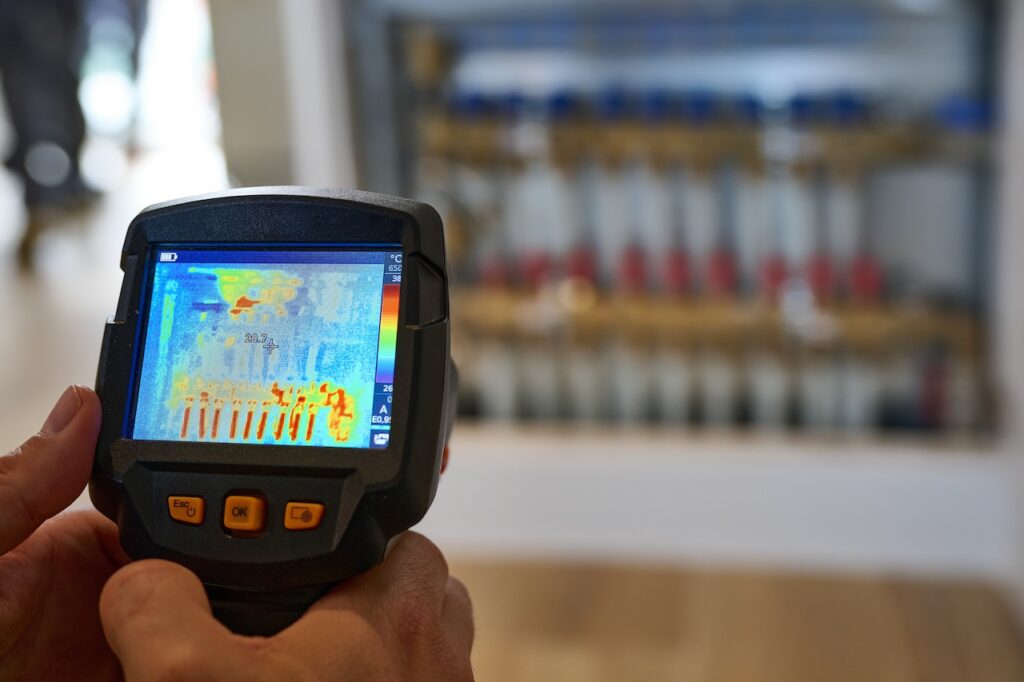
FLIR Infrared Thermal Imaging
FLIR thermal cameras do not see through walls; instead, they measure subtle surface temperature variations across building materials. As water evaporates from drywall, wood, or concrete, it creates a cooling effect. On a thermal camera display, wet areas show up as distinct, cold blue or purple shapes, allowing technicians to map the exact migration path of hidden water behind finished surfaces.
Electronic Moisture Mapping
Once thermal anomalies are identified, technicians verify moisture levels using electronic moisture meters:
- Pinless Meters: Use radio frequency signals to scan underneath tile, hardwood, and drywall without leaving holes or marks.
- Pin-Type Probes: Feature insulated pins that are inserted directly into structural wood framing to measure exact Percent Moisture Content (%MC). Wood framing with moisture content above 16% to 19% creates ideal conditions for mold amplification, while readings above 20% trigger wood-decay rot fungi.
5. The Path to Restoration: The PuroClean Protocol
When hidden water damage is identified inside your Melbourne home, quick action under industry standards is required to stop structural rot and prevent secondary mold contamination.
Operating from our central facility at 739 North Dr in the Coastal Technology Center, PuroClean of Melbourne follows strict Institute of Inspection, Cleaning and Restoration Certification (IICRC) S500 standards for water damage restoration.
[ Step 1: Emergency Diagnostic Moisture Mapping ]
│
▼
[ Step 2: Source Elimination & Plumbing Repair ]
│
▼
[ Step 3: Engineering Containment & HEPA Air Scrubbing ]
│
▼
[ Step 4: High-Volume Extraction & Controlled Demolition ]
│
▼
[ Step 5: Advanced LGR Dehumidification & Structural Drying ]
│
▼
[ Step 6: EPA Antimicrobial Sanitization & Verification ]
│
▼
[ Step 7: Complete Turnkey Structural Reconstruction ]
1. Emergency Moisture Diagnostic Mapping
Our certified technicians arrive with advanced thermal cameras and moisture meters to map the full extent of hidden water migration across floors, walls, and ceilings.
2. Source Containment and Plumbing Coordination
We identify the root cause of the moisture intrusion, whether it requires clearing an AC condensate line, isolating a slab leak, or repairing damaged roof flashing.
3. Engineering Controls and Containment
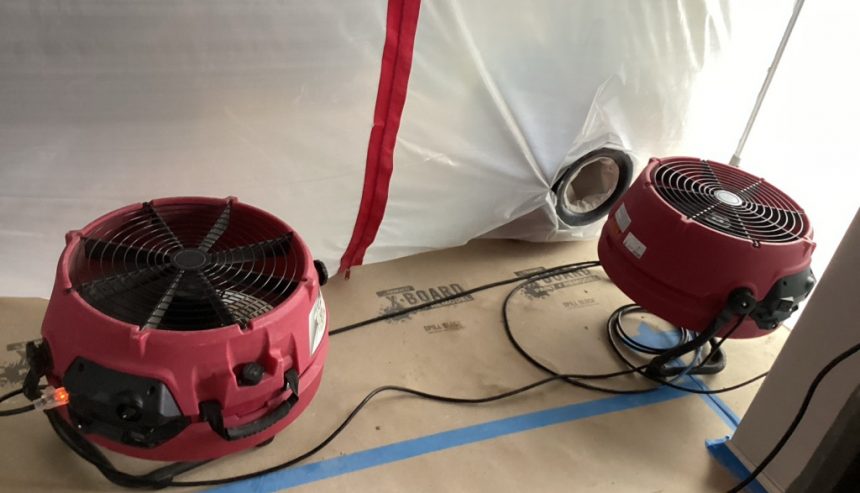
If moisture has already triggered hidden mold growth inside wall cavities, we construct 6-mil plastic containment chambers and deploy HEPA air scrubbers under negative pressure to prevent spores from spreading to clean areas during cleanup.
4. Controlled Cavity Drying and Structural Material Removal
Non-salvageable materials (such as saturated drywall, ruined insulation, or decayed baseboards) are carefully removed. Where structural framing remains sound, we utilize specialized wall-cavity drying injectors to pump dry, heated air directly inside wall voids without removing undamaged drywall.
5. Advanced LGR Dehumidification
We deploy industrial Low-Grain Refrigerant (LGR) dehumidifiers and high-velocity axial air movers to extract trapped water vapor from structural framing, drying building materials back to safe baseline moisture standards.
6. Antimicrobial Washing and Deodorization
Exposed wall studs, floor plates, and concrete subfloors are treated with EPA-registered, hospital-grade antimicrobials to eliminate bacteria and prevent mold growth.
7. Turnkey Reconstruction Services
As a licensed Florida General Contractor, PuroClean of Melbourne handles the entire rebuild process. From drywall repair and painting to subfloor replacement, flooring installation, and trim carpentry, we restore your property back to pre-loss condition under one roof.
6. Frequently Asked Questions (FAQ)
1. How long can water sit behind a wall before structural rot and mold begin?
In Melbourne’s warm, humid climate, mold spores can germinate and begin active growth inside a damp wall cavity within 24 to 48 hours following water exposure. Structural wood rot caused by decay fungi takes longer to develop, typically requiring 3 to 6 weeks of continuous moisture exposure above 20% wood moisture content. However, gypsum drywall begins softening and losing structural integrity within 24 hours of saturation.
2. Can a slab leak ruin my foundation if left untreated?
Yes. A continuous supply pipe leak beneath a concrete slab-on-grade foundation can erode the supporting soil and sub-base sand underneath your home. Over time, this soil erosion creates empty pockets beneath the concrete slab, leading to foundation cracking, floor sagging, and severe structural damage. Furthermore, water constantly wicks up through porous concrete, destroying floor coverings, rotting floor plates, and causing widespread mold growth along interior baseboards.
3. Will insurance cover hidden water damage if I didn’t notice it for several weeks?
Standard Florida homeowners insurance policies generally cover water damage if the underlying cause was sudden and accidental (such as a pipe suddenly cracking, a water heater failing, or an AC drain pan overflowing). However, insurance policies often exclude coverage for water damage resulting from long-term, ongoing leaks that went unaddressed due to deferred maintenance.
The key distinction adjusters look for is whether the leak was hidden within a wall cavity or under a slab where a reasonable homeowner could not see it. PuroClean of Melbourne works directly with insurance adjusters, providing detailed thermal imaging reports, moisture logs, and digital photos to document that the damage originated from a hidden leak.
4. What should I do if I smell a musty odor but cannot see any water stains or mold?
If you smell a persistent musty odor, do not ignore it or attempt to cover it up with air fresheners. Contact a professional restoration company or indoor environmental specialist to perform non-invasive moisture diagnostics. A technician using FLIR thermal imaging cameras and electronic moisture meters can scan your walls, floors, and ceiling registers to identify hidden moisture pockets behind finished surfaces without cutting holes in your drywall.
5. Can I dry out a wet wall by just running my home’s central air conditioning?
No, standard central air conditioning units are designed to maintain comfortable room temperatures and manage normal indoor humidity; they cannot extract the massive volumes of water trapped inside saturated drywall, fiberglass insulation, and structural 2×4 studs. In fact, running your AC without professional dehumidification can drive trapped moisture deeper into building assemblies and spread airborne mold spores through your return air ducts. Professional structural drying requires high-capacity Low-Grain Refrigerant (LGR) dehumidifiers and targeted wall-cavity drying equipment.
6. How do I prevent hidden AC drain line leaks from damaging my Melbourne home?
To prevent hidden AC drain line backups:
- Have a licensed HVAC technician service your system annually to clear algae and sediment buildup from condensate lines.
- Install an automatic float safety switch (primary and secondary pan switches) on your air handler. A float switch automatically shuts off power to your AC unit if the drain pan fills with water, preventing overflows into ceiling joists or closets.
- Pour one cup of plain white vinegar down your AC condensate T-pipe monthly during peak summer operating months to break up algae accumulation.
7. Protect Your Home with PuroClean of Melbourne
Don’t let hidden water damage quietly compromise your family’s health or ruin your property value. Whether you suspect an in-wall leak, are dealing with an overflowing AC condensate line, or need emergency slab leak extraction, the certified experts at PuroClean of Melbourne are available 24 hours a day, 7 days a week.
Operating from our central facility at 739 North Dr in the Coastal Technology Center, our certified technicians deliver comprehensive property damage restoration solutions across Brevard County, including:
- 24/7 Emergency Water Extraction & Structural Drying
- Advanced Non-Invasive Thermal Moisture Mapping
- IICRC S520 Certified Mold & Odor Remediation
- Fire, Smoke & Soot Damage Restoration
- OSHA & FDOH Compliant Biohazard & Trauma Cleanup
- Turnkey Structural Reconstruction Services
EXPERT HIDDEN WATER DAMAGE DIAGNOSTICS & RESTORATION IN MELBOURNE, FL
Stop hidden water damage before it destroys your property value. Contact the certified, compassionate experts at PuroClean of Melbourne today for immediate assistance.
- 24/7 Direct Emergency Line: (321) 378-2400
- Facility Location: 739 North Dr, Melbourne, FL 32934 (Coastal Technology Center)
- Service Area: Serving Melbourne, Viera, Palm Bay, Indialantic, Melbourne Beach, West Melbourne, Suntree, Eau Gallie, Melbourne Village, and all surrounding Brevard County communities.