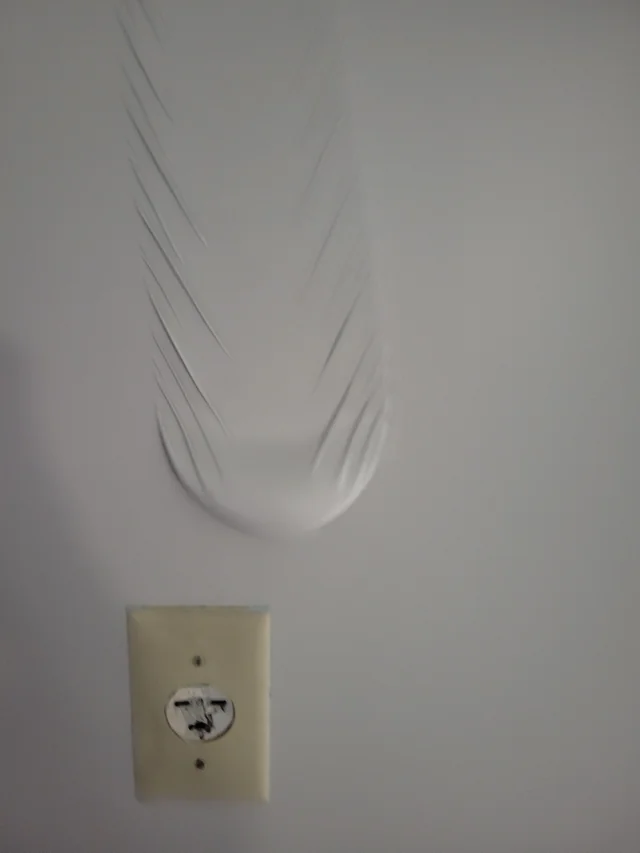
For residents of Melbourne, Florida, afternoon summer thunderstorms, tropical depressions, and heavy coastal rain events are a regular part of life.
While a refreshing downpour cools down the Space Coast, it frequently exposes hidden vulnerabilities in residential and commercial buildings. One of the most common and alarming symptoms property owners encounter following a heavy rainstorm is paint bubbling, blistering, or peeling along interior and exterior walls.
When paint bubbles after rain, it is rarely just a cosmetic defect or a sign of cheap paint. It serves as a visual distress signal from your building envelope. Paint is designed to adhere tightly to prepared substrates like drywall, plaster, stucco, or exterior masonry. When water infiltrates the wall assembly, it alters vapor pressure, dissolves adhesives, and forces moisture outward. As the trapped water attempts to escape through evaporation, it pushes against the paint film, creating unsightly bubbles, blisters, and soft pockets.
In Brevard County’s warm, high-humidity environment, ignoring paint bubbling after a rainstorm can lead to rapid structural degradation, including warped framing, ruined insulation, and toxic mold growth within 24 to 48 hours. Understanding the ten primary reasons paint bubbles after rain requires exploring Florida building science, exterior cladding mechanics, and moisture migration principles.
Ten Reasons Why Paint Bubbles on Walls After Rain
[ RAIN EVENT IN MELBOURNE, FL ]
│
┌───────────────────┬─────────────┴─────────────┬───────────────────┐
▼ ▼ ▼ ▼
[ Stucco Porosity ] [ Roof Leaks ] [ Window Flashing ] [ Slab Wicking ]
│ │ │ │
└───────────────────┴─────────────┬─────────────┴───────────────────┘
▼
[ 10 Causes of Paint Bubbling After Rain ]
1. Exterior Stucco Micro-Cracking and Porosity
Stucco is the predominant exterior cladding material across Melbourne, Palm Bay, and surrounding Brevard County neighborhoods. While durable, traditional three-coat stucco is porous by nature.
During heavy wind-driven rain, water saturates microscopic hairline cracks in the exterior stucco finish. If the stucco was improperly sealed, or if elastomeric paint coatings have aged and cracked, moisture penetrates the substrate, travels inward, and causes interior paint to bubble as it meets indoor air barriers.
2. Roof Flashing and Valley Failures
When paint blisters appear on upper-floor ceilings or near the top of interior walls following a storm, the root cause is almost always overhead.
Roof valleys, step flashing around chimneys, pipe boot flashings, and transitions between roof pitches are vulnerable junction points. If flashing is rusted, lifted, or improperly sealed, heavy rain bypasses the shingles, runs down roof sheathing, saturates attic insulation, and migrates directly into top-floor wall cavities.
3. Window and Sliding Glass Door Flashing Gaps
Windows and sliding glass doors represent major breaks in a building’s weather barrier. In coastal communities like Indialantic, Melbourne Beach, and Satellite Beach, wind-driven rain exerts immense pressure against glass panes and frames.
If window panning, head flashing, or perimeter caulking has degraded or cracked, water forces its way past the frame into the rough opening. The moisture accumulates in the framing studs beneath the window, eventually migrating outward to blister the interior paint below the sill.
4. Capillary Wicking Upward from Foundation Slabs
Many homes in Melbourne are built on concrete slab-on-grade foundations. Concrete is a porous sponge that absorbs ground moisture through capillary action.
During heavy rainfall, water pools around exterior foundation footings, raising the moisture content of the concrete slab. If the slab lacks an effective vapor barrier beneath it, moisture wicks upward into interior bottom plates, baseboards, and lower drywall sections, causing paint to bubble a few inches above the floor.
5. Vapor Pressure Differentials across the Wall Assembly
Florida’s climate creates extreme temperature and humidity differentials between the hot, humid outdoor environment and the air-conditioned interior of your home.
When torrential rain saturates exterior walls, intense sunlight immediately follows, heating the wet exterior surface. This rapid thermal shift vaporizes trapped moisture, creating high vapor pressure that forces moisture inward. If the interior paint layer creates an impermeable vapor barrier, the expanding water vapor gets trapped beneath the paint film, creating large blisters.
6. Interlayer Adhesion Failure from Painting Over Moisture
If a property owner or uncertified painter repainted a wall during a humid Florida week without allowing the substrate to dry completely, disaster follows.
Painting over damp drywall, uncured plaster, or humid stucco traps residual moisture beneath the fresh coating. When the next heavy rain increases the humidity inside the wall cavity, the trapped moisture expands, breaking the bond between the new paint layer and the old paint surface.
7. Poor Surface Preparation and Surfactant Leaching
High-quality paint performance depends heavily on surface preparation. If exterior walls were dirty, chalky, or contaminated with salt spray, pollen, or mildew when painted, new paint cannot achieve proper molecular adhesion.
Furthermore, water-soluble ingredients in paint known as surfactants can rise to the surface when exposed to fresh rainwater before the paint has fully cured, leaving sticky residue films and causing localized bubbling.
8. High Humidity and Condensation in Garages and Lanais
Semi-conditioned or unconditioned spaces such as garages, enclosed lanais, and utility rooms experience severe humidity spikes during rainy weather.
When warm, moisture-laden storm air enters an unconditioned garage and hits cooler interior block walls, heavy condensation forms directly on the painted surface. Prolonged surface moisture penetration breaks down latex paint binders, resulting in widespread bubbling along garage and lanai walls.
9. Coincidental Plumbing Leaks Triggered by Storm Shifts
Sometimes, plumbing leaks coincide with heavy rain events, leading to misdiagnosed causes. Heavy ground saturation can shift older, brittle cast-iron or PVC drain lines beneath a home, pulling pipe joints apart.
Additionally, municipal power fluctuations during thunderstorms can cause sump pumps or pressure regulators to malfunction. If paint bubbles appear on a wall containing a supply line or drain pipe during a storm, an in-wall plumbing leak may be the true culprit.
10. Subpar Paint Quality and Incorrect Product Selection
Using interior-grade paint on exterior surfaces, or applying low-grade, non-breathable paints in high-moisture coastal environments, guarantees premature failure.
Cheap paints lack the elastomeric flexibility and breathability required to withstand Brevard County’s intense weather cycles. When rainwater beats against subpar paint films, the coating absorbs water, loses structural cohesion, and blisters.
Building Science: How Water Destroys Paint Adhesion
To understand why paint bubbles, it helps to examine the microscopic interface between paint and the wall substrate. Paint achieves adhesion through mechanical bonding (gripping microscopic pores in the surface) and chemical bonding (molecular attraction).
+———————————————————————————–+
| THE MECHANICS OF PAINT BLISTERING |
+———————————————————————————–+
| STEP 1: Rain Infiltration | Water penetrates exterior cladding through cracks or |
| | flashing gaps, entering the wall cavity. |
+—————————-+——————————————————+
| STEP 2: Porous Absorption | Gypsum drywall, stucco, or framing absorbs water |
| | until saturation is reached. |
+—————————-+——————————————————+
| STEP 3: Adhesive Breakdown | Water molecules break the chemical and mechanical |
| | bonds holding paint to the wall. |
+—————————-+——————————————————+
| STEP 4: Vapor Pressure | Heat vaporizes trapped water, forcing it outward |
| | against the impermeable paint film. |
+—————————-+——————————————————+
| STEP 5: Blister Formation | The paint film lifts off the substrate, forming |
| | water-filled or air-filled bubbles. |
+—————————-+——————————————————+
When liquid water or water vapor infiltrates this bond line, it acts as a solvent, dissolving the adhesive polymers holding the paint film in place. As the sun comes out after a Melbourne rainstorm, exterior walls heat up rapidly.
The trapped moisture inside the wall turns into vapor, expanding significantly in volume. Seeking a point of escape, this expanding vapor pushes against the loosened paint film. Because modern latex and acrylic paints are relatively elastic, they stretch instead of cracking immediately, forming raised bubbles filled with water or compressed air.
Diagnostic Methods: Uncovering the True Root Cause
Simply scraping away paint bubbles and repainting is a temporary fix that guarantees recurrence if the underlying moisture source remains unaddressed. Professional restoration technicians use advanced diagnostic tools to trace paint bubbling back to its exact origin.
- FLIR Thermal Imaging Infrared Cameras: Detect subtle surface temperature variations caused by evaporative cooling, mapping hidden moisture pathways behind finished walls.
- Pinless Electronic Moisture Meters: Scan drywall, stucco, and wood framing without damaging surfaces to locate high-moisture zones.
- Penetrating Pin-Type Meters: Measure exact percent moisture content (%MC) inside structural studs and subfloors to determine if framing is at risk of wood rot or mold.
The PuroClean Restoration and Repair Protocol
When paint bubbling reveals active water intrusion inside your Melbourne home, professional intervention is required to stop structural rot and prevent indoor mold contamination.
Operating from our central facility at 739 North Dr in the Coastal Technology Center, PuroClean of Melbourne follows strict Institute of Inspection, Cleaning and Restoration Certification (IICRC) standards for water damage restoration.
[ Step 1: Thermal Moisture Mapping ] ──> [ Step 2: Source Repair & Sealing ]
│
┌─────────────────────────────────────────┘
▼
[ Step 3: Containment & HEPA Scrubbing ] ──> [ Step 4: Psychrometric Structural Drying ]
│
┌─────────────────────────────────────────┘
▼
[ Step 5: Antimicrobial Sanitization ] ──> [ Step 6: Turnkey Reconstruction & Rebuild ]
1. Comprehensive Moisture Mapping
Our certified technicians arrive with advanced thermal cameras and moisture meters to determine whether the bubbling paint is an isolated surface issue or a symptom of widespread wall cavity saturation.
2. Exterior Source Repair and Sealing
We identify and repair the root cause of the water intrusion, whether it requires sealing stucco cracks, repairing roof flashing, or re-caulking window frames.
3. Containment and HEPA Air Scrubbing
If trapped moisture has already fostered mold growth inside the wall cavity, we establish 6-mil plastic containment chambers and deploy HEPA air scrubbers under negative pressure to protect indoor air quality.
4. Psychrometric Structural Drying
We deploy industrial Low-Grain Refrigerant (LGR) dehumidifiers and high-velocity air movers to dry wall framing, studs, and drywall back to safe baseline moisture standards.
5. Turnkey Reconstruction Services
As a licensed Florida General Contractor, PuroClean of Melbourne handles the entire rebuild process under one roof. Once drying is certified, our in-house construction division scrapes bubbled paint, repairs damaged drywall, applies stain-blocking primers, and paints interior finishes, restoring your property completely.
Frequently Asked Questions (FAQ)
1. Can I just pop the paint bubbles and paint over them after it rains?
Popping paint bubbles and painting over them is a temporary cosmetic fix that fails to solve the underlying problem. If water is still trapped inside the wall or if exterior stucco cracks and flashing gaps remain unsealed, moisture will continue to compromise the wall assembly. Within weeks or months, the new paint will bubble and peel again, and trapped moisture may lead to hidden structural wood rot and toxic mold growth.
2. How do I know if paint bubbling is caused by a roof leak or a window leak?
Location is the primary indicator. Paint bubbling that occurs near the top of a wall, along ceiling corners, or directly beneath attic access points typically points to a roof leak, valley failure, or flashing issue. Paint bubbling that occurs directly beneath a window sill, around a sliding glass door, or along bottom baseboards usually points to window flashing failures, stucco micro-cracking, or slab moisture wicking. Professional thermal imaging can confirm the exact moisture path.
3. Why does my paint bubble only after heavy rain and not during normal humidity?
Normal indoor or outdoor humidity affects surface moisture, but heavy rain introduces liquid water under pressure. Wind-driven rain forces liquid water directly through microscopic cracks in stucco, gaps in window seals, or damaged roof flashing. Once liquid water enters the wall cavity, it saturates the porous drywall or framing, breaking paint adhesion and creating vapor pressure when the sun heats the exterior wall after the storm.
4. Will my Florida homeowners insurance cover wall repairs if paint bubbles from a roof leak?
Insurance coverage depends on the cause of the water intrusion. If paint bubbles result from sudden, accidental storm damage (such as a wind-damaged roof shingle or a sudden window seal failure during a hurricane), standard homeowners insurance generally covers the water mitigation and structural drywall repairs. However, damage resulting from long-term deferred maintenance, unsealed stucco cracks, or chronic slow leaks is typically excluded. PuroClean of Melbourne works directly with insurance adjusters to support your claim.
5. How long does it take for a wet wall to dry out professionally?
Professional structural drying using industrial LGR dehumidifiers and axial air movers typically takes between 3 and 5 days, depending on the volume of water trapped inside the wall cavity and the porosity of the building materials. Technicians monitor wood moisture content daily using pin-type meters, ensuring framing returns below 15% moisture content before any reconstruction or painting begins.
6. Where is PuroClean of Melbourne located, and how fast can you respond to water emergencies?
Our central commercial facility is located at 739 North Dr in the Coastal Technology Center, Melbourne, FL 32934. Because our facility is positioned near major Brevard County thoroughfares, our certified emergency response teams reach residential and commercial properties across Melbourne, Viera, Palm Bay, Indialantic, and surrounding Space Coast communities within 60 minutes or less, 24 hours a day, 7 days a week.
7. Partner with Melbourne’s Trusted Restoration Experts
When paint bubbling after rain reveals hidden water damage in your Melbourne, Viera, Palm Bay, or Space Coast home, don’t settle for temporary cosmetic fixes. Partner with the certified professionals who diagnose root causes and deliver complete structural recovery.
PuroClean of Melbourne is your single-source solution for complete property recovery. From emergency water extraction and thermal moisture mapping to biohazard sanitization and turnkey reconstruction, One Call Does It All.
Our comprehensive property damage restoration services include:
- 24/7 Emergency Water Extraction & Structural Drying
- Advanced FLIR Thermal Imaging & Moisture Diagnostics
- IICRC Certified Water, Mold & Odor Remediation
- Fire, Smoke & Soot Damage Restoration
- OSHA & FDOH Compliant Biohazard, Sewage & Trauma Cleanup
- Turnkey Structural Reconstruction & General Contracting
WATER DAMAGE RESTORATION & DRYING IN MELBOURNE, FL

Don’t let paint bubbling turn into a structural crisis. Contact the certified, compassionate experts at PuroClean of Melbourne today for professional diagnostics and immediate 24/7 emergency response.
- 24/7 Direct Emergency Line: (321) 378-2400
- Facility Location: 739 North Dr, Melbourne, FL 32934 (Coastal Technology Center)
- Service Area: Serving Melbourne, Viera, Palm Bay, Indialantic, Melbourne Beach, West Melbourne, Suntree, Eau Gallie, Melbourne Village, and all surrounding Brevard County communities.