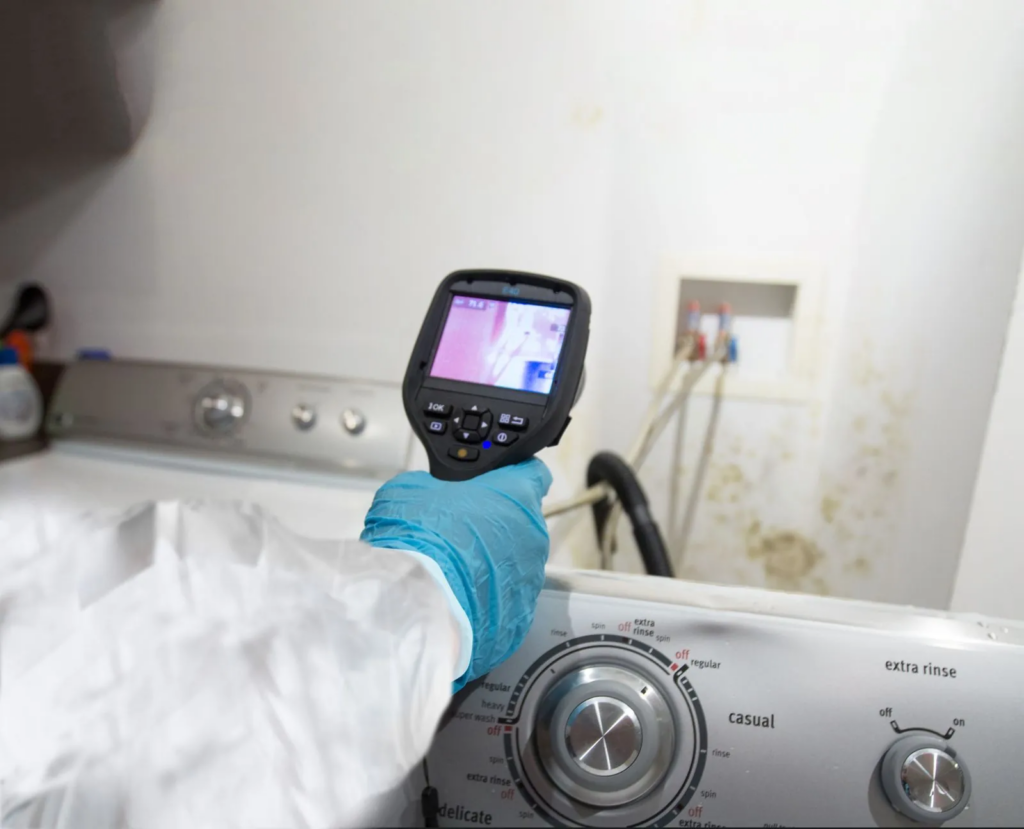
For property owners in Melbourne, Florida, mold is not an occasional inconvenience; it is a constant environmental pressure.
Situated along the Space Coast between the Indian River Lagoon and the Atlantic Ocean, Brevard County experiences long, blistering summers, ambient relative humidity that routinely exceeds 80%, heavy seasonal downpours, and near-constant usage of central air conditioning systems.
In this subtropical climate, microscopic mold spores exist naturally in both outdoor and indoor air. Under normal conditions, these airborne spores remain dormant and harmless. However, when moisture intrudes into a building envelope whether through a slow plumbing drip behind a shower wall, uninsulated AC ductwork in a hot attic, or subtle roof flashing leaks following a coastal storm dormant spores find everything they need to flourish: oxygen, organic cellulose (such as paper-faced drywall, carpet padding, or yellow pine framing), and water.
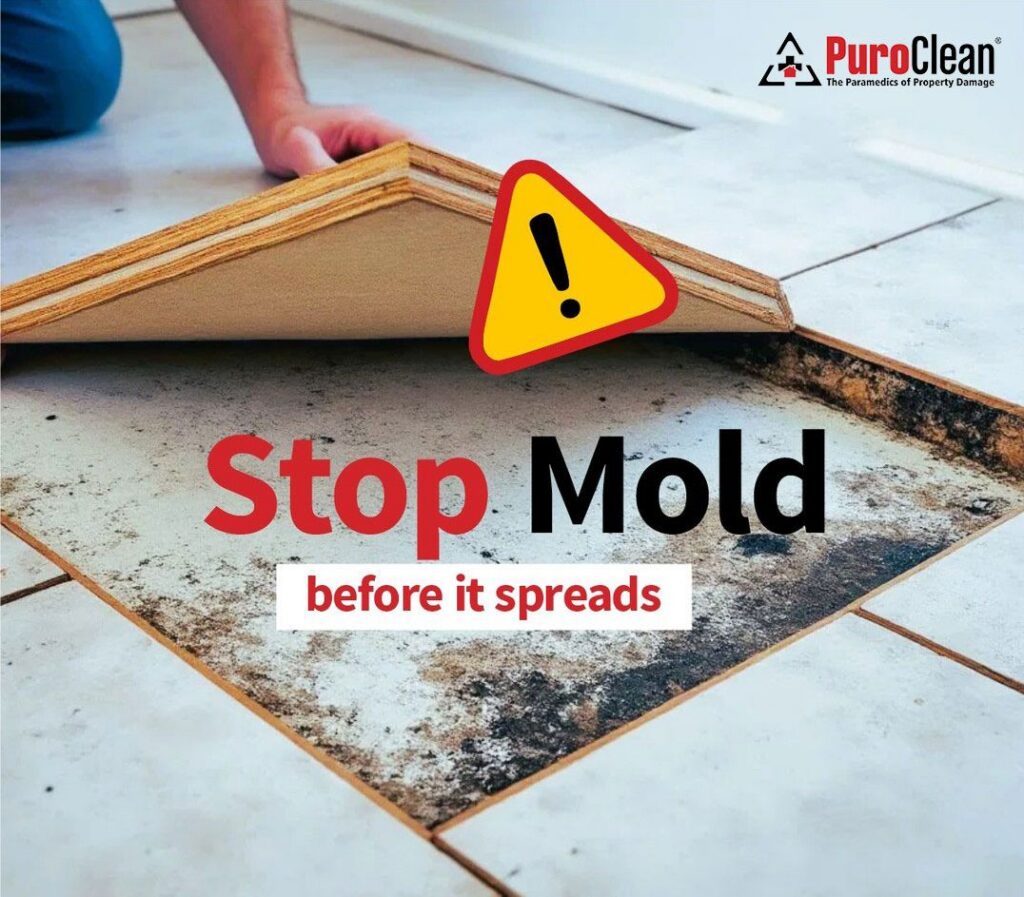
Under ideal Florida temperatures, mold spores can germinate and form active, multiplying colonies within 24 to 48 hours of moisture contact.
While a small spot of surface mildew on bathroom shower grout can often be addressed with routine cleaning, extensive fungal amplification hidden inside building cavities requires professional intervention. Attempting to scrub away widespread mold with consumer products or ignoring subtle environmental warning signs can spread millions of microscopic spores into your central HVAC ductwork, leading to severe indoor air quality degradation and structural deterioration.
Recognizing the early indicators of a compromised indoor environment is critical for protecting both your physical health and your property value. Here are the ten definitive signs that your Melbourne home requires professional, certified mold remediation.
Ten Critical Warning Signs You Need Professional Mold Remediation
[ SUBTROPICAL MOISTURE & FUNGAL AMPLIFICATION ]
│
┌───────────────────┬───────────────┴───────────────┬───────────────────┐
▼ ▼ ▼ ▼
[ Persistent Odors ] [ Unexplained Symptoms ] [ Visual Discoloration ] [ Historical Flooding ]
Musty mVOC gases Sinus & allergic flares Dark or white spots Unaddressed leaks
│ │ │ │
└───────────────────┴───────────────┬───────────────┴───────────────────┘
▼
[ 10 SIGNS YOU NEED PROFESSIONAL MOLD REMEDIATION ]
Sign 1: Persistent, Earthy, or Musty Odors (mVOC Off-Gassing)
One of the earliest and most reliable indicators of hidden microbial growth is a persistent, damp, or musty odor that remains even after deep cleaning. This smell is not caused by dirt; it is the direct result of active fungal metabolism.
As mold colonies feed on damp building materials, they release airborne gaseous compounds known as microbial Volatile Organic Compounds (mVOCs). Because these gases easily pass through drywall pores, baseboards, and electrical outlet covers, you will often smell hidden fungal growth inside wall cavities, crawlspaces, or unconditioned attics long before you ever see a physical spot. If a specific room, closet, or cabinet smells like a damp basement, professional diagnostic testing is required.
Sign 2: Unexplained Chronic Respiratory Symptoms and Allergic Flares
When microscopic mold colonies mature, they release millions of airborne spores, hyphal fragments, and mycotoxins directly into your indoor living space. For occupants sensitive to fungal allergens, spending time inside the home triggers persistent health symptoms that improve when leaving the property for work or vacation.
Common medical warning signs associated with high indoor spore loads include:
- Chronic nasal congestion, post-nasal drip, and sneezing.
- Unexplained throat irritation, dry coughing, or bronchial wheezing.
- Frequent asthma attacks in previously well-controlled individuals.
- Red, watery, or itchy eyes and unexplained skin rashes.
- Systemic complaints, including persistent fatigue, sinus pressure, and morning headaches.
Sign 3: Visible Fungal Growth Exceeding 10 Square Feet
If you can physically see dark green, black, white, or fuzzy gray growth spreading across drywall, ceiling tiles, or baseboards, an active moisture problem exists.
According to guidelines from the Environmental Protection Agency (EPA) and the Institute of Inspection, Cleaning and Restoration Certification (IICRC), any indoor mold contamination covering an area greater than 10 square feet (roughly a 3-foot by 3-foot section) moves beyond the scope of DIY homeowner cleanup and legally mandates professional engineering controls, containment, and certified remediation.
+———————————————————————————–+
| MOLD CONTAMINATION SCOPE MATRIX |
+———————————————————————————–+
| CONTAMINATION SIZE | RECOMMENDED ACTION PROTOCOL |
+—————————-+—————-──────────────────────────────────────+
| Isolated (< 10 Sq. Ft.) | Minor surface cleaning via non-porous disinfectants |
| | (e.g., small shower tile grout area). |
+—————————-+—————-──────────────────────────────────────+
| Moderate (10 – 100 Sq. Ft.)| Professional IICRC S520 remediation requiring |
| | critical poly containment and HEPA air scrubbing. |
+—————————-+—————-──────────────────────────────────────+
| Extensive (> 100 Sq. Ft.) | Full structural containment, negative pressure, |
| | independent environmental testing, and material gut. |
+———————————————————————————–+
Sign 4: A History of Unaddressed Water Intrusions or Plumbing Leaks
Every major mold outbreak begins with an unaddressed water event. If your Melbourne home has experienced past water damage—such as an overflowing washing machine, a burst supply line beneath a bathroom vanity, a hot water heater failure, or storm-driven rain penetrating roof flashing—mold is likely growing inside nearby wall cavities if structural materials were not professionally dried to baseline standards within 48 hours.
Water that pools beneath subflooring or saturates drywall paper facing creates an ideal, dark environment where fast-growing fungal genera like Aspergillus, Penicillium, and Stachybotrys flourish undisturbed.
Sign 5: Dark Dust Trails and Condensation Around AC Vents and Grilles
In Central Florida, central air conditioning systems run constantly for most of the year. When an AC system is oversized, improperly calibrated, or operating with uninsulated ductwork in a 130°F attic, warm humid air meets cold duct surfaces, causing heavy condensation to form around ceiling supply grilles.
If you notice fuzzy black or dark green rings forming on the ceiling drywall surrounding your AC registers, or if dark dust-like streaks trail across supply vents, mold is actively growing within the duct boot or interior duct lining. Operating the system continuously distributes fungal spores into every bedroom and living space in the home.
[ Uninsulated Attic Ductwork ] + [ Cold AC Supply Air ] ───> [ Surface Dew Point Drop ]
│
▼
[ Condensation Pools Around Vents ] ───> [ Fungal Growth Spreads Across Ceiling Drywall ]
Sign 6: Warped Baseboards, Blistering Paint, or Soft Drywall
Building materials often display physical structural distress when hidden moisture and mold are accumulating behind finished surfaces.
- MDF Baseboard Swelling: Medium-Density Fiberboard (MDF) baseboards act like paper sponges. When water accumulates along bottom plates, MDF swells to twice its thickness, cracks surrounding caulk, and pulls away from the wall.
- Paint Blistering and Bubbling: Trapped water vapor migrating from inside a damp wall cavity pushes against interior latex paint, creating raised, fluid- or air-filled blisters.
- Spongy Drywall: When gypsum wallboard absorbs moisture and harbors internal hyphal root networks, it loses its structural cohesion, feeling soft, crumbly, or hollow to the touch.
Sign 7: Recent Water Damage from a Concrete Slab Leak
A significant portion of single-family homes in Melbourne, Palm Bay, and West Melbourne are constructed on concrete slab-on-grade foundations with pressurized copper or CPVC plumbing supply lines buried within or beneath the slab.
When a pinhole slab leak develops, water migrates horizontally across the concrete sub-base and wicks upward into interior partition walls, floor joists, carpet padding, and wood flooring. Because the leak occurs beneath the floor, water can saturate building framing for weeks before surface puddles appear. If hardwood floors begin cupping, or if luxury vinyl plank (LVP) seams begin buckling, active subfloor mold growth is almost certainly present.
Sign 8: High Indoor Relative Humidity (Consistently Above 60% RH)
According to building science standards, ideal indoor relative humidity should remain between 30% and 50%. In coastal Brevard County, maintaining proper indoor humidity requires a correctly sized, fully functional HVAC system or supplemental whole-home dehumidification.
If your home’s indoor relative humidity consistently sits above 60% to 65%, the air contains enough suspended moisture to trigger fungal germination on organic household dust, clothing in closets, leather goods, and paper books without a direct plumbing leak. If windows frequently sweat on the inside or wooden furniture feels clammy, high humidity is driving widespread microbial growth across the building.
Sign 9: Unexplained Pest Intrusions (Termites, Ants, and Booklice)
A sudden influx of wood-destroying or moisture-loving insects inside your home often indicates underlying fungal decay and water damage.
- Subterranean Termites & Carpenter Ants: These insects are heavily drawn to soft, damp structural wood framing that has been softened by wood-rot fungi (Basidiomycetes).
- Booklice & Silverfish: These tiny pests feed directly on microscopic mold spores and damp organic starches, such as wet drywall facing paper and wallpaper paste.
If pest control technicians identify localized carpenter ant nests or booklice activity inside specific interior walls, a hidden moisture source and active mold growth are almost always present inside that wall void.
Sign 10: Failed DIY Cleanup Attempts and Returning Discoloration
A classic sign that you need professional remediation is when previous attempts to clean up mold fail. Homeowners frequently spray household chlorine bleach or consumer air fresheners on moldy drywall or baseboards, only to watch the dark spots return with greater severity a few weeks later.
Bleach consists primarily of water and sodium hypochlorite. Due to high surface tension, chlorine cannot penetrate porous materials like drywall or plywood; it remains on the surface, stripping the mold’s color so it temporarily disappears. Meanwhile, the water content in bleach soaks deep into the porous substrate, feeding the hidden fungal root system (hyphae). Within days, the colony regenerates and expands.
[ Consumer Bleach Applied to Drywall ] ───> [ Surface Chlorine Strips Pigment ]
│
▼
[ Water Base Soaks Deep Into Wood ] ────> [ Root System (Hyphae) Feeds & Regenerates ]
The Science of Mold Assessment: Florida Statute Section 468.8419
When investing in professional mold remediation in Melbourne, FL, property owners must be aware of consumer protection laws governing the Florida environmental and restoration industry.
Under Florida Statute Section 468.8419, it is a direct violation of state law for a single company to perform both professional mold assessment (testing) and physical mold remediation on the same property within a 12-month period.
[ Step 1: Licensed Independent Assessor Tests & Writes Protocol ]
│
▼
[ Step 2: Florida Law (FS 468.8419) Mandates Independent Remediator ]
│
▼
[ Step 3: PuroClean Executes 7-Step IICRC S520 Remediation ]
│
▼
[ Step 4: Assessor Returns for Independent Clearance Testing (PRV) ]
The Role of the Licensed Mold Assessor
An independent, licensed Florida Mold Assessor evaluates the property, collects volumetric air spore trap samples and direct surface tape lifts, sends them to an accredited microbiological laboratory, and writes a technical, site-specific Remediation Protocol.
The Role of the Licensed Mold Remediator
Once the protocol is drafted, a certified restoration contractor (such as PuroClean of Melbourne) carries out the physical containment, HEPA air scrubbing, material extraction, and antimicrobial cleaning according to those exact specifications. After cleanup is complete, the independent assessor returns to perform final Post-Remediation Verification (PRV) clearance testing to certify the indoor air quality has returned to normal baseline standards.
This legal separation protects consumers from conflicts of interest, ensuring that the company performing the cleanup is held accountable by an independent final lab test.
The 7-Step IICRC S520 Professional Remediation Protocol
When diagnostic testing confirms active indoor mold amplification (Condition 3), PuroClean of Melbourne executes a standardized 7-step remediation workflow compliant with Institute of Inspection, Cleaning and Restoration Certification (IICRC) S520 guidelines.
Operating from our central commercial facility at 739 North Dr in the Coastal Technology Center, our certified technicians bring elite equipment and scientific precision to every job.
[ Step 1: Protocol Review & Site Assessment ]
│
▼
[ Step 2: Critical Engineering Containment & Negative Air ]
│
▼
[ Step 3: Continuous Industrial HEPA Air Scrubbing ]
│
▼
[ Step 4: Controlled Material Removal & HEPA Vacuuming ]
│
▼
[ Step 5: Mechanical Cleaning & EPA Antimicrobial Application ]
│
▼
[ Step 6: Structural Moisture Control & Dehumidification ]
│
▼
[ Step 7: Independent Clearance Support & Rebuilding ]
1. Protocol Review and Pre-Remediation Walkthrough
Technicians review the independent mold assessor’s written scope of work, verify moisture boundaries using FLIR thermal imaging cameras, and establish site safety controls.
2. Critical Engineering Containment and Negative Pressure
Technicians build heavy-duty 6-mil polyethylene containment chambers around the affected work zone. Industrial HEPA air scrubbers equipped with specialized ducting are deployed to establish negative air pressure, ensuring that disturbed mold spores, dust, and microscopic fragments cannot escape into clean living areas during cleanup.
3. Continuous Industrial HEPA Air Scrubbing
High-efficiency particulate air (HEPA) filtration units run continuously throughout the project, scrubbing indoor air to capture 99.97% of airborne biological particulates down to 0.3 microns.
4. Controlled Removal of Contaminated Porous Materials
Building materials that have suffered deep, unsalvageable fungal penetration (such as saturated paper-faced drywall, ceiling tiles, carpet padding, and tack strips) are carefully cut away, double-bagged in 6-mil biohazard bags, wiped down, and safely removed from the property.
5. Mechanical Cleaning and EPA-Registered Antimicrobials
Exposed structural studs, wood framing, and concrete masonry undergo detailed mechanical cleaning, including hand-scrubbing with specialized abrasive pads and HEPA vacuuming. Technicians then apply EPA-registered, hospital-grade broad-spectrum antimicrobial and fungicidal treatments to eliminate residual micro-flora.
6. Structural Moisture Control and Dehumidification
Remediation is temporary if structural framing remains damp. PuroClean deploys commercial Low-Grain Refrigerant (LGR) dehumidifiers and high-velocity air movers to dry framing below 15% wood moisture content, ensuring mold cannot return.
7. Independent Clearance Verification and Turnkey Reconstruction
Once physical cleanup is complete, the original independent licensed mold assessor returns to perform final visual inspections and Post-Remediation Verification (PRV) air testing. Once lab results confirm normal indoor air quality, containment is removed. As a licensed Florida General Contractor, our in-house Reconstruction team then rebuilds drywall, flooring, trim, and finishes, returning your property to pre-loss condition under one roof.
Diagnostic Comparison Matrix: DIY vs. Professional Remediation
The following matrix compares DIY cleaning attempts against professional IICRC S520 mold remediation:
| Evaluation Factor | Household DIY Attempts (Bleach/Store Sprays) | Professional Mold Remediation (PuroClean) |
| Scientific Containment | None (Spreads spores throughout the HVAC system) | Critical 6-mil poly containment under negative air pressure |
| Air Filtration Depth | Standard HVAC or furnace filters (passes spores) | Industrial HEPA air scrubbing (captures particulates down to 0.3 microns) |
| Root Cause Diagnostics | Visual surface guessing | FLIR thermal moisture mapping & electronic %MC probes |
| Porous Material Treatment | Superficial bleaching (leaves roots intact inside wood) | Controlled extraction of contaminated drywall & HEPA vacuuming |
| Chemical Safety | Hazardous mixing of household chemicals | EPA-registered, hospital-grade broad-spectrum antimicrobials |
| Legal & Insurance Proof | Zero documentation (High risk of denied claims) | Independent lab clearance (PRV) & itemized Xactimate® estimates |
| Structural Rebuilding | Requires hiring separate general contractors | Turnkey in-house General Contracting rebuild under one roof |
Frequently Asked Questions (FAQ)
1. How do I know if the dark spots on my drywall are dangerous mold or just dirt?
It is scientifically impossible to confirm whether dark spots represent dangerous toxigenic mold (such as Stachybotrys chartarum) or harmless dirt and sap stains by visual inspection alone. However, if the discoloration is accompanied by a musty odor, feels soft or damp, or sits on a wall that experienced a past plumbing leak or roof intrusion, active fungal growth is likely present. The only way to definitively identify the species and spore concentration is through direct surface tape lifts or air spore samples collected by an independent licensed mold assessor and analyzed by an accredited laboratory.
2. Can mold make my family sick if we can’t see it growing?
Yes. Microscopic mold spores, hyphal fragments, and volatile organic compounds (mVOCs) released by hidden fungal colonies easily pass through drywall seams, baseboard gaps, electrical outlets, and central AC ductwork into your living space. Inhaling these airborne contaminants can trigger persistent allergic reactions, chronic sinus congestion, asthma attacks, coughing, eye irritation, and fatigue, even if the physical fungal colony remains entirely hidden behind drywall or under subflooring.
3. Why shouldn’t I use household bleach to clean up mold on drywall or framing studs?
Household chlorine bleach is ineffective and counterproductive on porous building materials like drywall, plaster, plywood, and yellow pine framing. Bleach consists primarily of water and sodium hypochlorite. Due to high surface tension, the chlorine component remains on the exterior surface, bleaching the surface pigment so the mold visually disappears. Meanwhile, the water base penetrates deep into the porous material, supplying moisture directly to the hidden fungal root system (hyphae). Within days, the mold returns with greater severity.
4. Why does Florida law require two separate companies for mold testing and mold cleanup?
Florida Statute Section 468.8419 prohibits a single business entity from performing both mold assessment (testing) and mold remediation on the same property within a 12-month period. This consumer protection law eliminates financial conflicts of interest. It ensures that the company testing your home has no incentive to inflate the cleanup scope, and the remediation contractor executing the work is held accountable by an independent final Post-Remediation Verification (PRV) clearance test.
5. Will my Florida homeowners insurance cover the cost of professional mold remediation?
Coverage depends on the underlying cause of the moisture intrusion and your specific policy language. In Florida, mold damage resulting from a sudden and accidental covered loss (such as a burst supply pipe, a hot water heater rupture, or storm damage to a roof) is generally covered, subject to specific policy mold sub-limits (typically $10,000). However, mold resulting from long-term deferred maintenance, chronic slow leaks, or rising floodwaters is generally excluded unless specific riders were purchased. PuroClean of Melbourne works directly with insurance adjusters, providing detailed line-item Xactimate® estimates and photo documentation to support your claim.
6. Where is PuroClean of Melbourne located, and how fast can you respond to a mold emergency?
Our central commercial facility is located at 739 North Dr in the Coastal Technology Center, Melbourne, FL 32934. Because our facility is centrally positioned near major Brevard County thoroughfares like Interstate 95 and US Highway 1, our certified emergency response teams can reach residential and commercial properties across Melbourne, Viera, Palm Bay, Indialantic, and surrounding Space Coast communities within 60 minutes or less, 24 hours a day, 7 days a week.
7. Partner with Melbourne’s Certified Mold Remediation Experts
If you recognize any of these ten warning signs in your home or business in Melbourne, Viera, Palm Bay, or the surrounding Space Coast area, don’t leave your family’s health or property value to chance. Partner with the certified professionals who deliver scientific containment, thorough material extraction, and complete structural rebuilding.
PuroClean of Melbourne is your trusted single-source solution for complete property recovery. From emergency water extraction and psychrometric structural drying to certified mold remediation and turnkey reconstruction, One Call Does It All.
Our comprehensive property damage restoration services include:
- 24/7 Emergency Water Extraction & Structural Drying
- Advanced FLIR Thermal Imaging & Moisture Diagnostics
- IICRC S520 Certified Mold & Odor Remediation
- Fire, Smoke & Soot Damage Restoration
- OSHA & FDOH Compliant Biohazard, Sewage & Trauma Cleanup
- Turnkey Structural Reconstruction & General Contracting
CERTIFIED MOLD REMEDIATION & RESTORATION IN MELBOURNE, FL
Protect your indoor air quality and preserve your property’s structural value. Contact the certified, compassionate experts at PuroClean of Melbourne today for professional guidance and immediate assistance.
- 24/7 Direct Emergency Line: (321) 378-2400
- Facility Location: 739 North Dr, Melbourne, FL 32934 (Coastal Technology Center)
- Service Area: Serving Melbourne, Viera, Palm Bay, Indialantic, Melbourne Beach, West Melbourne, Suntree, Eau Gallie, Melbourne Village, and all surrounding Brevard County communities.