


Table of Contents
Most homeowners in Melbourne, Florida have a mental checklist when it comes to mold: check under the sink, look behind the shower tiles, inspect the drywall near windows after a hard rain. What very few people think to check is their metal surfaces the air conditioning ducts, the exposed pipes under the house, the HVAC drip pan, the refrigerator coils, or the metal window frames that take the full force of Florida’s coastal humidity every single day.
Mold Removal in Melbourne, FL – Call (321) 378-2400

So here’s the question that surprises most people: can mold actually grow on metal?
The answer is more complicated and more alarming than most homeowners expect. And in a climate like Melbourne’s, where heat and humidity are relentless for most of the year, the relationship between mold and metal is something every property owner needs to understand.
In this guide, PuroClean of Melbourne breaks down the science behind mold and metal, where it happens most frequently in local homes, the health risks involved, and what to do if you find mold on metal surfaces in your home.
The Short Answer: Mold Doesn’t Eat Metal: But It Still Grows There
Here’s where the nuance matters. Mold is an organism that feeds on organic material — cellulose, wood, drywall paper, fabric, dust, and biological debris. Pure, clean metal does not provide a food source for mold in the way that drywall or wood does. In that sense, mold cannot truly “eat” or colonize bare metal the way it would colonize a piece of damp drywall.
But here’s what people get wrong: metal surfaces in the real world are never truly bare and clean.
In any occupied home or building, metal surfaces accumulate a thin but very real layer of organic material over time. Dust settles on metal ductwork. Grease films coat metal kitchen surfaces. Skin cells, pet dander, pollen, and biological debris collect on any surface that isn’t cleaned regularly — including metal pipes, vents, and frames. This organic film is all mold needs to establish a colony on an otherwise inhospitable surface.
Add moisture — which in Melbourne is rarely in short supply — and you have everything mold needs to thrive on metal: a nutrient source in the organic film and the water that is mold’s single most essential requirement.
Why Melbourne’s Climate Makes This Worse Than Almost Anywhere Else
Melbourne, Florida sits on the Atlantic coast of Brevard County, where the combination of high temperatures, intense humidity, and frequent rainfall creates one of the most mold-favorable environments in the continental United States. The average relative humidity in Melbourne hovers between 70 and 85 percent for much of the year, and during summer months it regularly exceeds 90 percent.
Mold begins to grow when relative humidity consistently exceeds 60 percent and a surface has been wet or damp for 24 to 48 hours. In Melbourne’s climate, both conditions are routinely met — especially on metal surfaces that experience what’s known as condensation.
Condensation is the process by which water vapor in warm, humid air deposits as liquid water on a cooler surface. In Melbourne homes, this happens constantly on:
- Cold water pipes that sweat in the summer heat
- Air conditioning ducts and vents, which are cooled by refrigerant and surrounded by warm, humid air
- Metal window frames that are cooled by indoor air conditioning while exposed to hot, humid outdoor air
- Refrigerator and freezer coils
- Metal roofing and flashing where temperature differentials cause repeated wetting and drying
- HVAC drip pans and drain lines that handle condensation from the air conditioning system
Each of these surfaces experiences repeated wetting, and because metal conducts heat efficiently, they stay cool long enough for that moisture to remain in place — exactly the conditions mold needs to establish itself in the organic film coating the surface.
Where Mold on Metal Is Most Commonly Found in Melbourne Homes
Understanding the specific locations where mold tends to colonize metal surfaces in Florida homes helps you know exactly where to look during your inspections. These are the areas we find most frequently during remediation work in the Melbourne area.
Air Conditioning Ductwork
This is by far the most common and most concerning location for mold on metal in Melbourne homes. Central air conditioning systems work by circulating air through a network of metal ducts — and in Florida, those ducts are cold on the inside and surrounded by warm, humid air on the outside, the perfect recipe for condensation.
Read Also: Can Mold Really Grow on Metal? Here’s the Truth
When duct insulation is damaged, missing, or inadequate — which is common in older Brevard County homes — the exterior surface of the metal ductwork can develop significant condensation. Combine that with the dust and organic debris that inevitably accumulates on duct surfaces, and you have an ideal mold growing environment. Worse, when mold colonizes the interior of ductwork, the air conditioning system actively distributes mold spores throughout every room of your home every time it runs.
HVAC Drip Pans and Drain Lines
Every central air conditioning system has a condensate drip pan — a metal or plastic tray positioned beneath the evaporator coil to catch the moisture that condenses out of the air as it’s cooled. In Melbourne’s climate, this pan can collect significant amounts of water. When the drain line becomes clogged — which happens frequently due to algae growth in Florida’s warm, humid conditions — the pan overflows and the standing water becomes a breeding ground for mold.
The metal components surrounding the drip pan, including the evaporator coil housing and air handler cabinet, are frequently contaminated with mold in homes where the drain line has not been regularly maintained.
Metal Window and Door Frames
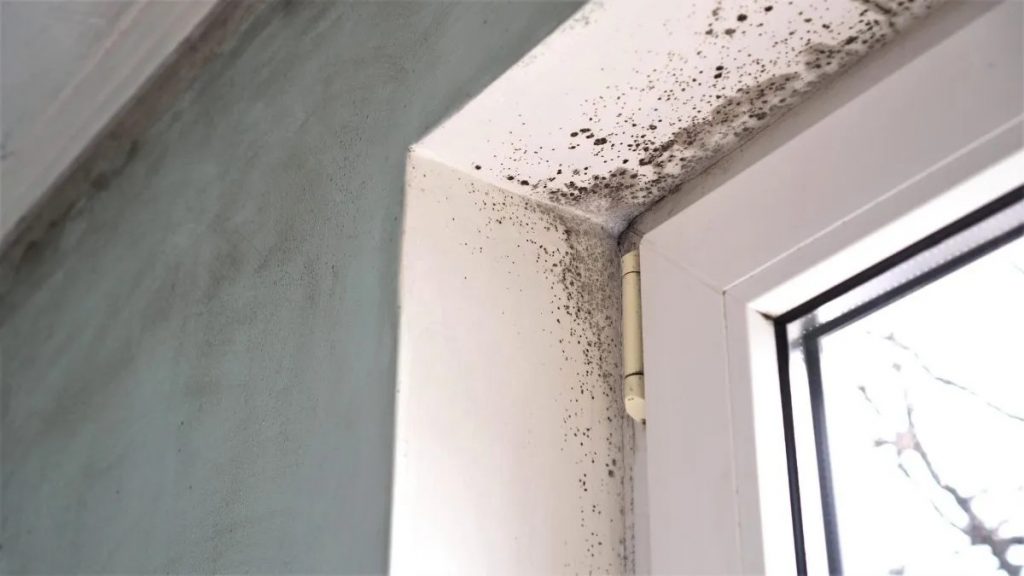
Older aluminum window frames in particular are notorious mold locations in Florida homes. The aluminum conducts cold from the air-conditioned interior to the exterior frame surface, where it meets warm, humid outside air and condensation forms. Over time, the combination of condensation, windblown dust, and salt air from Melbourne’s coastal location creates a nutrient-rich, perpetually moist environment on the frame surface.
Read Also: Saving Your Hardwood: How to Get Rid of Mold in Wood Without Ruining the Finish
Check the corners of metal window frames carefully — mold often begins there, where condensation pools and organic debris accumulates, before spreading across the frame and onto adjacent wall surfaces.
Exposed Pipes in Crawl Spaces and Utility Areas
Cold water supply pipes in crawl spaces, under sinks, and in utility closets sweat constantly in Florida’s heat and humidity. This condensation keeps the pipe surface damp, and in the dusty, debris-rich environment of a crawl space or utility area, the organic material needed to support mold growth is always present.
This is one reason why mold in crawl spaces is extremely common in Melbourne homes — and why it often goes undetected for a long time. The pipes themselves may show mold, but the surrounding wood framing, insulation, and subflooring that the moisture migrates to often sustains far more significant colonization.
Metal Roof Flashing and Gutters
The metal flashing used to seal roof penetrations — around chimneys, skylights, and where the roof meets walls — is frequently wet in Melbourne due to heavy rainfall and humidity. Organic debris from leaves, pollen, and airborne particles collects in gutters and around flashing, and the combination of trapped moisture and organic material creates conditions for mold on and around these metal components. While rooftop mold is less of a direct interior health concern than mold inside the HVAC system, it can be an indicator that moisture is finding its way into the building envelope.
Refrigerator Drip Pans and Coils
Most homeowners don’t know their refrigerator has a drip pan — a tray beneath the unit that collects condensation from the defrost cycle. In a humid Florida kitchen, this pan can accumulate significant moisture and the organic debris that comes with everyday kitchen use. Mold in the refrigerator drip pan is extremely common and can spread to surrounding kitchen areas. The condenser coils at the back or bottom of the refrigerator are another frequent mold location for the same reasons.
Metal Filing Cabinets and Storage in Garages
Garages in Melbourne are not typically climate-controlled, which means they experience the full force of Florida’s humidity. Metal filing cabinets, tool chests, and storage units in uninsulated garages develop condensation on their surfaces regularly, and the organic content of papers, cardboard boxes, fabrics, and other stored materials provides abundant food for mold. It’s not uncommon to open a metal filing cabinet in a Florida garage and find the contents — and the metal surfaces themselves — coated in mold.
The Health Risks of Mold on Metal Surfaces
Whether mold is growing on drywall, wood, fabric, or metal, the health risks it presents are fundamentally the same — because the danger comes from mold spores and mycotoxins, not from the surface the mold happens to be colonizing.
Mold reproduces by releasing spores into the air. These spores are microscopic and can remain airborne for extended periods, during which they can be inhaled. When mold on metal is disturbed — by cleaning, by air movement from an HVAC system, or simply by someone walking past — it releases spores into the surrounding air.
The health effects of mold exposure include:
- Respiratory irritation and inflammation — coughing, wheezing, shortness of breath, and nasal congestion are among the most common symptoms of mold exposure.
- Allergic reactions — mold is a significant allergen, and sensitized individuals can experience sneezing, runny nose, watery eyes, and skin rash from even low-level exposure.
- Asthma exacerbations — mold is one of the most well-documented triggers for asthma attacks, and the Asthma and Allergy Foundation of America identifies mold as a major indoor asthma trigger.
- Hypersensitivity pneumonitis — a serious inflammatory lung condition that can develop in individuals who are repeatedly exposed to mold over time.
- Mycotoxin exposure — certain mold species, most notably Stachybotrys chartarum (black mold), produce mycotoxins that can cause neurological symptoms, immune suppression, and other serious health effects with prolonged exposure.
Read Also: Does Mold Grow On Metal? Health Risk Explained
The specific risks associated with mold in HVAC ductwork deserve special emphasis. When a home’s air conditioning system distributes mold spores, every person in the home is breathing contaminated air during every hour the system operates. This creates continuous, unavoidable low-level exposure — exactly the kind of chronic exposure that leads to sensitization and the development of persistent health problems. In Melbourne’s climate, where air conditioning runs virtually year-round, contaminated ductwork represents a serious and ongoing health threat.
How to Identify Mold on Metal Surfaces
Mold on metal can look different from mold on porous surfaces. Because the mold colony is growing in the organic film on the metal’s surface rather than into the material itself, it often appears as a thin, superficial discoloration rather than the thick, fuzzy growth you might see on drywall. Common appearances include:
- Black, green, gray, or white speckling or spotting on the metal surface
- A powdery or dusty-looking film on pipes, vents, or frames
- Orange or rust-colored discoloration that is not actually rust — oxidation from mold acids can accelerate corrosion and produce discoloration that is mistaken for rust
- A musty odor when near the affected surface, even if the mold is not visibly obvious
- Discoloration concentrated in corners, seams, and areas where moisture tends to pool
If you notice any of these signs — particularly near HVAC components, window frames, or pipes — treat it as a potential mold situation and have it professionally assessed before attempting to clean it.
Can You Clean Mold Off Metal Yourself?
For very small areas of surface mold on non-porous metal in low-risk locations — such as a small patch on the exterior of a metal pipe under a sink — careful DIY cleaning may be appropriate if you take proper precautions. Here is the correct approach for minor cases:
- Wear an N95 respirator, nitrile gloves, and eye protection before touching anything.
- Ventilate the area well by opening windows and running exhaust fans. Do not run the central HVAC system, as this can spread spores.
- Use a solution of one cup of bleach per gallon of water, or a commercial mold remover, applied with a cloth or brush. For metal surfaces, avoid highly abrasive scrubbing, which can damage protective coatings.
- Wipe the surface thoroughly, then rinse with clean water and dry completely. Leaving moisture on metal after cleaning will simply invite mold to return.
- Bag and dispose of all cleaning materials immediately.
- Address the source of moisture — if the pipe is sweating, insulate it. If the window frame is condensing, improve ventilation or air sealing.
However, DIY cleaning is not appropriate in several situations: when mold is present inside HVAC ductwork or air handlers, when the affected area exceeds ten square feet, when mold is present in a crawl space or other difficult-to-access area, when the occupants include children, elderly, pregnant women, or immunocompromised individuals, or when mold keeps returning after cleaning. In all of these situations, professional remediation is the only appropriate response.
Why Treating the Source of Moisture Is Non-Negotiable
One of the most important lessons in mold remediation is this: cleaning the mold without fixing the moisture problem is a temporary measure at best. The mold will return — often faster than it appeared the first time — because the conditions that allowed it to grow are still present.
In Melbourne’s climate, this means addressing condensation as aggressively as you address the mold itself. This may involve insulating cold water pipes to prevent sweating, ensuring HVAC ductwork is properly insulated and sealed, repairing or replacing aging aluminum window frames with thermal-break frames that reduce condensation, maintaining air conditioning drain lines with regular flushing to prevent clogs, improving ventilation in garages, crawl spaces, and utility areas, and using a whole-home dehumidifier if your home’s humidity consistently exceeds 60 percent despite running air conditioning.
A professional remediation team doesn’t just clean the mold — they help identify and address the moisture sources driving it. This is what separates a lasting solution from a temporary fix.
How PuroClean of Melbourne Handles Mold on Metal
At PuroClean of Melbourne, our certified mold remediation technicians have extensive experience with the specific mold challenges that Florida’s climate creates — including mold on metal surfaces throughout homes and commercial properties in Brevard County.
Our mold remediation process includes a thorough inspection of all suspected mold locations, including metal HVAC components, pipes, window frames, and other moisture-prone areas. We use moisture meters, thermal imaging, and air quality testing to identify mold in locations that aren’t visible to the naked eye. Our remediation work follows EPA and IICRC guidelines and includes proper containment to prevent spore spread during the cleaning process, appropriate treatment of metal surfaces and surrounding materials, HVAC system inspection and cleaning where indicated, and post-remediation air quality testing to confirm that mold levels have been returned to safe levels before your home is cleared.
Read Also: Is That a Water Bubble in Your Paint? Why Your Walls Are Blistering
We also work directly with homeowners’ insurance companies and can help you navigate the claims process from initial documentation through final clearance. We are available 24 hours a day, 7 days a week, and serve all of Brevard County including Melbourne, Palm Bay, Viera, Cocoa Beach, Titusville, and surrounding communities.
Final Thoughts: In Melbourne, Mold Finds a Way
Florida’s climate is beautiful, but it is relentlessly favorable to mold. Heat, humidity, condensation, and rainfall create the conditions mold needs to grow on virtually any surface — including the metal ones you never thought to check. By understanding where mold on metal is most likely to occur in your home, what it looks like, and what the health risks are, you are far better equipped to catch it early and respond appropriately.
If you’ve noticed discoloration on metal vents, a musty smell near your HVAC system, or visible mold anywhere in your Melbourne home, don’t wait. Mold spreads quickly in Florida’s climate, and what starts as a small colony on a metal surface can become a significant whole-home problem within weeks. Call PuroClean of Melbourne today we’ll assess the situation honestly, explain your options clearly, and restore your home to a safe, healthy condition.
PuroClean of Melbourne
Fire, Smoke & Mold Remediation | Available 24/7
📍 739 North Dr, Melbourne, FL 32934
📞 (321) 378-2400
🌐 puroclean.com/melbourne-fl-puroclean-melbourne
✉️ [email protected]
Connect With Us on Social Media!
Instagram | Facebook | Direction | Check Reviews | Yelp