

Operating a business on the Space Coast requires navigating a unique set of environmental challenges. While residential properties frequently experience moisture intrusion, commercial spaces face an entirely different scale of risk. From expansive warehouses and multistory office buildings to boutique retail spaces and busy restaurants, commercial properties in Brevard County are constantly battling the intense Florida humidity.
When structural moisture goes unnoticed in a large commercial facility, the resulting biological contamination can silently devastate the indoor air quality, placing both your employees and your customers at significant risk.
Commercial property owners and facility managers carry a heavy burden of responsibility. Ensuring a safe, healthy environment is not just a matter of operational efficiency. It is a strict legal and ethical obligation. When an airborne hazard spreads through a commercial building, it can lead to severe health complaints, plummeting employee productivity, and catastrophic liability claims.

If you suspect a micro-environmental issue is developing within your facility, guessing is never an acceptable management strategy. Scheduling professional commercial mold testing Melbourne FL is the definitive, scientific method to identify hidden hazards, protect your workforce, and shield your business from legal exposure.
In this comprehensive guide, we will examine the unique vulnerabilities of commercial structures. We will explore the financial and health-related stakes of poor indoor air quality, how commercial HVAC systems act as superhighways for contamination, and how professional property damage restoration protocols can safely resolve the crisis with minimal business interruption.
The Financial and Legal Stakes of Indoor Air Quality
Ignoring a suspected moisture problem in a commercial setting is a high-risk gamble. Unlike a private residence where the occupants are fully aware of their own living conditions, commercial spaces host dozens or even hundreds of individuals daily who have no control over the building’s maintenance. This dynamic places absolute liability squarely on the shoulders of the property owner or the business operator.
From a regulatory standpoint, organizations like the Occupational Safety and Health Administration (OSHA) mandate that employers must provide a working environment free from recognized hazards that are causing or are likely to cause physical harm. While there are no federal limits for specific airborne fungal spore counts, allowing a known biological contamination to persist violates general duty clauses regarding workplace safety. If employees are forced to work in a contaminated environment, the business opens itself up to severe workers’ compensation claims, formal OSHA investigations, and potentially devastating civil litigation.
Beyond legal liability, there is the immediate financial impact of operational downtime. If a severe contamination forces a sudden, unplanned closure of the facility by local health inspectors, the loss of revenue can be crippling. Proactive diagnostics through certified environmental assessors allow facility managers to identify and isolate problems early, addressing them strategically before they require a complete shutdown of operations.
Recognizing Sick Building Syndrome
One of the most profound indicators of a commercial moisture crisis is the emergence of Sick Building Syndrome. This condition occurs when the occupants of a specific building experience acute health and comfort effects that appear to be directly linked to the time spent inside the structure, but no specific illness or cause can be identified. In humid climates like Melbourne, Florida, biological contamination is frequently the hidden culprit.
Facility managers should be highly vigilant if multiple employees begin reporting similar symptoms simultaneously. Common complaints include chronic headaches, eye irritation, persistent coughing, sinus congestion, and unexplained fatigue. The hallmark of Sick Building Syndrome is that these symptoms magically dissipate shortly after the employee leaves the building for the day or goes away for the weekend, only to return immediately upon re-entering the facility on Monday morning.
When human resources departments notice a sudden spike in sick days, or managers observe a noticeable drop in overall cognitive performance and productivity, the building’s physical environment must be investigated. These physiological reactions are often the result of elevated levels of aerosolized spores and microscopic volatile organic compounds off-gassing from hidden colonies feeding on commercial building materials.
Commercial HVAC Systems: The Superhighway for Spores
The sheer scale of commercial heating, ventilation, and air conditioning systems makes them particularly vulnerable to biological amplification. Unlike residential units, commercial rooftop units and massive industrial air handlers manage vast volumes of air and process enormous amounts of condensation. In the humid environment of the Space Coast, these commercial systems are constantly pulling moisture out of the air.
If a rooftop unit develops a blocked condensation drain line, or if routine maintenance is deferred, standing water will accumulate deep inside the dark metallic casing of the unit. Because commercial buildings often feature extensive, complex networks of galvanized steel and fiberglass-lined ductwork, any biological growth that takes root at the air handler will quickly become a systemic issue. The massive blower motors will push aerosolized spores at high velocities through hundreds of feet of ducting, actively distributing the contamination to every office, retail floor, and conference room connected to the grid.
Furthermore, commercial buildings often utilize drop ceilings with porous acoustic tiles. The space above these tiles, known as the plenum, is frequently used for return air circulation. If a slow plumbing leak occurs on an upper floor, or if the roof membrane fails during a summer storm, moisture can become trapped in the dark plenum space. Fungal colonies will aggressively consume the damp acoustic tiles and the paper backing of commercial drywall, completely hidden from the workers sitting directly below.
The Scientific Commercial Testing Protocol
Because the legal and financial stakes are so high, diagnostic accuracy is paramount. Commercial facility managers must avoid relying on in-house maintenance staff to diagnose air quality issues using unreliable hardware store testing kits. Instead, partnering with an independent, licensed environmental assessor is critical. An independent third party provides an unbiased, scientifically valid report that can stand up in a court of law or be presented to insurance adjusters.
Professional commercial mold testing Melbourne FL involves a rigorous, multi-faceted approach. Assessors will utilize specialized equipment such as commercial-grade infrared thermal imaging cameras to scan vast walls and ceilings for hidden temperature anomalies, which instantly highlight concealed moisture pockets. They will deploy deep-penetrating moisture meters to measure the structural dampness of concrete subfloors and commercial drywall.
The most critical component of the assessment is active air sampling. Using calibrated vacuum pumps, the assessor will draw precise volumes of air through specialized spore trap cassettes in various zones of the building. Crucially, they will take an outdoor baseline sample to establish the natural local spore count. The samples are then sent to an accredited third-party laboratory where a mycologist analyzes the concentration and species of the biological particulates. This data determines definitively if the building suffers from an active indoor amplification issue and dictates the exact scope of the necessary remediation.
Minimizing Interruption with PuroClean of Melbourne
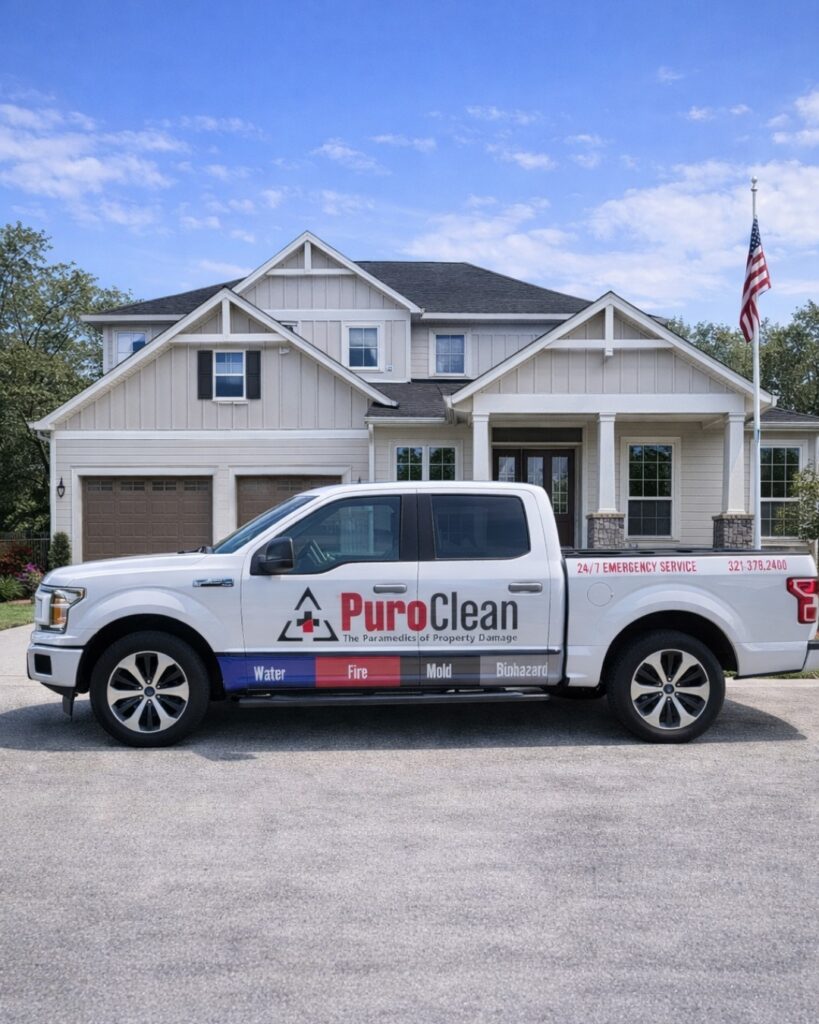
Receiving a positive laboratory report for commercial contamination can be daunting, but it is a manageable crisis when handled by certified professionals. At PuroClean of Melbourne, we understand that business continuity is just as important as structural sanitization. We specialize in commercial property damage restoration designed to protect your assets while keeping your doors open whenever safely possible.
Our highly trained, IICRC-certified technicians work closely with your independent assessor to execute the precise remediation protocol. We deploy heavy-duty commercial HEPA air scrubbers to aggressively filter the indoor air, removing microscopic hazards from the breathing zone. To prevent cross-contamination, we construct strict negative pressure containment barriers using heavy-mil polyethylene sheeting, effectively isolating the damaged areas from the rest of your operational facility.
We pride ourselves on our discrete operations. Whenever feasible, our teams can perform the heavy demolition and sanitization work during off-hours, over weekends, or through the night to minimize disruption to your daily workflow. We utilize advanced desiccant dehumidifiers to extract deep structural moisture from concrete and steel framing, ensuring the underlying cause of the biological growth is completely eliminated.
Secure Your Commercial Facility Today
Protecting your employees, shielding your customers, and securing your commercial investment requires a proactive approach to indoor air quality. Do not let hidden moisture intrusion turn into a catastrophic liability claim. If your building exhibits a persistent musty odor, signs of mysterious water damage, or an increase in employee health complaints, immediate scientific intervention is required.