


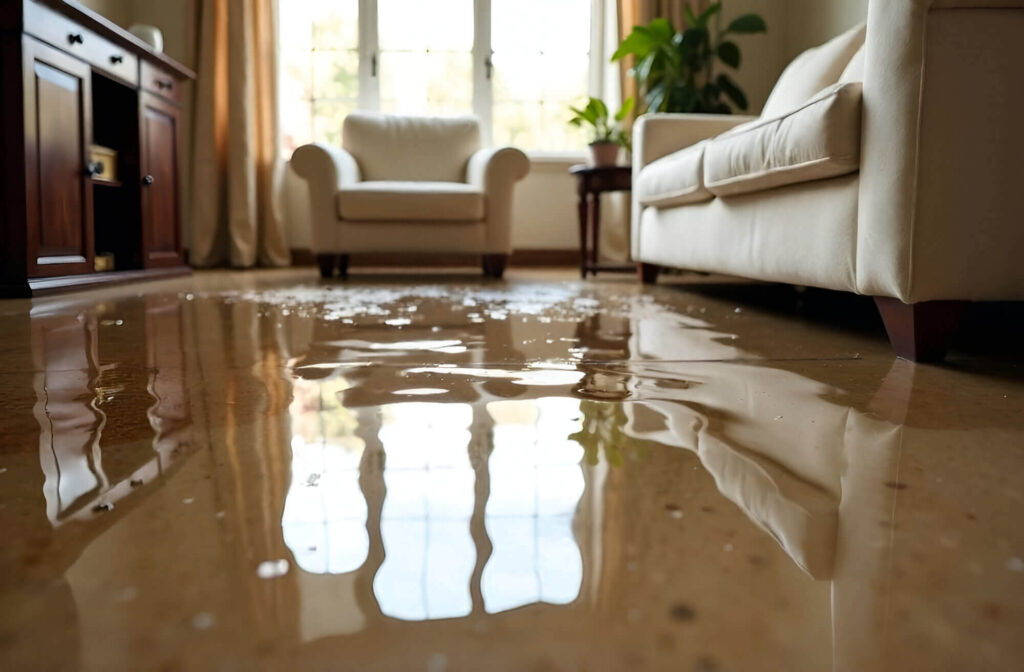
Living along the Space Coast of Florida offers an enviable subtropical lifestyle, but it also exposes property owners to severe meteorological and environmental vulnerabilities. Situated between the Atlantic Ocean and the Indian River Lagoon, Melbourne, Florida experiences heavy seasonal rainfall, tropical depressions, afternoon summer squalls, and occasional hurricane landfalls.
When major weather events drop several inches of rain in a matter of hours, municipal storm drainage systems can quickly become overwhelmed. Street flooding overflows into residential yards, rising water pushes against exterior foundation walls, and wind-driven rain penetrates roof shingles and window seals.
Beyond major weather disasters, everyday emergencies such as a main supply line rupture, a water heater tank failure, or an overflowing sewage line can flood a home with thousands of gallons of water in minutes.
When floodwaters enter a residential or commercial building, the water does not simply sit on top of your tile or carpet. Through capillary action and porous absorption, water migrates upward into drywall, downward into subflooring, and sideways across wood framing. In Florida’s warm, humid climate, unaddressed moisture creates an immediate biological and structural crisis.
Professional emergency flood repair is not a basic cleanup chore. It is a precise, scientific engineering process that requires specialized extraction equipment, atmospheric dehumidification controls, and rigorous adherence to national drying standards.
2. Understanding Water Damage Classifications and Categories
Before any restoration equipment is deployed, professional technicians evaluate the loss using classification and categorization protocols established by the Institute of Inspection, Cleaning and Restoration Certification (IICRC) S500 standard. Understanding these categories and classes explains why specialized emergency intervention is required.
+———————————————————————————–+
| IICRC WATER DAMAGE CATEGORIES AND CLASSES |
+———————————————————————————–+
| CATEGORY 1 (Clean Water) | Broken supply lines, faucet overflows, rainwater |
| | coming through clean roof leaks. |
+——————————+—————————————————-+
| CATEGORY 2 (Gray Water) | Washing machine discharges, dishwasher overflows, |
| | clean toilet bowl overflows with minor waste. |
+——————————+—————————————————-+
| CATEGORY 3 (Black Water) | Sewage backups, storm surge, rising river floods, |
| | stagnant water with heavy bacterial contamination. |
+——————————+—————————————————-+
| CLASS 1 / 2 / 3 / 4 (Speed) | Classifications measuring evaporation rate based on |
| | the quantity of water and porosity of materials. |
+———————————————————————————–+
Water Damage Categories
- Category 1 (Clean Water): Water originating from a sanitary source such as a broken domestic supply line, a leaking refrigerator water valve, or clean rainwater infiltrating through a roof leak. While manageable initially, Category 1 water degrades into Category 2 within 24 to 48 hours as it contacts organic household dust and surfaces.
- Category 2 (Gray Water): Water containing significant chemical, biological, or physical contamination that causes illness or discomfort if ingested or exposed to humans. Examples include discharge from washing machines, dishwasher overflows, and hydrostatic seepage.
- Category 3 (Blackwater): Grossly contaminated water carrying pathogenic agents, heavy metals, toxic organic chemicals, and raw sewage. This includes sewer main line backups, overflowing toilet bowls with feces, and rising floodwaters from storm surges or river overflows. Category 3 water requires full personal protective equipment (PPE), strict containment, and antimicrobial sanitization.
Water Damage Classes (Evaporation Rates)
- Class 1: Slow evaporation rate. Water affects only part of a room with low-porosity materials such as concrete or brick. Minimal moisture is absorbed.
- Class 2: Fast evaporation rate. Water affects an entire room, soaking carpet and cushions, and wicking up drywall up to 24 inches.
- Class 3: Fastest evaporation rate. Water originates from overhead sources or floods an entire area, saturating insulation, drywall, subflooring, and framing lumber.
- Class 4: Specialty drying situations. Deep saturation of low-porosity materials such as hardwood flooring, concrete slab subfloors, brick, and stone, requiring specialized cavity injection drying systems.
3. The Hidden Dangers of Delayed Flood Mitigation
Many property owners attempt to handle minor flooding themselves using household shop vacuums, box fans, and mops. Unfortunately, DIY drying methods leave massive volumes of trapped water inside structural assemblies, setting the stage for severe long-term property damage.
[ UNATTENDED FLOOD WATER ]
│
┌──────────────────────────────┼──────────────────────────────┐
▼ ▼ ▼
[ 24 Hours ] [ 48 To 72 Hours ] [ 1 To 3 Weeks ]
• Drywall begins swelling • Mold spore germination • Wood framing rot
• Subfloor adhesive fails • Musty mVOC odors released • Floor joist decay
• Insulation loses R-value • Secondary cross-contamination • Structural warping
Rapid Mold Spore Germination
In Brevard County’s humid climate, mold spores are constantly present in outdoor and indoor air. When floodwater saturates organic materials like paper-faced drywall, ceiling insulation, or wood framing, mold spores germinate and begin active colonial amplification within 24 to 48 hours. Once mold establishes itself inside wall cavities, it degrades indoor air quality and requires aggressive remediation.
Structural Wood Decay and Framing Rot
When framing lumber (such as 2×4 wall studs and floor joists) absorbs water and remains above 20% moisture content for more than a few weeks, wood-decay fungi begin consuming structural cellulose. The wood loses its compressive strength, turning soft, spongy, and brittle, which leads to sagging floors, cracked drywall, and compromised load-bearing capacity.
Electrical Hazards and Corrosion
Standing water inside a building poses severe electrocution risks if power is not immediately disconnected. Furthermore, residual moisture and high indoor humidity cause rapid metallic corrosion, destroying electrical panels, appliance motors, HVAC circuit boards, and wall switch wiring long after the standing water has receded.
4. The Professional 5-Step Emergency Flood Repair Process
Restoring a flooded property requires a systematic, scientifically controlled protocol. PuroClean of Melbourne executes a standardized 5-step emergency flood repair process compliant with IICRC S500 standards.
[ Step 1: Emergency Dispatch & Safety Assessment ]
│
▼
[ Step 2: High-Volume Extraction & Pumping ]
│
▼
[ Step 3: Controlled Demolition & Sanitization ]
│
▼
[ Step 4: Advanced Psychrometric Structural Drying ]
│
▼
[ Step 5: Turnkey Reconstruction & Rebuild ]
Step 1: Rapid 24/7 Emergency Dispatch and Safety Assessment
Time is the single most critical factor in flood mitigation. Our emergency response teams are on call 24 hours a day, 7 days a week, deploying extraction units across Melbourne, Palm Bay, and Viera within minutes. Upon arrival, certified technicians conduct an immediate safety audit, verify electrical shut-offs, and map moisture boundaries using FLIR thermal imaging cameras and electronic moisture meters.
Step 2: High-Volume Water Extraction and Submersible Pumping
Standing water must be removed immediately to prevent further saturation. Technicians deploy heavy-duty truck-mounted extraction systems, portable self-contained extractors, and high-capacity electric submersible trash pumps to clear bulk water from floors, subfloors, and stairwells. Extracted water is legally disposed of in accordance with environmental regulations.
Step 3: Controlled Demolition and Antimicrobial Sanitization
Porous building materials that have suffered extensive contamination (such as saturated insulation, ruined carpet padding, and bottom sections of drywall wetted by Category 2 or 3 water) are carefully cut away and discarded. Remaining hard surfaces are treated with EPA-registered, hospital-grade sporicidal disinfectants to eliminate bacteria, viruses, and fungal spores.
Step 4: Advanced Psychrometric Structural Drying
Drying a building is not just about blowing air; it is a science governed by psychrometrics (the study of moist air and water vapor).
- Low-Grain Refrigerant (LGR) Dehumidifiers: Industrial LGR dehumidifiers extract moisture vapor directly from indoor air, driving relative humidity below 45% to pull trapped water out of structural framing.
- Axial Air Movers: High-velocity directional air movers force dry air across wet surfaces, accelerating evaporation rates.
- Specialized Drying Equipment: For hardwood flooring and subfloor assemblies, we utilize injectidry wall-cavity systems that circulate warm, dry air directly through hidden structural voids without destructive demolition.
Step 5: Turnkey Structural Reconstruction Services
Unlike standard mitigation companies that leave you with exposed studs and missing floors, PuroClean of Melbourne holds a full Florida General Contractor license. Our in-house construction division handles complete structural rebuilding, including framing repair, drywall installation, flooring replacement, finish carpentry, and painting, restoring your home to pre-loss condition under one roof.
5. Psychrometrics: The Science Behind Professional Structural Drying
To understand why professional flood repair is vastly superior to setting up household fans, one must examine the physical science of psychrometrics. Psychrometrics measures the relationship between air temperature, relative humidity, vapor pressure, and Grains Per Pound (GPP)—the exact weight of moisture suspended in a pound of dry air.
+———————————————————————————–+
| PSYCHROMETRIC DRYING MONITORING METRICS |
+———————————————————————————–+
| METRIC | TARGET DRYING RANGE | OPERATIONAL GOAL |
+—————————-+——————————-+———————–+
| Relative Humidity (%RH) | Below 45% | Prevents secondary |
| | | mold growth |
+—————————-+——————————-+———————–+
| Grains Per Pound (GPP) | Steady downward trend toward | Ensures dehumidifiers |
| | outdoor baseline | are extracting vapor |
+—————————-+——————————-+———————–+
| Wood Moisture Content (%MC)| Below 15% | Verifies structural |
| | | framing is fully dry |
+—————————-+——————————-+———————–+
During an emergency flood repair project, technicians do not guess whether a room is dry. They log psychrometric readings daily using digital thermo-hygrometers and moisture meters:
- Relative Humidity (%RH): Monitored to ensure indoor humidity drops rapidly, stopping mold germination.
- Grains Per Pound (GPP): Monitored to confirm that industrial dehumidifiers are actively pulling water vapor out of the building materials and exhausting it outside.
- Wood Moisture Content (%MC): Pin-type moisture meters are driven into yellow pine framing studs and subfloors. Structural wood is not certified dry until its moisture content returns to normal baseline levels (typically below 15%).
6. Navigating Insurance Claims and Direct Xactimate® Billing
Dealing with a flooded home is stressful enough without having to fight your insurance company over claim payouts. PuroClean of Melbourne simplifies the insurance claims process from start to finish.
[ Step 1: Emergency Loss Documentation ] ──> [ Step 2: FLIR Thermal Mapping ]
│
┌──────────────────────────────────────────────┘
▼
[ Step 3: Xactimate® Line-Item Estimate ] ──> [ Step 4: Direct Carrier Billing ]
Standardized Line-Item Estimating via Xactimate®
Insurance adjusters across North America rely on Xactimate®, the industry-standard estimating software. Our team compiles all emergency extraction logs, psychrometric drying reports, biohazard manifests, and reconstruction scopes directly into Xactimate® format. This ensures that every line item aligns with regional pricing guidelines accepted by all major insurance carriers, eliminating pricing disputes.
Comprehensive Digital Evidence Packages
To support your claim and guarantee fast approval, we compile a detailed digital proofing package for your insurance adjuster:
- High-resolution photographs and video footage taken before, during, and after extraction.
- Daily psychrometric atmospheric logs proving drying equipment was operating effectively.
- Thermal imaging reports outlining hidden moisture boundaries.
- Signed work authorizations and waste disposal manifests.
Direct Carrier Billing
Instead of requiring you to pay out-of-pocket and wait months for reimbursement, PuroClean of Melbourne bills your insurance carrier directly. We coordinate with adjusters to verify coverage, answer technical questions, and streamline the approval process, allowing you to focus on getting your family back to normal.
7. Comprehensive Emergency Flood Repair Matrix
The following matrix outlines the operational scope, required safety controls, and structural restoration procedures applied across different flood scenarios:
| Flood Severity Level | Primary Water Source & Category | Required Safety Controls & Equipment | Structural & Chemical Restoration Scope |
| Level 1: Minor Standing Water | • Category 1 clean supply line leak • Localized floor flooding (< 2 inches) | • Level C PPE (N95 respirators, nitrile gloves) • Submersible pumps & extractors | • High-volume water extraction • Strategic placement of axial air movers • LGR dehumidifier setup |
| Level 2: Moderate Room Flooding | • Category 2 washing machine overflow • Entire room carpet/pad saturation | • Full PPE (Tyvek suits, rubber boots, P100 respirators) • HEPA air scrubbers | • Removal of wet carpet padding & baseboards • Antimicrobial washing of subfloors • Structural drying & moisture monitoring |
| Level 3: Catastrophic Storm / Sewage | • Category 3 storm surge or sewer backup • Widespread structural saturation | • Level B/C full protective suits & full-face respirators • 6-mil poly containment & negative air | • Controlled demolition of contaminated drywall • EPA sporicidal disinfection & thermal fogging • Full structural reconstruction |
8. Frequently Asked Questions (FAQ)
1. What should I do immediately if my Melbourne home starts flooding during a heavy storm?
First, ensure the immediate safety of your family and pets. If the water source is internal (such as a burst supply pipe or overflowing appliance), shut off your home’s main water supply valve immediately. If water is approaching electrical outlets, breaker panels, or appliances, turn off the electricity to the flooded rooms at the main breaker box if it is safe to do so. Avoid walking through standing water that may be electrically energized or contaminated with sewage. Call PuroClean of Melbourne at (321) 378-2400 for immediate 24/7 emergency dispatch, and take photos of the water levels for your insurance claim.
2. Can I dry out my flooded carpet and drywall using household fans and window AC units?
No. Standard household box fans and open windows are completely inadequate for drying a flooded structure. In Florida’s high-humidity climate, opening windows allows warm, moisture-laden air to rush inside, worsening indoor humidity and accelerating mold growth. Furthermore, standard fans only move surface air; they cannot extract water trapped inside drywall, insulation, subflooring, and structural framing. Professional flood repair requires high-capacity Low-Grain Refrigerant (LGR) dehumidifiers, directional air movers, and precise psychrometric monitoring.
3. Will my homeowners insurance cover emergency flood repair in Florida?
Insurance coverage depends entirely on the source of the water intrusion and your specific policy terms. Standard Florida homeowners insurance policies generally cover water damage resulting from sudden and accidental indoor plumbing failures, burst pipes, water heater ruptures, or wind-driven rain entering through a storm-damaged roof. However, standard policies explicitly exclude rising groundwater, storm surges, and external surface flooding (which require separate National Flood Insurance Program policies). PuroClean of Melbourne works directly with insurance carriers, providing detailed thermal imaging reports and Xactimate® estimates to support your claim.
4. How long does the professional structural drying process take?
The emergency water extraction and structural drying phase typically takes between 3 and 5 days, depending on the volume of water, the class of water loss, and the porosity of the affected building materials. Our technicians monitor psychrometric conditions and measure wood moisture content (%MC) daily. Once structural framing is verified dry by moisture meters, our in-house General Contracting team begins the reconstruction phase to restore your home to pre-loss condition.
5. Why is it advantageous to hire a restoration company that is also a licensed General Contractor?
Most standard water mitigation companies only hold licenses for cleaning and demolition. Once they finish drying your home, they leave you with exposed wall studs, missing flooring, and incomplete drywall, requiring you to find and hire a separate general contractor to rebuild your property. Because PuroClean of Melbourne holds a full Florida General Contracting license, our team handles the entire project under one roof. We eliminate the downtime between drying and rebuilding, cutting overall project timelines in half.
6. Where is PuroClean of Melbourne located, and how fast can you arrive at my property?
Our central commercial facility is located at 739 North Dr in the Coastal Technology Center, Melbourne, FL 32934. Because our facility is centrally positioned near major Brevard County thoroughfares like Interstate 95 and US Highway 1, our certified emergency response teams can reach residential and commercial properties across Melbourne, Viera, Palm Bay, Indialantic, and surrounding Space Coast communities within 60 minutes or less, 24 hours a day, 7 days a week.
9. Partner with Melbourne’s Trusted Emergency Restoration Team
When unexpected flooding threatens your home or business in Melbourne, Viera, Palm Bay, or the surrounding Space Coast area, you need a local partner who combines emergency response speed with complete structural restoration capabilities.
PuroClean of Melbourne is your single-source solution for complete property recovery. From emergency water extraction and psychrometric structural drying to biohazard sanitization and turnkey reconstruction, One Call Does It All.
Our comprehensive property damage restoration services include:
- 24/7 Emergency Water Extraction & Structural Drying
- Advanced FLIR Thermal Imaging & Moisture Diagnostics
- IICRC S520 Certified Mold & Odor Remediation
- Fire, Smoke & Soot Damage Restoration
- OSHA & FDOH Compliant Biohazard, Sewage & Trauma Cleanup
- Turnkey Structural Reconstruction & General Contracting
EMERGENCY FLOOD REPAIR & WATER EXTRACTION IN MELBOURNE, FL
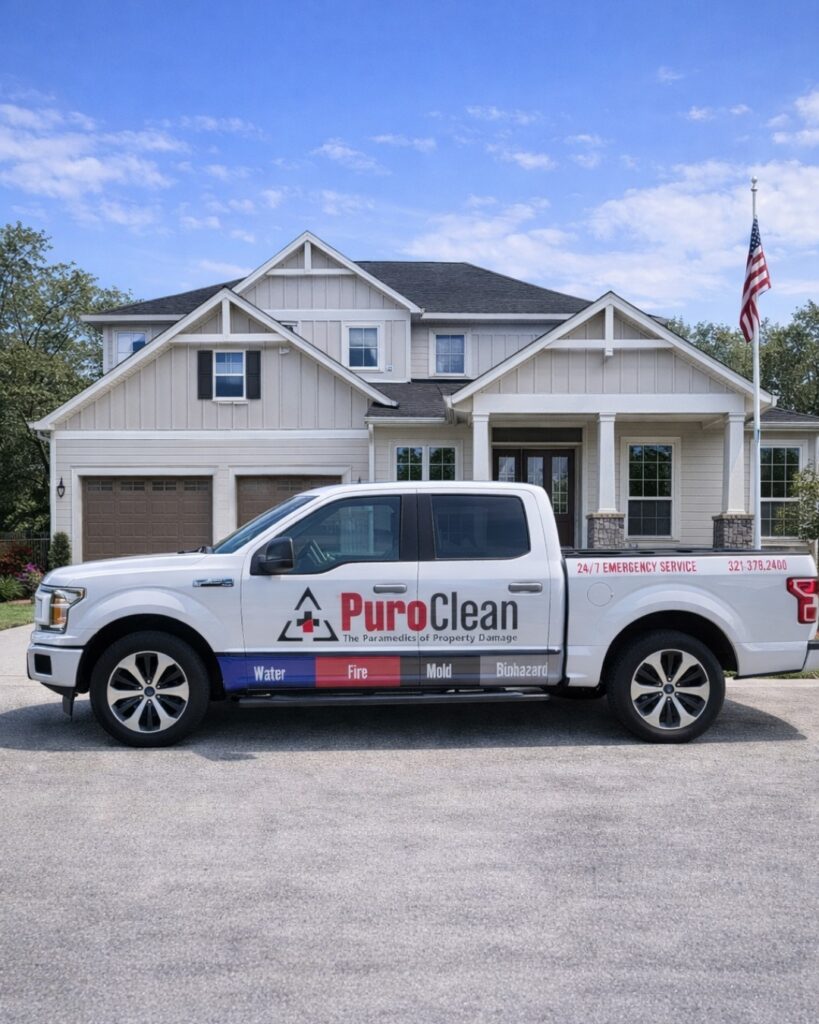
Don’t let floodwater destroy your property value or indoor air quality. Contact the certified, compassionate experts at PuroClean of Melbourne today for immediate 24/7 emergency dispatch.
- 24/7 Direct Emergency Line: (321) 378-2400
- Facility Location: 739 North Dr, Melbourne, FL 32934 (Coastal Technology Center)
- Service Area: Serving Melbourne, Viera, Palm Bay, Indialantic, Melbourne Beach, West Melbourne, Suntree, Eau Gallie, Melbourne Village, and all surrounding Brevard County communities.