


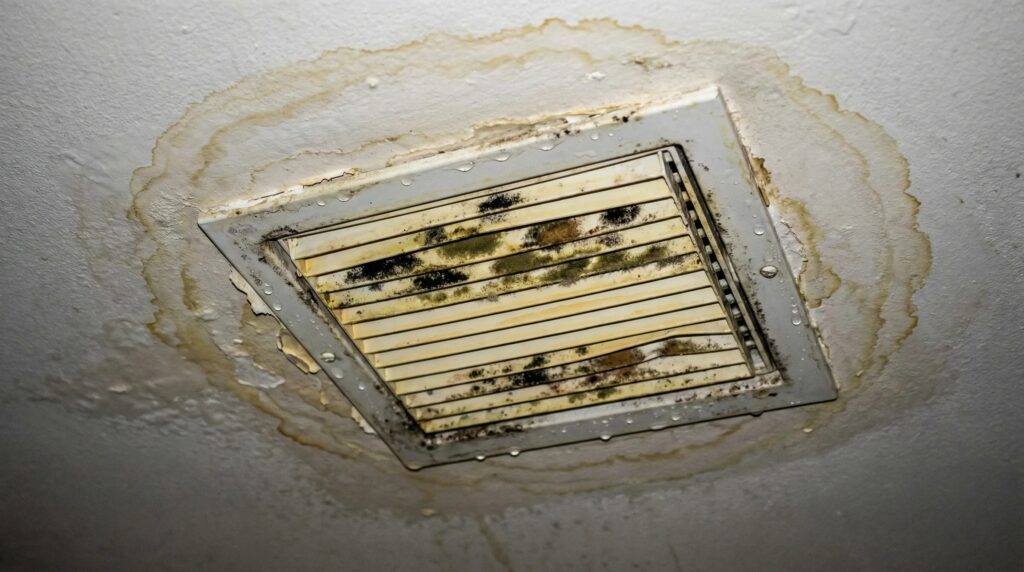
Florida is many things: sunshine, beaches, warm winters, and a quality of life that draws people from across the country to settle here permanently. But Florida is also, by almost every measurable standard, one of the most mold-friendly environments in the United States. The same humidity that keeps lawns green and landscapes lush year-round is the same humidity that makes mold growth a constant and serious threat inside Florida homes.
If you own a home in Melbourne or anywhere in Brevard County, you have probably noticed the musty smell that appears when a room is closed up too long, or spotted the dark patches that show up around window frames, in bathroom grout, or behind furniture pushed against exterior walls. That is Florida mold at work, and it does not need a flood or a burst pipe to get started. In the right humidity conditions, mold can begin colonizing surfaces in your home without any water damage event at all.
So how quickly can mold actually grow in Florida humidity? The answer depends on a handful of factors, and understanding each of them gives you practical power to protect your home. This guide breaks down the science, the timeline, the specific risks of Melbourne’s climate, and what you can do to stay ahead of mold before it becomes a remediation project.
The Direct Answer: Mold Can Begin Growing in 24 to 48 Hours in Florida
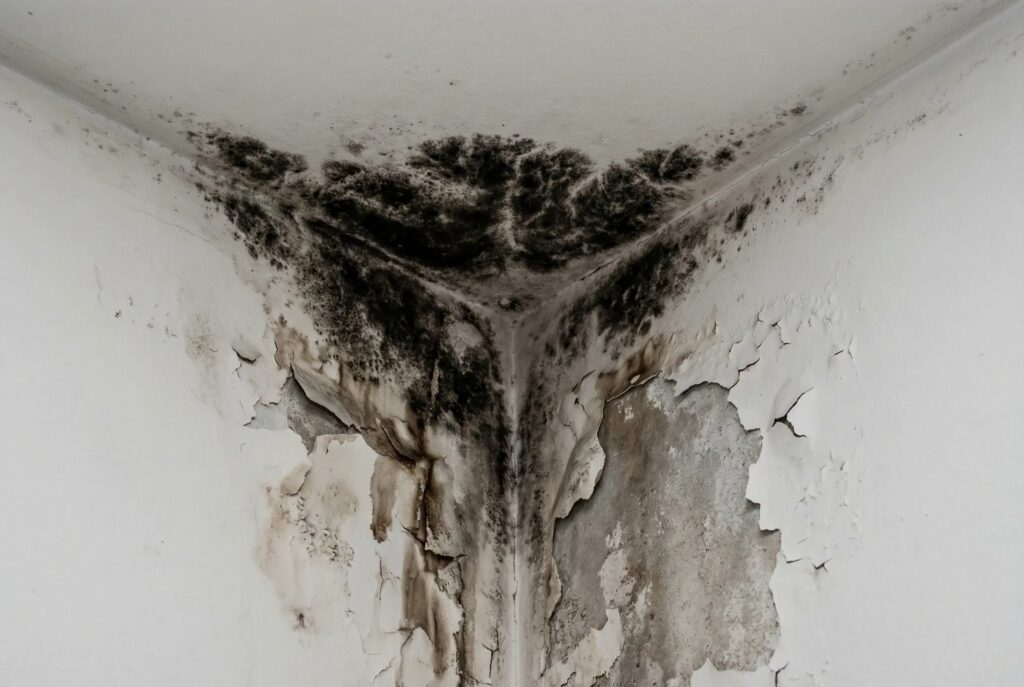
Under standard conditions, the scientific consensus is that mold spores can germinate and begin forming colonies within 24 to 48 hours when they land on a surface with adequate moisture and organic material. In Florida, and specifically in Melbourne’s subtropical climate, the upper end of that range rarely applies. The conditions here more consistently push mold toward the faster end of the growth window.
What that means practically for a Melbourne homeowner is this: if you experience a water intrusion event of any kind, whether it is a leaking roof, a burst pipe, a slow drip behind a cabinet, or even persistent condensation on a wall, you have roughly one day before mold transitions from a preventable problem to an active one.
Without any water damage event at all, Florida’s ambient outdoor humidity alone is sufficient to sustain mold growth on surfaces inside your home if indoor humidity is not actively controlled. This is the part of the mold conversation that surprises many homeowners who move to Florida from drier states. You do not need a flood to get mold in Melbourne. You just need to let your indoor humidity run high for long enough.
The Science Behind Humidity and Mold Growth
To understand why Florida is such a high-risk mold environment, it helps to understand the basic science of what mold needs to grow and how humidity fits into that equation.
Mold is a fungus that reproduces by releasing microscopic spores into the air. Those spores are everywhere, indoors and outdoors, at all times. They are not a sign of a dirty home or poor maintenance. They are simply a permanent feature of the environment we live in. The presence of spores alone does not cause a mold problem. What turns harmless spores into an active infestation is the combination of four conditions:
Moisture. This is the single most critical factor. Mold cannot grow without moisture, which is why controlling moisture is the foundation of all mold prevention. Moisture can come from liquid water, such as a leak or flood, but it can also come from water vapor in the air, which is where humidity becomes the central concern for Florida homeowners.
A food source. Mold does not need soil or rotting wood to eat. The paper facing on standard drywall, the cellulose fibers in wood framing, the organic sizing in carpet fibers, and the dust particles that accumulate on virtually every surface in your home are all adequate food sources for mold. Your home is, in a very real sense, a buffet for mold spores that find the right moisture conditions.
Temperature. Most mold species grow most aggressively between 70 and 90 degrees Fahrenheit. Melbourne’s indoor temperatures, whether the home is occupied or not, typically stay within this range throughout the year. Even when air conditioning keeps indoor temperatures comfortable, the thermal range favorable to mold growth is rarely escaped in a Florida home.
Oxygen. Mold requires oxygen to grow and is therefore present wherever air circulates. Sealed spaces like wall cavities and enclosed attic compartments retain enough oxygen for mold to grow actively, even without ventilation.
Of these four conditions, moisture and temperature are the two that homeowners can influence. And in Florida, temperature is largely fixed. That leaves moisture control, specifically humidity management, as the primary lever available to Melbourne homeowners who want to prevent mold.
The Humidity Threshold: What Level Triggers Mold Growth?
Relative humidity is measured as a percentage of the maximum amount of water vapor that air at a given temperature can hold. The higher the relative humidity percentage, the more moisture is available in the air for mold spores to absorb and use.
The widely accepted threshold for mold risk is 60 percent relative humidity. Below 60 percent, most mold species cannot absorb enough moisture from the air to sustain active growth on typical building materials. Above 60 percent, the risk of mold colonization rises steadily. Above 70 percent, active mold growth on porous surfaces becomes essentially inevitable if those conditions persist.
Now consider Melbourne’s climate numbers. Brevard County’s average relative outdoor humidity runs between 70 and 85 percent throughout the year, with summer months regularly pushing into the 80 to 90 percent range during morning hours. The air outside your home is almost always above the threshold at which mold can grow.
This matters inside your home because every time you open a door, a window, or run an exhaust fan, outdoor humid air enters your living space. Homes that are not consistently air conditioned, homes with air conditioning systems that are undersized or poorly maintained, and homes left closed up without climate control during periods of owner absence are all at risk of indoor humidity climbing into the mold growth zone regularly.
The target for indoor relative humidity in a Melbourne home is between 45 and 55 percent year-round. This range keeps conditions below the mold growth threshold while also maintaining comfortable air quality for the home’s occupants.
Florida’s High-Risk Mold Seasons in Melbourne
While mold is a year-round concern in Melbourne, there are periods when conditions become especially conducive to rapid growth. Understanding the seasonal pattern helps homeowners know when to be most vigilant.
June through September: Peak risk season. These are Melbourne’s hottest and wettest months. Afternoon temperatures regularly exceed 90 degrees, afternoon thunderstorms are nearly daily, and outdoor relative humidity stays extremely high throughout the day. Indoor humidity management during this period requires consistent air conditioning and often supplemental dehumidification. Homes that experience any water intrusion during this season face the fastest possible mold growth timeline.
October through November: Transition period. As the rainy season ends, temperatures begin to moderate, but humidity remains elevated. Homes that sustained water damage during the summer months and were not properly dried may begin showing visible mold during this period as residual moisture supports ongoing colony growth.
December through February: Relative relief, but not immunity. Melbourne’s dry season brings lower rainfall and somewhat reduced outdoor humidity, but average relative humidity still stays above 60 percent. Winter cold snaps can create condensation problems on walls and windows, and homes owned by seasonal residents who reduce or eliminate air conditioning during winter absence can develop significant mold issues by the time owners return.
March through May: Pre-season buildup. Temperatures begin rising before the rainy season fully arrives. The combination of increasing heat and a transitional humidity period means that any moisture problems that developed over winter begin accelerating toward visible mold growth in spring.
How Fast Mold Grows on Specific Materials in Your Home
Not all surfaces in your home present equal mold risk under the same humidity conditions. The porosity, organic content, and moisture retention characteristics of each material determine how quickly mold takes hold and how deeply it penetrates.
Drywall: 24 to 48 hours with direct water contact, 1 to 2 weeks from humidity alone. The paper facing on standard drywall is one of the most mold-susceptible materials in any home. When drywall gets wet from a leak or flood, mold can establish colonies within a single day. In high humidity without direct water contact, the paper facing can absorb enough moisture from the air to support mold growth within one to two weeks if humidity is consistently above 70 percent.
Wood framing and structural lumber: 24 to 72 hours with direct water contact. Wood is highly absorbent and provides an excellent organic food source for mold. Wet wood framing in wall cavities can develop visible mold growth within two to three days of water intrusion. Wood that experiences repeated wetting and drying cycles without proper treatment develops surface mold readily and can eventually develop structural rot.
Carpet and carpet padding: 24 to 48 hours with any moisture contact. Carpet padding is particularly dangerous because it absorbs and retains moisture directly against the subfloor while the carpet surface above may appear to dry relatively quickly. Mold growing in carpet padding is invisible from above and can reach significant contamination levels before any odor becomes apparent.
Ceiling tiles: 24 hours or less with any moisture. Acoustic ceiling tiles and drop ceiling panels are among the fastest materials to develop mold because they are highly porous and often made from materials with a high cellulose content. A single roof leak that drips onto a ceiling tile overnight can produce visible mold growth by the following morning in Florida’s conditions.
Grout and caulking: Weeks to months from humidity and soap residue alone. Bathroom grout and caulking do not require a water damage event to develop mold. The combination of ambient bathroom humidity, soap residue, and microscopic organic material that accumulates in porous grout is sufficient for mold to establish itself over weeks to months in inadequately ventilated bathrooms.
Concrete block and stucco: Weeks with persistent high humidity. Many Melbourne homes are built with concrete block construction and stucco exterior finishes. These materials are more resistant to mold than organic building materials, but they are not immune. Concrete that remains damp, either from water intrusion or from condensation in humid conditions, can develop mold growth on its surface and at paint interfaces over several weeks.
Signs That Humidity Is Already Driving Mold Growth in Your Melbourne Home
Because humidity-driven mold often develops without any single dramatic water event, it can progress further before homeowners recognize it. These are the early and intermediate warning signs that indoor humidity has been high enough long enough to support active mold growth.
Persistent musty odor without an obvious source. A musty smell that comes and goes or seems to be everywhere but nowhere in particular is one of the most reliable early indicators of hidden mold growth driven by chronic humidity. The smell often intensifies when the HVAC system runs, because air movement through the system carries mold volatile organic compounds throughout the home.
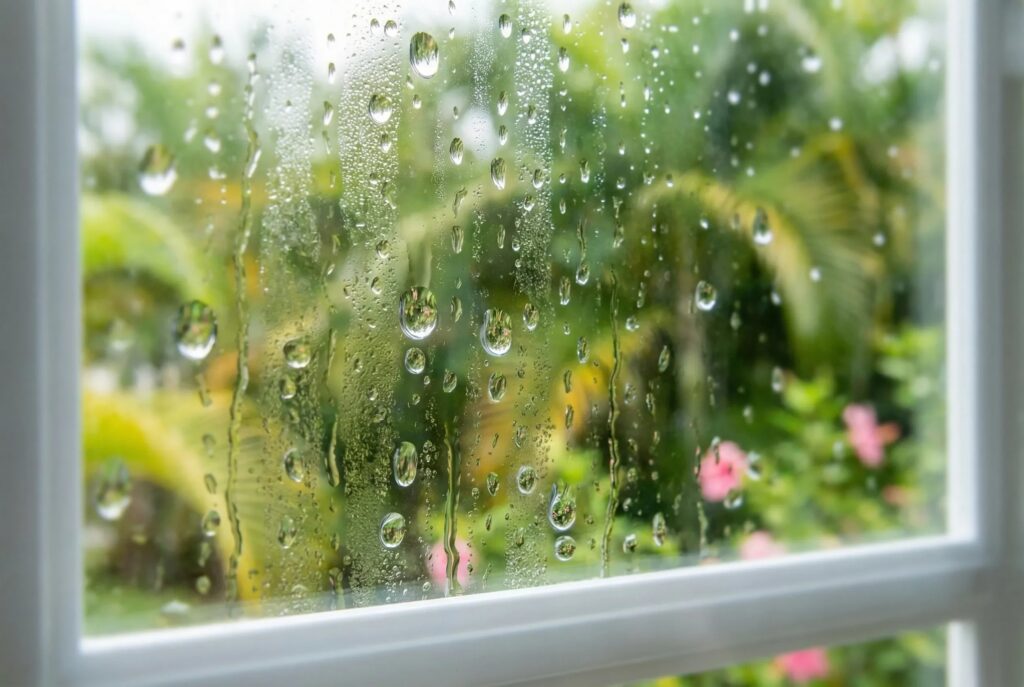
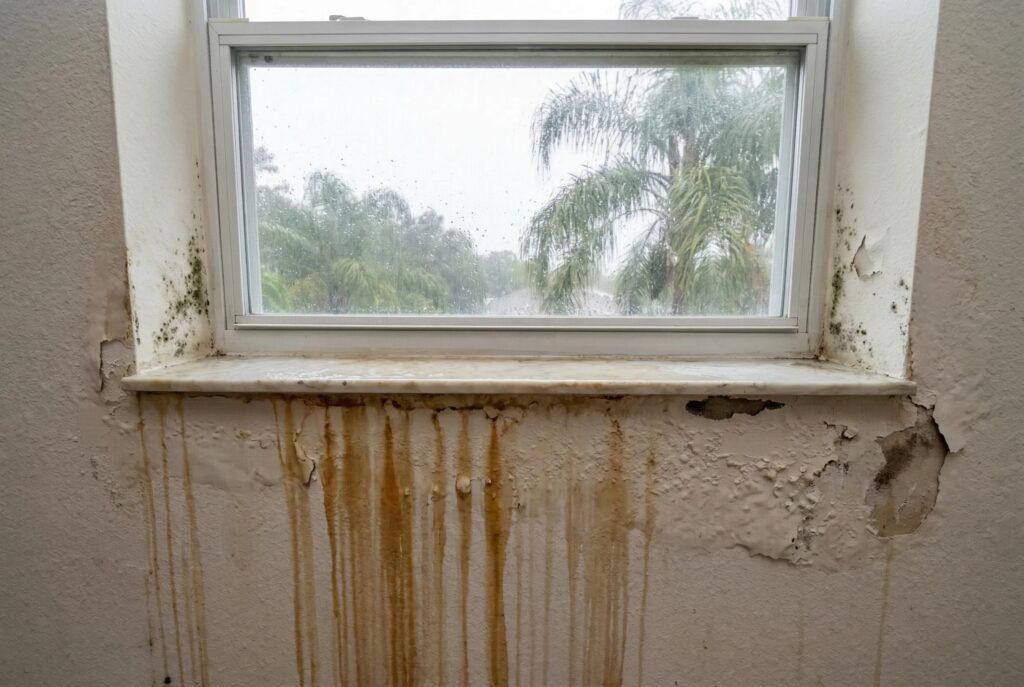
Condensation on windows and sliding glass doors. Condensation on interior glass surfaces means that the air inside your home contains more moisture than the temperature differential at the glass surface can hold. If you are seeing regular condensation on your windows, your indoor humidity is almost certainly above the mold growth threshold. Check the frames, sills, and surrounding drywall carefully for early mold signs.
Dark spots or discoloration on ceilings, walls, or grout. Any unexplained dark spotting or staining on interior surfaces is a potential mold indicator. In bathrooms and kitchens, black or gray grout discoloration and pink or orange staining on caulking are early signs. On drywall ceilings and walls, gray, brown, or black spotting that was not there before warrants professional inspection.
Allergic symptoms that improve when you leave the house. If household members experience sneezing, congestion, itchy eyes, or worsening asthma symptoms consistently at home but those symptoms improve when away from the property, indoor mold exposure is a likely contributor. This pattern is particularly common in homes where humidity-driven mold has been developing gradually over months.
Paint that bubbles, peels, or looks chalky. Paint failure on interior walls that is not related to aging or impact damage often indicates moisture migrating through the wall from behind. In Melbourne’s humid climate, this commonly means either a slow exterior leak or condensation buildup inside the wall cavity from temperature differential between the conditioned interior and the warm, humid exterior.
The Rooms in Your Melbourne Home Most Vulnerable to Humidity-Driven Mold
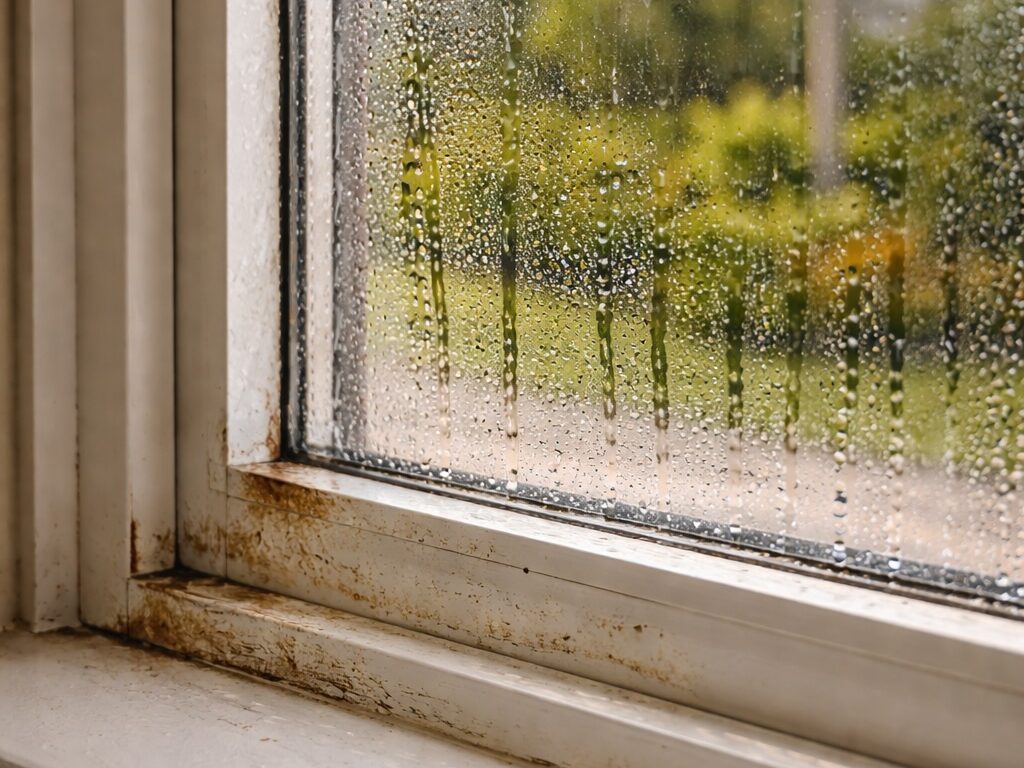
While mold can develop anywhere in a home where humidity is inadequately controlled, certain areas consistently present higher risk in Melbourne properties.
Bathrooms. Bathrooms generate moisture from showering, bathing, and running hot water multiple times daily. Without adequate exhaust ventilation, this moisture accumulates in the room and penetrates into walls, ceilings, and flooring. Florida bathrooms that lack properly functioning exhaust fans or that have fans venting into the attic rather than outside are particularly at risk.
Attics. Melbourne attics can reach temperatures exceeding 140 degrees Fahrenheit in summer, but they are also prone to humidity-related mold when ventilation is inadequate or when bathroom and kitchen exhaust fans are incorrectly vented into the attic space. The combination of heat and trapped moisture creates conditions where mold on roof sheathing can develop rapidly and spread across large areas of the attic before any signs reach the living space below.
Crawl spaces. Homes built on crawl space foundations in Melbourne are in direct contact with ground moisture that evaporates constantly from the soil below. Without a proper vapor barrier and adequate ventilation or encapsulation, crawl space humidity can remain extremely high year-round, driving mold growth across floor joists, subfloor materials, and any insulation present in the assembly.
Closets on exterior walls. Bedroom and hallway closets located on exterior walls are consistently among the most overlooked mold locations in Florida homes. These spaces receive little air circulation from the home’s HVAC system, creating localized humidity pockets. When the exterior wall behind the closet is not well insulated, the temperature differential between the cool interior and warm exterior causes condensation on the interior wall surface, providing the persistent moisture that mold requires.
Behind and under kitchen appliances. Refrigerators, dishwashers, and washing machines all generate or expose the surrounding area to moisture. The spaces behind and beneath these appliances receive minimal air circulation and often have direct contact with wall framing and flooring. Slow drips from water connections and normal condensation from refrigerator coils can sustain mold growth in these hidden locations for months before discovery.
How to Control Indoor Humidity and Slow Mold Growth in Your Melbourne Home
The most effective mold prevention strategy for any Melbourne homeowner is aggressive, consistent humidity control. Here is a practical framework for keeping indoor relative humidity below the mold growth threshold year-round.
Run your air conditioning consistently. Your air conditioning system is the primary dehumidification tool in your home. It removes moisture from indoor air as it cools. Running it consistently, even when the temperature feels comfortable without it, keeps indoor humidity in the safe range. Seasonal residents who turn off air conditioning during extended absences frequently return to significant mold problems.
Set your thermostat to hold humidity, not just temperature. Many modern smart thermostats allow you to set a humidity ceiling in addition to a temperature target. Setting your system to maintain indoor humidity below 55 percent is a more effective mold prevention strategy than targeting temperature alone.
Use exhaust fans every time you shower or cook. Bathroom and kitchen exhaust fans should run during and for at least 15 to 20 minutes after any activity that generates steam or moisture. Confirm that your fans are actually venting to the exterior of the home and not into an attic space.
Add a whole-home or portable dehumidifier. In Melbourne’s climate, a well-maintained central air conditioning system often needs supplemental dehumidification support, particularly in laundry rooms, bathrooms, and other high-moisture areas. A whole-home dehumidifier integrated with your HVAC system provides the most comprehensive protection. Portable units work well for specific problem areas.
Encapsulate your crawl space. If your Melbourne home has a crawl space, encapsulation with a heavy-duty vapor barrier and controlled conditioned air supply is one of the most impactful investments you can make for long-term mold prevention. Open crawl spaces in Florida’s climate are persistent sources of moisture that affects the entire home above.
Monitor indoor humidity with a hygrometer. Inexpensive digital hygrometers are available at hardware stores throughout Melbourne for under twenty dollars. Placing one in your living area, bathroom, and any high-risk area gives you real-time visibility into whether your humidity management is working. If you regularly see readings above 60 percent, your current approach needs reinforcement.
Service your HVAC system on a regular schedule. An air conditioning system that is not properly maintained loses dehumidification efficiency. Dirty evaporator coils, clogged condensate drain lines, and undersized systems all reduce your home’s ability to control humidity. In Melbourne’s climate, annual HVAC service is a minimum standard, and twice-yearly service is a reasonable investment for homes with known moisture challenges.
When Humidity Control Is Not Enough: Recognizing a Bigger Problem
There are situations where a homeowner in Melbourne is doing everything right from a humidity management standpoint and still developing mold. When that happens, it is almost always a sign that there is an unresolved moisture source that humidity control alone cannot address.
Hidden plumbing leaks behind walls or under slabs are among the most common culprits. A slow drip from a supply line fitting or a pinhole in a copper pipe can saturate the surrounding structural materials continuously for months without producing any visible sign at the surface. By the time mold becomes noticeable, the wall cavity or subfloor has been wet long enough to sustain a significant colony.
Roof damage that allows intermittent water entry during rain events is another frequent cause of mold that persists despite good humidity management. Even a small amount of water that enters during each storm and saturates an attic rafter or ceiling assembly keeps the moisture level in that localized area above the mold growth threshold regardless of what the rest of the home’s humidity readings show.
If you are actively managing indoor humidity but continue to smell mold, see recurring stains, or experience unexplained respiratory symptoms, the problem is almost certainly a hidden moisture source that requires professional inspection and moisture mapping to locate.
What Professional Mold Inspection and Remediation Provides That DIY Cannot
When humidity-driven mold has progressed beyond surface spots that can be wiped away with a cleaning solution, professional remediation is the only path to a complete resolution. Here is what that process delivers that no amount of household cleaning can replicate.
Thermal imaging and moisture mapping. Infrared cameras reveal moisture inside wall assemblies, under flooring, and above ceilings that is completely invisible to the naked eye. Without this technology, the true extent of a mold problem driven by hidden moisture sources is impossible to assess accurately.
Air quality testing. Spore counts in the affected areas of your home can be measured and compared to outdoor baseline levels. Elevated indoor spore counts confirm active mold growth even in areas where no visible mold is present, and they define the scope of the remediation needed.
Containment during remediation. When mold remediation is performed without proper containment, the disturbance of colonies releases massive numbers of spores into the air, which can spread contamination to unaffected areas of the home. Professional remediation uses physical barriers and negative air pressure to prevent cross-contamination during the work.
Treatment of structural materials. HEPA vacuuming, antimicrobial surface treatment, and controlled removal of non-salvageable materials address mold at a level that surface cleaning with household products cannot reach. Professional treatments are designed to eliminate mold at the root structure level and inhibit regrowth.
Post-remediation verification. A professional remediation job is not complete until follow-up inspection and testing confirm that mold levels have returned to acceptable baseline levels and that moisture has been addressed at the source. This verification step is what prevents the recurring mold that homeowners experience when they attempt to resolve the problem themselves.
Mold in Melbourne Moves Fast. PuroClean of Melbourne Moves Faster.
Florida’s humidity does not give homeowners the luxury of a long decision window when mold becomes a concern. The 24 to 48 hour growth timeline, combined with Melbourne’s year-round warm temperatures and persistently high ambient humidity, means that any moisture problem left unaddressed is a mold problem in the making.
Whether you are dealing with active mold growth, the aftermath of a water damage event, or persistent humidity problems that keep producing mold in the same locations, PuroClean of Melbourne has the equipment, the training, and the local expertise to resolve it completely.
We serve Melbourne, Palm Bay, Viera, Rockledge, Cocoa Beach, Satellite Beach, Indialantic, and all of Brevard County. Our team is available 24 hours a day, 7 days a week, because mold does not keep business hours and neither do we.
Call PuroClean of Melbourne 24/7 at (321) 378-2400
Email: [email protected]
Address: 739 North Dr, Melbourne, FL 32934
Website: puroclean.com/melbourne-fl-puroclean-melbourne
Do not let Florida’s humidity turn into a mold problem. Call PuroClean of Melbourne today.
PuroClean of Melbourne provides fire, water, and mold remediation services including mold inspection, mold removal, structural drying, water extraction, carpet restoration, and biohazard cleaning throughout Brevard County, Florida.
Connect With Us on Social Media!
Instagram | Facebook | Direction | Check Reviews | Yelp | Linkedin | Youtube | Twitter | BBB