Discovering water damage in your Melbourne, Florida home or commercial property triggers an immediate crisis.
Whether water originates from a burst supply pipe beneath a concrete slab, an overflowing air conditioning condensate line, or wind-driven rain during a coastal storm, every minute matters. Water migrates rapidly through porous building materials, dissolving subfloor adhesives, saturating drywall, and creating ideal conditions for aggressive mold germination within 24 to 48 hours.

During an emergency, property owners often feel rushed to choose the first contractor who answers the phone. Unfortunately, panicking and hiring an unverified or uncertified cleanup crew can lead to disastrous consequences. Inexperienced operators frequently lack proper psychrometric drying equipment, fail to map hidden moisture pockets inside wall cavities, and leave behind trapped humidity that triggers severe structural rot and toxic mold growth weeks later. Furthermore, hiring unlicensed or uncertified contractors can result in denied insurance claims and municipal building code violations.
Knowing how to systematically evaluate, verify, and select certified water damage restoration companies in the Melbourne and Palm Bay area is the most important step a property owner can take to protect their investment. This comprehensive guide details the essential credentials, industry certifications, licensing requirements, and vetting protocols necessary to secure true professional support across Brevard County.
Essential Certifications and Licensing: What to Look For
The property restoration industry is governed by rigorous national standards and state regulations. When vetting water damage restoration companies serving Melbourne, Viera, and Palm Bay, you must verify specific credentials before signing any work authorizations.
[ CORE CREDENTIALS FOR RESTORATION FIRMS ]
│
┌────────────────┬───────────────┴───────────────┬────────────────┐
▼ ▼ ▼ ▼
[ IICRC Firm Status ] [ Florida General Contractor ] [ Mold Licenses ] [ Workers Comp & COI ]
Certified under S500 Licensed for structural rebuilds Assessor & Remediator Protects property owner
standard protocols under Florida DBPR regulations compliance (FS 468) against liability
1. Institute of Inspection, Cleaning and Restoration Certification (IICRC)
The IICRC is the non-profit standard-bearing body for the inspection, cleaning, and restoration industries. A reputable restoration company should be recognized as an IICRC Certified Firm, and the individual technicians arriving at your property should hold specific field certifications:
- WRT (Water Damage Restoration Technician): The baseline certification for understanding psychrometrics, water categories, extraction methods, and structural drying equipment placement.
- ASD (Applied Structural Drying Technician): An advanced certification proving expertise in drying complex building assemblies, including hardwood floors, layered masonry, and insulated wall cavities without destructive demolition.
- AMRT (Applied Microbial Remediation Technician): Essential training for safely containing and treating mold contamination resulting from prolonged water damage.
2. Florida General Contractor License
Many water mitigation companies hold licenses only for basic cleaning and demolition. Once they dry your home, they leave you with exposed wall studs and missing flooring, requiring you to hire a separate general contractor to rebuild. To ensure seamless single-source recovery, look for a restoration provider that holds an active Florida General Contractor License issued by the Department of Business and Professional Regulation (DBPR). This license legally permits the company to handle structural repairs, framing, drywall, and flooring installation.
3. Florida Mold Assessor and Remediator Compliance
In Florida, mold remediation is strictly regulated under Florida Statute Section 468.8419, which prohibits a single company from performing both mold testing/assessment and mold remediation on the same property within a 12-month period. Certified restoration companies respect this consumer protection law, working alongside independent licensed mold assessors to ensure complete legal compliance and objective quality control.
4. Comprehensive Insurance Coverage (COI)
Always request a Certificate of Insurance (COI) directly from the restoration company’s insurance carrier before work begins. Ensure the company maintains active General Liability insurance, Pollution Liability insurance (critical for handling mold, sewage, and biohazards), and statutory Workers’ Compensation coverage to protect you from liability if a technician is injured on your property.
Red Flags and Unlicensed Operators to Avoid
Unfortunately, emergency situations attract opportunistic operators, out-of-state storm chasers, and uncertified handymen looking to exploit vulnerable property owners. Recognizing common red flags protects you from financial loss and poor workmanship.
+———————————————————————————–+
| RESTORATION VENDOR RED FLAGS TO AVOID |
+———————————————————————————–+
| RED FLAG 1: Unmarked Vehicles and Out-of-State Plates | Zero local accountability|
+———————————————————————————–+
| RED FLAG 2: Cash-Only Demands and Large Up-Front Fees | Legitimate firms bill |
| | insurance carriers direct|
+———————————————————————————–+
| RED FLAG 3: Refusal to Provide Written Estimates | Professional scopes |
| | require itemized Xactimate|
+———————————————————————————–+
| RED FLAG 4: Lack of Advanced Diagnostic Tools | Guessing drying times |
| | without thermal imaging |
+———————————————————————————–+
1. Out-of-State Storm Chasers and Unmarked Vehicles
Following severe tropical storms or major weather events across Brevard County, transient crews often travel to Florida from other states. These operators use temporary phone numbers, unmarked vehicles, and temporary lodging. Once they pull their drying equipment, they disappear, leaving you with no local recourse if structural issues or mold outbreaks emerge weeks later. Always verify that a company maintains a permanent physical facility in Brevard County.
2. Demanding Cash Payments and Large Up-Front Fees
Reputable, certified restoration companies work directly with insurance carriers, utilizing industry-standard Xactimate estimating software and establishing direct billing. Be highly suspicious of any contractor who demands large cash payments upfront, asks you to sign over insurance claim checks before work is performed, or refuses to provide formal written contracts.
3. Refusing to Provide Written Estimates or Contracts
Professional restoration providers document every phase of the project in writing. If a contractor offers vague verbal promises, refuses to provide an itemized scope of work, or avoids explaining how drying equipment will be billed, do not sign their paperwork.
4. Relying Solely on Visual Inspection Without Diagnostic Tools
Water damage is largely hidden behind walls and beneath flooring. Any company that evaluates a flood by simply walking through a room and setting up a few box fans without using FLIR thermal imaging cameras or electronic moisture meters is uncertified and unqualified. Scientific drying requires precise psychrometric mapping.
Evaluating Equipment Standards and Technical Capabilities
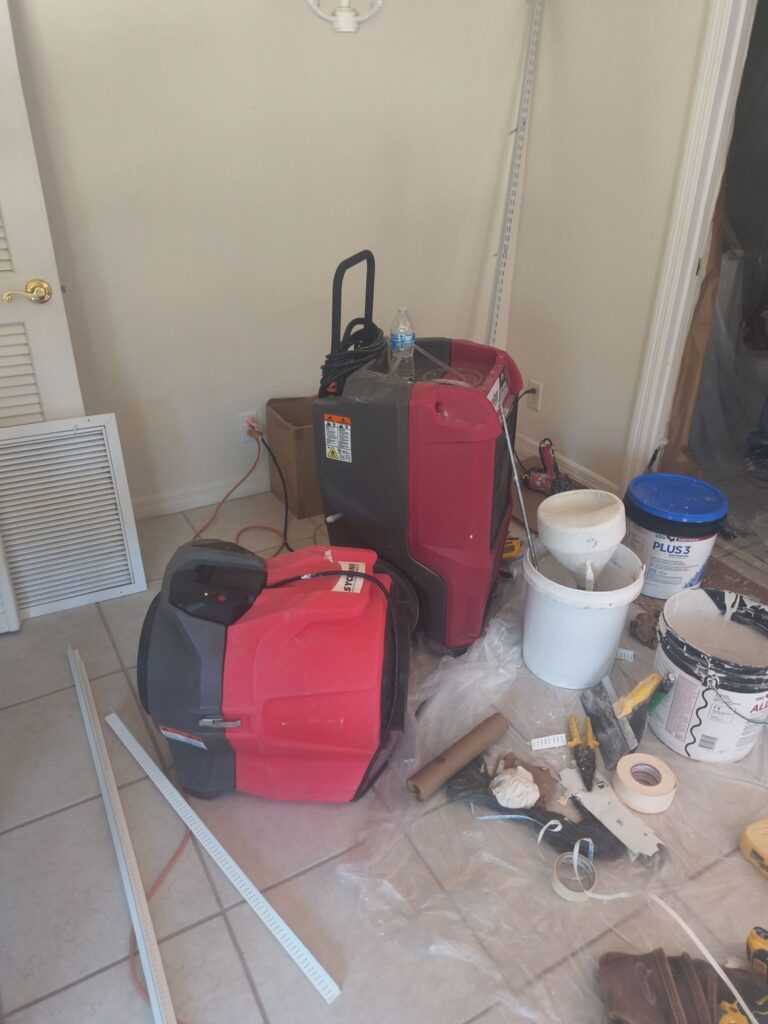
Finding a certified restoration company involves examining the technology and equipment fleet they deploy to your property. Basic household fans and wet/dry shop vacuums are insufficient for professional structural restoration.
[ PROFESSIONAL RESTORATION EQUIPMENT FLEET ]
│
┌───────────────────┬──────────────┴──────────────┬───────────────────┐
▼ ▼ ▼ ▼
[ Truck-Mounted Extractors ] [ LGR Dehumidifiers ] [ FLIR Thermal Cameras ] [ HEPA Air Scrubbers ]
High-volume liquid removal Industrial vapor extraction Non-invasive moisture Airborne particulate
power for standing water for low relative humidity mapping and leak detection containment (0.3 microns)
1. Industrial Low-Grain Refrigerant (LGR) Dehumidifiers
Standard consumer dehumidifiers struggle in Florida’s humid climate. Certified restoration companies deploy high-capacity Low-Grain Refrigerant (LGR) dehumidifiers capable of extracting moisture vapor from indoor air even when relative humidity levels are low, driving moisture out of structural framing and subfloors.
2. High-Velocity Axial Air Movers
Specialized axial air movers generate high-velocity laminar airflow across wet floors, walls, and subfloor assemblies, accelerating evaporation rates without damaging delicate surface finishes.
3. FLIR Thermal Imaging and Moisture Meters
Certified technicians utilize Forward-Looking Infrared (FLIR) thermal imaging cameras to detect subtle temperature variations caused by evaporative cooling, identifying hidden water pockets behind finished walls and beneath tile or hardwood flooring instantly.
Comprehensive Vetting Checklist for Melbourne Property Owners
When interviewing water restoration providers in the Melbourne and Palm Bay area, use this step-by-step vetting checklist to ensure you hire a fully certified, reliable partner:
| Vetting Step | Key Verification Question | Industry Standard / Compliance Benchmark |
| 1. Credential Verification | Are your technicians certified under IICRC WRT and ASD standards? | Active IICRC Certified Firm status with master-certified technicians. |
| 2. Licensing Check | Do you hold an active Florida General Contractor license? | Active DBPR General Contractor license for structural rebuilding. |
| 3. Insurance Validation | Can you supply a Certificate of Insurance naming us as certificate holder? | Active General Liability, Pollution, and Workers Compensation policies. |
| 4. Diagnostic Approach | Do you use thermal imaging cameras and daily moisture logs? | Deployment of FLIR cameras and psychrometric GPP monitoring. |
| 5. Billing Transparency | Do you bill insurance carriers directly using Xactimate software? | Itemized line-item estimating accepted by all major insurance carriers. |
| 6. Local Accountability | Where is your permanent physical facility located in Brevard County? | Permanent commercial address in Melbourne or surrounding Brevard area. |
Why PuroClean of Melbourne Sets the Gold Standard for Certification

When property owners across Melbourne, Viera, Palm Bay, and the barrier islands search for a fully certified, trusted restoration partner, PuroClean of Melbourne represents the gold standard of professional excellence.
Operating out of our central facility at 739 North Dr in the Coastal Technology Center, Melbourne, FL 32934, PuroClean combines elite national certifications with deep roots on the Space Coast.
[ Certified Emergency Dispatch ] ──> [ Advanced FLIR Diagnostics ] ──> [ IICRC S500 Psychrometric Drying ]
│
┌─────────────────────────────────────────┘
▼
[ In-House General Contractor Rebuild ] ──> [ Direct Xactimate® Insurance Billing ] ──> [ Complete Recovery ]
Unmatched Industry Certifications and Licensing
- IICRC Certified Firm: Our technicians hold advanced certifications in Water Damage Restoration (WRT), Applied Structural Drying (ASD), and Mold Remediation (AMRT).
- Licensed Florida General Contractor: Unlike mitigation-only companies that leave you with exposed studs, PuroClean holds a full Florida General Contracting license, managing your entire recovery from initial extraction to final structural rebuilding under one roof.
- Strict Regulatory Adherence: We comply fully with OSHA safety standards, FDOH biomedical waste regulations, and Florida Statute Section 468.8419 regarding mold remediation protocols.
The “One Call Does It All” Advantage
By unifying emergency water mitigation, advanced mold remediation, biohazard cleanup, and turnkey reconstruction into a single service model, PuroClean eliminates multi-vendor friction, cuts project timelines in half, and provides a single point of accountability for your complete property recovery.
Frequently Asked Questions (FAQ)
1. How can I verify if a water restoration company in Melbourne is truly certified?
You can verify a company’s professional credentials through several official channels. Check the Institute of Inspection, Cleaning and Restoration Certification (IICRC) registry online to confirm Certified Firm status. To verify contractor licenses, visit the Florida Department of Business and Professional Regulation (DBPR) website at myfloridalicense.com to ensure their General Contractor or mold licenses are active and clear of disciplinary actions. Always request a physical Certificate of Insurance (COI) directly from their insurance agency before work begins.
2. What is the difference between water mitigation and water restoration?
Water mitigation is the emergency first phase of recovery, focusing on stopping water sources, extracting standing liquid, removing ruined porous materials, and setting up industrial drying equipment to stop structural rot. Water restoration is the broader process that includes mitigation plus complete structural reconstruction, rebuilding damaged drywall, replacing subflooring, hanging trim, and painting finishes. PuroClean of Melbourne provides both phases under a single Florida General Contractor license.
3. Do I have to use the restoration company recommended by my insurance company?
As a property owner in Florida, you have the legal right to choose any licensed, certified restoration contractor you prefer. Insurance companies often suggest “preferred vendors,” but those vendors may focus exclusively on mitigation and lack in-house reconstruction capabilities. Choosing an independent certified contractor like PuroClean of Melbourne ensures you have a licensed General Contractor advocating for your property’s complete rebuilding.
4. How quickly can a certified restoration company arrive at my Melbourne property?
Certified local restoration providers with permanent facilities in Brevard County can dispatch emergency crews rapidly. Because PuroClean of Melbourne is centrally located in the Coastal Technology Center at 739 North Dr, our certified technicians reach residential and commercial properties across Melbourne, Viera, Palm Bay, and surrounding Space Coast communities within 60 minutes or less, 24 hours a day, 7 days a week.
5. Will my homeowners insurance cover certified water damage restoration services?
Most standard Florida homeowners insurance policies cover water damage mitigation and reconstruction if the cause is sudden and accidental, such as a burst supply pipe, a failed water heater tank, or an appliance overflow. Policies typically exclude long-term slow leaks caused by deferred maintenance. PuroClean of Melbourne works directly with insurance adjusters, providing daily psychrometric logs, FLIR thermal imaging reports, and itemized Xactimate estimates to support your claim.
6. Why should I avoid out-of-state storm chasing contractors after a flood?
Out-of-state storm chasers lack permanent local facilities, accountability, and familiarity with Florida building codes and climate challenges. When secondary issues or mold outbreaks occur weeks after a storm, transient operators are gone. Hiring a permanent local provider like PuroClean of Melbourne ensures ongoing local accountability, verified certifications, and guaranteed workmanship backed by a physical Brevard County facility.
Partner with Melbourne’s Certified Restoration Experts
When water damage threatens your home or business in Melbourne, Viera, Palm Bay, or the surrounding Space Coast area, don’t leave your property’s recovery to chance. Partner with the certified professionals who combine elite technical training with complete structural rebuilding capabilities.
PuroClean of Melbourne is your trusted single-source solution for certified property recovery. From emergency water extraction and psychrometric structural drying to biohazard sanitization and turnkey reconstruction, One Call Does It All.
Our comprehensive property damage restoration services include:
- 24/7 Emergency Water Extraction & Structural Drying
- Advanced FLIR Thermal Imaging & Moisture Diagnostics
- IICRC Certified Water, Mold & Odor Remediation
- Fire, Smoke & Soot Damage Restoration
- OSHA & FDOH Compliant Biohazard, Sewage & Trauma Cleanup
- Turnkey Structural Reconstruction & General Contracting
CERTIFIED WATER DAMAGE RESTORATION IN MELBOURNE, FL
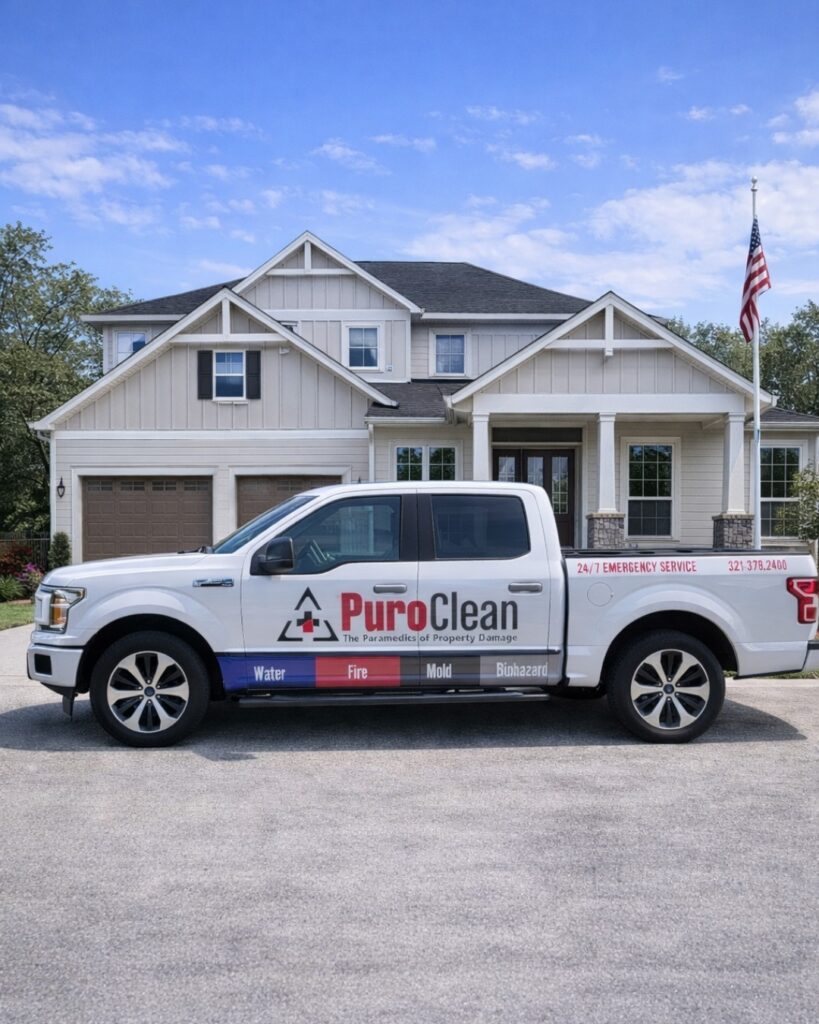
Don’t compromise on quality when your property’s safety and value are on the line. Hire Melbourne’s trusted, certified restoration experts. Contact PuroClean of Melbourne today for immediate 24/7 emergency dispatch.
- 24/7 Direct Emergency Line: (321) 378-2400
- Facility Location: 739 North Dr, Melbourne, FL 32934 (Coastal Technology Center)
- Service Area: Serving Melbourne, Viera, Palm Bay, Indialantic, Melbourne Beach, West Melbourne, Suntree, Eau Gallie, Melbourne Village, and all surrounding Brevard County communities.