


Hiring a restoration company is not like hiring a plumber or a painter. The stakes are higher, the decision window is shorter, and the consequences of choosing the wrong company can follow you for months or years in the form of hidden mold, botched insurance claims, and structural damage that was never properly addressed.
Most homeowners have never hired a restoration company before the moment they need one. They have no frame of reference for what the process should look like, what questions to ask, what credentials actually matter, or what the warning signs of a bad operator look like. That lack of preparation, combined with the urgency of a water, fire, or mold emergency, creates exactly the conditions that unqualified contractors and outright scammers exploit.
In Melbourne and throughout Brevard County, this problem is especially pronounced after major weather events. When a tropical storm or hurricane sweeps through the Space Coast, it brings not just flooding and wind damage but a wave of out-of-state contractors who set up temporary operations, chase insurance money, and disappear before homeowners realize the work was never done properly.
This guide gives you the knowledge to hire a restoration company the right way, whether you are making the decision under emergency pressure or doing your research before the next storm season. PuroClean of Melbourne has been the trusted restoration partner for Brevard County homeowners, and everything in this guide reflects the standards we hold ourselves to every day.
Step 1: Understand What Type of Restoration Work You Actually Need
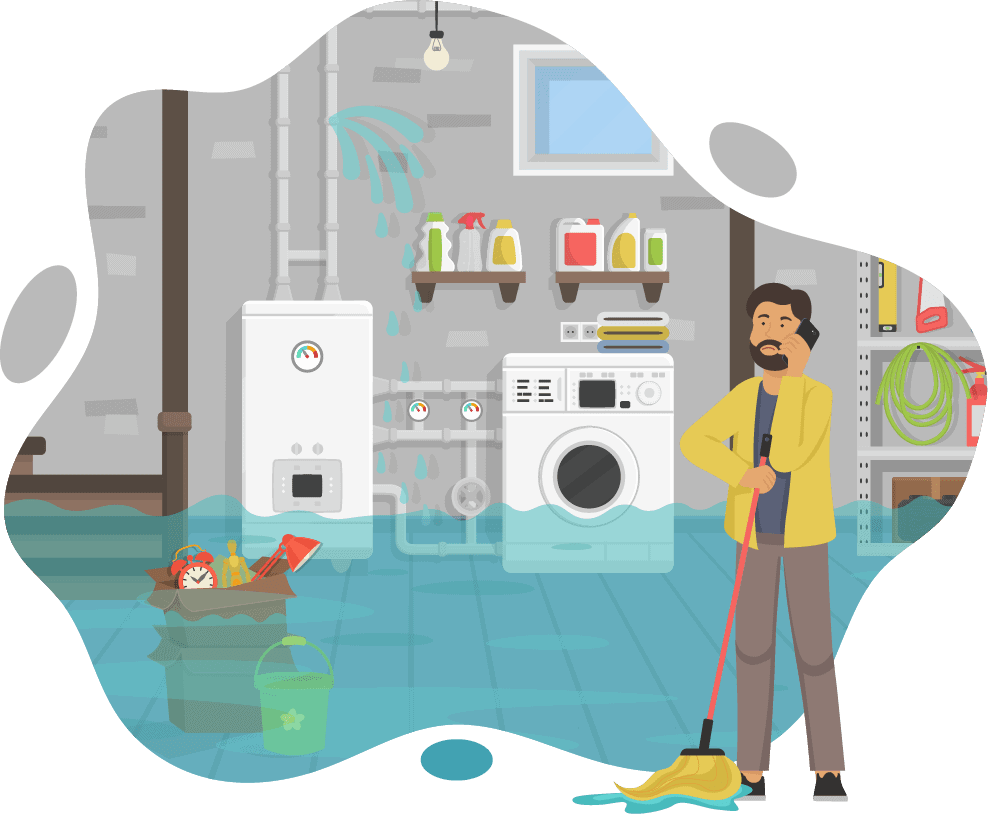
Restoration is a broad term that covers several distinct service categories. Not every company that calls itself a restoration company is qualified to handle every type of damage, and not every job requires the same type of expertise. Before you start searching for a company, it helps to clearly identify what you are dealing with.
Water damage restoration. This is the most common restoration category and involves emergency water extraction, structural drying, moisture mapping, and the prevention or treatment of mold following a water intrusion event. Sources include burst pipes, appliance failures, roof leaks, flooding, and storm-related water entry. Water damage restoration requires specific IICRC certifications and commercial-grade drying equipment.
Mold remediation. Mold remediation is a specialized discipline that involves inspection, containment, removal of mold-affected materials, treatment of structural surfaces, air filtration, and post-remediation verification. Not all water damage companies have the training or equipment to perform proper mold remediation, and not all mold remediation companies are also qualified to handle the water damage that caused the mold.
Fire and smoke damage restoration. Fire damage involves a unique combination of structural damage, smoke and soot contamination, water damage from firefighting, and persistent odor that requires specialized treatment. This category requires different training, different cleaning chemistry, and different equipment than water or mold work.
Biohazard and specialty cleaning. Sewage backups, flooding with contaminated water, and certain biological contamination events require hazardous material handling protocols that go beyond standard restoration work. Companies performing this type of work should hold specific training and follow OSHA guidelines for personal protection and waste disposal.
Understanding which category applies to your situation helps you evaluate whether a company you are considering is actually qualified for your specific type of damage, or just broadly marketing themselves as a restoration company without the relevant specialization.
Step 2: Verify Credentials Before You Agree to Anything
Credentials in the restoration industry are not just marketing language. They represent specific training, examination, and continuing education requirements that translate directly into the quality of the work performed in your home. Here is what to verify before you commit to any restoration company.
IICRC Certification
The Institute of Inspection, Cleaning and Restoration Certification is the primary credentialing body for the restoration industry. IICRC certifications that matter most for residential restoration work include:
- WRT (Water Restoration Technician): Covers the science and practice of water damage assessment, extraction, and drying.
- ASD (Applied Structural Drying): Advanced training in psychrometrics and the drying of structural assemblies including walls, floors, and ceilings.
- AMRT (Applied Microbial Remediation Technician): Specialized training in mold and microbial remediation protocols.
- FSRT (Fire and Smoke Restoration Technician): Covers fire and smoke damage assessment and restoration procedures.
You can verify a company’s IICRC certification status by asking for the technician’s certification number and checking it at iicrc.org. Do not simply take a company’s word for it. A certificate on a wall in an office does not mean the technicians showing up at your door are currently certified.
Florida State Licensing
Florida requires contractors performing certain types of restoration and reconstruction work to hold specific state licenses. Verify that any company you are considering is properly licensed for the work they will perform in your home. Florida contractor license status can be verified through the Department of Business and Professional Regulation at myfloridalicense.com.
General Liability and Workers Compensation Insurance
Ask every restoration company you consider to provide a certificate of insurance showing current general liability coverage and workers compensation insurance. General liability insurance protects you if the company causes additional damage to your property during the restoration work. Workers compensation insurance protects you from liability if a technician is injured while working in your home. A company that cannot provide current insurance certificates should not be allowed to work in your property under any circumstances.
Step 3: Evaluate Their Equipment and Process Before Work Begins
A restoration company’s credentials tell you what training their people have completed. Their equipment and documented process tell you whether they have the tools to actually do the work those credentials qualify them for. These are two separate evaluations and both matter.
Ask what equipment they will bring to your home. A professional water damage response requires industrial extraction equipment, commercial air movers, low-grain refrigerant dehumidifiers, thermal imaging cameras, and calibrated moisture meters. If a company’s equipment description sounds like what you could assemble from a home improvement store rental counter, their drying results will reflect that limitation.
Ask how they will document the drying process. Professional restoration requires daily moisture readings at every affected location, recorded and reported throughout the drying period. This documentation serves two purposes: it tells you that your home is actually being dried to professional standards, and it creates the adjuster-ready record your insurance company needs to process your claim. A company that cannot explain a clear documentation protocol is not performing professional-grade work.
Read Also: The Role Of Professionals In Smoke Damage Restoration
Ask how they determine when drying is complete. The answer should reference specific moisture content targets for the affected materials and verification using calibrated meters, not a general statement about how many days the equipment will run. Drying timelines vary based on material type, saturation level, and environmental conditions. A company that quotes a fixed number of days without assessing your specific situation is not doing proper drying science.
Ask whether they use thermal imaging. Thermal imaging cameras are not optional equipment for professional water damage restoration. They are the tool that reveals moisture hidden inside wall cavities, under flooring, and above ceilings, the exact locations where incomplete drying leads to mold growth weeks or months later. A company that does not use thermal imaging cannot confirm that your home has been fully dried.
Step 4: Understand the Insurance Process Before You Sign Anything
The intersection of restoration work and homeowner’s insurance is where many Melbourne homeowners make costly mistakes. Understanding the basics of how this process works before you sign any authorization documents protects you from arrangements that may not serve your interests.
Call Your Insurance Company First
Before authorizing any restoration company to begin work beyond emergency water extraction, call your insurance company and report the claim. Ask them about your coverage, your deductible, and whether they have a preferred vendor list. Some insurers have direct billing relationships with restoration companies that can simplify the claims process. Others have no preference and will work with any qualified contractor. Either way, having your claim number and adjuster contact information in hand before work begins creates a cleaner paper trail and protects your coverage.
Understand What You Are Signing
Restoration companies typically ask homeowners to sign a work authorization before beginning. This is a normal and appropriate document. However, some operators use authorization forms that contain Assignment of Benefits clauses, which transfer your right to collect insurance proceeds directly to the contractor. While AOB arrangements are not always problematic, they remove you from the insurance negotiation process and can create complications if disputes arise about the scope or cost of the work.
Read every document before you sign. Ask specifically whether any document you are being asked to sign includes an Assignment of Benefits clause. If a company is pressuring you to sign documents quickly without allowing you time to read them, that is a significant red flag.
Get a Written Scope of Work
A professional restoration company should be able to provide a written scope of work that describes what services will be performed, what equipment will be used, and how the work will be documented. This document protects you by creating a clear standard against which the actual work can be measured. It also helps your insurance adjuster understand what they are authorizing payment for.
Step 5: Assess Their Communication and Availability Standards
Restoration work is not a one-time visit. A full water damage restoration project involves multiple days of active drying, daily monitoring visits, ongoing communication about progress, and coordination with your insurance company throughout. The quality of a company’s communication during this process directly affects your experience, your peace of mind, and the completeness of your insurance documentation.
Ask how often they will visit your home during the drying period. Professional standards call for daily monitoring visits to record moisture levels, adjust equipment placement as drying progresses, and identify any areas where progress is slower than expected. A company that plans to place equipment and return in three to five days without daily visits is not performing professional-grade monitoring.
Ask who your primary point of contact will be. You should have a named individual at the company who is responsible for your project and reachable during business hours. Knowing who to call when you have a question or concern, and knowing that call will be returned promptly, is a basic standard of professional service.
Ask how they communicate with your insurance company. A restoration company with real insurance coordination experience handles this process proactively, not reactively. They should be able to tell you specifically how they prepare and submit documentation to adjusters, how they handle scope disputes, and what their track record looks like with the major insurers operating in Florida.
Ask about their after-hours availability. Water damage emergencies do not follow a Monday through Friday schedule. A company that offers genuine 24-hour emergency response, meaning a real person answers the phone at 2 a.m. and a crew can mobilize immediately, is operating at a different standard of service than a company that takes emergency calls and schedules next-morning assessments.
Step 6: Research Their Local Reputation
A restoration company’s local reputation is one of the most reliable indicators of what your experience will actually look like. Here is how to evaluate it effectively.
Read Google reviews with specificity. Look beyond the overall star rating and read the content of reviews. Pay particular attention to reviews that describe the experience during a water or mold emergency, how the company communicated, how smoothly the insurance process went, and whether the damage was fully resolved. Reviews that describe generic satisfaction are less informative than reviews that describe specific situations similar to yours.
Read Also: How to Hire a Water Damage Restoration Company
Look for review recency and volume. A company with twenty five-star reviews from seven years ago and no recent activity tells a different story than a company with ongoing recent reviews. Active, consistent reviews across recent periods indicate that the company is still operating at the level that earned those reviews.
Ask for references from similar projects. A professional restoration company should be willing to provide references from homeowners who experienced similar damage types in the Melbourne or Brevard County area. Speaking directly with a homeowner who has been through the process with a company you are considering gives you ground-level insight that no website or review platform can replicate.
Check their Better Business Bureau status. The BBB listing for a local restoration company shows complaint history, complaint resolution, and the company’s overall standing. A pattern of unresolved complaints, particularly around insurance claim disputes or incomplete work, is a meaningful red flag regardless of how polished a company’s marketing looks.
Step 7: Confirm They Handle the Full Scope, Not Just Part of It
One of the most common sources of frustration for Melbourne homeowners after water or fire damage is discovering midway through the project that the restoration company they hired handles extraction and drying but not reconstruction, or handles mold treatment but not the demolition of affected materials, or handles the damage cleanup but not the final repairs that return the home to its pre-loss condition.
Managing multiple contractors during a restoration project is stressful, time-consuming, and creates gaps in accountability where each company can point to the other when something is not done correctly. Before you hire a restoration company, confirm exactly where their scope of service begins and ends.
Ask specifically whether they handle:
- Emergency water extraction and initial response
- Structural drying including wall cavities, subfloors, and ceilings
- Controlled demolition of non-salvageable materials
- Mold treatment and remediation if required
- Reconstruction of removed or damaged materials
- Final restoration of the home to pre-loss condition
A company that can honestly say yes to the full list is a company that can take you from emergency response to a completed, restored home without requiring you to manage the coordination between phases. That continuity has real value during an already stressful experience.
Red Flags That Tell You to Walk Away
Knowing what good looks like only matters if you can also recognize what bad looks like. These are the warning signs that should stop you from hiring a restoration company regardless of how urgently you feel you need to make a decision.
- They showed up at your door unsolicited after a storm. Legitimate restoration companies do not canvass neighborhoods after weather events. Storm chasers who arrive uninvited are looking for quick insurance jobs, not long-term reputation building in your community.
- They cannot provide proof of IICRC certification or insurance on request. Any qualified restoration company has these documents readily available. Hesitation, deflection, or promises to send them later are red flags.
- They are pressuring you to sign documents before you have read them. Urgency tactics around paperwork are a classic pattern among operators who use aggressive AOB arrangements or who know that a homeowner with time to think would not sign what they are being asked to sign.
- They cannot explain their drying process in specific terms. Vague answers about drying timelines, equipment, and monitoring protocols indicate a company that is not operating at the professional level the job requires.
- They have no verifiable local presence or history in Brevard County. A company that appeared in Melbourne after the last storm and has no established history, no local address, and no local reviews is a company that will not be here to stand behind their work if problems arise.
- They require large upfront cash payment. Professional restoration companies work within insurance billing frameworks and do not require large cash payments before work begins. Upfront cash demands are a common pattern among operators who do not intend to complete the work properly.
The Right Timeline: What a Professional Restoration Process Looks Like
Understanding the typical timeline of a professional restoration project helps you evaluate whether what a company is telling you aligns with industry standards.
Day 1: Emergency response and extraction. The restoration company arrives on-site, assesses the damage, performs initial moisture mapping with thermal imaging, and begins water extraction. Commercial drying equipment is placed strategically based on the moisture assessment. Initial documentation of damage and moisture readings is completed.
Days 2 through 5 (typical drying period): Daily monitoring. Technicians visit daily to record moisture readings, adjust equipment placement as materials dry, and document progress. The drying period can vary from three to seven days depending on the type and extent of saturation, the materials involved, and environmental conditions.
Read Also: Water Damage Restoration in Melbourne, FL | Fire and Mold Cleanup
Drying completion: Final moisture verification. When all affected materials have reached target moisture levels, equipment is removed and a final moisture report is documented. This report serves as verification for your insurance company that structural drying was completed to professional standards.
Demolition phase (if required): Removal of non-salvageable materials. Drywall, insulation, flooring, or other materials that sustained damage too severe to dry and restore are carefully removed. This phase also reveals whether any mold growth occurred during the moisture period and whether additional remediation is needed.
Reconstruction phase: Returning your home to pre-loss condition. Removed materials are replaced, flooring is reinstalled, painting is completed, and the home is returned to its pre-loss condition. This phase may involve coordination with your insurance adjuster to confirm the scope of replacement work covered under your policy.
Why Melbourne Homeowners Hire PuroClean of Melbourne
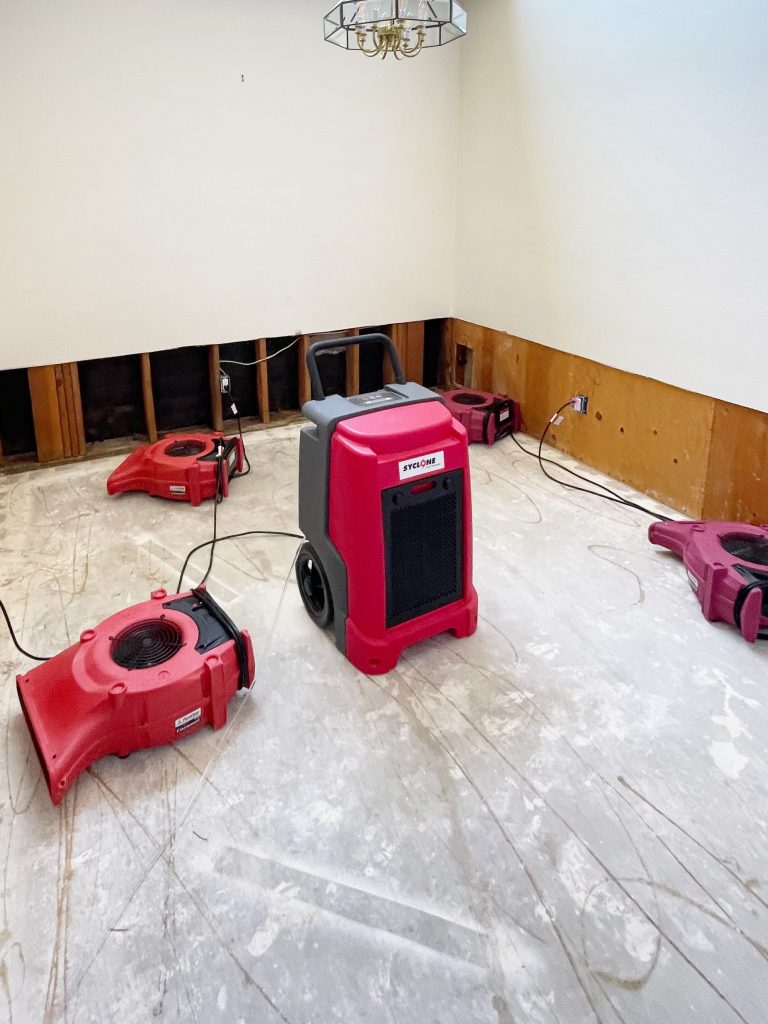
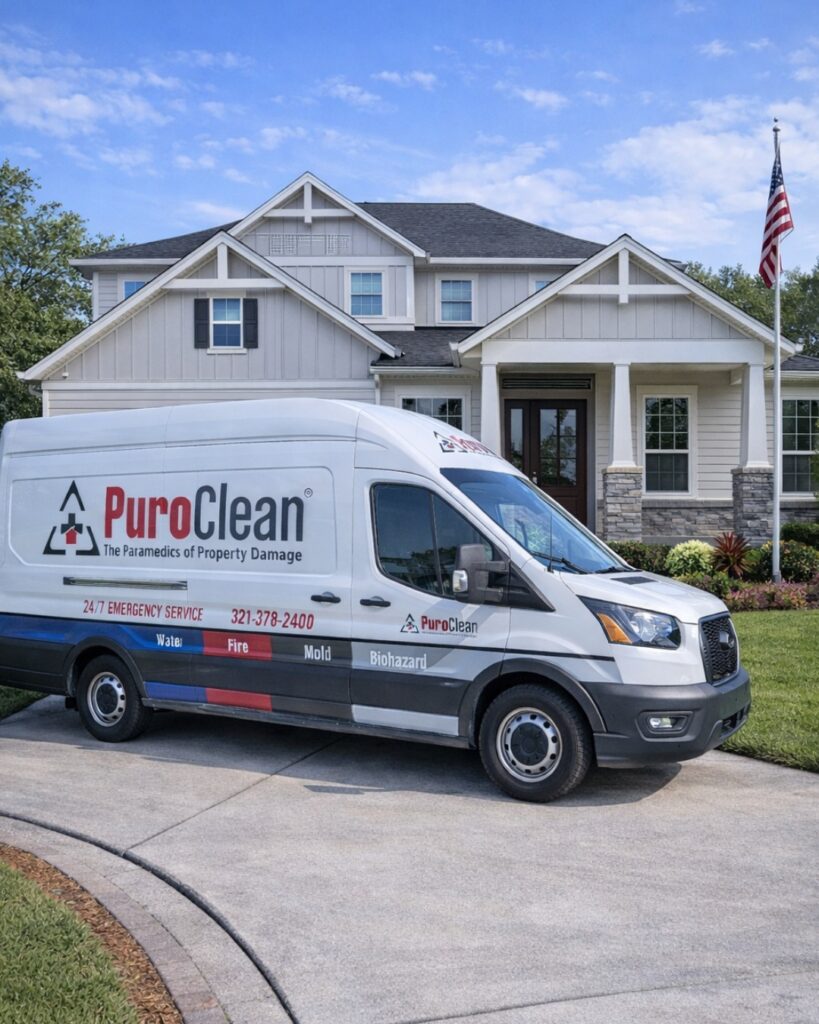
PuroClean of Melbourne meets every standard in this guide. We hold current IICRC certifications in water damage restoration, applied structural drying, and mold remediation. Our technicians arrive with industrial extraction equipment, commercial drying systems, thermal imaging cameras, and calibrated moisture meters. We document every step of the drying process and provide adjuster-ready reports. We are locally owned, have a verified presence in Melbourne, and our reputation in Brevard County has been built through years of work in this community.
We answer the phone 24 hours a day and our response team can mobilize immediately. We handle the full scope of restoration work from emergency extraction through reconstruction so you are never left coordinating between contractors during the most stressful phase of the project. And we work directly with all major insurance carriers to make the claims process as smooth as possible for every homeowner we serve.
If you are currently dealing with water, mold, or fire damage in Melbourne or anywhere in Brevard County, the most important step you can take right now is to call a company you can trust and get professional help started immediately.
Call PuroClean of Melbourne 24/7 at (321) 378-2400
Email: [email protected]
Address: 739 North Dr, Melbourne, FL 32934
Website: puroclean.com/melbourne-fl-puroclean-melbourne
Serving Melbourne, Palm Bay, Viera, Rockledge, Cocoa Beach, Satellite Beach, Indialantic, and all of Brevard County, Florida. Available 24 hours a day, 7 days a week.
PuroClean of Melbourne provides fire, water, and mold remediation services including emergency water extraction, structural drying, mold removal, carpet restoration, flood damage cleanup, fire and smoke damage restoration, and biohazard cleaning throughout Brevard County, Florida.
Connect With Us on Social Media!
Instagram | Facebook | Direction | Check Reviews | Yelp | Linkedin | Youtube | Twitter | BBB