After discovering a potential structural moisture issue in your home or business, scheduling an independent assessment is the smartest protective measure you can take. However, once the professional mold testing Melbourne FL is complete, you are handed a highly technical document filled with scientific jargon, Latin classifications, and complex numerical data. For many property owners on the Space Coast, translating this laboratory data into an actionable recovery plan can feel overwhelming.
Understanding the core elements of your environmental report is essential. It empowers you to make informed decisions regarding your indoor air quality and guides the property damage restoration process effectively.
The Critical Role of the Outdoor Baseline Sample
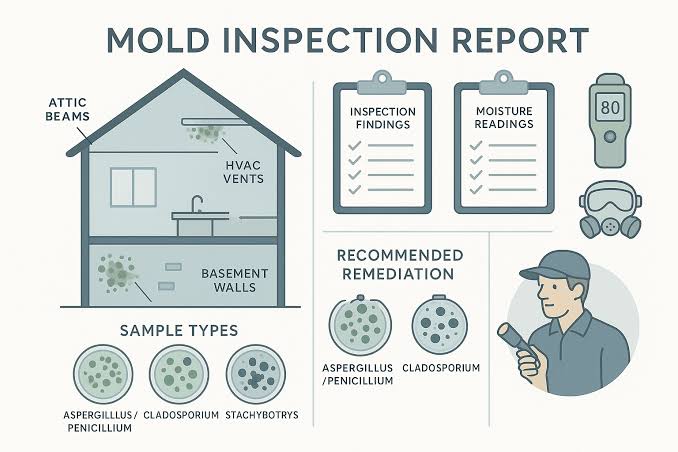
Every reputable scientific assessment in Florida must include an outdoor baseline sample. Because fungal spores are a natural and necessary part of our coastal ecosystem, finding them indoors is entirely normal. The objective of a lab report is never to achieve a zero count. Instead, the mycologist compares your indoor samples to the outdoor air. If the concentration of spores inside your property is significantly higher than the natural levels found outside your front door, the report confirms an active indoor amplification issue.
Decoding Spore Counts: Raw vs. Spores Per Cubic Meter
As you scan the columns of your report, you will notice two distinct sets of numbers for each identified species:
- • Raw Count: This is the literal number of spores the laboratory technician physically counted under the microscope on the collection slide.
- • Spores Per Cubic Meter (Sp/m3): This is a mathematical calculation. It extrapolates the raw count to estimate the total concentration of spores floating within one cubic meter of your indoor air. This standardized metric is the most important number on your report, as it dictates the severity of the contamination.
Identifying High Risk vs. Common Fungal Strains
The laboratory will categorize all biological particulates by their genus. Seeing names like Cladosporium or Ascospores is very common, as these naturally migrate indoors through open windows or on clothing. However, the presence of specific water damage indicator species demands immediate attention. If your report highlights Stachybotrys, Chaetomium, or elevated levels of Penicillium/Aspergillus, your building has a chronic moisture intrusion problem that requires professional intervention.
Moving Forward with PuroClean of Melbourne
A positive lab report is simply a diagnosis. The cure involves precise, scientific remediation. At PuroClean of Melbourne, our IICRC certified technicians use your independent lab data to build a custom, highly targeted restoration protocol. We deploy commercial HEPA air scrubbers, build strict negative pressure containment barriers, and execute deep molecular sanitization to ensure every trace of the biological hazard is safely removed.
If you are confused by a recent lab report or suspect a hidden moisture crisis, do not wait for the damage to spread further into your structural framing.
NEED HELP WITH YOUR LAB RESULTS? CALL US NOW: (321) 378-2400
PuroClean of Melbourne is available 24/7 for certified property restoration.