


When property owners in Melbourne, Florida think about indoor mold growth, they often picture visible discoloration along bathroom tile grout, water stains under kitchen sinks, or dark spots around leaky window frames.
However, in the subtropical environment of Brevard County, the most severe, expansive, and dangerous fungal infestations rarely start in plain sight. Instead, they colonize the unconditioned, hidden buffer zones of the building envelope: the attic overhead and the crawlspace underfoot.
Attics and crawlspaces serve as the critical boundary layers between Florida’s harsh exterior climate and your climate-controlled indoor living environment. Due to high ambient humidity, heavy seasonal rainfall, intense solar radiant heat, and elevated water tables along the Space Coast, these structural cavities create ideal micro-climates for mold spore amplification.
What makes attic and crawlspace mold particularly hazardous is not just its hidden location, but its direct impact on the air you breathe every day. Through physical phenomena known as thermal buoyancy, air pressure differentials, and ductwork leakage, microscopic mold spores and volatile organic compounds generated in these hidden spaces continuously migrate into living rooms, bedrooms, and commercial workspaces.
Understanding why professional mold testing in attics and crawlspaces is necessary requires examining building science, coastal moisture dynamics, and modern environmental diagnostic protocols. This guide explores the unique challenges facing Melbourne structures, explains how hidden mold impacts indoor air quality, and outlines the precise testing protocols needed to safeguard your property value and respiratory health.
The Micro-Climate Realities of Brevard County Attics
Attics in Central Florida represent one of the most brutal environmental zones in residential construction. During peak summer months in Melbourne, when ambient outdoor temperatures reach the mid-90s with relative humidity topping 80%, attic temperatures can easily surge to between 120°F and 140°F. This intense radiant heat, combined with specific structural moisture sources, transforms attic spaces into high-risk zones for rapid fungal colonization.
[ Intense Solar Radiation ] ───> [ Roof Shingles / Tile ]
│
▼
[ Elevated Attic Temperatures (120°F – 140°F) ] + [ Moisture Intrusion ]
│
┌───────────────────────┴───────────────────────┐
▼ ▼
[ HVAC Duct Condensation ] [ Roof & Soffit Leaks ]
(Cold ducts in hot attic) (Wind-driven rain & storm damage)
│ │
└───────────────────────┬───────────────────────┘
▼
[ Rapid Fungal Amplification on Wood Framing ]
HVAC Systems in Unconditioned Spaces
In the majority of Melbourne residences, air handling units (AHUs) and flexible ductwork networks are installed directly inside unconditioned attic spaces. When cold air (typically 55°F) passes through ductwork surrounded by 130°F attic air, the physical surface of the duct liner or metal casing drops below the local dew point.
If duct insulation is torn, degraded, improperly sealed, or under-insulated, moisture rapidly condenses on the exterior of the ductwork and surrounding ceiling joists. This constant dripping saturates gypsum ceiling drywall and cellulose insulation, creating ideal germination conditions for fast-growing mold species such as Aspergillus, Penicillium, and Cladosporium.
Roof Line Failures and Wind-Driven Rain
Coastal storms, tropical depressions, and summer afternoon thunderstorms frequently drive rain under roof shingles, ridge vents, and flashing around plumbing stacks or chimneys. Minor roof leaks often do not show up immediately as ceiling stains. Instead, moisture trickles down wood roof sheathing, trusses, and insulation, allowing fungal colonies to thrive undisturbed for months behind roof valleys and knee walls.
Soffit Blockages and Inadequate Ventilation
Proper attic ventilation relies on continuous airflow entering through eave soffit vents and exiting through ridge or off-ridge exhaust vents. In many older Melbourne homes, blown-in insulation shifts over time, completely blocking soffit vents. Trapped, stagnant, humid air cannot escape, causing ambient relative humidity inside the attic to remain above 70% for extended periods, triggering widespread mold growth across exposed plywood sheathing and yellow pine roof trusses.
Crawlspace Moisture Dynamics in Coastal Central Florida
While attics suffer from extreme radiant heat and duct condensation, crawlspaces present a completely different set of moisture challenges driven by soil dynamics, high water tables, and coastal geology. In communities such as Melbourne Beach, Indialantic, Eau Gallie, and Melbourne Village, crawlspace foundations face relentless moisture pressure from below.
+———————————————————————————–+
| CRAWLSPACE MOISTURE DYNAMICS MATRIX |
+———————————————————————————–+
| MOISTURE SOURCE | PHYSICAL MECHANISM | STRUCTURAL IMPACT |
+—————————-+——————————-+———————–+
| Shallow Water Table | Hydrostatic pressure pushes | Constant ground vapor |
| | soil moisture upward | emissions into space |
+—————————-+——————————-+———————–+
| Unsealed Dirt Floors | Evaporation of ground water | Relative humidity |
| | directly into air cavity | exceeds 80% constantly|
+—————————-+——————————-+———————–+
| Open Crawlspace Vents | Hot, humid outdoor air enters | Condensation forms on |
| | cool subfloor surfaces | cold wood joists |
+—————————-+——————————-+———————–+
| Plumbing Line Leaks | Undetected drips from drain | Saturated subflooring |
| | or supply lines under floor | and joist rot |
+—————————-+——————————-+———————–+
High Water Tables and Ground Evaporation
Central Florida’s sandy soil retains significant moisture, and the water table in coastal Brevard County is often just a few feet below the surface. Moisture continuously travels upward through soil via capillary action. In unsealed crawlspaces with bare dirt or degraded vapor barriers, gallons of water evaporate directly into the enclosed space beneath the home every day.
The Failure of Traditional Vented Crawlspaces
For decades, traditional building codes required crawlspaces to feature open exterior wall vents, operating under the assumption that outdoor air currents would cross-ventilate the space and keep it dry. In Florida’s climate, this design principle fails completely.
When hot, humid outdoor summer air (e.g., 90°F at 85% relative humidity) enters a shaded, cooler crawlspace (e.g., 75°F underneath a air-conditioned home), the air cools down rapidly. As air cools, its relative humidity spikes toward 100%, causing water vapor to condense on cold wood floor joists, subflooring, insulated ductwork, and copper plumbing lines. This phenomenon creates an ideal breeding ground for wood-decay fungi and toxigenic molds such as Stachybotrys chartarum (black mold) and Memnoniella.
Structural Wood Rot and Joist Failure
Excessive crawlspace moisture does not merely ruin indoor air quality; it destroys building foundations. Wood-decay fungi (such as Serpula lacrymans and Poria species) feed on the structural cellulose within floor joists and subflooring. Over time, wood becomes soft, spongy, and brittle, leading to sloping interior floors, sagging floorboards, jammed interior doors, and eventual structural failure.
The Science of the “Stack Effect”: How Unseen Mold Contaminates Living Spaces
A common question asked by Melbourne homeowners is: “If the mold is isolated in my attic or crawlspace, why does it matter to the air inside my living room?”
The answer lies in a fundamental principle of building physics known as the Stack Effect (or thermal buoyancy).
[ Hot Air Escapes Out Top Vents ]
▲
│
[ ATTIC ZONE: Negative/Positive Shifts ]
▲
│ (Air pulled through ceiling penetrations)
│
[ LIVING SPACE: Neutral Pressure Zone ]
▲
│ (Air pulled up through subfloor gaps)
│
[ CRAWLSPACE ZONE: Vacuum Effect ]
▲
│
[ Moist Air Drawn In From Ground/Vents ]
Pressure Differentials and Natural Air Movement
In any residential structure, warm air naturally rises toward the highest point of the home (the attic) and escapes through roof vents, exhaust fans, and recessed lighting penetrations. As warm air exits through the top of the building, it creates a negative pressure differential (a vacuum effect) in the lower section of the structure.
To balance this pressure difference, the home draws replacement air upward from the ground level and crawlspace through openings in the subfloor, including:
- Plumbing penetrations under sinks, bathtubs, and toilets
- Electrical wiring channels and junction boxes
- Gaps around floor registers and HVAC supply vents
- Expansion joints along exterior perimeter walls
Building science studies demonstrate that between 40% and 50% of the air you breathe on the first floor of a home with a crawlspace originates directly from that crawlspace cavity. If your crawlspace harbors dense colonies of Aspergillus or Stachybotrys, millions of microscopic spores, fungal fragments, and volatile organic compounds (mVOCs) are continuously pulled up into your living environment.
HVAC Duct Leakage Amplification
The Stack Effect is further amplified when air handling systems operate in attics or crawlspaces. Standard return air ductwork operates under negative pressure. If return ducts have loose connections, degraded tape, or unsealed seams, the system acts like a powerful vacuum, pulling spore-laden air directly out of the attic or crawlspace and blasting it through supply vents into every bedroom and living space in the home.
Why Professional Testing Matters: Methods, Metrics, and Legal Standards
Attempting to diagnose mold issues in attics or crawlspaces through visual inspection alone is insufficient and unreliable. Mold spores are microscopic (ranging from 2 to 100 microns in size), and active growth can exist behind insulation batts, inside duct liners, or within structural wall cavities without being immediately visible.
Professional mold testing utilizes specialized scientific equipment, physical sampling, and laboratory analysis to establish a clear picture of indoor environmental quality.
+———————————————————————————–+
| SCIENTIFIC MOLD TESTING METHODOLOGY |
+———————————————————————————–+
| TESTING TECHNIQUE | SAMPLE TYPE / EQUIPMENT | DIAGNOSTIC PURPOSE |
+—————————-+——————————-+———————–+
| Volumetric Air Sampling | Spore Trap Cassettes & | Quantifies airborne |
| | Calibrated Vacuum Pumps | spore counts & genera |
+—————————-+——————————-+———————–+
| Direct Surface Sampling | Clear Tape Lifts, Swabs, | Identifies active |
| | or Bulk Material Strips | growth vs dust drop |
+—————————-+——————————-+———————–+
| Non-Invasive Moisture Map | FLIR Infrared Thermal Imaging | Pinpoints hidden leaks|
| | & Digital Moisture Meters | & moisture traps |
+—————————-+——————————-+———————–+
| Cavity Wall Air Sampling | Wall-Wall Probes & Cassettes | Detects amplification |
| | inserted into wall voids | behind drywall/plaster|
+—————————-+——————————-+———————–+
Volumetric Air Sampling and Baseline Comparisons
Certified mold assessors collect volumetric air samples using calibrated vacuum pumps and spore trap cassettes. To accurately evaluate a space, the assessor takes multiple samples:
- Outdoor Baseline Control Sample: Establishes the natural, background fungal ecology on the day of testing.
- Indoor Living Area Samples: Evaluates the air quality inside primary bedrooms, family rooms, and kitchens.
- Target Cavity Samples (Attic / Crawlspace): Captures concentrated airborne particulate samples directly within the unconditioned space.
In a healthy home, indoor spore counts should reflect similar genera and lower total concentrations than the outdoor baseline. If attic or crawlspace air samples reveal elevated concentrations of toxigenic genera (such as Stachybotrys, Memnoniella, or elevated Aspergillus/Penicillium clusters) while outdoor levels remain low, abnormal indoor fungal amplification is confirmed.
Surface Sampling: Distinguishing Active Growth from Settled Dust
Not all dark spots on wood framing indicate active mold growth. In older Melbourne homes, dark discoloration on pine trusses may simply be timber aging or harmless sap stains. Conversely, fine white or clear mold growth on joists can easily be overlooked.
Assessors collect direct surface samples using tape lifts or micro-swabs, which are analyzed under optical microscopy by an independent laboratory to verify whether active hyphal structures, fruiting bodies, and spore structures are present.
Thermal Imaging and Electronic Moisture Mapping
Modern mold testing goes hand-in-hand with moisture diagnostics. Certified assessors utilize forward-looking infrared (FLIR) thermal imaging cameras to detect subtle temperature anomalies caused by evaporative cooling. Cold spots behind drywall or underneath subflooring highlight active water leaks or trapped moisture. Pin-type and pinless digital moisture meters are then driven into structural timber to measure exact percent moisture content (%MC). Wood moisture content readings above 16% to 19% indicate conditions capable of supporting active fungal growth, while readings above 20% trigger active wood decay.
Florida Statute Section 468.8419: Legal Separation of Testing and Remediation
When investing in mold testing in Melbourne, FL, property owners must be aware of consumer protection laws governing the Florida restoration industry.
Under Florida Statute Section 468.8419, it is a direct violation of state law for a single company to perform both professional mold assessment (testing) and physical mold remediation on the same property within a 12-month period.
This law protects consumers from potential conflicts of interest. An independent, licensed Florida Mold Assessor conducts unbiased initial testing, interprets lab data, and drafts a technical Remediation Protocol. Once the protocol is written, a certified restoration contractor (such as PuroClean of Melbourne) carries out the physical remediation work according to those exact specifications. After cleanup is complete, the independent assessor returns to perform final Post-Remediation Verification (PRV) clearance testing to certify the building is clean.
Comprehensive Testing & Diagnostic Matrix
The following matrix illustrates the diagnostic steps, specialized equipment, and evaluation parameters required when inspecting attics and crawlspaces in Brevard County:
| Diagnostic Target | Specialized Diagnostic Equipment | Key Evaluation Metrics | Actionable Outcome |
| Attic Roof Sheathing & Trusses | • FLIR Thermal Camera • Pinless Moisture Meter • Tape Lift Surface Sampling | • Wood Moisture Content (%MC > 16%) • Visible hyphal structures • Thermal anomalies indicating roof leaks | Identifies active roof leaks, soffit vent blockages, and necessary sheathing removal scope. |
| HVAC Attic Ductwork & AHU | • Air Cassette Spore Traps • Thermo-Hygrometer • Ductwork Borescope Camera | • Dew point vs duct surface temp • Relative Humidity (> 60% inside duct zone) • Internal duct lining amplification | Determines if HVAC system requires professional duct sanitization or mechanical replacement. |
| Crawlspace Joists & Subfloors | • Deep Penetrating Pin Meters • Volumetric Air Sampling Pumps • Surface Swab Kits | • Structural Timber %MC (> 19%) • Airborne spore counts vs outdoor baseline • Identification of wood rot fungi | Establishes structural timber integrity and dictates need for subfloor replacement or sealing. |
| Crawlspace Soil & Foundation | • Digital Hygrometers • Hydrostatic Soil Probes • Visual Pest Inspection | • Relative humidity at soil boundary (> 80%) • Ground vapor emission rate • Standing water / drainage pooling | Mandates ground vapor barrier installation, drainage improvements, or complete encapsulation. |
From Diagnostic Testing to Remediation: The PuroClean Protocol
Once independent mold testing confirms elevated fungal counts or structural contamination in your attic or crawlspace, swift remediation executed under strict industry standards is required.
Operating out of our central facility at 739 North Dr in the Coastal Technology Center, PuroClean of Melbourne follows strict Institute of Inspection, Cleaning and Restoration Certification (IICRC) S520 guidelines to safely remediate attic and crawlspace mold without cross-contaminating your home.
[ Step 1: Protocol Review & Engineering Containment ]
│
▼
[ Step 2: HEPA Air Scrubbing & Negative Pressure Setup ]
│
▼
[ Step 3: Safe Removal of Unsalvageable Porous Materials ]
│
▼
[ Step 4: Mechanical Cleaning & Antimicrobial Treatment ]
│
▼
[ Step 5: Structural Moisture Control & Encapsulation ]
│
▼
[ Step 6: Final Independent Clearance Testing (PRV) ]
Step 1: Containment and Engineering Controls
Technicians establish heavy-duty 6-mil polyethylene containment chambers around attic access hatches or crawlspace entry points. Industrial HEPA air scrubbers are deployed to maintain continuous negative air pressure, ensuring that disturbed spores, dust, and debris cannot enter living areas during cleanup.
Step 2: HEPA Air Scrubbing and Particulate Removal
High-efficiency particulate air (HEPA) filtration units continuously scrub the air inside the work zone, capturing 99.97% of airborne biological particulates down to 0.3 microns.
Step 3: Controlled Removal of Contaminated Materials
Porous building materials that have suffered deep mold penetration and moisture damage (such as saturated insulation, ruined ceiling drywall, or decayed subflooring) are carefully double-bagged in biohazard bags and safely removed from the property.
Step 4: Mechanical Cleaning and EPA-Registered Antimicrobials
Exposed structural timbers, trusses, and floor joists undergo detailed mechanical cleaning, including HEPA vacuuming and hand-scrubbing with specialized abrasive pads. Technicians then apply EPA-registered, hospital-grade broad-spectrum antimicrobial and fungicidal treatments to eliminate remaining surface micro-flora and prevent future growth.
Step 5: Moisture Source Elimination & Crawlspace Encapsulation
Remediation is only temporary if moisture issues remain unaddressed. PuroClean technicians deploy commercial Low-Grain Refrigerant (LGR) dehumidifiers and high-velocity air movers to dry framing to baseline standards. For crawlspaces suffering from chronic ground vapor emissions, we install heavy-duty reinforced vapor barriers and complete crawlspace encapsulation systems to permanently block soil moisture.
Step 6: Post-Remediation Clearance Verification
After cleanup is complete, the independent licensed mold assessor returns to perform visual inspections and collect final air and surface clearance samples. Once lab analysis verifies that spore counts have returned to Normal Fungal Ecology, a formal Certificate of Clearance is issued.
Frequently Asked Questions (FAQ)
1. How can I tell if I have mold in my attic or crawlspace without going up there myself?
While physical access is required for definitive testing, several warning signs in your main living space indicate hidden mold growth below or above:
- Persistent, earthy, or musty odors coming from floor registers or ceiling AC vents when the air conditioning turns on.
- Unexplained spikes in indoor relative humidity (consistently staying above 60%) despite running your AC.
- Soft, warm, or sloping spots along interior flooring, particularly around bathrooms or kitchens.
- Visible water stains, bowing ceiling drywall, or dark dust trails along ceiling AC supply grilles.
- Respiratory irritation, allergic reactions, or sinus congestion that worsens when spending time at home.
2. Can I just spray bleach on crawlspace floor joists or attic wood to kill the mold?
No, using household chlorine bleach on porous building materials like plywood sheathing, pine trusses, or subfloor joists is ineffective and counterproductive. Bleach consists primarily of water, with only a small percentage of active chlorine.
Because of high surface tension, chlorine molecules remain on the exterior surface of wood, bleaching the surface pigment so the mold appears to disappear visually. However, the water content in bleach penetrates deep into the porous wood fibers, supplying moisture directly to the hidden fungal root system (hyphae). Within days or weeks, the mold returns with greater severity. Professional remediation requires physical removal, HEPA vacuuming, and specialized EPA-registered penetrating antimicrobials.
3. How long does professional mold testing in an attic or crawlspace take, and when will I get results?
An initial on-site physical assessment and sample collection typically takes between 1 and 3 hours, depending on the size and accessibility of the property. Once air spore traps and surface tape samples are sealed and sent under chain-of-custody to an accredited microbiological laboratory, standard direct-microscopy results are usually delivered within 24 to 48 business hours. Expedited same-day processing is often available for urgent real estate transactions or acute health concerns.
4. Why is Florida Statute 468.8419 important to me as a homeowner?
Florida Statute Section 468.8419 protects consumers by prohibiting a single company from performing both mold testing/assessment and mold remediation on the same property within a 12-month period. This eliminates potential conflicts of interest, ensuring that the company testing your home has no financial incentive to inflate remediation needs, and the company performing the cleanup is held accountable by an independent final clearance test.
5. Will my Florida homeowners insurance cover mold testing and remediation in my crawlspace or attic?
Coverage depends on the original cause of the moisture intrusion and the specific language of your insurance policy. In Florida, mold damage resulting from a sudden and accidental covered loss (such as a burst plumbing pipe, hot water heater rupture, or storm-damaged roof leak) is generally covered, though policies often include specific mold coverage sub-limits (e.g., $10,000).
However, mold resulting from long-term deferred maintenance, age-related wear and tear, or chronic groundwater seepage is typically excluded. PuroClean of Melbourne works directly with insurance carriers, providing detailed line-item Xactimate estimates, digital moisture mapping, and photo documentation to support your claim.
6. What is crawlspace encapsulation, and is it necessary in Melbourne, FL?
Crawlspace encapsulation is the process of completely sealing an open, vented crawlspace from exterior humidity and ground moisture. It involves laying a heavy-duty, multi-layer reinforced polyethylene vapor barrier over the dirt floor, sealing seams up foundation walls, closing exterior foundation vents, and installing a dedicated LGR dehumidifier. In Melbourne’s humid coastal climate, encapsulation is often the most effective permanent solution to prevent chronic crawlspace mold, wood rot, and structural degradation.
Safeguard Your Home with PuroClean of Melbourne
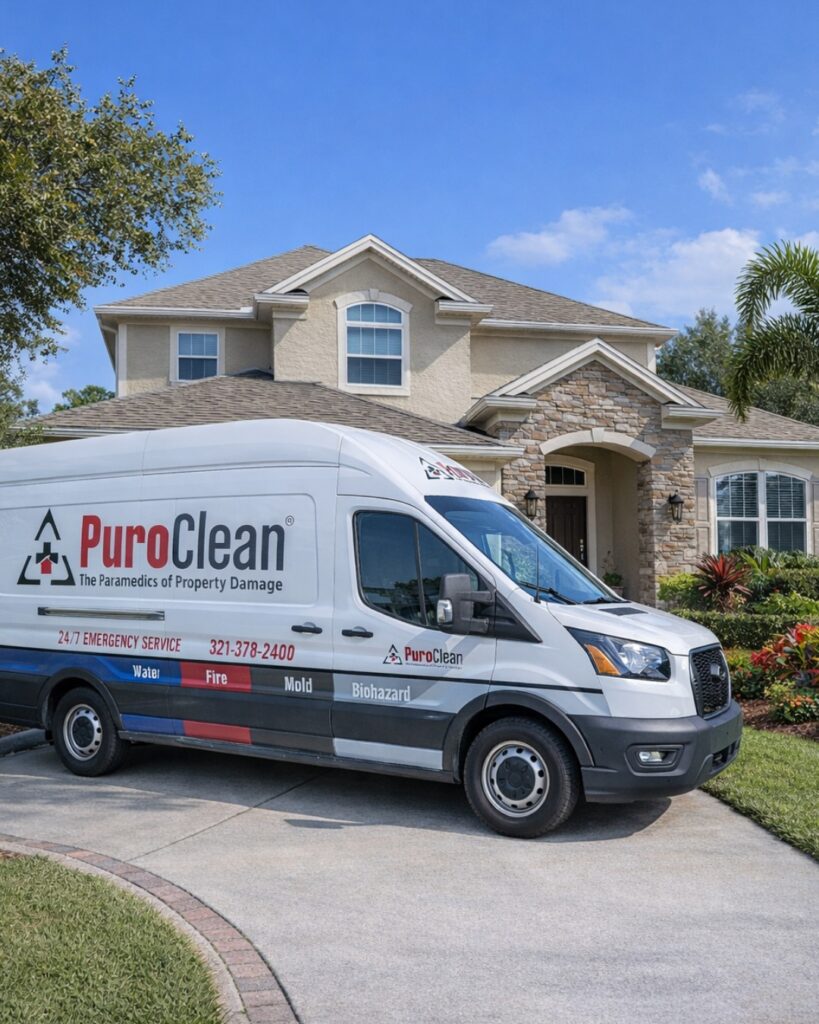
Don’t let hidden mold in your attic or crawlspace compromise your family’s health or ruin your home’s structural value. Whether you need assistance interpreting an independent mold assessment report, require immediate water damage extraction, or want to explore structural remediation and crawlspace options, PuroClean of Melbourne is here to help 24 hours a day, 7 days a week.
Our certified restoration team provides comprehensive property damage solutions across Brevard County, including:
- Emergency Water Extraction & Structural Drying
- IICRC-Compliant Mold & Odor Removal
- Fire & Smoke Damage Restoration
- Biohazard & Trauma Scene Cleaning
- Carpet Cleaning & Restorative Care
- Turnkey Structural Reconstruction Services
EXPERT MOLD REMEDIATION & PROPERTY RESTORATION IN MELBOURNE, FL
Protect your indoor air quality and preserve your property’s structural value. Contact the certified, compassionate experts at PuroClean of Melbourne today for immediate assistance.
- 24/7 Direct Emergency Line: (321) 378-2400
- Facility Location: 739 North Dr, Melbourne, FL 32934 (Coastal Technology Center)
- Service Area: Serving Melbourne, Viera, Palm Bay, Indialantic, Melbourne Beach, West Melbourne, Suntree, Eau Gallie, Melbourne Village, and all surrounding Brevard County communities.