


It is a question almost every homeowner asks when they spot mold for the first time. The patch on the bathroom ceiling. The dark stain spreading across the drywall behind the washing machine. The smell coming from inside a wall after last summer’s flooding. You see it, you recognize it as mold, and immediately the question forms: can I handle this myself, or do I need to call someone?
It is a fair question, and it deserves a straight answer, not a blanket statement designed to sell you a service you may not need.
The honest answer is that it depends. There are situations where a homeowner can safely and effectively address a small mold problem on their own. There are also situations where attempting DIY mold removal is genuinely dangerous, is likely to make the problem worse, and will cost significantly more to correct than simply hiring a professional from the start.
In Melbourne, Florida, the balance tips more heavily toward professional remediation than it does in most other parts of the country. Florida’s year-round heat, persistently high humidity, and the frequency of water damage events in Brevard County create mold conditions that are genuinely different from what a homeowner in a drier climate faces. Understanding those differences is the foundation for making the right decision for your home and your family.
PuroClean of Melbourne is going to walk you through exactly when DIY is a reasonable option, when it is not, what the real risks of getting this wrong look like, and what professional mold remediation provides that no amount of bleach and elbow grease can replicate.
When DIY Mold Removal Is Acceptable
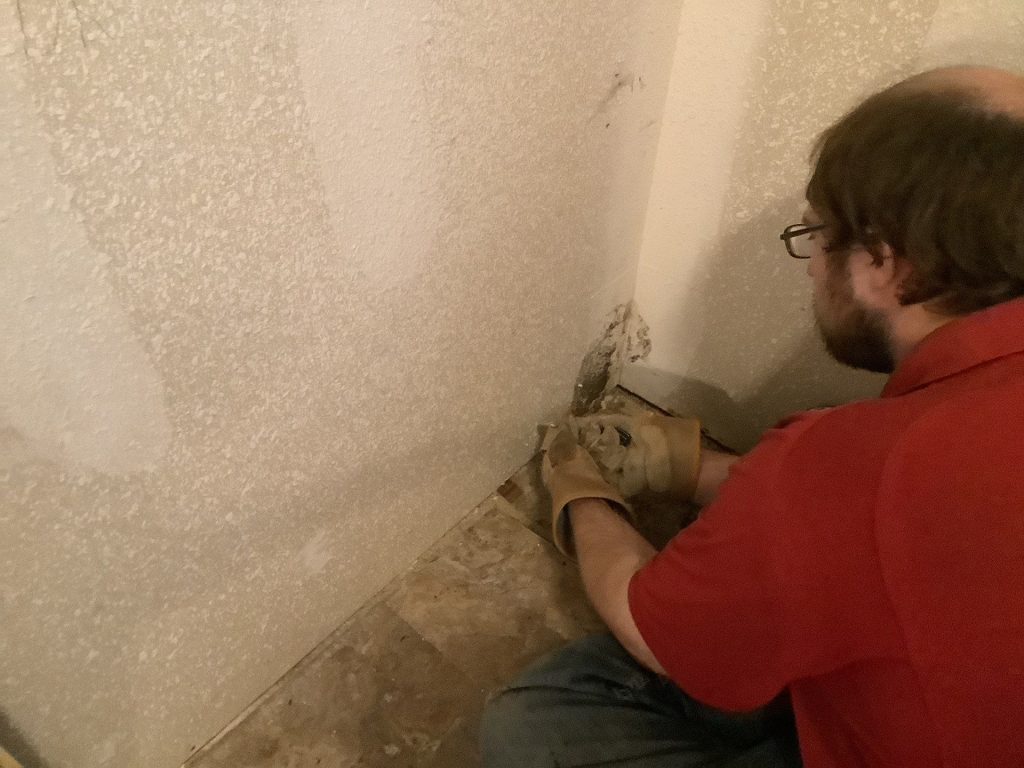
There is a narrow set of circumstances where a homeowner can safely and effectively address mold without professional intervention. These conditions are specific and all of them need to be true simultaneously for DIY to be a reasonable choice.
The affected area is small. The EPA’s guideline for DIY mold removal is that it may be appropriate for affected areas of less than 10 square feet, roughly the size of a standard ceiling tile. This is the outer limit, not a target. If the total visible mold coverage in your home exceeds 10 square feet across all locations, professional remediation is the appropriate response regardless of other factors.
The mold is on a hard, non-porous surface. Mold on tile, glass, metal, or sealed hard surfaces can sometimes be cleaned effectively with appropriate products. On these surfaces, mold sits on top of the material rather than growing into it, which means surface cleaning can actually reach the colony. Mold on drywall, wood, grout, carpet, insulation, or any other porous material is a fundamentally different problem that surface cleaning cannot resolve.
The moisture source has been fully identified and permanently fixed. Cleaning mold without eliminating the moisture that caused it is a temporary cosmetic fix. The colony will return, usually within weeks in Florida’s climate. Before any mold removal attempt, the source of moisture that produced the mold must be found, addressed, and confirmed as resolved. If you do not know with certainty what caused the mold and that the cause has been eliminated, cleaning the visible growth is a waste of time and effort.
No one in the home is in a high-risk health category. DIY mold removal disturbs colonies and releases spores into the air. If anyone in your household is an infant or young child, elderly, pregnant, immunocompromised, or living with asthma, chronic respiratory conditions, or known mold allergies, the temporary spike in airborne spore counts during a DIY removal attempt poses a real health risk to those individuals.
You are not dealing with black mold or unknown species. Without professional testing, you cannot identify which mold species you are looking at. Certain species, most notably Stachybotrys chartarum, produce mycotoxins that require specialized handling protocols beyond what DIY approaches provide. If the mold you are seeing is black, slimy, or appears in large areas following water damage, do not attempt DIY removal.
When You Should Absolutely Not Attempt DIY Mold Removal
The following situations represent circumstances where DIY mold removal is not just inadvisable but genuinely risky, either to your health, your home’s structural integrity, your insurance coverage, or all three.
The mold appeared after a water damage event. Mold that follows a flood, a burst pipe, a roof leak, or any other water intrusion event is not surface mold. It has grown from the inside of saturated materials outward. What you see on the surface represents a fraction of the actual colony, which extends into the wall cavity, the wood framing, the insulation, and potentially the subfloor below. Cleaning the surface accomplishes nothing meaningful for mold that originated inside your structural materials.
The mold is inside walls, ceilings, or under flooring. If you can smell mold but cannot see it, or if you can see discoloration on a surface but suspect the growth extends behind it, the mold is almost certainly inside a structural assembly. Addressing hidden mold requires opening up the affected area, which creates a significant spore release event that needs to be managed with professional containment and negative air pressure, not a dust mask from the hardware store.
The affected area exceeds 10 square feet. This is the EPA’s threshold for when professional remediation is recommended, and it is based on the practical limits of what a non-professional can safely manage in terms of spore containment, personal protection, and effective treatment. In Florida’s climate, where mold spreads more rapidly than in drier environments, the threshold for seeking professional help is arguably lower than the national guideline suggests.
Your HVAC system may have been exposed to mold. If mold is present in areas where your air handling system circulates air, or if the system itself has been exposed to moisture and mold growth, running the system distributes spores throughout every room in the home. This scenario requires professional assessment and HVAC cleaning before any mold removal work begins, and it is far beyond the scope of DIY treatment.
You or a family member is experiencing health symptoms. If household members are experiencing respiratory symptoms, unexplained allergic reactions, persistent headaches, or other symptoms that improve when they leave the home and worsen when they return, the mold burden in the home is already affecting air quality at a level that requires professional assessment and remediation, not DIY cleaning that will temporarily increase spore counts before reducing them.
You are preparing to sell your home. In Florida’s real estate market, mold is a disclosure issue. Attempting and failing to fully remediate mold before a home sale, or having incomplete DIY treatment that leaves hidden mold in place, creates significant legal liability. Professional remediation with documented clearance testing provides the paper trail that protects both the seller and the transaction.
Why Florida’s Climate Makes DIY Mold Removal Riskier Than in Other States
The guidance that a homeowner can safely address mold on less than 10 square feet of non-porous surface was developed as a national standard. It is based on average conditions. In Melbourne and throughout Brevard County, the conditions that drive mold growth are consistently more extreme than the national average, and that changes the risk calculus for DIY treatment in meaningful ways.
Mold comes back faster after incomplete treatment. If a DIY removal attempt leaves any portion of the colony alive, or if the underlying moisture source is not fully eliminated, Melbourne’s warm, humid conditions will regenerate a visible mold problem faster than in a cooler or drier climate. In some cases, a DIY treatment that appears successful for a few weeks is followed by a more extensive mold problem than the original one, because disturbing the colony without fully eliminating it can spread growth to previously unaffected areas.
Hidden moisture is a constant reality in Florida homes. One of the reasons professional moisture mapping is so important in Florida is that homes here frequently carry elevated moisture levels inside structural assemblies that have nothing to do with a specific water damage event. High ambient outdoor humidity, condensation from air conditioning systems, and the specific construction characteristics of Brevard County homes create conditions where moisture persists inside walls and under floors at levels that sustain mold growth even without a visible leak or flood.
Year-round mold season means no natural recovery period. In northern states, cold winters create a natural break in mold growth conditions that gives homes and homeowners a recovery window. In Melbourne, that break never comes. A partial DIY treatment followed by a return to normal Florida conditions means the mold problem resumes from wherever the treatment left off, with no seasonal pause to slow it down.
The Bleach Myth: Why the Most Common DIY Approach Does Not Work on Porous Surfaces
The single most common DIY mold treatment is bleach, and it is also the most widely misunderstood. Every week, homeowners in Melbourne spray bleach on mold, watch the surface lighten, and conclude that the problem has been solved. It has not.
Bleach is a surface disinfectant. On hard, non-porous surfaces like ceramic tile, it can effectively kill mold colonies that exist entirely on the surface. But on porous materials, which describes the majority of surfaces in a home where mold grows after water damage, bleach has a fundamental limitation: the water component of bleach solution is absorbed into the porous material, the chlorine component remains on the surface, and the mold roots, called hyphae, that extend into the material are left alive.
The result is a surface that looks clean and white for a period of days or weeks, while the living mold structure inside the material continues to grow. When the colony reaches the surface again, the visible mold returns. In many cases it returns more extensively than before because the bleach treatment created the illusion of resolution and the homeowner stopped looking for the real cause.
Professional mold remediation uses EPA-registered antimicrobial compounds specifically formulated to penetrate porous building materials and address mold at the root structure level. These products are not available in hardware stores and require professional application equipment to be used effectively. They are categorically different from household bleach, both in how they work and in the results they produce.
The Hidden Cost of Getting Mold Removal Wrong
The appeal of DIY mold removal is saving money. It is worth understanding exactly what happens to that calculation when the DIY attempt fails, because the cost of a failed DIY treatment is almost always significantly higher than the cost of professional remediation from the start.
Expanded mold colonization. Disturbing a mold colony without proper containment releases spores into the air that settle on previously unaffected surfaces throughout the home. In Florida’s humidity, those spores have excellent conditions to establish new colonies. A mold problem that began in a single bathroom can, after an improperly performed DIY treatment, become a mold problem that extends into adjacent rooms, the attic space above, or the wall cavities throughout an entire floor of the home.
Structural damage that gets worse over time. Mold that is not fully remediated continues to consume the organic material in your structural components. Drywall weakens and crumbles. Wood framing develops rot. What begins as a mold remediation project can become a structural repair project if the underlying problem is allowed to progress. The delay between a failed DIY attempt and the eventual call to a professional often means that materials which could have been saved with timely treatment require full replacement by the time professional help arrives.
Insurance complications. Homeowner’s insurance policies that cover mold remediation as a consequence of a covered water damage event typically require that the homeowner take reasonable steps to mitigate damage promptly. Attempting DIY treatment, failing to resolve the problem, and then filing an insurance claim for a mold problem that has grown significantly during the delay creates a complicated claims situation. Insurers may question why professional help was not sought sooner and whether the expanded damage resulted from the water event or from the delay in proper treatment.
Health costs. Prolonged mold exposure in a Florida home carries real health costs for the people living in it, particularly for children, elderly residents, and anyone with respiratory conditions. These costs are difficult to quantify in advance but can include increased medical visits, worsening of chronic conditions, and in severe cases the need to temporarily relocate while a more extensive remediation is performed.
What Professional Mold Remediation Actually Involves
Part of what makes professional remediation look expensive compared to a bottle of bleach is that the comparison is not between equivalent approaches. A professional mold remediation is a comprehensive process that addresses the problem at every level, from the air quality in the affected space to the structural materials the mold has colonized to the moisture source that enabled the growth. Here is what that process actually looks like.
Inspection and moisture mapping. Before any treatment begins, a professional remediation starts with a complete assessment of both the visible mold and the hidden moisture conditions that produced it. Thermal imaging cameras and calibrated moisture meters map every wet and damp area in the home, including inside wall cavities, under flooring, and above ceilings. This assessment defines the actual scope of the problem rather than just the visible portion of it.
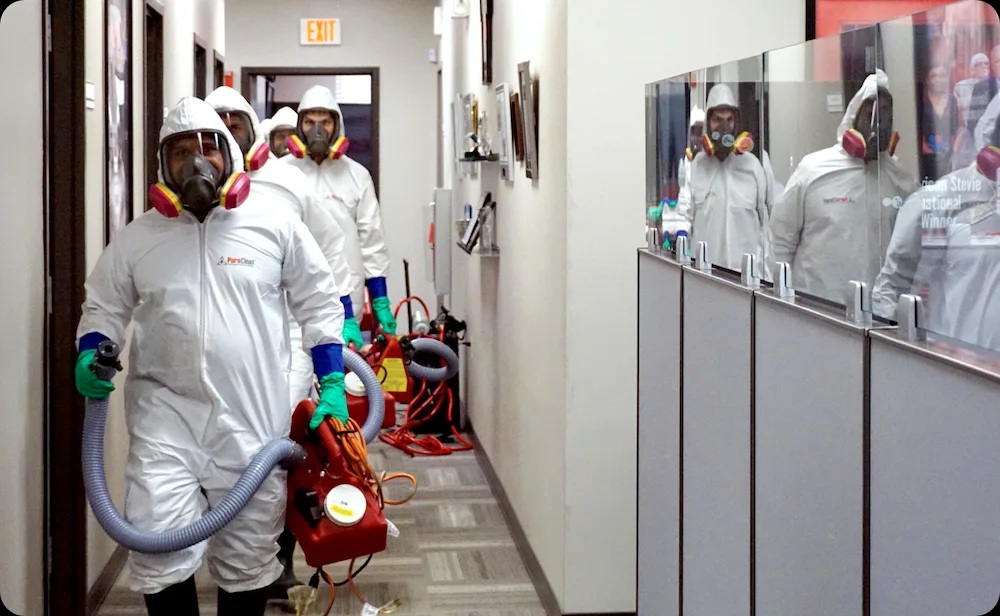
Containment. The affected area is physically sealed from the rest of the home using plastic sheeting and negative air pressure. This containment prevents spores disturbed during remediation from spreading to unaffected areas. HEPA air scrubbers run continuously throughout the work to capture airborne spores and maintain air quality during the process.
Removal of non-salvageable materials. Porous materials that have been colonized beyond the point of effective treatment, typically including drywall, insulation, carpet, and heavily affected wood, are carefully removed and disposed of following proper containment protocols. This step exposes the full extent of the colony and eliminates the primary reservoir of mold growth.
Treatment of structural surfaces. Remaining structural materials in the affected area are cleaned with HEPA vacuuming and treated with EPA-registered antimicrobial compounds that penetrate porous surfaces and address mold at the root structure level. This treatment is applied by trained technicians using professional equipment and is not replicable with household cleaning products.
Moisture source resolution. If the moisture source has not already been identified and resolved, professional remediators work with the homeowner to ensure it is addressed before reconstruction begins. Rebuilding over an unresolved moisture problem is one of the most common causes of mold recurrence after professional remediation.
Post-remediation verification. A professional remediation job does not end when the visible mold is gone. Post-remediation inspection and, in many cases, air quality testing confirm that mold levels have returned to acceptable baseline levels and that the structural materials in the remediated area are clean and dry. This verification step is what provides the documented proof of successful remediation that insurance companies, future buyers, and the homeowner’s own peace of mind require.
DIY vs. Professional: A Realistic Cost Comparison
The upfront cost of professional mold remediation is higher than DIY in every case. What the cost comparison looks like across the full lifecycle of the problem depends heavily on whether the DIY attempt works or not.
For the narrow set of situations where DIY is appropriate, meaning a small area of mold on a non-porous surface with a confirmed and resolved moisture source and no vulnerable household members, the DIY approach is genuinely more cost-effective. The materials cost is low and the outcome, when the conditions are right, can be durable.
For the majority of mold situations in Melbourne homes, particularly those involving porous building materials, post-water-damage mold, or any mold growth that extends beyond a very small visible area, the real cost comparison looks different. A professional remediation performed promptly and completely eliminates the problem in one project. A failed DIY attempt, followed by expanded mold growth, followed eventually by a professional remediation of a now-larger problem, costs significantly more than the professional remediation would have cost at the outset.
The honest advice is this: if you are genuinely within the narrow window where DIY is appropriate, do it carefully and correctly. If you have any doubt about whether your situation falls within that window, the financially and medically safer choice is to call a professional.
If You Are Within the DIY Window: How to Do It Safely
If your situation genuinely meets every condition for safe DIY mold removal, here is how to do it as safely and effectively as possible.
- Wear the right personal protection. At minimum, wear an N-95 respirator, not a paper dust mask. Add goggles that seal against your face and disposable gloves. Consider a disposable coverall if the affected area is larger than a few square feet.
- Isolate the work area. Close doors to adjacent rooms and cover HVAC vents in the work area with plastic sheeting to prevent spores from entering the duct system. Turn off the HVAC system while you work.
- Use the right products on the right surfaces. On non-porous surfaces, a diluted bleach solution or a commercial mold-killing product can be effective. Do not use bleach on porous surfaces. For grout and caulking, specific antifungal grout cleaners perform better than bleach.
- Do not sand, scrub dry, or use a leaf blower. Anything that creates airborne dust or debris while mold is present is creating a spore release event. Work carefully, use damp methods to minimize aerosolization, and bag all contaminated materials immediately.
- Verify the moisture problem is resolved before finishing. An inexpensive digital hygrometer can confirm that the humidity level in the affected area has returned to below 60 percent. Do not consider the job complete until both the mold is gone and the moisture condition that caused it is confirmed as resolved.
When in Doubt, Call PuroClean of Melbourne
If you have read this guide and are still not certain whether your mold situation is within the DIY window, that uncertainty itself is a good reason to call a professional. A brief conversation with our team can help you understand what you are dealing with and whether professional assessment and treatment is warranted for your specific situation.
PuroClean of Melbourne provides professional mold inspection and remediation throughout Melbourne, Palm Bay, Viera, Rockledge, Cocoa Beach, Satellite Beach, and all of Brevard County. Our IICRC-certified technicians have the training, the equipment, and the local experience to assess your situation honestly and give you a clear picture of what it will take to resolve it completely.
We are available 24 hours a day, 7 days a week. If you have an active water damage situation that may lead to mold, or if you have already spotted mold and want a professional assessment, call us now. Getting the right answer today is always less expensive than fixing a bigger problem later.
Call PuroClean of Melbourne 24/7 at (321) 378-2400
Email: [email protected]
Address: 739 North Dr, Melbourne, FL 32934
Website: puroclean.com/melbourne-fl-puroclean-melbourne
Serving Melbourne, Palm Bay, Viera, Rockledge, Cocoa Beach, Satellite Beach, Indialantic, and all of Brevard County, Florida. Available 24 hours a day, 7 days a week.
PuroClean of Melbourne provides fire, water, and mold remediation services including mold inspection, mold removal, structural drying, water extraction, carpet restoration, and biohazard cleaning throughout Brevard County, Florida.
Connect With Us on Social Media!
Instagram | Facebook | Direction | Check Reviews | Yelp | Linkedin | Youtube | Twitter | BBB