


Few words in property management and homeownership provoke as much immediate anxiety as ‘toxic mold.’ In coastal central Florida, where sub-tropical heat, elevated relative humidity, and frequent rain events create ideal environmental conditions for organic growth, mold is a constant concern. From Melbourne Beach to Viera, property owners regularly deal with moisture intrusion, storm runoff, and air conditioning condensation issues that can trigger fungal growth inside residential and commercial structures.
Unfortunately, the subject of toxic mold is also surrounded by widespread misinformation, internet hysteria, and outdated DIY myths. Sensationalized news reports often lead property owners to panic unnecessarily, while incorrect cleaning methods frequently worsen contamination by dispersing invisible spores throughout living spaces. To protect both your physical health and your property value, it is vital to separate sensational claims from established environmental science and professional restoration standards.
In this comprehensive guide, industry experts debunk the most persistent toxic mold myths, explain the scientific realities of indoor fungal amplification, and outline the proper, certified steps required to safely remediate mold damage in Melbourne, Florida.
Myth #1: All Dark or Black Mold Is ‘Toxic Black Mold’
The Myth: Many property owners assume that any dark gray, dark green, or black spot discovered on drywall, window sills, or bathroom grout is the infamous ‘toxic black mold’ known scientifically as Stachybotrys chartarum.
The Fact: Color is never a reliable indicator of mold species, toxicity, or potential health risk. There are over 100,000 identified species of fungi in the world, and hundreds of common indoor species appear black or dark green under ambient lighting. Common non-toxic molds such as Cladosporium, Alternaria, and Aspergillus frequently grow in dark shades when colonizing damp surfaces.
Read Also: Black Mold vs. Green Mold: Ultimate Guide to Key Differences and Risks
While Stachybotrys chartarum does produce chemical compounds known as mycotoxins under specific environmental conditions, it is actually a slow-growing species that requires continuous, high-level water saturation on cellulose-rich materials such as gypsum drywall backing, wallpaper, or structural wood framing. It is far less common than lighter-colored or fast-growing molds like Penicillium.
Furthermore, environmental scientists emphasize that all mold species, regardless of color or toxicity classification, present potential respiratory risks to sensitive individuals when allowed to amplify indoors. High concentrations of non-toxic mold spores can trigger severe allergic reactions, asthma attacks, and sinus irritation. Therefore, identifying whether a mold is strictly ‘toxic’ matters far less than executing proper containment, physical removal, and structural moisture control.
Myth #2: Household Bleach Completely Kills Mold on Porous Building Materials
The Myth: Pouring household chlorine bleach over moldy drywall, baseboards, or exposed wood framing eliminates the colony permanently.
The Fact: Using household bleach on porous or semi-porous building materials is one of the most common and damaging DIY mistakes property owners make. While sodium hypochlorite (the active ingredient in bleach) can disinfect non-porous surfaces like tile, glass, or porcelain, it fails completely on porous surfaces like drywall, plywood, plaster, and carpet.
The chemical composition of household bleach consists primarily of water, with only a small percentage of active chlorine. Due to its high surface tension, the chlorine molecules remain on the exterior surface of porous drywall or wood, bleaching the surface pigment so the mold appears to disappear visually. Meanwhile, the water content in the bleach penetrates deep into the porous substrate, providing fresh moisture directly to the microscopic root structures (hyphae) buried beneath the surface.
Within days or weeks, the hidden roots thrive on the newly added moisture and return with increased vigor, often spreading deeper into wall cavities. Professional restoration technicians never rely on bleach. Instead, industry standards require physical removal of non-restorable porous materials, meticulous HEPA vacuuming, and the application of specialized EPA-registered botanical or synthetic antimicrobial fungicides designed to penetrate deep structural fibers.
Myth #3: Fogging or Spraying Air Fresheners Fixes a Mold Problem
The Myth: You can eliminate a mold infestation by simply spraying air fresheners, burning disinfectant bombs, or fogging a room with sanitizers without physically removing the growth.
The Fact: Chemical sprays, ozone generators, and antimicrobial fogs cannot substitute for physical remediation. According to the Institute of Inspection, Cleaning and Restoration Certification (IICRC) S520 Standard for Professional Mold Remediation, dead mold spores and cellular fragments remain allergenic and potentially toxic.
Simply ‘killing’ mold with chemical vapors leaves millions of microscopic, dried-out spore shells sitting on building surfaces. When air currents pass over these dead colonies, the microscopic fragments become airborne and can easily be inhaled, triggering identical allergic or toxic reactions as living spores. Moreover, fogging a room does nothing to address the water leak, condensation issue, or structural moisture accumulation that allowed the colony to grow in the first place.
Effective mold remediation is a mechanical cleaning process. It requires physical containment under negative pressure, heavy-duty HEPA air scrubbing to capture airborne particulates, safe removal of contaminated porous materials, and detailed mechanical abrasive cleaning of affected structural framing.
Myth #4: If You Cannot See Mold, Your Indoor Air Is Completely Safe
The Myth: If your walls look clean and there are no visible dark spots on your baseboards or ceilings, your property is free of mold contamination.
The Fact: Mold thrives in dark, undisturbed, and humid spaces. In Brevard County homes and businesses, the vast majority of severe structural mold infestations occur completely out of sight behind drywall, inside HVAC ductwork, beneath carpet padding, behind tile backing, and within unconditioned crawlspaces or attics.
A property can harbor millions of active fungal colonies behind a wall cavity long before any visible discoloration appears on the exterior paint. Warning signs of hidden amplification include persistent, earthy or musty odors (caused by microbial volatile organic compounds or mVOCs released by growing mold), unexplained spikes in indoor relative humidity, water stains, or unexplained allergic symptoms that improve when leaving the building.
To uncover hidden mold, professional assessors and restoration teams utilize advanced non-invasive diagnostic tools:
- • Thermal Imaging Cameras: Identify hidden moisture behind walls and ceilings by detecting subtle temperature variations created by evaporative cooling.
- • Deep-Penetrating Moisture Meters: Measure exact saturation levels deep within wood framing, subfloors, and concrete slabs without cutting open walls.
- • Volumetric Air Sampling Equipment: Capture calibrated indoor air samples to detect elevated spore counts hidden inside air handling systems and wall voids.
Myth #5: Professional Remediation Can Guarantee a 100% ‘Mold-Free’ Property
The Myth: A top-tier restoration company can sterilize your home so that zero mold spores exist inside your indoor environment.
The Fact: A 100% mold-free environment is a biological impossibility in any standard residential or commercial building. Fungal spores are natural, microscopic organic particles present in all outdoor air across Florida and the entire planet. Every time an exterior door or window opens, spores naturally enter your property.
The objective of professional remediation is not complete eradication of every single spore. Rather, the objective is to return the indoor environment to a ‘Normal Fungal Ecology’ (often referred to as Category 1 conditions under IICRC guidelines). This means that indoor spore counts and species distributions match or are lower than the outdoor baseline samples collected on the same day.
When indoor spore levels are equal to or cleaner than outdoor air, and when structural building materials are thoroughly dried below threshold moisture limits, mold cannot amplify or pose a health threat. Any restoration company promising a 100% permanently mold-free guarantee is making a scientifically false claim.
Myth #6: Small Water Leaks Can Be Left to Dry Naturally Without Risking Mold
The Myth: A minor pipe leak, refrigerator line drip, or small window leak in Melbourne FL is not urgent and will dry out on its own without causing mold growth.
The Fact: In Florida’s warm climate, mold spores require only three elements to germinate: oxygen, organic food sources (such as drywall paper or wood), and moisture. Under ambient indoor temperatures, dormant mold spores can germinate and begin colonizing wet building materials in as little as 24 to 48 hours following water exposure.
Allowing wet drywall, carpet, or cabinet bases to air-dry naturally almost guarantees fungal contamination inside wall cavities. Water trapped between baseboards and drywall creates a humid micro-climate with near 100% relative humidity, fostering rapid spore reproduction.
Immediate emergency water extraction and structured structural drying using industrial LGR dehumidifiers and high-velocity air movers are essential. Stopping water damage within the first 24 to 48 hours is the single most effective way to prevent a minor leak from escalating into a costly mold remediation project.
Myth #7: Mold Remediators and Environmental Testers Should Be the Same Company
The Myth: It is best and most convenient to hire a single company to inspect, sample, remediate, and perform final clearance testing on your mold project.
The Fact: Combining testing and remediation within a single company creates a clear conflict of interest and violates Florida state licensing laws. Under Florida Statute Section 468.8419, a licensed mold assessor cannot perform mold remediation on the same property within a 12-month period.
This legal separation protects consumers. An independent, licensed environmental assessor performs impartial initial testing and drafts an objective remediation protocol outlining exactly what work needs to be done. Once the restoration contractor (such as PuroClean of Melbourne) completes the structural cleanup, the independent assessor returns to perform final clearance testing. This double-check verifies that the indoor air quality has been fully restored according to strict scientific standards.
The Scientific Mold Remediation Process at PuroClean of Melbourne
When property owners in Melbourne, FL, face mold contamination or indoor air quality concerns, PuroClean of Melbourne delivers industry-leading restoration solutions grounded in proven environmental science. Located at 739 North Dr in the Coastal Technology Center, our certified technicians follow strict IICRC S520 guidelines to safely restore your home or commercial building.
Our comprehensive property damage restoration process includes:
- 1. Comprehensive Site Assessment & Protocol Review: We work alongside independent licensed assessors to review laboratory test results, locate structural moisture traps, and formulate a targeted action plan.
- 2. Containment & Engineering Controls: We build critical plastic containment barriers reinforced with negative air pressure systems to prevent mold spores from migrating into unaffected living areas during cleanup.
- 3. HEPA Air Filtration: Industrial HEPA air scrubbers continuously filter the air inside the containment zone, removing 99.97% of airborne biological particulates down to 0.3 microns.
- 4. Safe Structural Removal & HEPA Vacuuming: Unsalvageable porous materials like contaminated drywall, insulation, and tack strips are carefully double-bagged and removed. Remaining hard surfaces and structural framing are meticulously vacuumed with HEPA equipment.
- 5. Mechanical Cleaning & Antimicrobial Treatment: Technicians perform mechanical abrasive cleaning on exposed framing and apply EPA-registered antimicrobial solutions to eliminate residual surface contaminants.
- 6. Structural Drying & Dehumidification: We deploy commercial LGR dehumidifiers and air movers to pull deep moisture out of structural wood framing and concrete slabs, ensuring conditions cannot support future growth.
- 7. Post-Remediation Verification & Reconstruction: After independent clearance testing confirms the air is clean, our full-service Reconstruction team rebuilds drywall, flooring, and finishes to return your property to pre-loss condition.
Whether you require immediate Emergency Water Extraction, specialized Drying & Dehumidification, complete Mold & Odor Removal, or full structural Reconstruction, PuroClean of Melbourne is available 24 hours a day, 7 days a week.
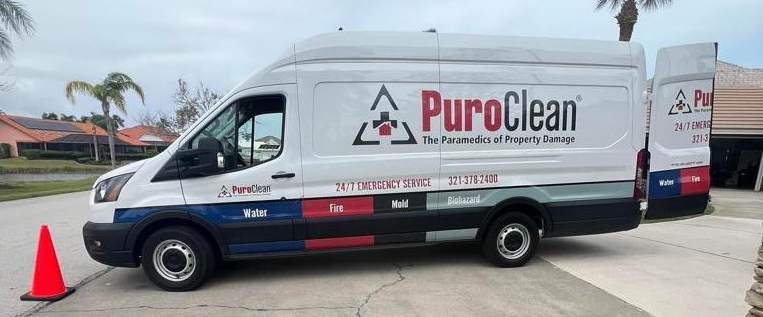
EXPERT MOLD REMOVAL & PROPERTY RESTORATION IN MELBOURNE, FL
Don’t let toxic mold myths compromise your home’s air quality.
Call PuroClean of Melbourne today at (321) 378-2400 for 24/7 assistance!