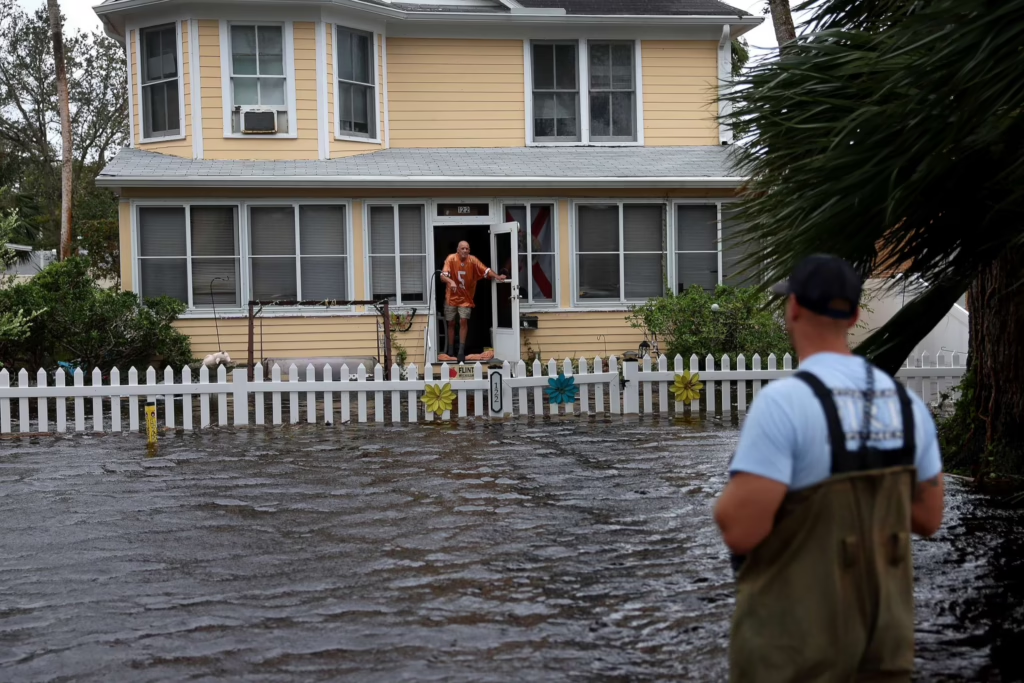
Thousands of seasonal residents (“snowbirds”) and real estate investors own properties across Melbourne, Viera, Palm Bay, and barrier island communities like Indialantic and Melbourne Beach. Each spring, seasonal residents close up their winter residences and return to northern states, leaving their Florida homes vacant throughout the hottest, wettest, and most storm-prone months of the year.
The Atlantic hurricane season runs officially from June 1 through November 30, overlapping almost perfectly with the period when seasonal homes remain unoccupied.
While many absentee property owners take basic precautions before departing such as setting the thermostat, locking deadbolts, and turning off main water supply valves leaving a coastal property completely unmonitored for four to six months creates extreme vulnerability.
In Central Florida, severe weather does not require a named Category 5 hurricane to cause devastating damage. Tropical depressions, afternoon thunderstorms with 60-mph wind gusts, severe lightning strikes, and flash flooding occur regularly throughout the summer. When moisture or physical destruction compromises an unoccupied home, the absence of immediate intervention allows secondary damage to multiply exponentially day after day.
Understanding the compounding risks of leaving a Florida property unchecked during storm season is essential for protecting your real estate investment, preserving indoor air quality, and maintaining insurance coverage.
2. Top 7 Compounding Risks of an Unchecked Vacation Home
[ UNCHECKED VACATION HOME IN STORM SEASON ]
│
┌───────────────────┬───────────────┴───────────────┬───────────────────┐
▼ ▼ ▼ ▼
[ 1. Unnoticed Leaks ] [ 2. Explosive Mold ] [ 3. AC & Grid Fail ] [ 4. Claim Denials ]
Minor roof/window 24-48 hr fungal Power loss spikes Policy vacancy
water entry amplification indoor humidity exclusion clauses
│ │ │ │
└───────────────────┴───────────────┬───────────────┴───────────────────┘
▼
[ 5. Pest Infestations ] ──> [ 6. Security Breaches ] ──> [ 7. Structural Collapse ]
1. Unnoticed Water Intrusion Escalates Into Catastrophic Rot
During a summer thunderstorm or tropical squall, wind-driven rain can lift a single roof shingle, breach a window head flashing seal, or force water through soffit vents. If a home is occupied, the owner notices a ceiling stain or damp windowsill immediately, places a bucket beneath the drip, and calls for emergency extraction.
In an unchecked vacation home, that minor leak continues dripping for weeks or months. Rainwater saturates attic insulation, breaks down ceiling drywall, runs down internal wall framing, and pools on subfloors. Over months of continuous moisture saturation, structural yellow pine framing lumber loses its load-bearing strength, leading to severe wood decay and ceiling collapses.
2. Rapid, Explosive Mold Amplification Across the Entire Building
In Brevard County’s subtropical climate, dormant mold spores require only three conditions to germinate: oxygen, an organic food source (such as paper-faced drywall, carpet backing, or wood trim), and moisture.
When rainwater enters an unconditioned, vacant home, mold spores germinate into active, multiplying colonies within 24 to 48 hours.
[ Unattended Water Intrusion ] + [ High Indoor Temperature (85°F+) ]
│
▼
[ Mold Germination Within 24 – 48 Hours ]
│
▼
[ Spore Amplification Across Drywall, Furniture & HVAC Ducts ]
│
▼
[ Total Interior Fungal Contamination Over 30+ Days ]
Without an owner or property manager present to identify the issue, a localized roof leak can turn into an environment where dark mold growth covers every wall, ceiling, furniture piece, and HVAC duct line in the building within 30 days.
3. Air Conditioning Failure and Humidity Spikes
Air conditioning in Florida is not merely for human comfort; it is a critical building preservation system. Your central AC unit actively extracts gallons of water vapor from indoor air every day, maintaining relative humidity below 50%.
During storm season, several events can disable an unmonitored AC system:
- Power Grid Outages: Severe lightning or windstorms trip main breakers or knock out local power grids for days.
- Clogged Condensate Lines: Algae and biological sludge clog the PVC drain line, causing the float switch to trip and shut down the system.
- Compressor or Capacitor Burnout: Power surges from nearby lightning strikes destroy delicate AC circuit boards or capacitors.
Once the AC stops running, indoor temperatures soar above 90°F and relative humidity jumps past 85%. In this stifling environment, ambient indoor air contains enough suspended moisture to trigger widespread mold growth across clothing, leather, cabinets, and drywall without a direct liquid plumbing leak.
4. Insurance Claim Denials Due to Vacancy and Neglect Clauses
Many seasonal homeowners mistakenly assume that their standard Florida property insurance policy will automatically cover any storm damage that occurs while they are away. However, insurance contracts contain strict homeowner responsibilities regarding mitigation and property maintenance.
- The 14-Day / 30-Day Inspection Requirement: Many Florida property insurance policies contain specific endorsements requiring the policyholder to arrange for regular physical inspections (typically every 7 to 14 days) while the property is unoccupied during storm season.
- Failure to Mitigate: Insurance contracts legally obligate the insured to take immediate action to stop ongoing damage once an event occurs. If an adjuster determines that a minor storm leak occurred in July but went unaddressed until the owner returned in October, the insurer may deny coverage for all secondary damage (such as mold and structural rot), citing failure to mitigate and neglect.
+———————————————————————————–+
| INSURANCE COVERAGE RISK COMPARISON |
+———————————————————————————–+
| PROPERTY MONITORING STATUS | CLAIMS PROCESSING IMPACT |
+—————————-+—————-──────────────────────────────────────+
| Regularly Checked | Immediate loss documentation; carrier approves |
| (Weekly / Bi-Weekly) | mitigation and structural drying without dispute. |
+—————————-+—————-──────────────────────────────────────+
| Unchecked for Months | High probability of claim denial for secondary mold |
| (Unattended Loss) | and rot based on “failure to mitigate” clauses. |
+———————————————————————————–+
5. Severe Pest and Rodent Infestations
Damp, unmonitored, dark interiors attract wood-destroying and moisture-loving pests.
- Subterranean Termites and Carpenter Ants: These wood-destroying insects are heavily drawn to soft, water-damaged structural framing that has been softened by wood-decay fungi.
- Cockroaches, Silverfish, and Rodents: Water-damaged drywall paper facing, glue backing, and mold spores provide a continuous food supply. Rats and mice entering through storm-damaged soffits or roof vents can chew through electrical wiring, creating severe fire hazards.
6. Unaddressed Security Breaches and Vandalism
If wind-driven rain or flying debris shatters a window, blows open a sliding glass door, or damages a garage door panel during a summer storm, an unchecked home remains completely exposed to the elements and intruders. Vacant properties with broken windows or overgrown lawns become prime targets for burglary, squatting, and vandalism.
7. Compounding Restoration Costs and Total Loss Scenarios
The financial difference between immediate storm damage response and delayed discovery is staggering.
- Immediate Discovery (Day 1-2): A minor roof leak caught immediately requires localized roof patching, 3 to 5 days of professional LGR dehumidification, and minor drywall repair, costing a few thousand dollars (typically fully covered by insurance).
- Delayed Discovery (Month 3-4): The same roof leak left unchecked results in collapsed ceilings, rotted roof trusses, ruined subflooring, total HVAC duct contamination, and widespread toxic mold remediation, costing $50,000 to $100,000+ with a high risk of insurance claim denial.
3. Essential Protective Measures for Absentee Homeowners
If you leave a Florida property vacant during storm season, implementing a proactive risk-mitigation strategy significantly reduces your exposure to catastrophic loss.
[ PROACTIVE ABSENTEE PROTECTION STRATEGY ]
│
┌───────────────────┬─────────────┴─────────────┬───────────────────┐
▼ ▼ ▼ ▼
[ Home Watch Service ] [ Smart Sensors ] [ Water Shut-Off ] [ Pre-Season Check ]
Contract verified Install Wi-Fi leak, Close main valve & Inspect roof, flashings,
local inspector temp & humidity units de-energize heater & HVAC before departure
1. Hire a Certified Local Home Watch Service
Do not rely on informal promises from neighbors who may also travel or fail to conduct thorough indoor checks. Hire a professional, insured Home Watch Service that physically enters your property every 7 to 14 days. A verified inspector checks air handler drain pans, scans ceilings for stains, tests humidity levels, checks window sills, and verifies security after severe weather events.
2. Install Smart Environmental Sensors and Cellular Monitors
Modern smart home technology allows absentee owners to monitor internal conditions in real time from anywhere in the world:
- Wi-Fi / Cellular Temperature & Humidity Sensors: Set automated alerts to notify your smartphone if indoor relative humidity exceeds 60% or if ambient temperature spikes (indicating AC failure).
- Smart Water Leak Detectors: Place wireless moisture sensors beneath water heaters, sinks, and AC drain pans that immediately send alerts and trigger automatic main water shut-off valves upon detecting liquid.
3. Perform Proper Pre-Departure Plumbing Isolation
Before leaving your vacation home for the summer:
- Shut off the main water supply valve to the house (unless your fire sprinkler system requires it to remain open).
- Turn off the circuit breaker for the electric water heater to prevent element burnout if the tank drains.
- Shut off individual supply valves to toilets, washing machines, and ice makers.
4. Schedule Professional Pre-Season Roof and HVAC Maintenance
Before heading north, hire a licensed roofing contractor to inspect flashings, seal pipe boots, and replace loose shingles. Have a licensed HVAC technician service your air conditioner, clear the condensate line with algaecide, and install a functional float safety switch that automatically shuts down the system if the drain pan fills.
4. Demonstrations and Visual Techniques
The video below demonstrates how smart environmental sensors and remote monitoring tools help absentee property owners protect vacant Florida homes during storm season.

5:44
GoveeLife WiFi Water Leak Detector Review | Best Smart Water Sensor for Home Protection?
YouTube · PureReviews
5. What to Do If Unattended Damage Is Discovered: The PuroClean Protocol
When a seasonal resident returns to Melbourne or a Home Watch inspector discovers water damage, active mold, or storm intrusion in an unoccupied property, swift action under strict industry standards is required.
Operating from our central commercial facility at 739 North Dr in the Coastal Technology Center, PuroClean of Melbourne provides complete single-source property restoration across Brevard County.
[ Step 1: Emergency Thermal & Moisture Diagnostics ]
│
▼
[ Step 2: Critical Containment & HEPA Air Scrubbing ]
│
▼
[ Step 3: High-Volume Extraction & Controlled Material Gut ]
│
▼
[ Step 4: Psychrometric Structural Drying (LGR Units) ]
│
▼
[ Step 5: EPA Antimicrobial Wash & Molecular Deodorization ]
│
▼
[ Step 6: Insurance Claim Coordination & Xactimate® Billing ]
│
▼
[ Step 7: Complete Turnkey Structural Reconstruction ]
1. Comprehensive FLIR Thermal Moisture Mapping
Our certified technicians evaluate the entire property using FLIR thermal imaging cameras and electronic moisture meters to map every hidden pocket of moisture behind drywall, above ceilings, and beneath subfloors.
2. Critical Containment and Environmental Controls
If unattended moisture has triggered widespread mold growth, we establish 6-mil plastic containment chambers and deploy HEPA air scrubbers under negative pressure, ensuring spores cannot spread during cleanup.
3. Controlled Demolition and Material Extraction
Rotted framing, saturated insulation, and mold-contaminated drywall are carefully removed, double-bagged in biohazard bags, and safely disposed of. Exposed framing is vacuumed using commercial HEPA equipment.
4. Advanced Psychrometric Structural Drying
We deploy industrial Low-Grain Refrigerant (LGR) dehumidifiers and high-velocity axial air movers to dry framing lumber below 15% wood moisture content, halting wood decay and preventing mold return.
5. Insurance Claim Coordination via Xactimate®
We document the loss thoroughly with pre-mitigation photos, daily psychrometric drying logs, and moisture maps. We write itemized estimates using industry-standard Xactimate® software and coordinate directly with your insurance adjuster to support your claim.
6. Turnkey Structural Reconstruction Services
Unlike mitigation-only companies that leave you with exposed studs and missing flooring, PuroClean of Melbourne holds a full Florida General Contracting license. Our in-house construction division handles the entire rebuild, including framing repair, drywall hanging, flooring installation, trim carpentry, and painting, returning your home to pre-loss condition.
6. Absentee Owner Risk Evaluation Matrix
The following matrix summarizes the primary risks, physical symptoms, and mitigation strategies for leaving a Florida home unchecked during storm season:
| Risk Category | Physical Unattended Symptom | Financial & Structural Consequence | Recommended Mitigation Strategy |
| Unnoticed Water Intrusion | Ceiling water rings, dripping soffits, wet subfloors | Wood framing decay, ceiling collapse, $50k+ structural rebuild | Bi-weekly Home Watch visits & roof/flashing pre-season checks |
| Indoor Mold Amplification | Musty odors, dark wall growth, fuzzy furniture growth | Total interior material destruction, health hazard, claim denial | Smart humidity sensors (>60% RH alerts) & IICRC S520 remediation |
| AC System Failure | Frozen coils, clogged drain pan, tripped breakers | Rapid indoor humidity spike, widespread surface mold | Annual HVAC service, algaecide drain cleaning, pan float switch |
| Insurance Claim Denial | Unaddressed water damage over 14–30+ days | Out-of-pocket costs due to failure to mitigate / neglect clauses | Documented Home Watch logs & immediate emergency restoration |
| Plumbing Supply Ruptures | Slab leaks, burst flex lines, flooded living rooms | Foundation erosion, floor failure, massive water utility bills | Shut off main water valve & de-energize electric water heater |
7. Frequently Asked Questions (FAQ)
1. How often should someone physically inspect my vacant Melbourne home during storm season?
Industry experts and Florida insurance carriers recommend that an unoccupied home be physically inspected indoors and outdoors at least once every 7 to 14 days during hurricane season (June through November). Inspections should also occur immediately following any major tropical storm or severe thunderstorm that passes through Brevard County.
2. Is setting my AC to 78°F enough to prevent mold while I am away for the summer?
Not always. Temperature control is only half of the equation; relative humidity is the critical factor. If outdoor humidity is extremely high, or if your AC unit is oversized for the home’s square footage, the system may cool the house to 78°F quickly without running long enough to pull moisture out of the air. This leaves the home cool but humid (e.g., 78°F at 75% RH), creating ideal conditions for Aspergillus mold growth. Setting your thermostat to 75°F–77°F, utilizing a humidistat set to 55% RH, or installing a dedicated whole-home dehumidifier is far safer.
3. Will my homeowners insurance cover mold damage if I was away for three months when the leak happened?
It depends on your policy wording and whether you can prove reasonable property oversight. Many Florida insurance policies exclude coverage for secondary damage (such as mold and rot) if the loss went unaddressed for more than 14 days due to policyholder neglect or failure to mitigate. Having a documented Home Watch inspection log proving the home was checked regularly significantly strengthens your insurance claim if a sudden storm leak occurs.
4. What should I do with my main water supply before leaving for the summer?
Unless your home relies on an interior fire sprinkler system that requires water pressure, you should always close the main water supply valve to the house before departing for the summer. After closing the valve, open a faucet to relieve line pressure, and turn off the dedicated circuit breaker for your electric water heater to prevent heating element burnout.
5. Why should I choose a restoration company that is a licensed General Contractor?
Mitigation-only cleaning companies can extract standing water and dry your home, but they leave you with missing drywall, exposed studs, and bare subfloors, requiring you to find and hire a separate general contractor while living out of state. A licensed General Contractor like PuroClean of Melbourne manages the entire project from initial emergency drying to complete drywall, flooring, and paint reconstruction under a single contract.
6. Where is PuroClean of Melbourne located, and what is your service area?
Our central commercial facility is located at 739 North Dr in the Coastal Technology Center, Melbourne, FL 32934. We provide 24/7 emergency water restoration, mold remediation, biohazard cleanup, and turnkey reconstruction across all of Brevard County, including Melbourne, Palm Bay, Viera, Suntree, West Melbourne, Indialantic, Melbourne Beach, and surrounding Space Coast communities.
8. Partner with Melbourne’s Trusted Restoration Experts
Whether you are preparing your property for your upcoming summer departure or facing unexpected storm damage in an unoccupied home in Melbourne, Viera, Palm Bay, or the Space Coast, don’t leave your investment to chance.
PuroClean of Melbourne is your trusted single-source solution for complete property recovery. From 24/7 emergency water extraction and psychrometric structural drying to certified mold remediation and turnkey reconstruction, One Call Does It All.
Our comprehensive property damage restoration services include:
- 24/7 Emergency Water Extraction & Structural Drying
- Advanced FLIR Thermal Imaging & Moisture Diagnostics
- IICRC Certified Water, Mold & Odor Remediation
- Fire, Smoke & Soot Damage Restoration
- OSHA & FDOH Compliant Biohazard, Sewage & Trauma Cleanup
- Turnkey Structural Reconstruction & General Contracting
VACATION HOME STORM PROTECTION & RESTORATION IN MELBOURNE, FL

Protect your Florida property from unmonitored storm damage and mold. Contact the certified, compassionate experts at PuroClean of Melbourne today for professional guidance and immediate 24/7 emergency response.
- 24/7 Direct Emergency Line: (321) 378-2400
- Facility Location: 739 North Dr, Melbourne, FL 32934 (Coastal Technology Center)
- Service Area: Serving Melbourne, Viera, Palm Bay, Indialantic, Melbourne Beach, West Melbourne, Suntree, Eau Gallie, Melbourne Village, and all surrounding Brevard County communities.