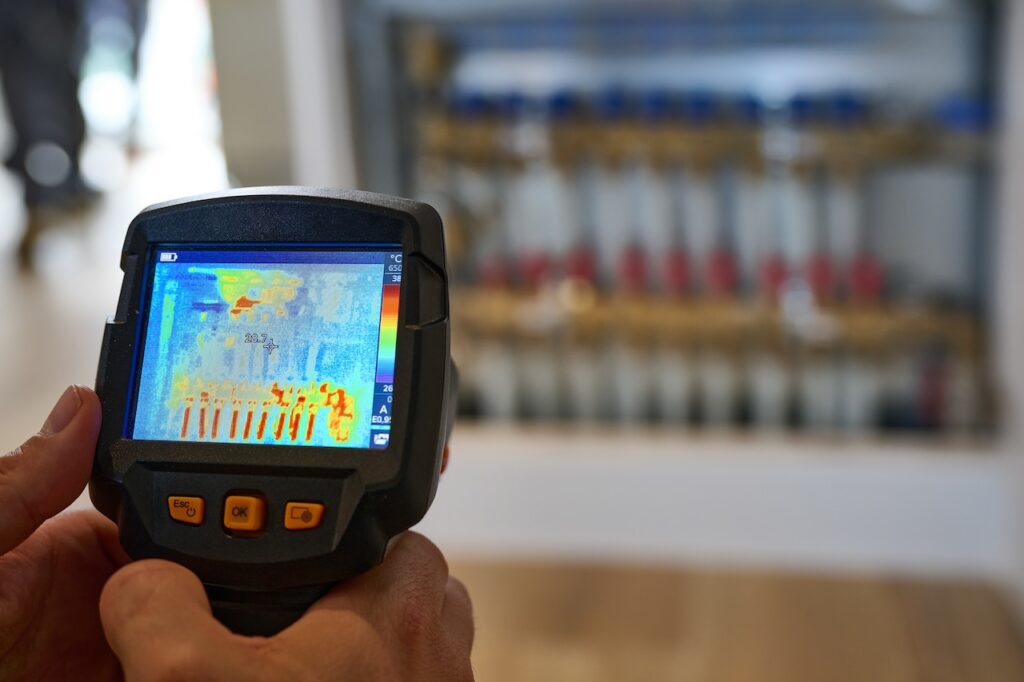
When standing water floods a home in Melbourne, Florida, removing the visible puddles with a truck-mounted extractor is only the first phase of recovery. The far more complex, time-sensitive, and technically demanding phase is structural drying—the scientific process of removing bound moisture trapped deep inside gypsum drywall, yellow pine framing studs, subflooring, and concrete slabs.
Across Brevard County, the cost of structural drying alone typically ranges from $1,000 to $5,000 per affected room (or roughly $3.00 to $6.00 per square foot), depending on the severity of saturation and the duration of equipment runtime. For a typical 500-square-foot clean-water loss, homeowners can expect structural drying equipment and monitoring to cost between $1,500 and $3,000, whereas complex multi-room or specialty hardwood losses can easily reach $8,000 to $15,000+ before any reconstruction begins.
In Melbourne’s subtropical coastal climate, drying a structure is never a simple matter of setting up a few hardware-store box fans and waiting for things to feel dry. Because outdoor relative humidity routinely hovers between 70% and 90%, opening windows introduces wet air that halts evaporation.
Certified restoration professionals rely on psychrometrics—the engineering science of temperature, relative humidity, and vapor pressure—to calculate exact equipment ratios and monitor daily progress. Understanding the seven core physical, environmental, and logistical factors that drive structural drying expenses empowers property owners to understand their estimates, prevent secondary mold damage, and navigate insurance claims effectively.
2. The Seven Core Factors That Drive Structural Drying Costs
[ STRUCTURAL DRYING COST DRIVERS ]
│
┌──────────────────┬───────────┴───────────┬──────────────────┐
▼ ▼ ▼ ▼
[ 1. Loss Class ] [ 2. Water Category ] [ 3. Material Type ] [ 4. Response Speed ]
Class 1 to Class 4 Category 1, 2, or 3 Drywall, slab, 24-48 hr mold
evaporation rates contamination levels or hardwood floors germination window
│ │ │ │
└──────────────────┴───────────┬───────────┴──────────────────┘
▼
[ 5. Equipment Count ] ──> [ 6. Cavity Access ] ──> [ 7. Daily Monitoring ]
1. IICRC Class of Water Loss (Evaporation Speed and Porosity)
Under the Institute of Inspection, Cleaning and Restoration Certification (IICRC) S500 standard, restoration technicians classify water losses into four distinct Classes based on the volume of water and the porosity of the saturated building materials. The Class of loss directly dictates the number of dehumidifiers required and how many days the equipment must run:
- Class 1 (Least Amount of Water): Slow evaporation rate affecting only part of a room with low-porosity materials such as concrete or sealed tile. Requires minimal equipment and typically dries within 2 to 3 days.
- Class 2 (Large Amount of Water): Fast evaporation rate affecting an entire room, soaking carpet and cushion, and wicking up drywall up to 24 inches. Requires balanced airflow and dehumidification for 3 to 4 days.
- Class 3 (Greatest Amount of Water): Fastest evaporation rate, typically caused by overhead leaks (such as an attic AC pan overflow or storm-damaged roof) that saturate ceilings, insulation, walls, and subfloors simultaneously. Requires high-capacity equipment fleets running for 4 to 5+ days.
- Class 4 (Specialty Drying Situations): Deep moisture saturation inside low-porosity assemblies such as solid tongue-and-groove hardwood flooring, plaster, brick, or concrete slabs. Because moisture escapes slowly from dense materials, Class 4 losses require specialized heat-drying systems, floor suction mats, and Low-Grain Refrigerant (LGR) dehumidifiers running for 7 to 14 days, significantly increasing daily rental costs.
2. IICRC Water Contamination Category (Clean vs. Gray vs. Blackwater)
The chemical and biological purity of the intruding water fundamentally alters whether materials can be dried in place or must be demolished and discarded:
+———————————————————————————–+
| HOW WATER CATEGORY IMPACTS DRYING & MITIGATION COSTS |
+———————————————————————————–+
| WATER CATEGORY | DRYING STRATEGY | COST IMPACT |
+—————————-+——————————-+———————–+
| Category 1 (Clean Water) | In-place drying of framing, | Baseline cost; saves |
| | drywall, and subfloors. | thousands in rebuilds.|
+—————————-+——————————-+———————–+
| Category 2 (Gray Water) | Removal of carpet pad & | Moderate increase; |
| | antimicrobial washing. | adds sanitization. |
+—————————-+——————————-+———————–+
| Category 3 (Blackwater) | Full poly containment, HEPA | 2x to 3x higher cost |
| | scrubbers & material gut. | due to biohazard PPE. |
+———————————————————————————–+
Category 1 (Clean Water): Originating from a broken domestic supply line or clean rainwater. Technicians can often dry drywall, wood baseboards, and subflooring in place, saving thousands of dollars in demolition and reconstruction.- Category 2 (Gray Water): Originating from washing machine discharges, dishwasher overflows, or AC condensate backups. Saturated carpet padding must be removed and discarded, and structural framing requires EPA-registered antimicrobial washing prior to drying.
- Category 3 (Blackwater): Grossly contaminated water from sewer main backups, toilet overflows containing solid waste, or rising outdoor floodwaters. Category 3 losses cost two to three times more than clean-water events because technicians must erect 6-mil plastic containment chambers, run negative-air HEPA scrubbers, wear full Level C protective gear, dispose of all saturated drywall and insulation, and sanitize the framing before drying begins.
3. Building Material Composition and Slab-on-Grade Construction
Melbourne and Palm Bay homes feature distinct construction assemblies that respond differently to moisture:
- Concrete Slab-on-Grade Foundations: Most modern Brevard County homes sit on porous concrete slabs. When water pools on tile or luxury vinyl plank (LVP) flooring, moisture seeps through grout lines or plank seams and becomes trapped between the concrete slab and the flooring underlayment. Extracting moisture from concrete requires sustained low vapor pressure and specialized floor-drying mats.
- Solid Hardwood Flooring: Hardwood planks absorb water unevenly, causing edges to swell upward (“cupping”). Saving expensive hardwood floors rather than tearing them out requires precision negative-pressure floor drying mats taped directly over the wood planks, increasing daily specialty equipment rates.
- Paper-Faced Drywall and MDF Baseboards: Standard drywall and Medium-Density Fiberboard (MDF) trim act like sponges. If MDF swells beyond repair or drywall loses structural cohesion, technicians must perform controlled “flood cuts” (removing the bottom 24 inches of drywall) to expose wet wall studs to direct airflow.
4. Response Time and Brevard County’s 48-Hour Mold Window
In Central Florida, ambient temperatures and coastal humidity accelerate biological activity. If standing water or damp drywall sits unaddressed for more than 24 to 48 hours, dormant mold spores germinate into active fungal colonies.
Once mold colonization occurs, standard structural drying is immediately halted. Under Florida Statute Section 468.8419, the project shifts into regulated mold remediation, requiring an independent licensed mold assessor, critical poly containment chambers, continuous HEPA air filtration, and hazardous material disposal—easily turning a $3,500 drying job into a $15,000 to $30,000+ remediation project.
5. Psychrometric Equipment Fleet Ratios and Daily Rental Rates
Professional drying relies on calculated equipment ratios based on room cubic footage and moisture load. Restoration providers bill equipment per unit, per day using standardized regional rates:
- Low-Grain Refrigerant (LGR) Dehumidifiers ($75 to $200 per day each): Industrial LGR units pull massive volumes of moisture vapor out of indoor air, dropping indoor relative humidity below 40% to force trapped water out of wood framing. Large or multi-room losses require multiple units running simultaneously.
- High-Velocity Axial & Centrifugal Air Movers ($25 to $75 per day each): Technicians place 1 to 4 air movers per affected room to create a continuous vortex of dry air across wet walls and floors, accelerating surface evaporation.
- HEPA Air Scrubbers ($75 to $150 per day each): Deployed when mold spores, demolition dust, or Category 2/3 contaminants threaten indoor air quality.
6. Structural Cavity Complexity and Accessibility
Water rarely stays on open floor surfaces; it migrates behind kitchen cabinetry, inside insulated exterior block walls, beneath shower pans, and inside multi-story ceiling plenums.
- Wall Cavity Injection Systems: To dry trapped water behind expensive custom kitchen cabinets or tiled shower walls without destroying them, technicians use specialized Injectidry systems that force warm, dry air through tiny holes drilled behind baseboards or toe-kicks.
- Attic and Crawlspace Access: Drying saturated ceiling insulation from above in a cramped 130°F attic or working inside a tight raised crawlspace in Eau Gallie or Melbourne Beach requires additional labor hours, specialized containment, and safety lighting.
7. Daily Psychrometric Monitoring and Moisture Verification
Drying is never complete simply because a wall feels dry to the touch. Certified technicians must return to the property every 24 hours to log psychrometric data—measuring indoor and outdoor temperature, relative humidity, and Grains Per Pound (GPP)—and test structural wood studs with calibrated pin-type moisture meters.
Technician monitoring visits typically cost $75 to $150 per visit, ensuring equipment is adjusted as rooms dry and generating the daily drying logs required by insurance carriers to approve full claim reimbursement.
3. Psychrometrics in Action: Why Hardware-Store Fans Fail
Many homeowners attempt to save money by renting box fans and small residential dehumidifiers from local home improvement stores. Unfortunately, DIY drying almost always costs more in the long run.
[ Hardware Store Dehumidifier ] ──> [ Stops Extracting Below 50% RH ] ──> [ Framing Stays Wet ]
│
[ Industrial LGR Dehumidifier ] ──> [ Extracts Vapor Down to 25% RH ] ──> [ Framing Dries Safely ]
Consumer dehumidifiers lose efficiency once indoor relative humidity drops near 50%, leaving deep moisture trapped inside dense yellow pine wall studs and concrete slabs. Industrial Low-Grain Refrigerant (LGR) dehumidifiers pre-cool incoming air before it hits the evaporator coils, allowing them to extract moisture down to 25% relative humidity. This extreme vapor pressure differential pulls bound moisture out of structural wood within 3 to 5 days, preventing hidden wood rot and toxic mold growth.
4. Demonstrations and Visual Techniques
The video below shows how certified technicians set up commercial air movers, LGR dehumidifiers, and daily moisture meter monitoring during a structural drying project.

0:13
Jupiter Water Damage Mitigation and Structural Drying Services
YouTube · SuperClean Restoration Services
5. Itemized Structural Drying Cost Breakdown Matrix
The table below outlines typical regional pricing benchmarks for structural drying equipment, diagnostics, and labor across Melbourne and Brevard County:
| Drying Component / Line Item | Billing Structure | Typical Brevard County Cost | Operational Purpose |
| Thermal Imaging & Moisture Mapping | Per Incident | $250 – $450 | FLIR infrared scanning & calibrated pin/pinless moisture mapping |
| Industrial LGR Dehumidifier | Per Unit / Day | $75 – $200 | High-capacity vapor extraction driving indoor humidity below 40% |
| High-Velocity Axial Air Mover | Per Unit / Day | $25 – $75 | Continuous laminar airflow accelerating surface evaporation |
| Specialty Hardwood Floor Drying System | Per System / Day | $150 – $300 | Negative-pressure floor mats saving solid wood floors in place |
| Wall Cavity Injection Drying System | Per System / Day | $125 – $250 | Forces dry air behind cabinets & walls without demolition |
| Daily Psychrometric Monitoring | Per Visit / Day | $75 – $150 | Daily GPP logs, equipment adjustments & insurance verification |
| EPA Antimicrobial Application | Per Sq. Ft. | $0.50 – $3.00 | Prevents bacterial & fungal germination during drying |
6. How PuroClean of Melbourne Controls Drying Costs and Protects Claims
When water damage strikes your property, transparent pricing and scientific precision protect both your home and your wallet. Operating from our central commercial facility at 739 North Dr in the Coastal Technology Center, PuroClean of Melbourne follows strict IICRC S500 structural drying standards.
- Industry-Standard Xactimate® Pricing: We write all estimates using Xactimate®, the exact line-item estimating software recognized by all major insurance carriers. Every equipment day, square foot of extraction, and monitoring visit aligns with verified Brevard County pricing benchmarks.
- In-Place Drying Expertise: Using FLIR thermal cameras and specialty cavity-drying injectors, our certified Applied Structural Drying (ASD) technicians frequently save hardwood floors, kitchen cabinets, and drywall in place—saving property owners and insurers thousands of dollars in unnecessary demolition and rebuild expenses.
- Turnkey General Contracting Reconstruction: Unlike mitigation-only vendors that leave you with exposed studs once the fans are picked up, PuroClean of Melbourne holds a full Florida General Contracting license. If flood cuts or subfloor repairs are required, our in-house construction team seamlessly completes the rebuild under one roof.
7. Frequently Asked Questions (FAQ)
1. How much does it cost to dry out a single water-damaged room in Melbourne, FL?
For a single room affected by clean water (Category 1), professional structural drying—including commercial LGR dehumidifiers, axial air movers, and daily moisture monitoring over 3 to 4 days—typically costs between $1,000 and $3,500. If standing water extraction, drywall flood cuts, or reconstruction are required, total costs range from $1,500 to $4,500.
2. How long does it take to professionally dry out a flooded house?
Most standard residential water losses (Class 1 through Class 3) require 3 to 5 days of continuous structural drying using industrial LGR dehumidifiers and air movers. Class 4 specialty losses involving saturated hardwood floors, plaster, or concrete slabs typically require 7 to 14 days to reach safe baseline moisture standards.
3. Does running commercial drying equipment for 4 days make my electric bill skyrocket?
No. Modern industrial LGR dehumidifiers and axial air movers are engineered for high energy efficiency. Over a typical 3-to-5-day structural drying cycle, most Brevard County homeowners see an increase of only $25 to $75 on their monthly FPL electric bill, and electricity usage for mitigation equipment is routinely reimbursable under standard homeowners insurance claims.
4. Can I turn off the dehumidifiers and fans at night so we can sleep?
No. Turning off professional drying equipment at night allows relative humidity to spike back up, halting evaporation and allowing moisture to wick deeper into drywall and wood framing. Continuous 24-hour runtime is essential to prevent mold germination within the 48-hour window and keeps total drying days—and equipment rental costs—to a minimum.
5. Will my homeowners insurance cover the cost of structural drying in Florida?
Most standard Florida homeowners insurance policies cover structural drying and water mitigation if the water damage was caused by a sudden and accidental event, such as a burst supply pipe, ruptured water heater, or storm-damaged roof. Keep in mind that many Florida policies include a $3,000 emergency mitigation cap unless carrier authorization is secured; PuroClean of Melbourne coordinates directly with your adjuster using daily psychrometric logs to support full coverage.
6. Where is PuroClean of Melbourne located, and how fast can you start drying?
Our central commercial facility is located at 739 North Dr in the Coastal Technology Center, Melbourne, FL 32934. Our certified emergency response teams operate 24 hours a day, 7 days a week, reaching residential and commercial properties across Melbourne, Palm Bay, Viera, Indialantic, and surrounding Space Coast communities within 60 minutes or less.
8. Partner with Melbourne’s Trusted Structural Drying Experts
When water damage threatens your home or business in Melbourne, Viera, Palm Bay, or the surrounding Space Coast area, fast, scientifically monitored drying saves thousands of dollars in structural repairs and prevents toxic mold growth.
PuroClean of Melbourne is your trusted single-source solution for complete property recovery. From 24/7 emergency water extraction and psychrometric structural drying to certified mold remediation and turnkey General Contracting reconstruction, One Call Does It All.
Our comprehensive property damage restoration services include:
- 24/7 Emergency Water Extraction & Structural Drying
- Advanced FLIR Thermal Imaging & Moisture Diagnostics
- IICRC Certified Water, Mold & Odor Remediation
- Fire, Smoke & Soot Damage Restoration
- OSHA & FDOH Compliant Biohazard, Sewage & Trauma Cleanup
- Turnkey Structural Reconstruction & General Contracting
SCIENTIFIC STRUCTURAL DRYING & WATER RESTORATION IN MELBOURNE, FL
Don’t let hidden moisture multiply your restoration expenses. Contact the certified, compassionate experts at PuroClean of Melbourne today for an on-site moisture evaluation and immediate 24/7 emergency dispatch.
- 24/7 Direct Emergency Line: (321) 378-2400
- Facility Location: 739 North Dr, Melbourne, FL 32934 (Coastal Technology Center)
- Service Area: Serving Melbourne, Viera, Palm Bay, Indialantic, Melbourne Beach, West Melbourne, Suntree, Eau Gallie, Melbourne Village, and all surrounding Brevard County communities.