

Discovering smoke damage in your Melbourne home can be overwhelming, whether it’s from a small kitchen fire, a neighboring property fire, or even wildfire smoke that’s drifted into your area. As you assess the damage and plan your next steps, one of the most pressing questions on your mind is likely: “Will my insurance cover this?”
Understanding your homeowners insurance policy and how it applies to smoke damage cleanup can feel like navigating a maze of technical language and complex provisions. The good news is that most standard homeowners insurance policies do cover smoke damage, but the extent of that coverage depends on several factors including the source of the smoke, the type of policy you have, and how you handle the claims process.
This comprehensive guide will help Melbourne residents understand their smoke damage coverage, navigate the insurance claims process, and maximize their chances of receiving fair compensation for cleanup and restoration.
Understanding Homeowners Insurance and Smoke Damage
Before diving into the specifics of smoke damage claims, it’s important to understand how homeowners insurance typically works and what types of coverage are relevant to smoke damage situations.
Read Also: Expert Fire & Smoke Damage Restoration in Palm Bay & Viera
Standard Homeowners Insurance Policies
Most homeowners in Melbourne carry what’s known as an HO-3 policy, which is the most common type of homeowners insurance. These policies typically provide coverage on an “open peril” basis for your dwelling, meaning they cover all types of damage except those specifically excluded in the policy.
Your homeowners insurance generally includes several types of coverage. Dwelling coverage protects the physical structure of your home, including walls, roof, built-in appliances, and attached structures. Personal property coverage protects your belongings such as furniture, clothing, electronics, and other possessions. Additional living expenses coverage pays for temporary housing and related costs if your home becomes uninhabitable. Liability coverage protects you if someone is injured on your property.
For smoke damage situations, dwelling coverage and personal property coverage are typically the most relevant components.
How Smoke Damage Is Typically Covered
Smoke damage is generally covered under the fire damage provision of your homeowners insurance policy. This makes sense because smoke damage almost always occurs as a result of fire, whether it’s a fire in your home, a neighbor’s fire, or a more distant source like wildfires.
The key principle is that if the fire itself would be covered under your policy, then the resulting smoke damage is also covered. Most policies explicitly state that damage from smoke includes soot, whether the fire originates inside or outside your home.
This is an important distinction because it means you don’t need to have had a fire in your own home to file a smoke damage claim. If your neighbor’s house catches fire and smoke infiltrates your home, causing damage to your walls, belongings, and air quality, your insurance should cover the cleanup.
Common Coverage Scenarios
Understanding different smoke damage scenarios helps clarify when coverage typically applies. If you experience a direct fire in your home, whether it’s a kitchen fire, electrical fire, or any other type of covered fire, both the fire damage and all resulting smoke damage throughout your home are generally covered under your policy.
When a fire occurs in a neighboring property and smoke enters your home through windows, doors, or ventilation systems, this is typically covered. The smoke doesn’t need to originate from your property for you to file a claim.
Wildfires present a more complex scenario. If smoke from distant wildfires infiltrates your home and causes actual damage to your property or belongings, coverage may apply, though insurers often scrutinize these claims more carefully. The key is demonstrating actual damage rather than just temporary odor.
Read Also: Professional Tile and Grout Cleaning Service Melbourne: Transform Your Floors and Surfaces
However, furnace puffbacks, which occur when your furnace malfunctions and releases soot throughout your home, are usually covered as sudden and accidental events under most policies.
What’s Typically Not Covered
While smoke damage coverage is generally broad, there are important exclusions to be aware of. Damage from smoking tobacco products inside your home is not covered, as this is considered gradual damage and wear and tear. Similarly, smoke damage that occurs gradually over time, rather than as a result of a sudden event, typically isn’t covered.
If you’ve neglected maintenance that contributes to smoke damage, such as failing to clean your chimney regularly, your insurer may deny coverage. Intentional acts that cause smoke damage are never covered. If your home is vacant for an extended period, typically 30 to 60 days, coverage may be limited or excluded.
Types of Smoke Damage and Coverage Implications
Not all smoke damage is the same, and understanding the different types can help you better document your claim and understand what restoration work may be covered.
Wet Smoke Damage
Wet smoke results from smoldering, low-heat fires that burn slowly. This type of smoke is sticky, thick, and has a particularly pungent odor. It typically results from fires involving rubber or plastic materials and is one of the most difficult types of smoke damage to clean.
Wet smoke tends to smear when you attempt to clean it, making professional restoration essential. It penetrates deeply into porous materials and leaves a strong, persistent odor. Because wet smoke damage is so difficult to remediate, cleanup costs can be substantial, but these costs are typically covered under your policy if the fire itself was a covered event.
Dry Smoke Damage
Dry smoke comes from fast-burning, high-temperature fires fueled by paper, wood, or other materials. This type of smoke is powdery, dry, and easier to clean than wet smoke, though it still requires professional attention.
Dry smoke can travel further throughout your home and tends to get into small cracks and crevices. While it’s generally less expensive to clean than wet smoke, it still causes significant damage and odor that requires professional remediation.
Protein Smoke Damage
Protein residue results from the evaporation of materials during low-heat fires, particularly common in kitchen fires. This type of damage is nearly invisible but leaves a strong, unpleasant odor and can discolor paints and varnishes.
Because protein smoke damage isn’t always visible, it’s important to have professionals inspect your home thoroughly after any fire, even a small one. Your insurance should cover this type of damage, but you’ll need to document the odor and any discoloration carefully.
Fuel Oil Soot
When furnaces malfunction and cause puffbacks, they distribute fuel oil soot throughout your home. This type of contamination is particularly challenging because the oily residue penetrates deeply into porous materials and is difficult to remove.
Furnace puffbacks are typically covered as sudden and accidental events, and the extensive cleanup required is usually covered under your policy.
The Insurance Claims Process for Smoke Damage
Successfully navigating the insurance claims process requires understanding the steps involved and taking appropriate action at each stage.
Immediate Steps After Discovering Smoke Damage
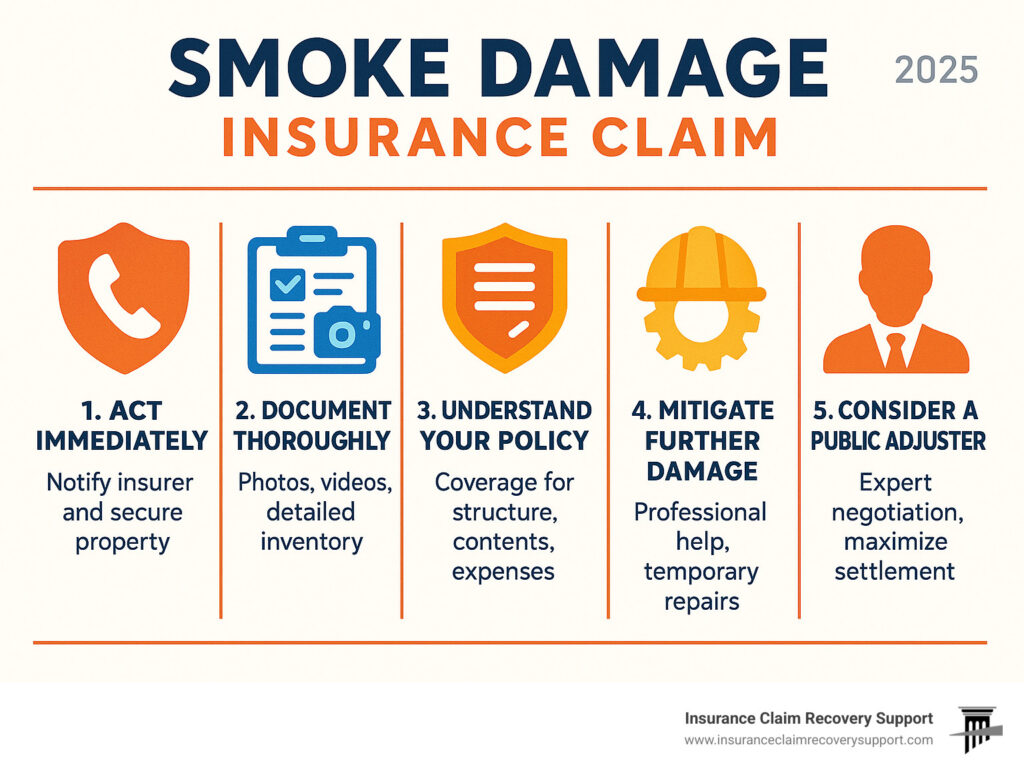
Your actions immediately after discovering smoke damage can significantly impact your claim’s success. First and foremost, ensure everyone’s safety and evacuate if air quality is poor or if there’s any ongoing danger.
Contact your insurance company as soon as possible to report the damage. Most policies require prompt notification, and delaying could potentially jeopardize your claim. When you call, ask for specific guidance on what steps you should take before cleanup begins.
Document everything thoroughly by taking extensive photos and videos of all visible damage from multiple angles. Include close-up shots of soot on surfaces, damaged items, and any visible smoke residue. Photograph the source of the fire if it’s on your property. Create a written inventory of damaged items, including descriptions, approximate ages, and original purchase prices if you remember them.
Take steps to prevent further damage, as your policy requires you to mitigate additional losses. This might include opening windows for ventilation if it’s safe to do so, covering broken windows, or placing tarps over damaged areas exposed to the elements. However, don’t begin extensive cleanup without guidance from your insurance company, as you need to preserve evidence of the damage.
Keep all receipts for any emergency expenses you incur, including temporary housing, meals eaten out because your kitchen is unusable, emergency repairs, and protective equipment or supplies.
Working with Insurance Adjusters
After you file your claim, your insurance company will assign an adjuster to assess the damage and determine the amount they’ll pay for your claim. Understanding the adjuster’s role and how to work with them effectively is crucial.
The insurance adjuster will schedule a visit to inspect your property, typically within a few days of your claim. During this visit, the adjuster will photograph the damage, ask questions about how the damage occurred, review your documentation, and assess the extent of restoration needed.
Prepare for the adjuster’s visit by having all your documentation organized and readily available, including your photo and video evidence, inventory of damaged items, receipts for emergency expenses, and any estimates you’ve obtained from restoration companies. Be present during the inspection to point out all areas of damage and answer questions. Don’t minimize the damage or make assumptions about what is or isn’t covered.
Read Also: What Insurance Covers in Fire and Smoke Damage Repair: A Breakdown
Remember that the adjuster works for the insurance company, not for you. While most adjusters are professional and fair, their goal is to settle claims efficiently and economically for the insurer. Be cooperative but don’t feel pressured to accept their initial assessment if you believe it’s inadequate.
Getting Professional Restoration Estimates
Having a professional restoration company like PuroClean of Melbourne assess your damage and provide an estimate is invaluable for several reasons. Professional estimates carry more weight with insurance companies than your own assessments. Restoration professionals may identify damage you missed, such as smoke contamination in air ducts or hidden water damage from firefighting efforts. Detailed professional estimates help ensure all necessary work is included in your claim settlement.
Many restoration companies will work directly with your insurance company, providing documentation, answering questions, and even negotiating on your behalf. This can significantly reduce your stress and help ensure you receive fair compensation.
When choosing a restoration company, look for one with experience handling insurance claims, proper certifications and licensing, a good reputation in the Melbourne community, and willingness to work with your insurance company. PuroClean of Melbourne meets all these criteria and has extensive experience helping homeowners navigate the insurance process.
Understanding Your Settlement Offer
Once the adjuster completes their assessment, your insurance company will provide a settlement offer. This offer should detail what damage is covered, what repairs or replacement costs are included, any deductible you’re responsible for, and the total amount the insurance company will pay.
Settlement offers may be calculated using either replacement cost value (RCV) or actual cash value (ACV). Replacement cost value pays to replace damaged items with new ones of similar quality, without deducting for depreciation. This is generally more favorable for policyholders. Actual cash value pays the depreciated value of damaged items, accounting for age and wear. This results in lower payouts.
Many policies pay claims in two stages. You’ll receive an initial payment based on the actual cash value, then receive an additional payment (recoverable depreciation) after repairs are completed or items are replaced. This ensures that policyholders actually use the money for repairs rather than pocketing the cash.
Review your settlement offer carefully. Does it include all damaged areas you documented? Are the repair cost estimates reasonable based on local contractor rates? Does it include adequate funds for both structural repairs and content replacement? Have all necessary professional services been included, such as air duct cleaning or specialized soot removal?
If you believe the settlement offer is inadequate, you have options. You can request a reinspection, provide additional documentation or estimates, negotiate for a higher settlement, or hire a public adjuster to advocate on your behalf.
Common Coverage Issues and Disputes

Even with legitimate smoke damage claims, disputes can arise between homeowners and insurance companies. Being aware of common issues helps you prepare and respond effectively.
Disagreements About Extent of Damage
One of the most common disputes involves the scope of damage. Insurance adjusters may argue that certain areas weren’t affected by smoke or that odors will dissipate naturally without professional intervention.
Smoke travels through air ducts and can affect areas far from the fire’s origin. Professional air quality testing and thermal imaging can reveal contamination that isn’t visible to the naked eye. If your insurer disputes the extent of damage, consider hiring an independent restoration professional to provide a detailed assessment and report.
Disputes Over Replacement vs. Repair
Insurance companies often prefer to repair items when possible rather than replace them, as repairs are typically less expensive. However, some items cannot be adequately restored after smoke damage.
Upholstered furniture, mattresses, and some textiles may absorb smoke and odors that cannot be completely removed. Electronics can be damaged by corrosive smoke particles. Some building materials like drywall may need replacement rather than cleaning if smoke has penetrated deeply.
If you disagree with your insurer’s determination that items can be repaired rather than replaced, obtain professional opinions from restoration specialists who can explain why replacement is necessary.
Depreciation and Valuation Disputes
Disagreements over the value of damaged items are common, especially for personal property. Your insurance company may assign a lower value to items than you believe they’re worth.
Protect yourself by maintaining a home inventory with photos and receipts before any damage occurs. For items you’ve already lost, gather whatever evidence you can of their value, including purchase receipts, credit card statements, online shopping history, or professional appraisals for high-value items.
If you can’t find original receipts, research comparable items to show current replacement costs. Many insurance companies will accept reasonable estimates based on similar items available for purchase.
Coverage Denials
In some cases, insurance companies deny smoke damage claims entirely. Common reasons for denial include the damage not meeting the policy’s definition of a covered event, the source of smoke being excluded under the policy, failure to report the claim promptly, policy lapses or exclusions, or allegations that the damage was caused by neglect or intentional acts.
If your claim is denied, carefully review the denial letter to understand the specific reasons. Request a detailed written explanation if the denial letter is unclear. Review your policy to understand the relevant provisions. Consider getting a second opinion from a public adjuster or attorney who specializes in insurance claims. File an appeal if you believe the denial is unjustified.
Maximizing Your Smoke Damage Claim
Taking strategic steps throughout the claims process can help ensure you receive the full compensation you’re entitled to under your policy.
Document Everything Thoroughly
The importance of documentation cannot be overstated. The more evidence you provide, the stronger your claim will be. Beyond initial photos, continue documenting throughout the restoration process. Take photos before, during, and after cleanup to show the progression of work. Keep detailed records of all communications with your insurance company, including dates, times, names of representatives, and summaries of conversations.
Maintain a file with all claim-related documents including your policy, claim number, correspondence, estimates, receipts, and reports. Create a timeline of events from when damage occurred through the resolution of your claim.
Understand Your Policy Inside and Out
Many homeowners don’t fully understand their insurance coverage until they need to file a claim. Take time to carefully review your policy, paying particular attention to what’s covered under dwelling coverage and personal property coverage, your deductible amount, coverage limits for different categories of items, any special endorsements or riders you’ve added, and exclusions that might limit coverage.
If policy language is confusing, don’t hesitate to ask your insurance agent for clarification. Understanding your coverage helps you know what to expect and where you might need to negotiate.
Don’t Accept the First Offer Without Review
Insurance companies often make initial settlement offers that are lower than what they’re ultimately willing to pay. While some initial offers are fair and adequate, it’s worth taking time to carefully review any settlement offer before accepting.
Compare the settlement offer to professional estimates from restoration companies. Ensure all damaged items and areas are included. Verify that the offer accounts for the actual cost of repairs in the Melbourne area, as costs can vary significantly by location. Consider consulting with a public adjuster for a second opinion if you’re unsure whether the offer is fair.
Consider Hiring a Public Adjuster
If you’re having difficulty with your insurance claim, feel the settlement offer is inadequate, lack time to manage the claims process yourself, or are dealing with extensive or complex damage, hiring a public adjuster might be worthwhile.
Public adjusters are licensed professionals who work for policyholders, not insurance companies. They assess damage, prepare and file claims, negotiate with insurance companies on your behalf, and work to maximize your settlement. They typically charge a percentage of your settlement, usually between 5% and 15%, but their expertise often results in significantly higher settlements that more than offset their fees.
Read Also: My Oven Caught On Fire: Can I Still Use It in 2026?
Special Considerations for Melbourne Residents
Living in Melbourne and the broader Brevard County area comes with unique considerations that can affect smoke damage claims.
Florida-Specific Insurance Regulations
Florida has specific insurance regulations and consumer protections that benefit homeowners filing claims. Florida law requires insurance companies to acknowledge receipt of your claim within 14 days and begin investigating promptly. If your home is uninhabitable, insurers must advance partial payment for additional living expenses within specific timeframes.
Florida also has favorable statutes regarding claim disputes and attorney’s fees, which can help homeowners who need to challenge claim denials or inadequate settlements.
Coastal Climate Considerations
Melbourne’s coastal climate creates unique challenges for smoke damage restoration. High humidity can complicate smoke damage cleanup and increase the risk of mold growth if water was used in firefighting. Salt air can accelerate corrosion of metal components that have been weakened by fire and smoke.
These factors may increase restoration costs and extend the cleanup timeline. Ensure your insurance company accounts for these climate-specific challenges when assessing your claim.
Hurricane and Storm Interactions
Melbourne’s location in a hurricane-prone area adds another layer of complexity. If smoke damage occurs close to hurricane season, you may need to expedite repairs to ensure your home is secure before a storm arrives. If your home has smoke damage and then experiences hurricane damage, determining which damage relates to which event can be complicated.
Document the condition of your home after smoke damage and before any subsequent storm damage to help differentiate between the two events for insurance purposes.
Local Building Codes and Permit Requirements
Smoke damage restoration sometimes requires repairs that trigger local building code requirements or necessitate permits. Your insurance company should cover the cost of bringing affected areas up to current building codes if the work is part of the restoration, though this may be subject to policy limits.
Work with restoration companies familiar with Melbourne building codes and permit processes to ensure all work is done properly and legally. PuroClean of Melbourne has extensive knowledge of local requirements and can help navigate this aspect of restoration.
Working with Restoration Professionals
Choosing the right restoration company and understanding how they interact with your insurance claim is crucial for a successful outcome.
Why Professional Restoration Matters for Insurance Claims
While you might be tempted to handle smoke cleanup yourself to save money, professional restoration is almost always necessary for insurance claims. Insurance companies expect professional-grade work and may not adequately compensate for DIY efforts. Professionals provide detailed documentation and estimates that support your claim. They use specialized equipment and techniques that ensure thorough cleanup. They can identify hidden damage that you might miss. Their work comes with warranties and guarantees that protect you.
Most importantly, professional restoration companies understand the insurance process and can advocate for you throughout your claim.
What to Look for in a Restoration Company
When choosing a restoration company to handle your smoke damage, look for several key qualifications. The company should have relevant certifications from organizations like the Institute of Inspection, Cleaning and Restoration Certification (IICRC). They should carry proper insurance and licensing for operating in Florida. Look for extensive experience with insurance claims, local knowledge of Melbourne and Brevard County, positive reviews and references from previous clients, 24/7 emergency availability, and transparent pricing.
PuroClean of Melbourne meets all these criteria and has built a strong reputation in the community for quality work and excellent customer service.
How Restoration Companies Work with Insurance
Professional restoration companies typically handle much of the insurance process on your behalf. They provide detailed damage assessments and scope of work documents, communicate directly with insurance adjusters, supply itemized estimates and invoices, document work with photos and reports, and can help negotiate if the initial settlement offer is inadequate.
Many restoration companies work on an assignment of benefits basis, meaning you authorize them to bill your insurance company directly for covered services. This arrangement reduces your out-of-pocket expenses and simplifies the payment process. However, make sure you understand the terms of any agreement before signing.
The Restoration Timeline and Insurance Payments
Understanding the typical timeline for restoration and how insurance payments work helps set appropriate expectations. The process usually begins with emergency services and assessment within 24 to 48 hours. Initial cleanup and stabilization takes 3 to 7 days. Structural repairs and restoration can take 2 to 8 weeks depending on the extent of damage.
Insurance companies typically make payments in stages. You’ll receive an initial payment minus your deductible to begin work. An additional payment for recoverable depreciation comes after work is completed. Final payment occurs after all invoices are submitted and approved.
Stay in communication with both your restoration company and insurance company throughout the process to ensure everything moves smoothly.
Prevention and Preparedness
While you’re dealing with your current smoke damage situation, it’s wise to think about how to better protect yourself in the future.
Maintaining Adequate Insurance Coverage
Review your insurance coverage annually to ensure it keeps pace with your home’s value and your belongings. Consider whether you have replacement cost coverage for both your dwelling and personal property. Verify that your coverage limits are sufficient to fully rebuild your home at current construction costs. Consider additional coverage for high-value items like jewelry, art, or collectibles. Ensure you have adequate additional living expense coverage.
Document your belongings with a detailed home inventory including photos, videos, receipts, and appraisals for valuable items. Store this documentation outside your home, such as in cloud storage or a safe deposit box.
Fire and Smoke Prevention
The best way to avoid dealing with smoke damage claims is to prevent fires in the first place. Install and maintain smoke detectors on every level of your home and in each bedroom. Keep fire extinguishers in key locations and know how to use them. Have your HVAC system, chimney, and dryer vents cleaned regularly. Never leave cooking unattended. Keep flammable materials away from heat sources. Ensure electrical systems are up to code and avoid overloading outlets. Have a family fire escape plan and practice it regularly.
Knowing When to Call Professionals
If you do experience a fire or smoke damage, knowing when to call professionals can make a significant difference in your outcome. Contact restoration professionals immediately after any fire, even a small one, to assess potential smoke damage. Call if you notice persistent smoke odors, visible soot or discoloration, or respiratory irritation after a fire event. Don’t wait to see if problems resolve on their own, as delays can lead to more extensive damage and potentially complicate your insurance claim.
Read Also: Complete Guide to Fire & Smoke Damage Restoration in Melbourne, FL: Expert Services from PuroClean of Melbourne
Conclusion: Understanding Your Coverage Protects Your Investment
Smoke damage cleanup can be expensive, often costing thousands or even tens of thousands of dollars depending on the extent of contamination. The good news for Melbourne homeowners is that most standard homeowners insurance policies do cover smoke damage when it results from a covered fire event.
Understanding your policy, documenting damage thoroughly, working with professional restoration companies, and knowing how to navigate the claims process are all crucial steps toward receiving fair compensation for your losses.
If you’re facing smoke damage in your Melbourne home, don’t try to navigate the insurance process alone. PuroClean of Melbourne has extensive experience helping homeowners file successful smoke damage claims and can guide you through every step of the process. From initial damage assessment through final restoration, we work to ensure your home is properly cleaned and your claim is handled fairly.
Remember that smoke damage is more than just an aesthetic issue; it poses real health risks and can cause ongoing deterioration if not properly addressed. Your insurance coverage exists to protect you from these situations, and with the right approach and professional support, you can successfully restore your home and recover your losses.