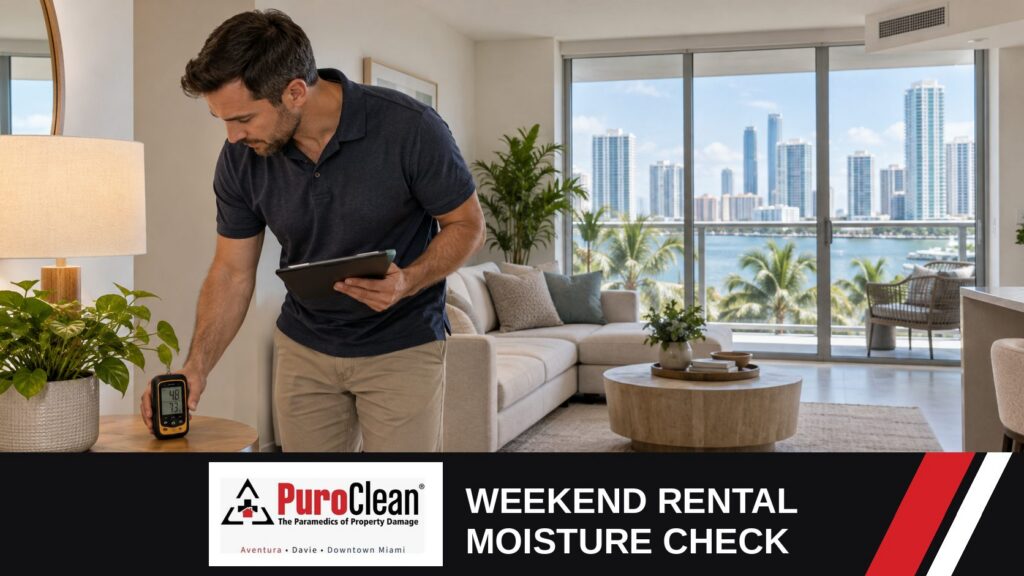
A freshly cleaned condo can still have a moisture problem. Before Friday check-in, look past the folded towels and polished counters. A rental moisture check gives Downtown Miami hosts and property managers a repeatable way to spot dampness, report leaks, and decide whether a unit needs attention before guests arrive. It is a maintenance walkthrough, not a mold clearance inspection or a guarantee that hidden damage is absent.
Use this route between checkout and the next arrival:
- Read the room before spraying fragrance
- Check humidity and condensation
- Inspect wet areas
- Look around the AC without opening equipment
- Check windows and balcony doors
- Record findings and hand off
1. Start Your Rental Moisture Check With the Air
Enter before using scented cleaning products. A persistent musty odor can be a reason to investigate even when walls look clean. Note which room smells different and whether the odor is strongest near a closet, window, or air-conditioning return. Do not cover the smell with fragrance and call the problem solved.
Ask the cleaner what changed since the last turnover. A towel left wet on a floor is different from a cabinet that feels damp every week. Repeated observations matter more than a single guess about the source. Record the location and date so the owner or maintenance team has something specific to investigate.
2. Measure Humidity Instead of Guessing
A small digital hygrometer measures relative humidity. The EPA’s guide to mold and moisture recommends keeping indoor humidity below 60 percent, ideally between 30 and 50 percent when possible. Use the manufacturer’s instructions and let the meter settle before recording the reading. One reading is a snapshot, not proof of a hidden leak.
As part of the rental moisture check, compare the reading with earlier visits under similar conditions. A room that stays humid deserves a maintenance review. Keep balcony doors closed while air conditioning operates, and follow the equipment manufacturer’s operating guidance. Do not turn the cooling system off between guests simply because the unit is empty without considering humidity control.
3. Walk the Bathroom, Kitchen, and Laundry Area
Look under sinks and around supply connections for visible drips, staining, swollen cabinet material, or a wet floor. Check the area around toilets and appliances without moving heavy equipment or loosening fittings. Report a leak rather than assuming a cleaning crew can repair it during a tight turnover.
Inspect shower corners and the nearby floor. Confirm the bathroom exhaust fan operates and report a failed fan. Dry wet towels and bath mats rather than folding or storing them while damp. A rental moisture check should separate ordinary cleanup from a recurring water source that needs repair. If water returns after drying, the cause has not been addressed.
4. Look Around the AC, Not Inside It
Check the visible floor and surrounding surfaces near accessible air-conditioning equipment for water, staining, or repeated condensation. Keep access clear for a qualified technician. Do not open electrical panels, reach into equipment, pour chemicals into drains, or disturb a shared building system as part of a turnover checklist.
The EPA recommends keeping air-conditioning drip pans clean and drain lines unobstructed. Those maintenance tasks should follow the system’s instructions and your building’s service arrangements. If you know or suspect that HVAC equipment is contaminated with mold, do not run it; seek professional guidance because it can spread contamination.
5. Check Windows and Balcony Doors After Rain
Look for damp tracks, fresh staining, bubbling finishes, or wet flooring near exterior openings. Photograph the area before moving a mat over it. Condensation and rain intrusion are different problems, and neither should be diagnosed from a photograph alone. Share the observations with building maintenance, especially where the exterior or balcony is a common element.
Keep furniture and stored items from hiding damp surfaces. During the rental moisture check, inspect accessible areas without pulling wallpaper, lifting flooring, or opening a wall. Disturbing suspected hidden mold can release spores. An odor with no visible source is a reason to ask for assessment, not permission to start demolition.
6. Make the Handoff Useful
Keep a short log with the unit, room, date, humidity reading, visible findings, and the person notified. Use a close photograph and a wider one that shows the location. Record what was dried or repaired and when someone will recheck it. A note that says “bathroom smells musty near vanity” is more useful than “mold everywhere” when that has not been established.
Build time for follow-up into the weekend plan. The EPA advises drying water-damaged materials within 24 to 48 hours to help prevent mold growth. Do not wait until the next guest reports a problem. A rental moisture check only helps when someone owns the next step and confirms that the water source has been fixed.
When to Pause the Turnover
Visible growth, persistent musty odors, sewage, extensive wet materials, or a leak you cannot stop call for more than routine housekeeping. Keep people away from affected areas and arrange qualified help. Do not paint over mold or use a fan to blow across suspected contamination. Where guest safety or habitability is uncertain, have the responsible property manager assess it before occupancy.
PuroClean of Downtown Miami provides mold removal and remediation and water damage restoration. If your rental moisture check identifies damage that needs professional attention, contact our team to discuss the findings and next steps.
24/7 EMERGENCY CONTACT: (305) 907-7373 | [email protected]