




Thanksgiving cooking fire safety matters because Thanksgiving is the peak day of the year for home cooking fires, ahead of Christmas Day and Christmas Eve, according to the National Fire Protection Association (NFPA). The leading cause of kitchen fires, NFPA says, is unattended cooking: someone steps away from a pan or an oven for a minute. Here is how to cook the big meal in your Orange County kitchen without a fire, what to do in the first seconds if one starts, and what the cleanup looks like if smoke or soot spreads.
Before you cook: habits that prevent most kitchen fires
- Stay in the kitchen while you are frying, boiling, grilling or broiling. If you have to leave, turn off the burner first.
- If you are simmering, baking or roasting, stay in the house, check on the food regularly and set a timer.
- Clear the stovetop and the area around it. Oven mitts, dish towels, paper packaging, wooden spoons and curtains do not belong near a burner.
- Keep a lid that fits each pan within reach before you start.
- Do not use the oven or microwave as storage space.
- Wear snug sleeves, and test your smoke alarms before guests arrive.
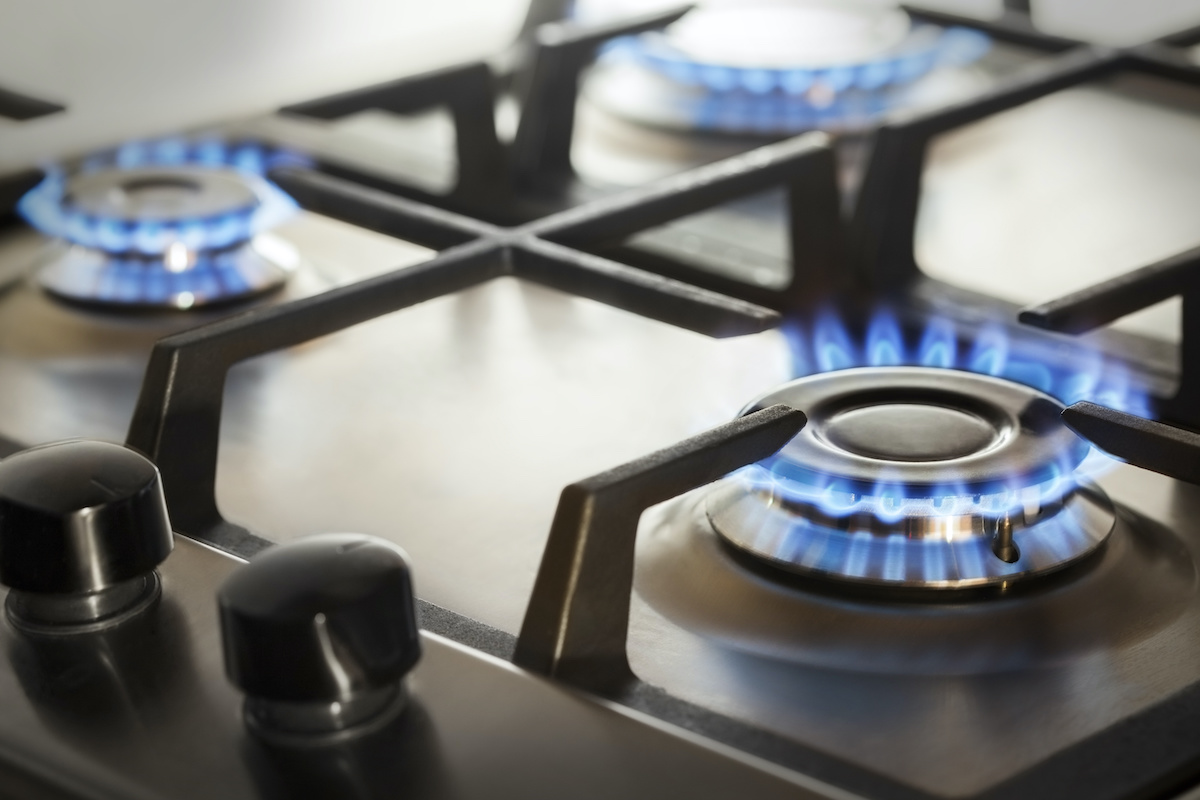
If a grease fire starts in a pan
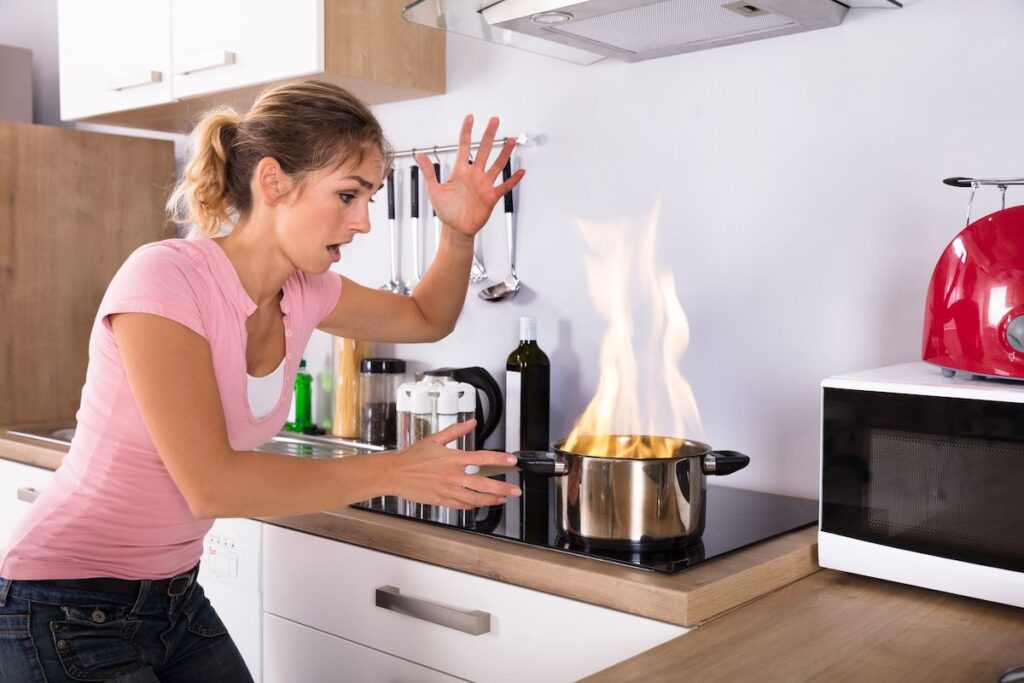
Move fast and do these in order:
- Turn off the burner.
- Slide a lid over the pan to smother the flames.
- Do not move the pan.
- Leave the lid on until the pan has cooled completely, or the fire can restart.
- Never pour water on a grease fire. It can spread the burning grease.
These steps follow NFPA’s educational messages.
Oven and microwave fires
Keep the door closed and turn off the heat. Opening the door feeds the fire with fresh air. Do not carry a burning pan or dish through the house.
When to stop fighting it and get out
If the fire is spreading beyond the pan, grows quickly or you are not sure you can control it, get everyone out of the house, close the door behind you if you can do it safely, and call 911 from outside. A fire extinguisher is for a small fire with an exit at your back. It is never a reason to stay in a smoky house.
Turkey fryers
NFPA and the US Consumer Product Safety Commission have demonstrated how quickly a turkey fryer can erupt in a video on the dangers of turkey fryers. If you use one anyway, follow the manufacturer’s directions exactly and keep it outdoors on level ground, well away from the house, deck, garage and anything that can burn. Never use one indoors or in a garage.
After a kitchen fire: smoke, soot and water
Even a small kitchen fire can send smoke and soot through the rest of the house. Soot settles as a film on walls, ceilings, cabinets and contents, and smoke odor soaks into porous materials. Wiping soot with a wet cloth can smear it deeper into the surface, so it is usually better to leave it alone until it has been assessed. If the fire department used water, or an extinguisher discharged, there may be moisture and residue to deal with too. The EPA advises drying water-damaged areas within 24 to 48 hours to prevent mold growth.
Our fire and smoke damage restoration starts with an assessment of how far the smoke and soot traveled. We document the damage, clean the affected surfaces and contents, treat the odor, and dry any water. If walls, cabinets or flooring need to be rebuilt, reconstruction is under the same roof. For more on kitchen fire safety year-round, read our guide to kitchen fire safety, and see what to expect when removing smoke odor after a fire.
Asbestos comes first. If drywall, plaster, ceiling or flooring materials have to be opened or removed, suspect materials are tested for asbestos before they are disturbed, as New York requires. See the NYS Department of Labor asbestos survey requirements.
If insurance is involved
Whether to file a claim is your decision. We document the damage with photos, moisture or soot readings and a written scope, and we give those documents to you. Our invoice is due under the agreement you sign with us, and if your policy pays, it reimburses you. General education, not advice on your claim.
Questions, or damage you are not sure about? Call PuroClean of Central Orange at (845) 869-5999. We serve homeowners across Orange County from our Middletown office; see the towns we serve.


