


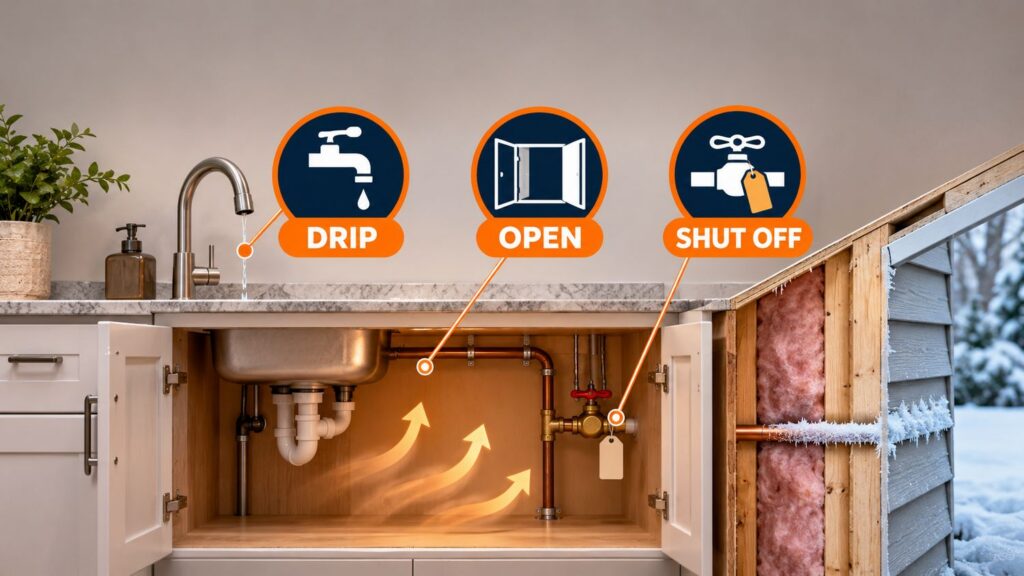
Water expands as it freezes, and that puts tremendous pressure on a pipe. According to the American Red Cross, pipes that run along exterior walls or sit in unheated areas are the ones most at risk. In an Orange County winter, that means attics, crawl spaces, unheated basements, garages and the wall behind a kitchen or bathroom sink. Here is how to protect your pipes before the first hard freeze, and exactly what to do if one lets go.
Before the cold: protect the pipes
- Find your main water shutoff and make sure everyone in the house knows where it is and how to close it.
- Disconnect and drain outdoor hoses. Close the inside valve to each outdoor hose spigot and open the outside spigot so it drains.
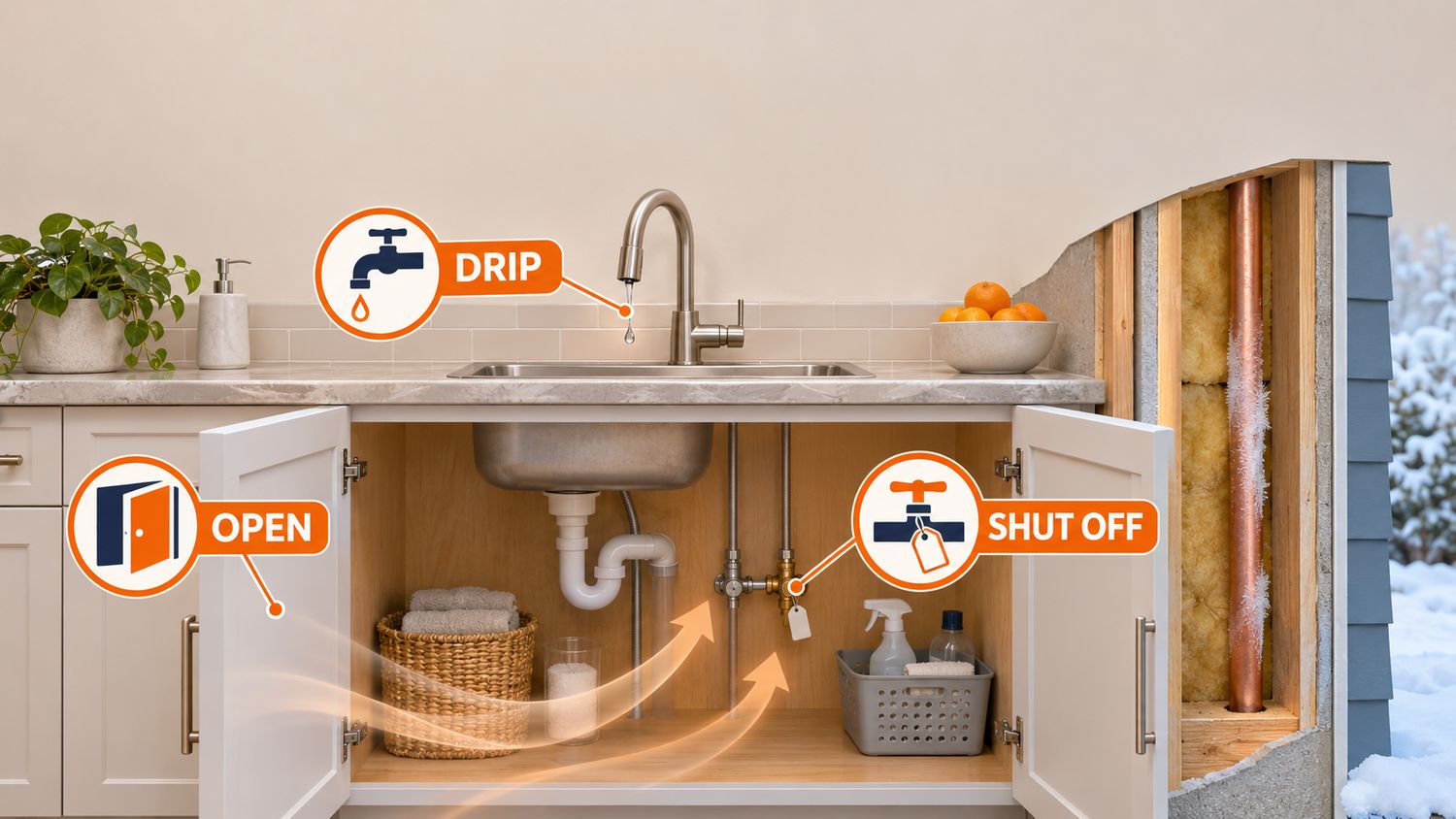
- Open kitchen and bathroom cabinet doors on exterior walls so warmer air can reach the pipes.
- During extreme cold, let cold water drip from a faucet served by exposed pipes. Moving water is harder to freeze.
- Keep the thermostat at the same temperature day and night, and do not set it below 55°F if you are away.
- Keep garage doors closed if there are water supply lines in the garage.
- If you leave town, have someone check the house during a cold snap.
These steps come from the Red Cross guidance on preventing and thawing frozen pipes.
If a faucet only trickles or gives no water
Suspect a frozen pipe. Leave the faucet open, so water can flow as soon as the ice clears and relieve pressure. The Red Cross lists gentle heat on the frozen section, such as an electric hair dryer or a heating pad, and never recommends a torch or open flame. Keep electrical devices away from any standing water. If you cannot find the frozen section, the water does not return, or the pipe looks cracked or bulging, stop and call a licensed plumber.
If a pipe bursts: do these in order
- Shut off the main water supply.
- Open the lowest faucet in the house to drain what is left in the lines.
- Stay out of any room where water is reaching outlets, appliances or the electrical panel. If you cannot reach the breaker safely and dry, call your utility or an electrician.
- Call a licensed plumber to repair the pipe.
- Before you move anything, photograph and video the damage. Then move valuables and small furniture out of the wet area.
- Call a restoration company quickly. The EPA advises drying water-damaged areas within 24 to 48 hours to prevent mold growth.
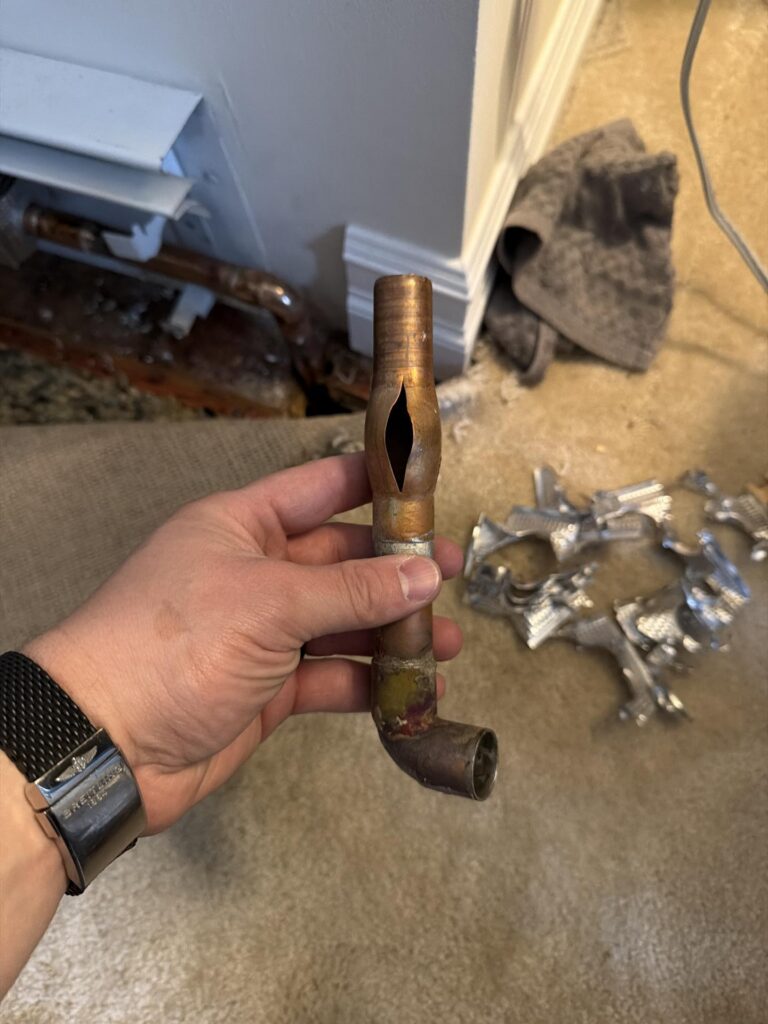
Why burst pipes cause more damage than you can see
Water does not stay where the pipe broke. It runs down inside wall cavities, soaks insulation, drips through ceilings into the rooms below and travels under flooring. A wall can look dry on the surface and still be wet inside. That is why drying starts with finding where the water went, not just removing what is visible.
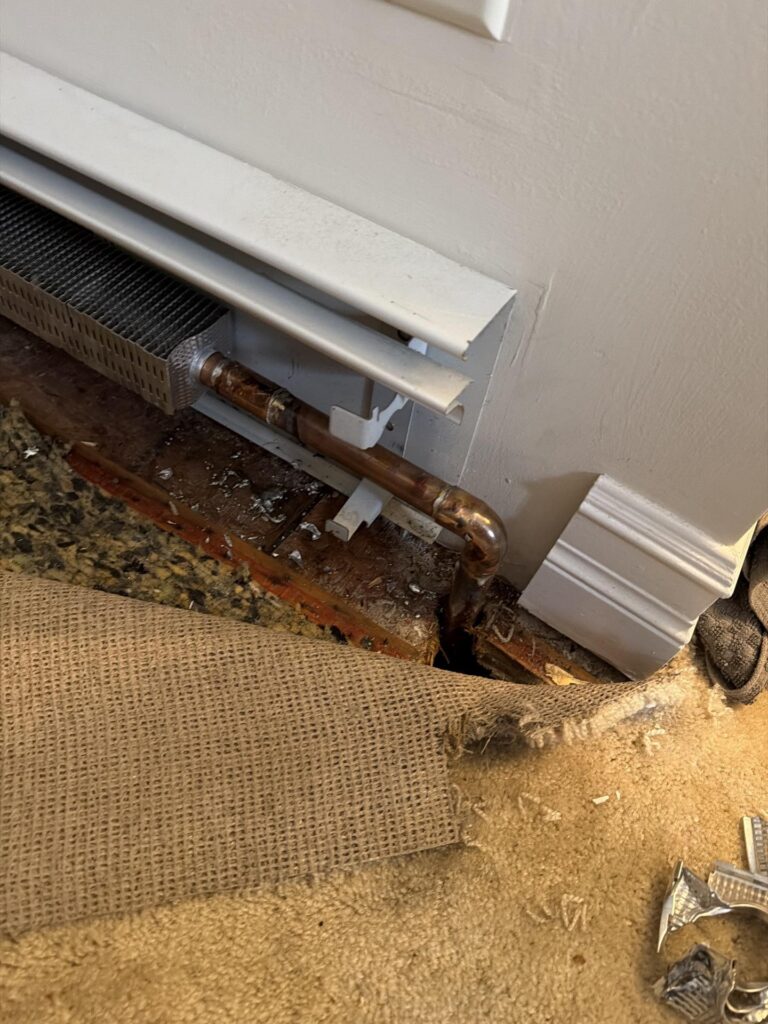
What our water mitigation looks like
- We stop the spread, remove standing water and confirm the water is shut off.
- We map moisture with meters, wall by wall, ceiling by ceiling and floor by floor, instead of guessing from surface appearance.
- We set drying equipment and write a drying plan, so you know what is being dried and how we will know when it is done.
- We keep daily logs and photos while the equipment runs, and we give you the documentation.
- Where materials cannot be dried in place, we tell you what has to come out and why. Replace-or-keep decisions are yours.
This is our water damage restoration. If drywall, ceilings or floors need to be rebuilt afterward, reconstruction is under the same roof, and if mold has already started, our NYS-licensed mold remediation handles it. In New York, mold assessment and mold remediation are done by separate licensed companies, so any clearance testing comes from an independent assessor, not from us.
Winter water damage can also start on the roof. See our guides on roof leaks after snow and ice dams and when steam ice dam relief is appropriate.
Asbestos comes first. If drywall, plaster, ceiling or flooring materials have to be opened or removed, suspect materials are tested for asbestos before they are disturbed, as New York requires. See the NYS Department of Labor asbestos survey requirements.
If insurance is involved
Whether to file a claim is your decision. We document the damage with photos, moisture or soot readings and a written scope, and we give those documents to you.
Questions, or damage you are not sure about? Call PuroClean of Central Orange at (845) 869-5999. We serve homeowners across Orange County from our Middletown office; see the towns we serve.