


The peak months for home heating fires are December, January and February, according to the National Fire Protection Association (NFPA). In NFPA’s analysis of home heating fires, space heaters accounted for about one-third of heating equipment fires and nearly nine out of ten of the deaths. Here are the rules that matter most for an Orange County winter, and what to do if a heating problem leaves soot behind.
Space heater rules
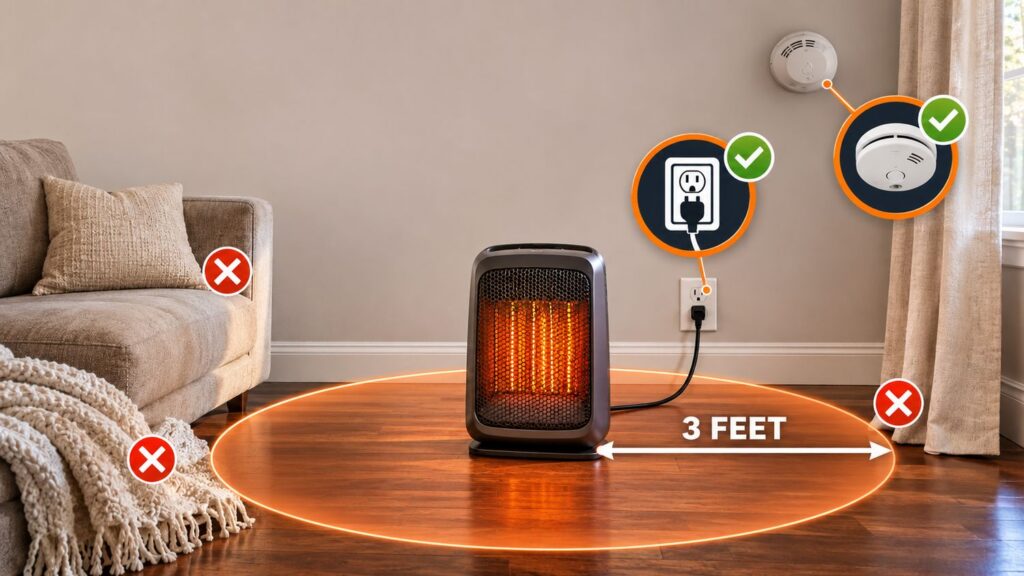
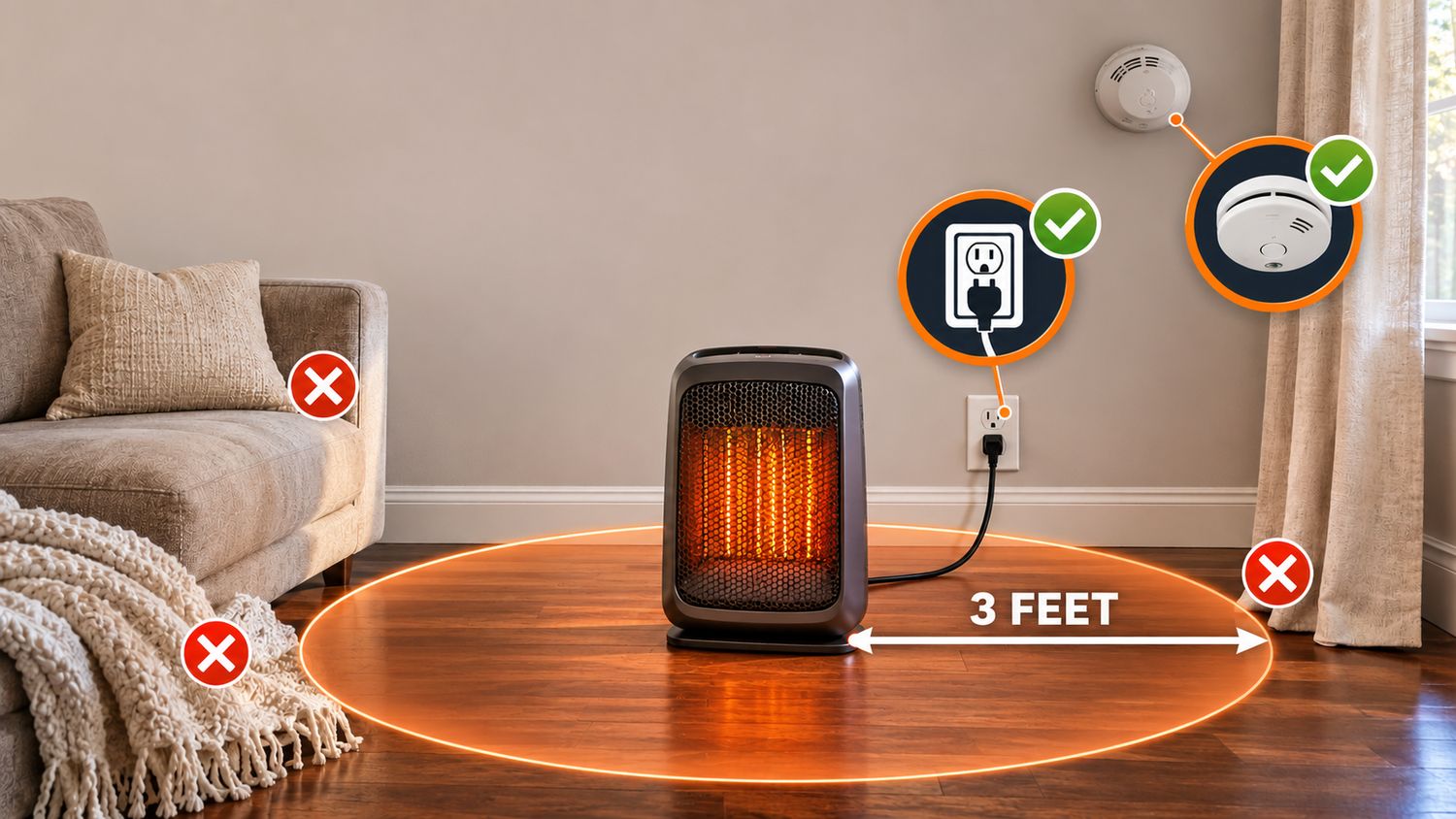
- Keep anything that can burn at least 3 feet from any heater, furnace, fireplace or wood stove. Keep children and pets out of a 3-foot zone around it.
- Buy a heater with the seal of a qualified testing laboratory.
- Plug it directly into a wall outlet. Never use an extension cord, and do not plug other heat-producing appliances into the same outlet.
- Turn it off when you leave the room or go to bed.
- Never use your oven to heat your home.
These come from NFPA’s space heater tip sheet and heating safety guidance. If an outlet or cord feels hot, or a breaker keeps tripping, stop using it and have a qualified electrician look at the circuit.
Furnace, boiler, fireplace and chimney
- Have your furnace or boiler serviced by a licensed heating professional before the season, not after the first cold snap.
- Have chimneys and wood stoves installed and maintained by qualified professionals, and keep a screen in front of an open fireplace.
- Put fireplace ashes in a metal container and take it outside, away from the house, deck and anything that can burn.
- All fuel-burning equipment should be vented to the outside.
- Install and maintain carbon monoxide alarms. If you smell gas, do not light anything. Leave the home immediately and call the fire department or your gas company.
- Test smoke alarms monthly.
What a furnace puff-back is, and what to do
A puff-back happens when an oil burner ignites late and pushes smoke and soot out of the unit instead of up the flue. The result can be a fine black film across a basement, a floor or the whole house, carried through the home by the heating system and air movement. If it happens:

- If you can do it safely, shut off the burner using its emergency switch.
- Do not run the heating system or HVAC fan, which can carry soot into more rooms.
- Do not wipe the soot with a wet cloth. It can smear into porous surfaces.
- Call your heating company to inspect the burner before it runs again.
- Photograph the soot before anything is cleaned, and call us.
What soot cleanup involves
Soot is fine, oily and easy to spread. Our fire and smoke damage restoration starts by assessing how far it traveled, including walls, ceilings, contents and the heating and air system. We document the damage, clean the affected surfaces and contents, treat the odor, and where soot traveled through the ductwork, duct cleaning comes into play. If surfaces or finishes need to be rebuilt, reconstruction is under the same roof. You will find more about odors after a fire in our guide to removing smoke odor from your home.
If something is burning
Get everyone out and call 911 from outside. Do not go back in for belongings.
Asbestos comes first. If drywall, plaster, ceiling or flooring materials have to be opened or removed, suspect materials are tested for asbestos before they are disturbed, as New York requires. See the NYS Department of Labor asbestos survey requirements.
If insurance is involved
Whether to file a claim is your decision. We document the damage with photos, moisture or soot readings and a written scope, and we give those documents to you.
Questions, or damage you are not sure about? Call PuroClean of Central Orange at (845) 869-5999. We serve homeowners across Orange County from our Middletown office; see the towns we serve.