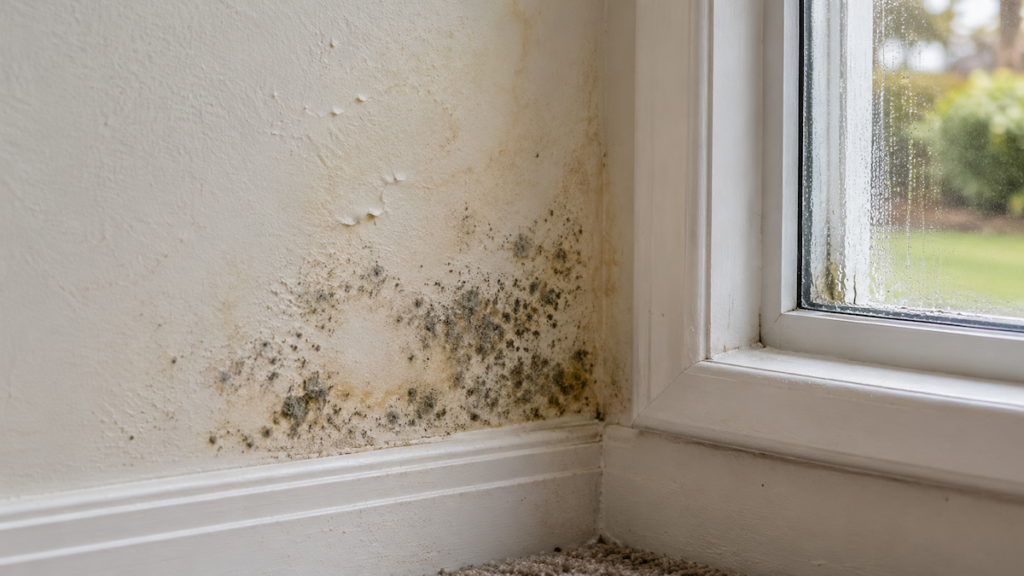
You clean the spot. It disappears. A few weeks later, it’s back.
Mold keeps coming back after cleaning when the moisture supporting its growth hasn’t been resolved. A slow leak, lingering humidity or materials that never fully dried can allow mold to return, even when the surface looks clean.
For homeowners and property managers, the next question is: What is keeping this area damp?
What Causes Mold to Keep Coming Back?
Mold needs moisture to grow, but that moisture doesn’t always come from an obvious leak. Several conditions can contribute to repeat growth:
- Plumbing or appliance leaks: A slow leak may keep nearby materials damp without leaving a noticeable puddle.
- Water entering from outside: Roof leaks and other building defects can allow moisture into the property.
- Humidity and poor ventilation: Moisture can linger in bathrooms, basements and other areas that don’t dry readily.
- Unresolved water damage: An earlier leak or overflow may have left affected materials needing further attention.
Identifying which condition applies helps determine what needs to happen beyond cleanup.
How to Track Recurring Mold and Moisture
Instead of treating each recurrence as a separate incident, keep a simple record. Where does the mold appear? How soon does it return? What was happening before you noticed it?
Useful observations might include:
- Whether the problem follows rain or use of a nearby plumbing fixture
- Whether the room regularly feels damp
- Whether the same location was affected by an earlier leak
- What cleaning or repair work has already been attempted
Photos and dates can help you explain the history to our professional remediation experts. For property managers, documenting repeat reports can also help prevent a recurring complaint from being treated as another isolated cleaning request.
Why Surface Cleaning May Not Stop Mold Growth
The type of material matters. Mold on a hard surface presents a different cleanup situation from mold affecting porous materials such as carpet or ceiling tiles. In some cases, affected porous materials may need to be removed because mold cannot be fully cleaned out of them.
Painting or caulking over mold is also not a solution. The EPA advises cleaning up mold and drying surfaces before painting; paint applied over moldy surfaces is likely to peel. A cosmetic improvement does not establish that the underlying problem has been resolved.
Does Recurring Mold Always Mean a Major Problem?
No. Reappearing mold in a frequently damp bathroom may improve with better ventilation and more consistent cleaning. Recurrence alone does not prove there is extensive hidden damage.
However, a persistent musty smell without an obvious source, or suspected growth behind building materials, deserves closer attention. Avoid pulling apart walls or removing wallpaper to investigate suspected hidden mold yourself; disturbing affected materials can release spores. PuroClean of Newark can assess the situation and provide effective remediation.
Professional guidance is particularly useful when there is substantial water damage, extensive growth or possible HVAC involvement. Cleanup involving sewage or other contaminated water should be handled by a professional experienced with that type of damage.
How to Help Prevent Mold From Returning
Before considering the issue resolved, ask:
- Has the moisture source been identified and corrected?
- Have affected materials been appropriately cleaned or removed?
- Has the area dried thoroughly?
- Is there a plan to check for returning moisture or growth?
Rechecking the area after cleanup helps establish whether the corrective work has addressed the conditions that allowed mold to grow.
Get Help With Recurring Mold in New Jersey
If mold keeps returning, another round of surface cleaning may leave you with the same unanswered questions.
PuroClean of Newark helps homeowners and property managers assess mold-affected areas and address damage through professional mold remediation. Contact our team to discuss what you’re seeing and the appropriate next steps for your property.