


Table of Contents
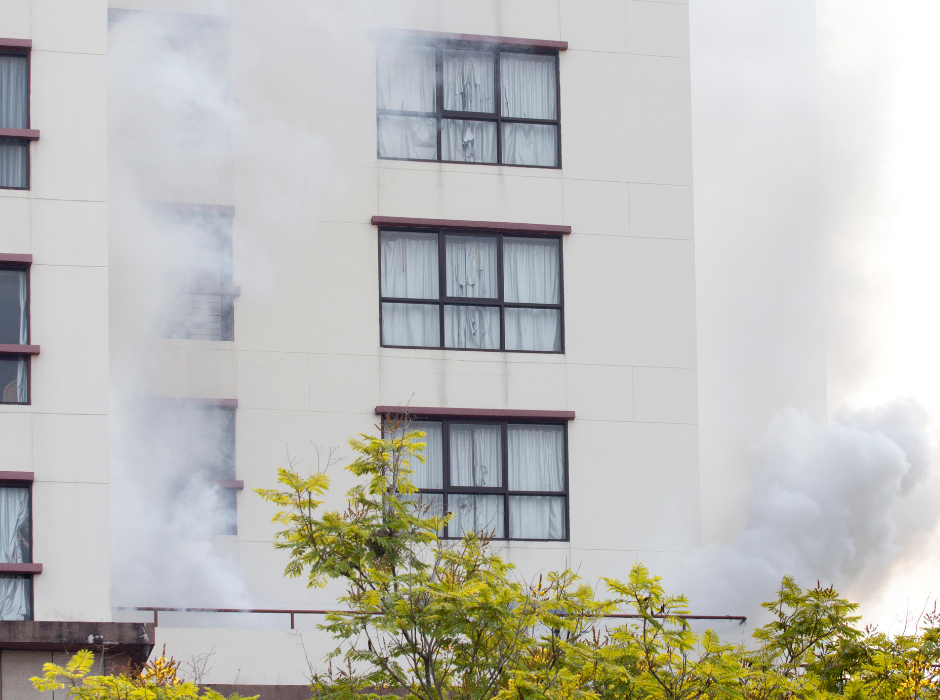
When a fire occurs in a multi-unit property, the visible damage is often contained to a single space.
The smoke is not.
In buildings with shared HVAC systems, smoke can travel far beyond the unit where the fire originated, spreading through ductwork, vents and air returns into neighboring spaces. For property managers, this creates a hidden layer of damage that can impact multiple tenants, even those untouched by flames.
How Smoke Spreads Through HVAC Systems
Smoke particles are extremely small and easily carried through airflow systems. In multi-unit residential and commercial buildings, shared ventilation allows smoke to:
- Move between units through ductwork
- Circulate through return air systems
- Settle inside vents, coils and filters
- Re-enter spaces long after the fire is extinguished
Even a contained fire can result in widespread smoke migration, affecting hallways, adjacent units and entire sections of a building.
This is why properties that appear “minimally impacted” often experience lingering odors and complaints days or weeks later.
The Impact on Tenants and Operations
Smoke damage is more than an inconvenience. It directly affects occupancy, tenant satisfaction and operational continuity.
Persistent Odors
Smoke odor embeds into porous materials and HVAC components. Without proper remediation, it continues to circulate, making affected spaces difficult or impossible to occupy.
Health Concerns
Smoke residue can contain fine particulates and harmful compounds that degrade indoor air quality. This creates potential health risks for occupants, especially in residential buildings, healthcare facilities and offices.
Cross-Unit Contamination
Tenants in unaffected units may still experience smoke intrusion, leading to complaints, lease issues or temporary displacement.
Compliance and Liability Risks
Property managers are responsible for maintaining safe indoor environments. Inadequate remediation can create compliance concerns and increase liability exposure if air quality issues persist.
Why Surface Cleaning Isn’t Enough
One of the most common mistakes after a fire is treating smoke damage as a localized issue.
Wiping surfaces or replacing visibly damaged materials does not address contamination inside the HVAC system. Smoke particles can remain embedded in ductwork, insulation and mechanical components, continuing to circulate long after initial cleanup.
Without proper treatment, this can lead to:
- Recurring smoke odors
- Ongoing tenant complaints
- Recontamination of cleaned areas
- Extended downtime for affected units
The Role of Professional Fire Damage Restoration
Proper smoke remediation requires a comprehensive approach that goes beyond visible damage.
At PuroClean of Newark, restoration teams use specialized equipment and processes to deliver complete fire and smoke damage restoration services, including:
- Inspecting and assessing HVAC system contamination
- Cleaning and deodorizing ductwork and ventilation components
- Removing smoke residue from affected materials
- Using air scrubbers and filtration systems to restore indoor air quality
- Applying advanced deodorization techniques to eliminate embedded odors
This process often includes advanced equipment such as hydroxyl generators, ozone machines and HEPA air filtration devices with carbon filters, which are utilized by PuroClean of Newark to help neutralize smoke odors, capture fine particulates and restore indoor air quality at a deeper level.
For owners and operators of commercial properties and facilities, this level of remediation is critical to ensuring safe conditions and minimizing business interruption.
Just as importantly, restoration professionals understand how smoke behaves in complex building systems. This allows them to identify hidden contamination and address it before it leads to larger operational issues.
Protecting Occupancy and Preventing Long-Term Disruption
For property managers, the goal after a fire is not just cleanup. It’s restoring safe, functional space as quickly as possible.
Addressing smoke damage in shared ventilation systems is a critical part of that process.
When handled properly, it helps:
- Reduce downtime across multiple units
- Prevent tenant displacement and complaints
- Restore confidence in indoor air quality
- Support faster return to normal operations
This is especially important for those responsible for managing multi-unit properties and tenant relationships, where even small disruptions can impact occupancy and revenue.
A Hidden Risk That Requires a Complete Response
Smoke doesn’t respect unit boundaries, and in shared ventilation systems, it rarely stays contained.
What begins as a single-unit incident can quickly become a building-wide issue, affecting air quality, tenant comfort and operational continuity.
That’s why smoke damage must be addressed at the system level, not just the surface level.
With the right expertise and equipment, PuroClean of Newark helps ensure contamination is fully removed from both visible spaces and the HVAC system itself, helping property managers restore safe conditions, protect occupancy and avoid ongoing disruption.
For more information on how to fully remediate smoke contamination in commercial properties, explore our fire and smoke damage restoration services or learn how we support property managers and multi-unit facilities.